

Disclosure: First Phosphate Corp has paid FRC a fee for research coverage and distribution of reports. See last page for other important disclosures, rating, and risk definitions.
The analyst’s rating and fair value are one click away. Free FRC account, no credit card.
Already have an account?
Price and Volume (1-year)
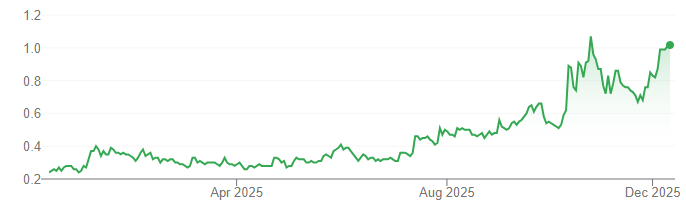
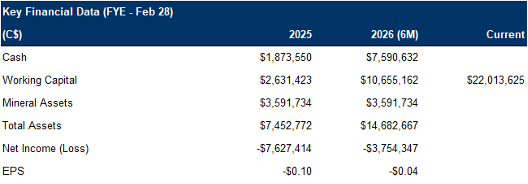
*Subsequent to FY2026 (6M), PHOS raised $15M through equity financings.
*QP: Gilles Lavardiére, P.Geo., Chief Geologist of First Phosphate Corp.
* First Phosphate Corp. has paid FRC a fee for research coverage and distribution of reports. See last page for other important disclosures, rating, and risk definitions.
Portfolio Summary
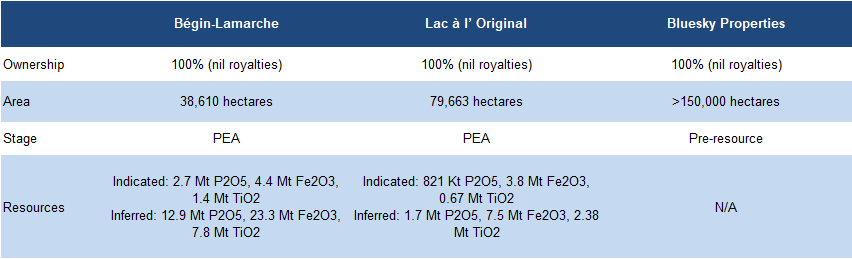
Two advanced-stage phosphate projects in Quebec, an emerging battery metal hub in Canada
Phosphate was recently added to the U.S. critical minerals list, joining the E.U., South Korea, and Canada
*QP: Gilles Lavardiére, P.Geo., Chief Geologist of First Phosphate Corp
Source: Company
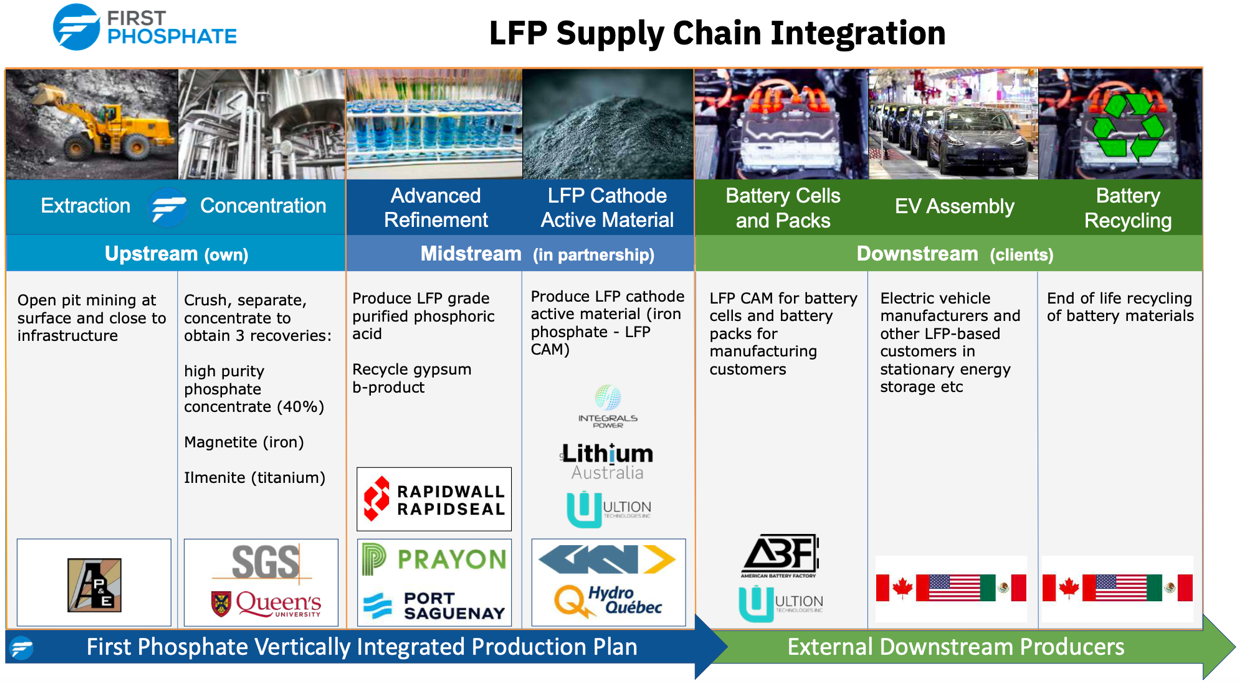
The company aims to build a vertically integrated LFP battery ecosystem
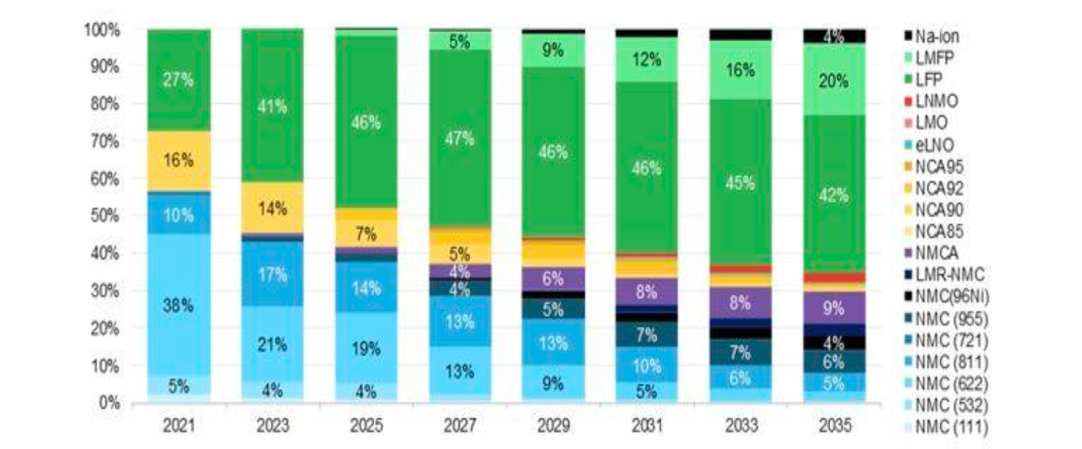
LFP batteries employ lithium iron phosphate (LiFePO4) as the cathode material. Phosphate makes up 50–55% of the cathode , and about 10–15% of the total battery weight.
Market Share of Cathode Materials in Batteries
Source: Bloomberg
LFP batteries account for 60% of the global battery market
China dominates LFP battery production, though other countries are expanding their capacity
PHOS’s Proposed Downstream Facilities
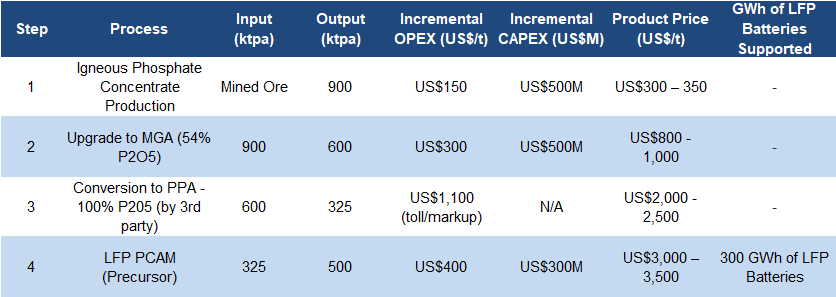
The table and chart below outline a projected economic model for a four-step, vertically integrated value chain that transforms raw phosphate ore into high-value LFP (Lithium Iron Phosphate) precursor material (PCAM). The figures presented represent our preliminary assumptions , derived from our market studies, and analysis of comparable projects.
Proposed Development Plans
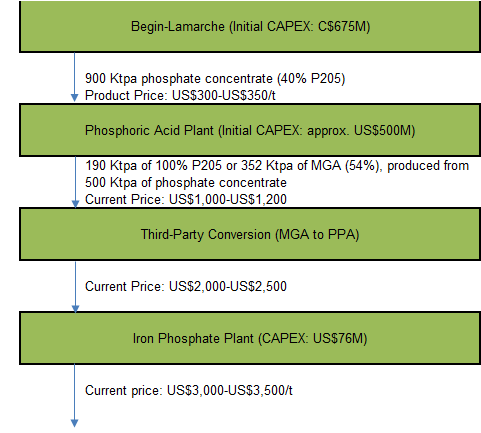
Note how the product price increases at each stage, reflecting the value added through incremental OPEX and CAPEX
Projected Economic Model for a Vertically Integrated Value Chain (FRC Estimates)
Source: FRC
Product pricing ranges from US$300–350/t for igneous phosphate concentrate, US$800–1,000/t for MGA, US$2,000–2,500/t for PPA, and $10,000–15,000/t for LFP cathode active material (CAM)
Bégin-Lamarche Phosphate Project (100% interest)
Recent tests confirmed that LFP battery cells made using 100% North American-sourced critical minerals showed robust energy storage and power performance. PHOS supplied phosphate and iron from its Bégin-Lamarche property, while lithium and graphite were provided by other juniors. This achievement highlights the potential for a fully localized LFP battery supply chain.
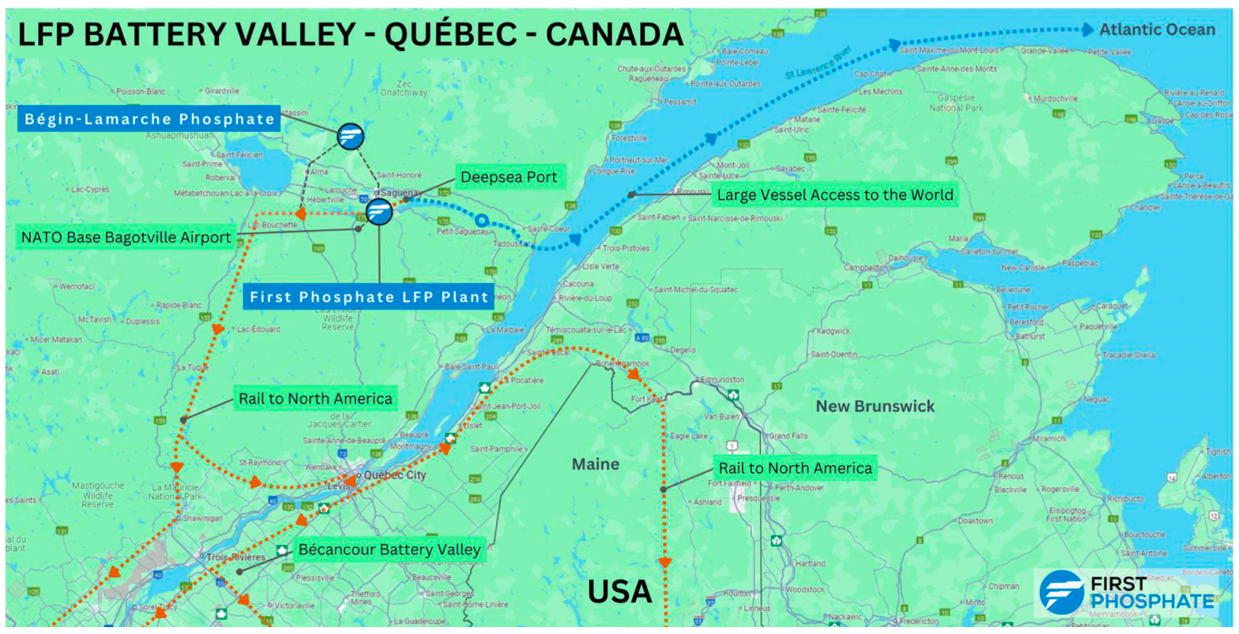
Approximately 70 km northwest of Saguenay, a regional hub and developed industrial area
Location Map
Source: Company
Excellent infrastructure in place including access to power, railways, deep-sea port (75 km driving distance), and a skilled workforce
Proximity to railway and port are key, as future production will likely be distributed to North American and European markets
The project hosts a medium-sized, open-pit resource totaling 255.5 Mt at 6.96% P2O5 vs standard grades ranging from 4% to 15% P2O5
Pit-Constrained Resource Estimate (at 2.5% P2O5 cut-off)
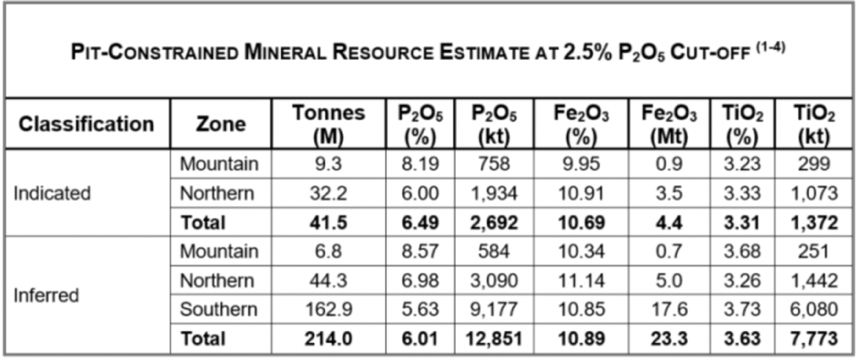
Qualified Persons: Gilles Laverdière, P.Geo. VP Exploration for PHOS, and Eugene Puritch, P.Eng., FEC, CET, President of P&E Mining Consultants Inc.
Source: Company
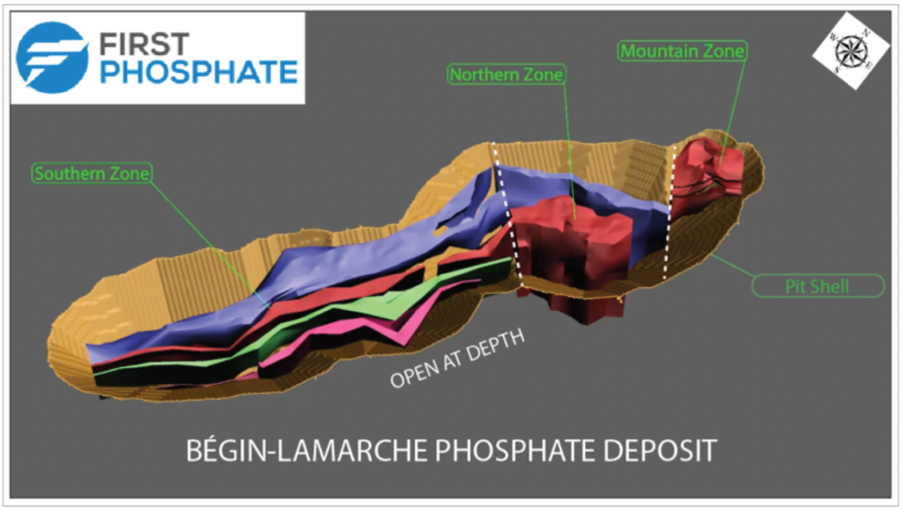
Mineralization at Bégin-Lamarche is spread across three zones: 1) the Southern zone; 2) the Northern zone; and 3) the Mountain zone
The company has commenced a 30,000 m drill program to potentially confirm, expand, and/or upgrade the current resource ahead of a feasibility study.
Bégin-Lamarche Block Model
Source: Company
We believe there is significant resource expansion potential as the deposits remain open at depth
Qualified Persons: Gilles Laverdière, P.Geo. VP Exploration for PHOS, and Eugene Puritch, P.Eng., FEC, CET, President of P&E Mining Consultants Inc.
Source: Company
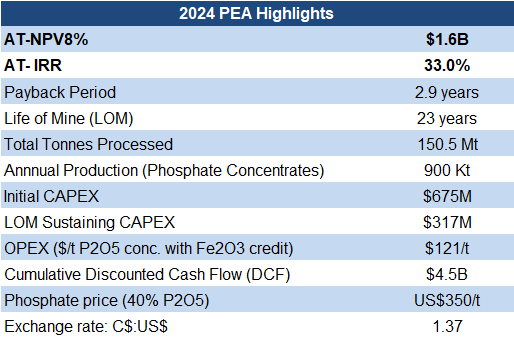
A 2024 PEA returned an AT-NPV8% of $1.59B, and a high AT-IRR of 33%, using US$350/t igneous phosphate concentrate (spot: US$305/t)
IRR >25% is attractive for mining projects
PHOS plans to complete a feasibility study, advance permitting, secure strategic and financing partners, with production potentially starting in 2029.
PHOS’s Proposed 190 ktpa Phosphoric Acid (MGA) Plant
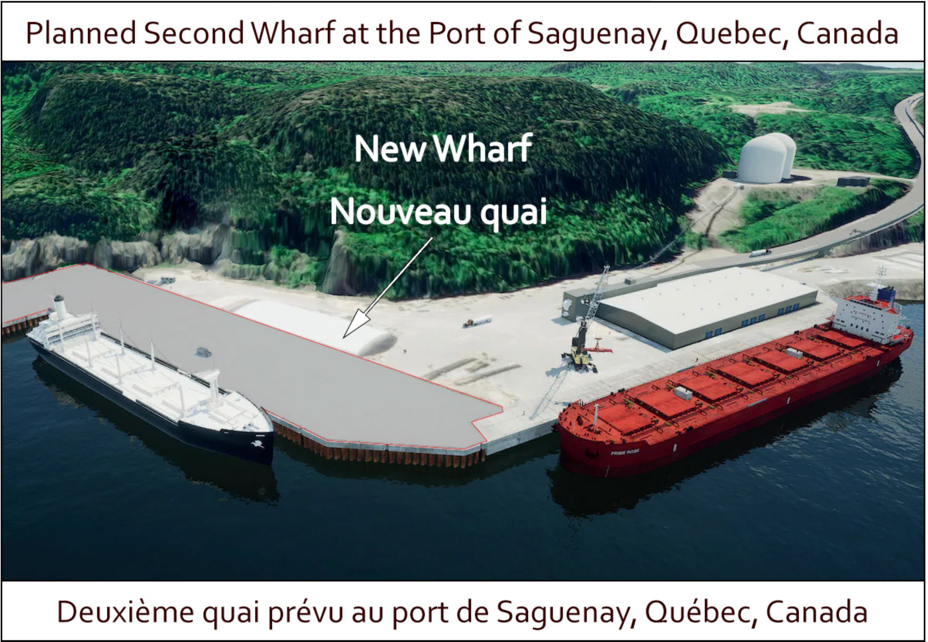
The company plans a 190 ktpa phosphoric acid (MGA) plant at the Port of Saguenay, about 70 km from Bégin-Lamarche. PHOS has finalized the land lease for the plant. The Canadian government announced a $58 M investment to build a second wharf next to PHOS’s proposed plant, providing a major supply chain advantage.
Source: Company
70 km from the Bégin-Lamarche project
A proposed second wharf would enhance export logistics
PHOS recently completed an internal economic study, details of which remain undisclosed, but management has indicated the results were robust enough to move the project forward. The study assumes that 500 ktpa of the 900 ktpa concentrate expected to be produced at Bégin-Lamarche will be used to produce 190 ktpa of value-added phosphoric acid (100% P₂O₅) or 352 ktpa of merchant-grade acid (MGA: 54% P₂O₅).
PHOS has signed a technology license agreement with Prayon SA of Belgium , under which Prayon will grant PHOS the rights to use its technology to design, build, operate, and maintain the plant. Prayon is a well-established player in phosphate chemistry, with over 1,000 employees, and multiple production and R&D facilities across Europe and the U.S
Management’s Proposed Development Timeline
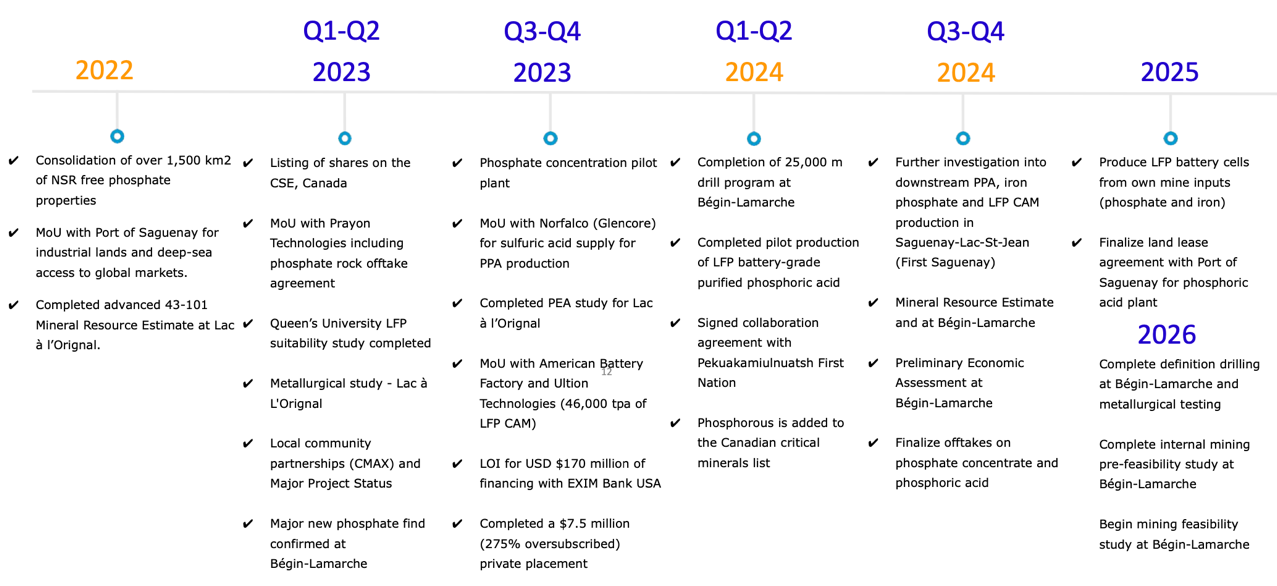
Source: Company
Multiple Catalysts
Financials
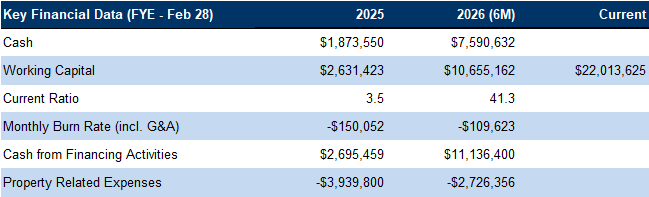
Strong balance sheet
Subsequent to Q2-FY2026 (August), PHOS raised $15M through equity financings
Source: FRC / Company
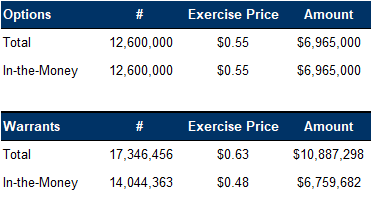
In-the-money warrants and options can bring in $14M
FRC Valuation and Rating
Source: FRC
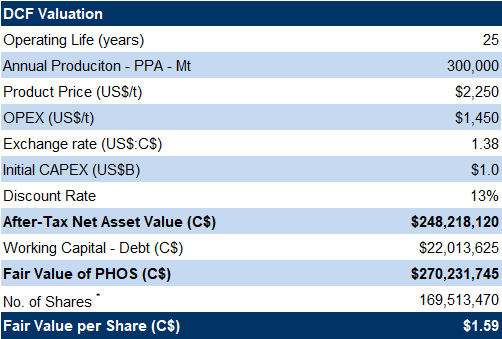
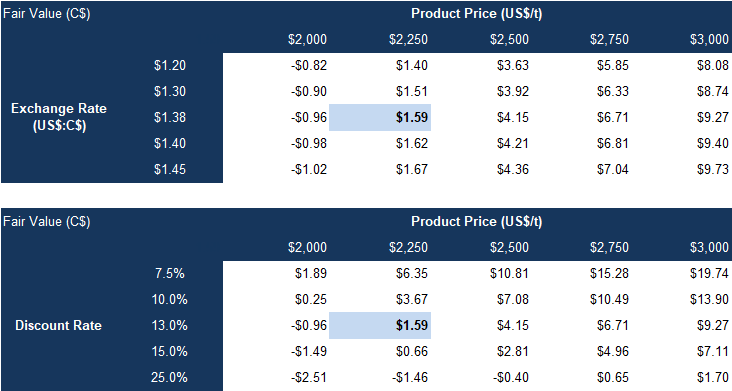
We continue to value the company based on a 25-year operation, assuming annual production of 300 ktpa of PPA (100% P₂O₅), with an initial CAPEX of US$1B
Given recent positive developments, we are lowering our discount rate assumption from 15% to 13% vs our usual 10-12% for North American projects
Source: FRC
As a result, our Discounted Cash Flow (DCF) valuation increased from $1.15 to $1.59/share
We are reiterating our BUY rating and raising our fair value estimate from $1.15 to $1.59/share. We believe PHOS offers rare exposure to a vertically integrated, North American LFP battery supply chain. With a strong PEA and multiple downstream projects underway, PHOS has the potential to become a key domestic player in the LFP battery market.
Risks
We believe the company is exposed to the following key risks (not exhaustive):
We are maintaining a risk rating of 5 (Highly Speculative)