
Disclosure: Unknown Company has paid FRC a fee for research coverage and distribution of reports. See last page for other important disclosures, rating, and risk definitions.
The analyst’s rating and fair value are one click away. Free FRC account, no credit card.
Already have an account?
The following table shows how Capital Direct’s portfolio compares to that of other MIEs (with AUM of $100M+) focused on single-family residential units.
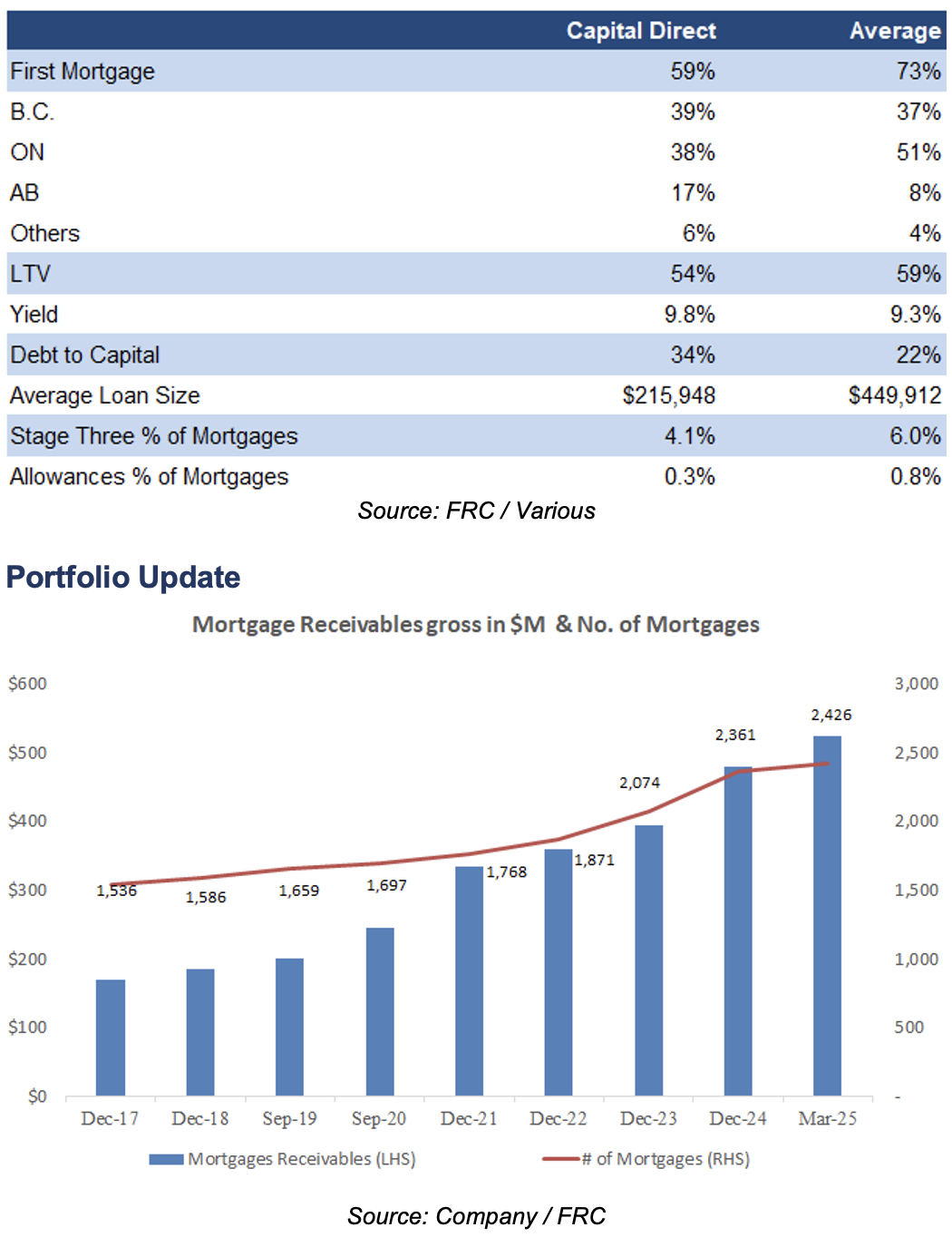
Capital Direct has lower first mortgages, average mortgage size, and LTV. Debt to capital is higher. Yield is higher even though management pays a performance fee in addition to management fees; most comparable MIC do not charge performance-based fees
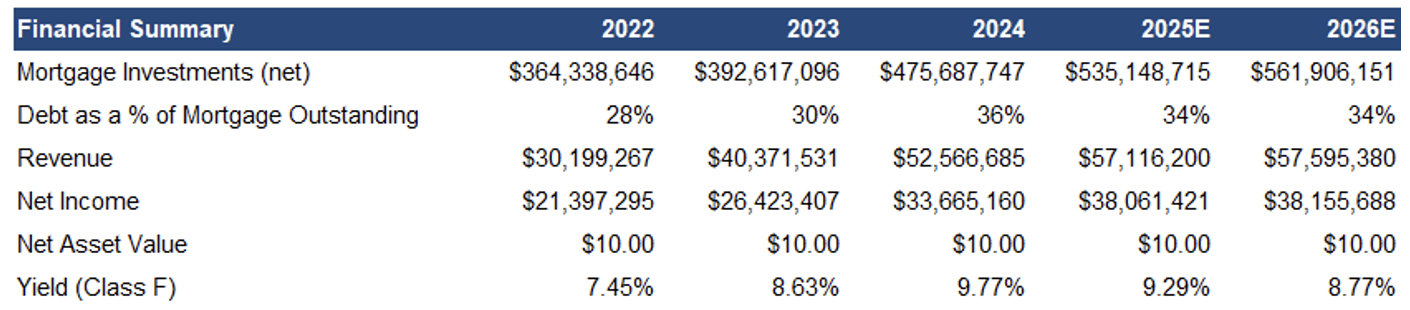
In 2024, mortgage receivables were up 21% to $476M, 10% higher than our forecast. In Q1-2025, receivables increased 10% YTD to $521M
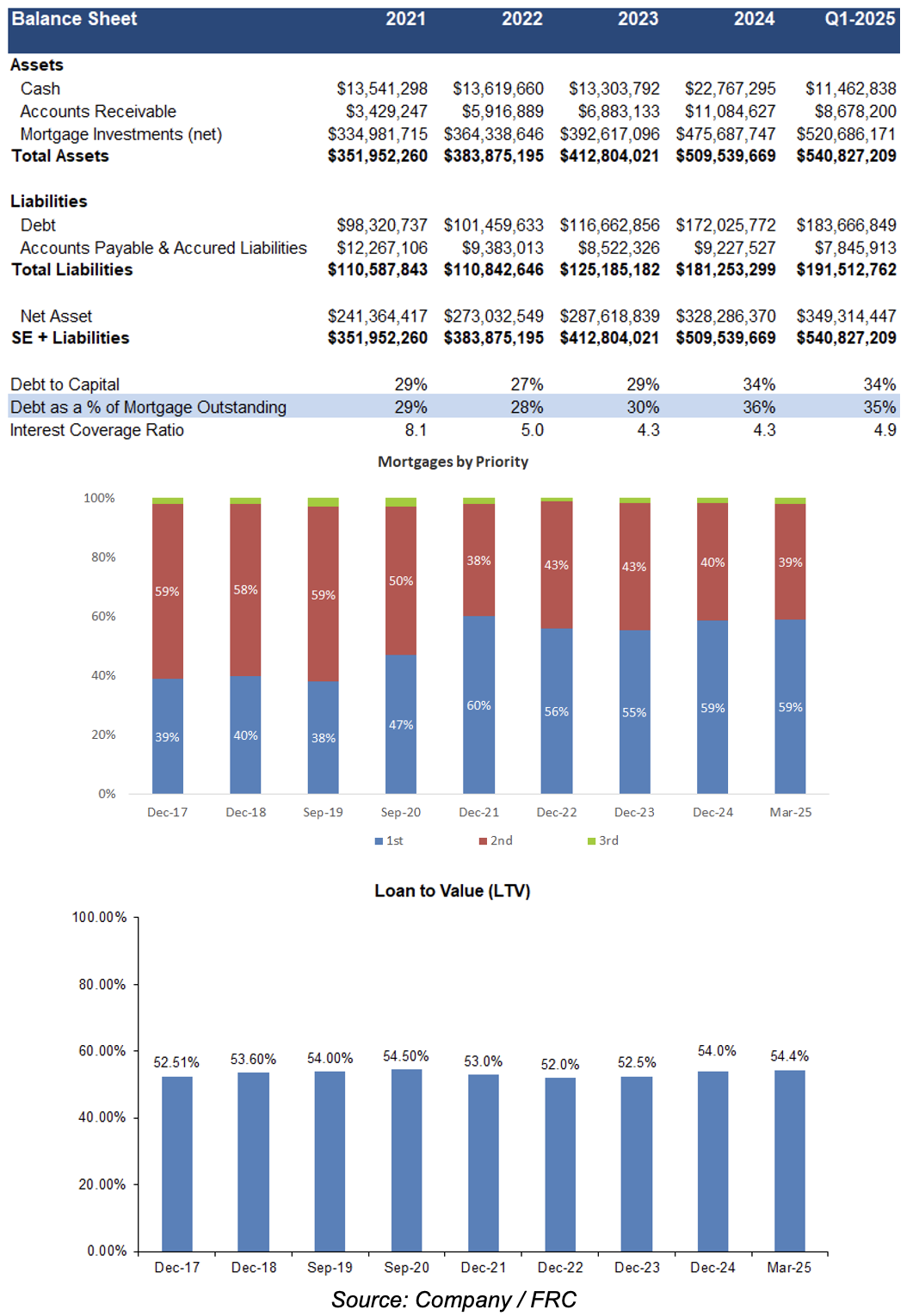
In 2024, debt to capital increased 5 pp to 34%, in line with comparables (20%-40%). The interest coverage ratio was also in line with comparables (3x-5x)
Exposure to first mortgages increased 4 pp to 59%, implying lower risk profile . LTV increased slightly
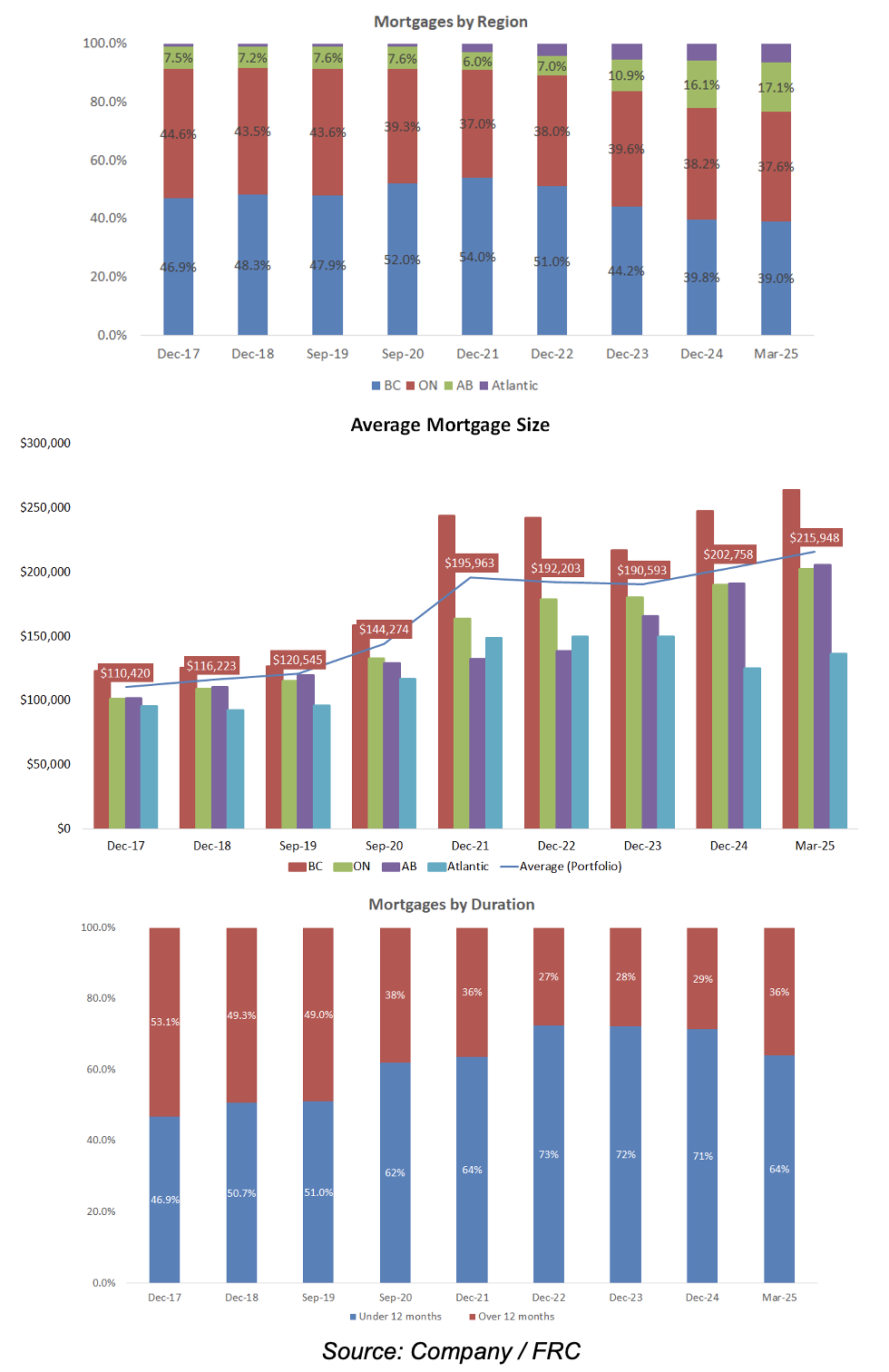
Trimmed B.C. and ON exposure, with a corresponding increase in AB, implying enhanced geographical diversification. The average mortgage size increased 13% to $216k. Duration decreased, but remained lower than the historic average
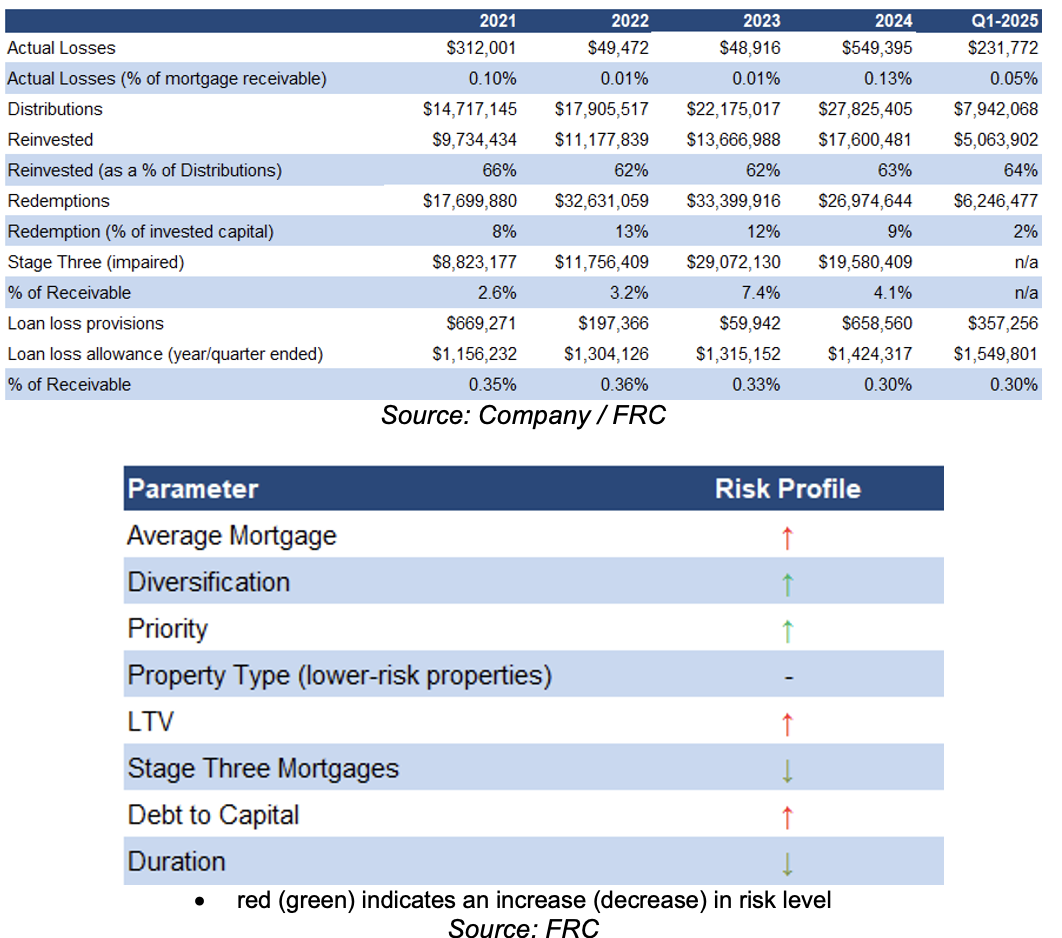
In 2024, stage three mortgages decreased 3.3 pp YoY to 4.1% of mortgages, a notable contrast to the broader MIC sector, which saw a rise in impairments
In summary, we believe the portfolio’s risk profile has decreased (four green vs three red signals), primarily driven by higher first mortgages, and lower stage three mortgages
Financials
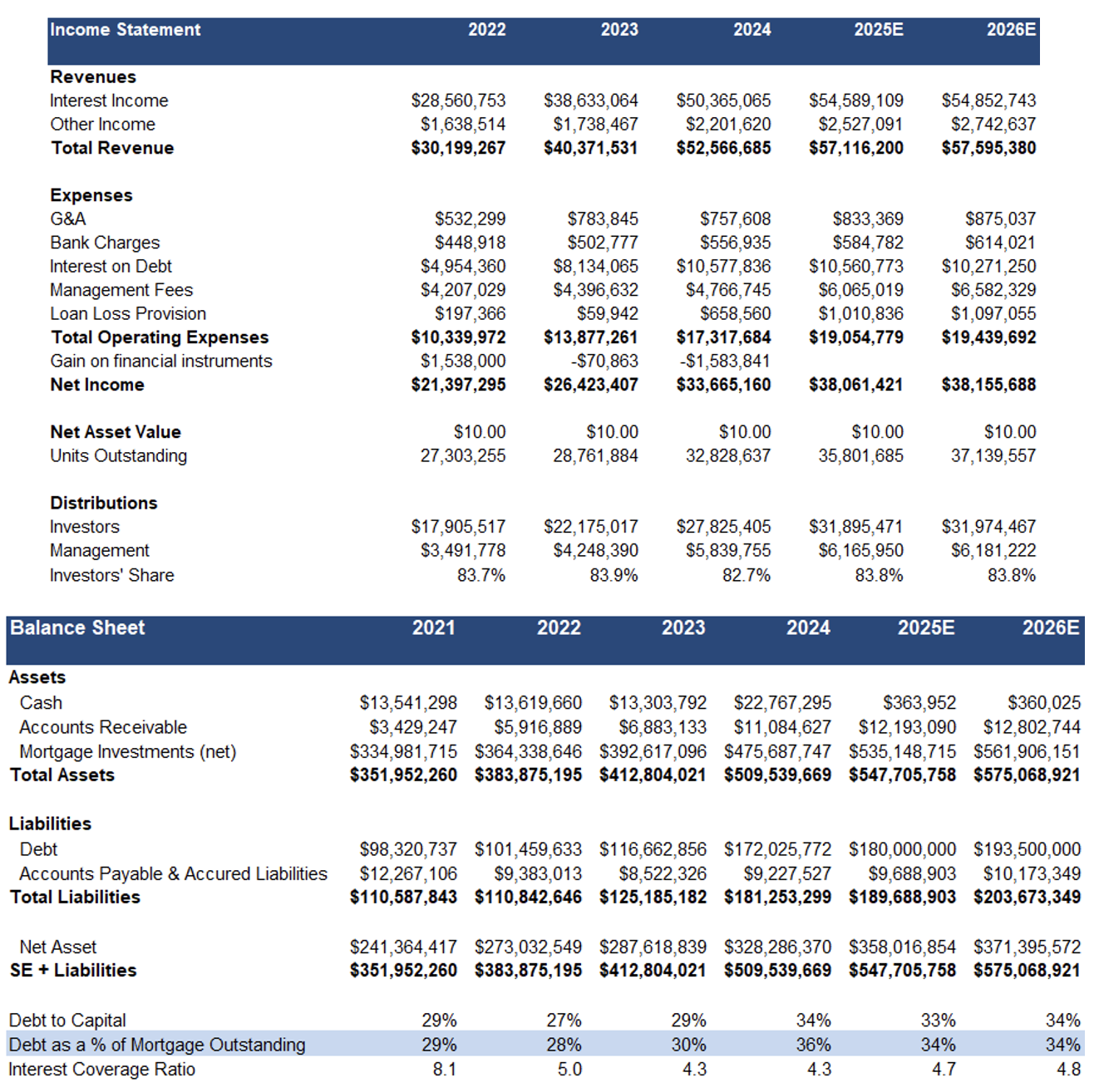
2024 revenue was up 30% YoY, beating our estimate by 16%, driven by higher lending rates and mortgage receivables. Net income was up 27% YoY, beating our estimate by 14%
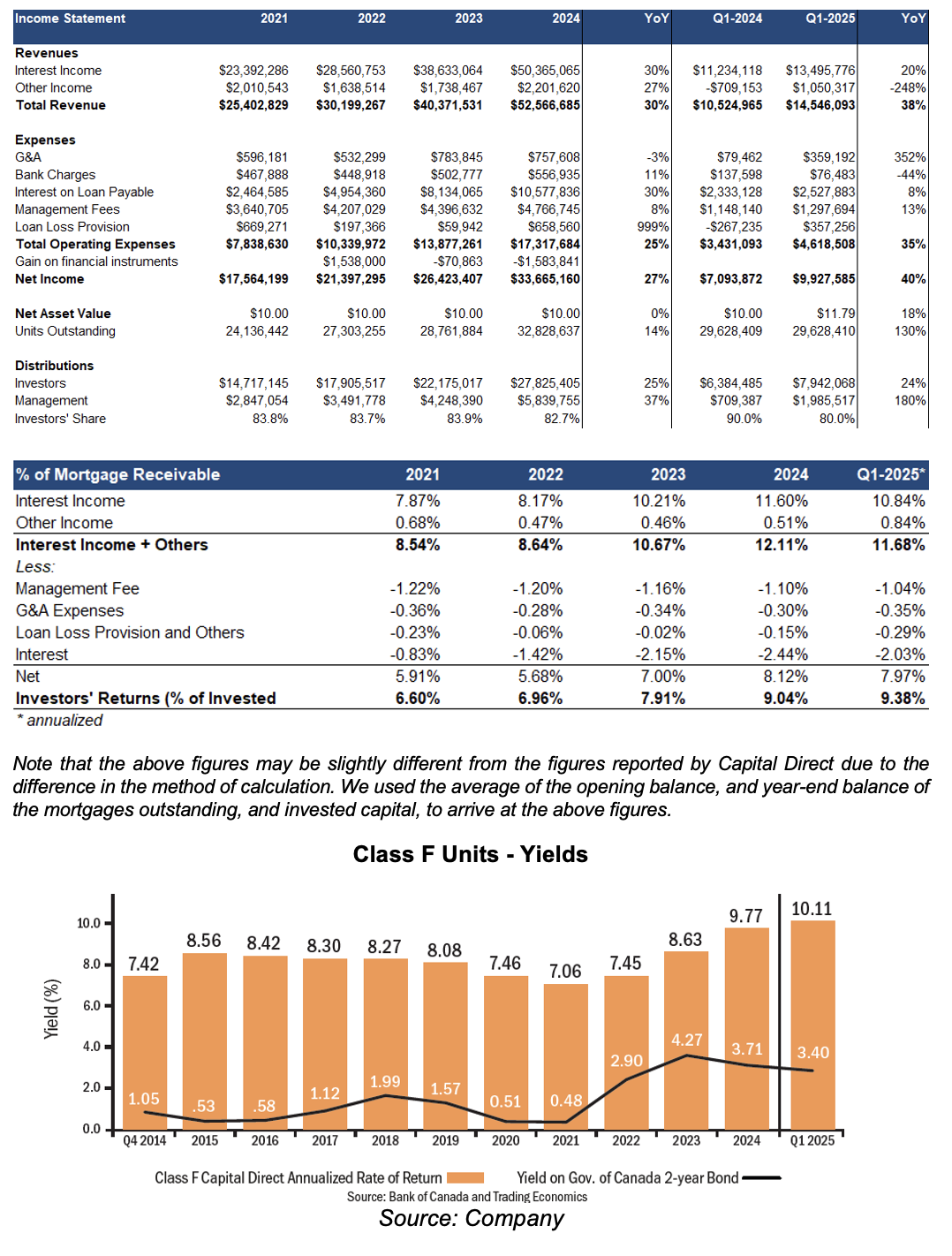
In Q1-2024, revenue and net income were up 38% YoY, and 40% YoY, respectively. The yield on class F units increased from 8.63% in 2023, to 9.77% in 2024 (our forecast was 9.35%), and to 10.11% in Q1-2025
Units Outstanding and Ownership

35M units outstanding at the end of Q1-2025, up 18% YoY
FRC Projections and Rating
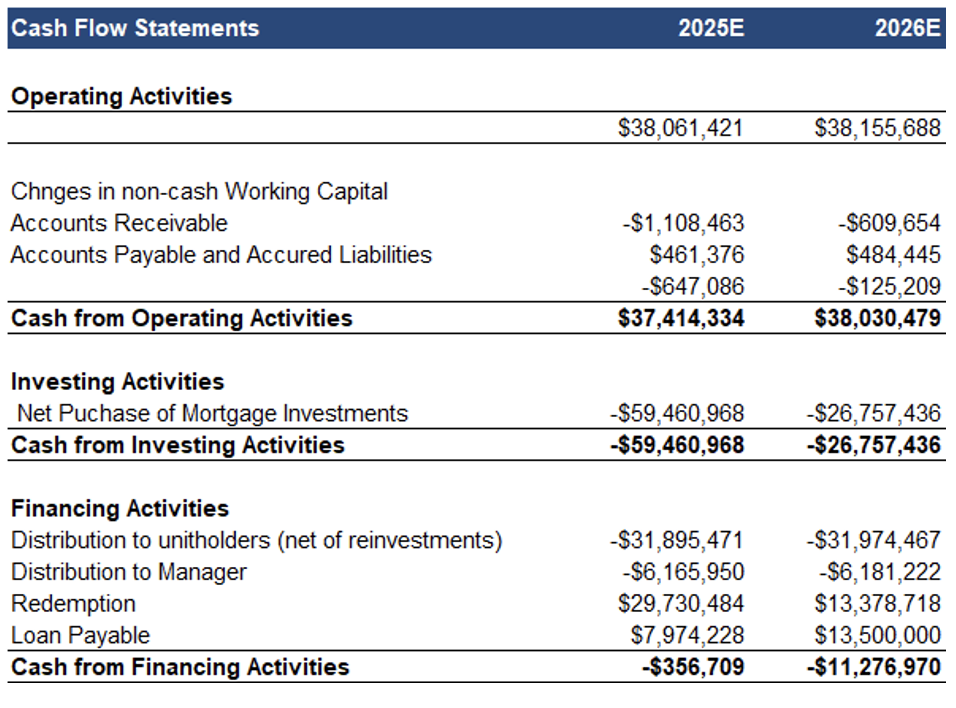
With rates trending downward, we foresee yields declining in 2025 and 2026. We are projecting yields of 9.3% in 2025, and 8.8% in 2026
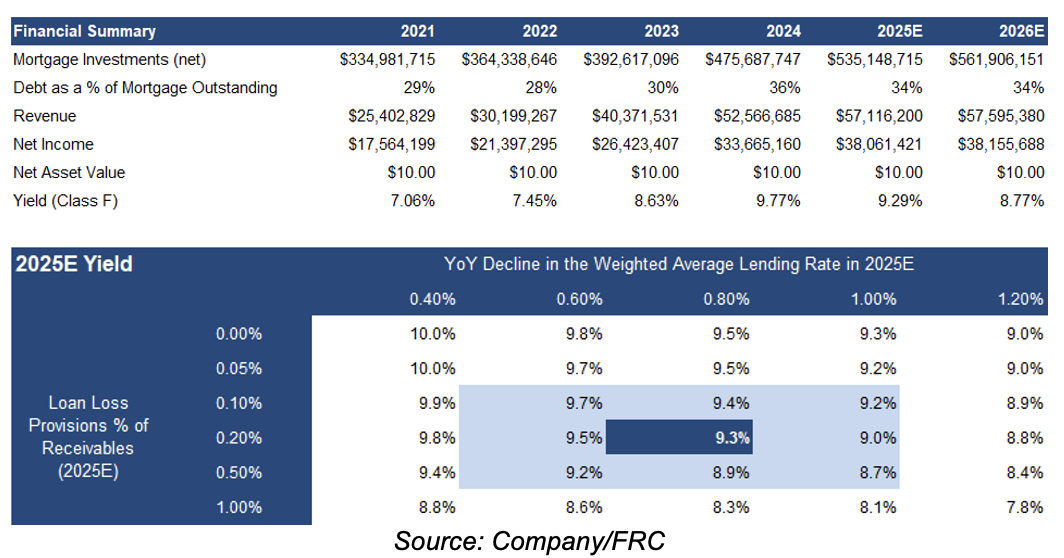
Our estimate for the 2025 yield varies between 8.7% and 9.7%, as loan loss provisions and lending rates vary
We find high-yielding funds, like Capital Direct, increasingly attractive in the current declining rate environment. This is because MIC lending rates are less elastic, meaning their yields tend to decline less in a falling rate environment, and rise more slowly in a rising rate environment.
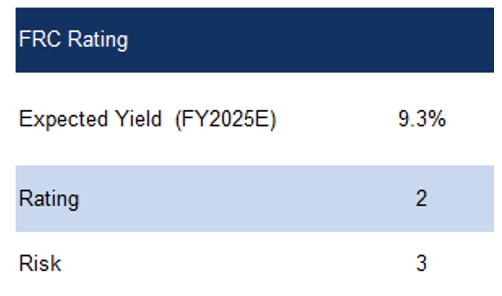
We believe the MIE has demonstrated its ability to deliver strong yields, while reducing portfolio risk by increasing exposure to first mortgages, and lowering impaired mortgages. As a result, we are upgrading our overall rating from 2- to 2, while keeping the risk rating unchanged at 3.
Risks
APPENDIX