
Disclosure: CMI MIC Funds has paid FRC a fee for research coverage and distribution of reports. See last page for other important disclosures, rating, and risk definitions.
The analyst’s rating and fair value are one click away. Free FRC account, no credit card.
Already have an account?
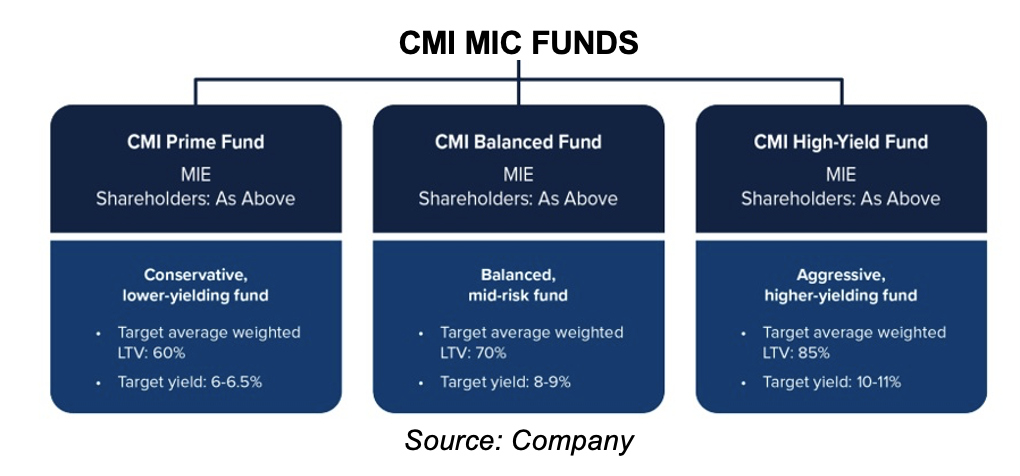
Short-term loans secured by real estate. Management runs three funds totaling $320M in assets under management. CMI High-Yield has the highest risk profile among the funds under management
The following table shows how CMI’s portfolio compares to that of other MICs (with AUM of $100M+) focused on single-family residential units.
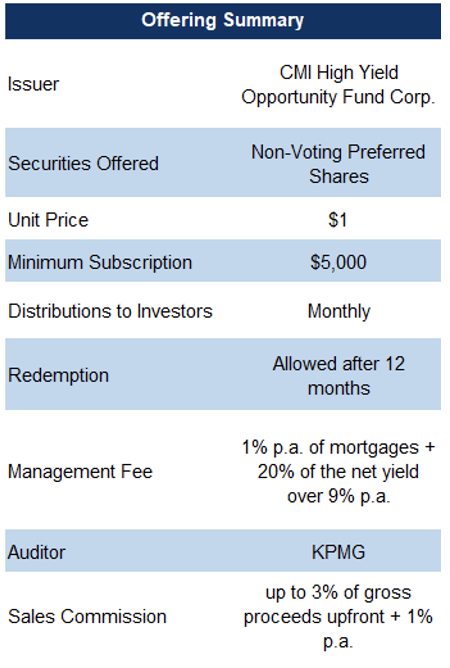
The manager charges a management fee of 1% p.a. on mortgages, along with a performance fee of 20% on net yields exceeding 9% p.a. We believe CMI’s management fees align with comparables
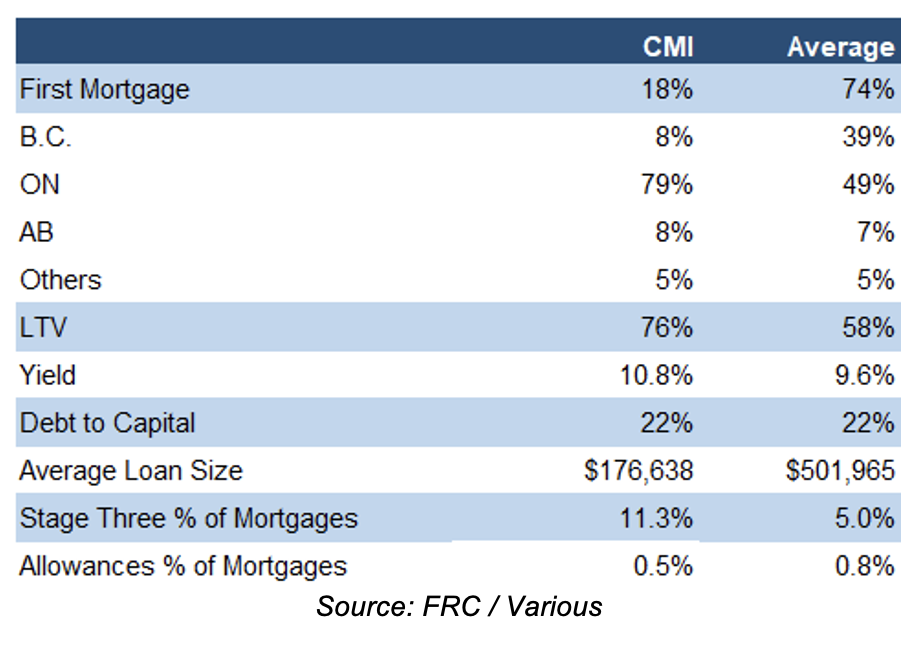
We note that it is not uncommon for MICs with a higher-risk tolerance to charge performance fees. CMI has a higher-than-average risk profile (primarily due to lower first mortgages, and higher LTV), and higher yield
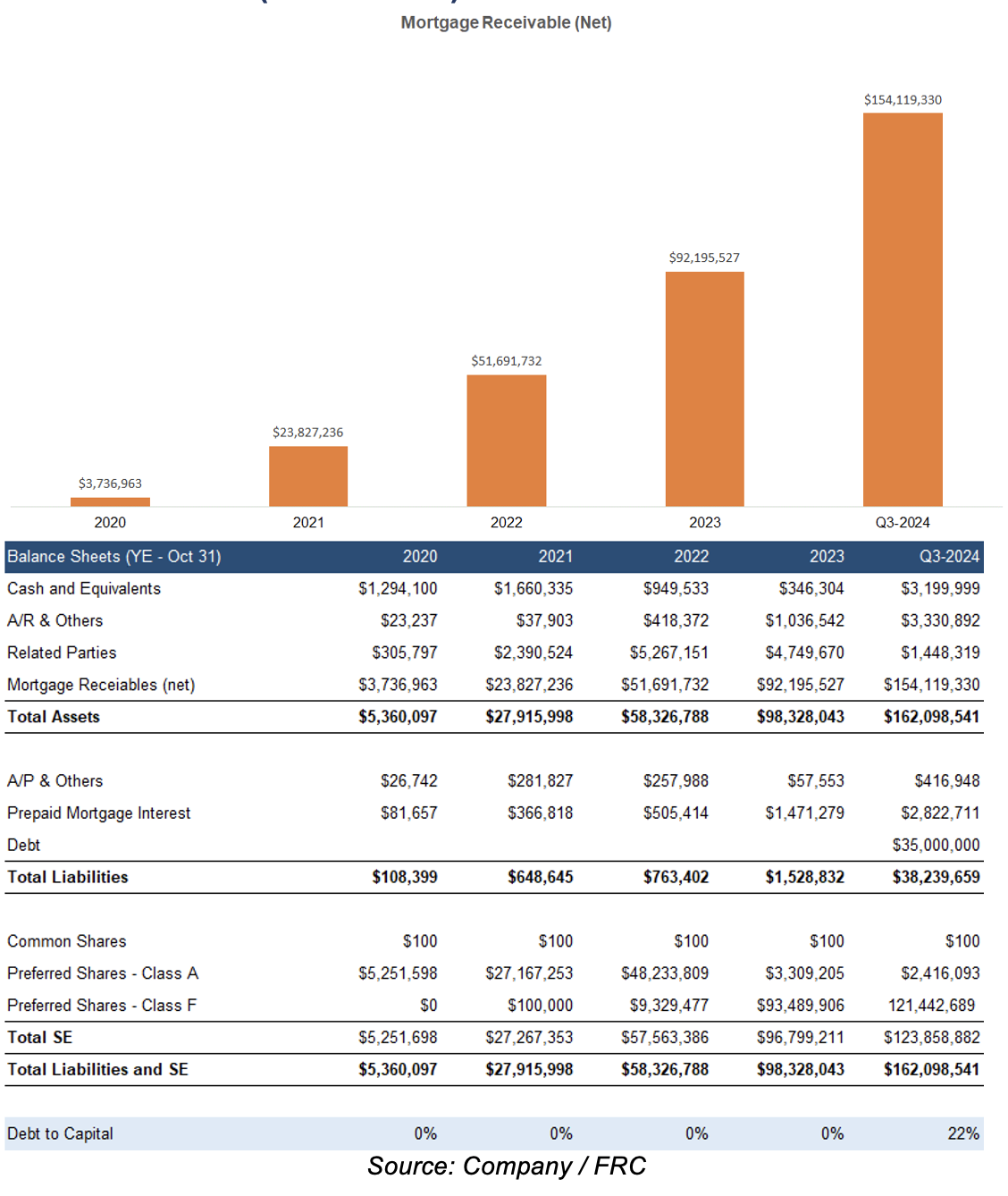
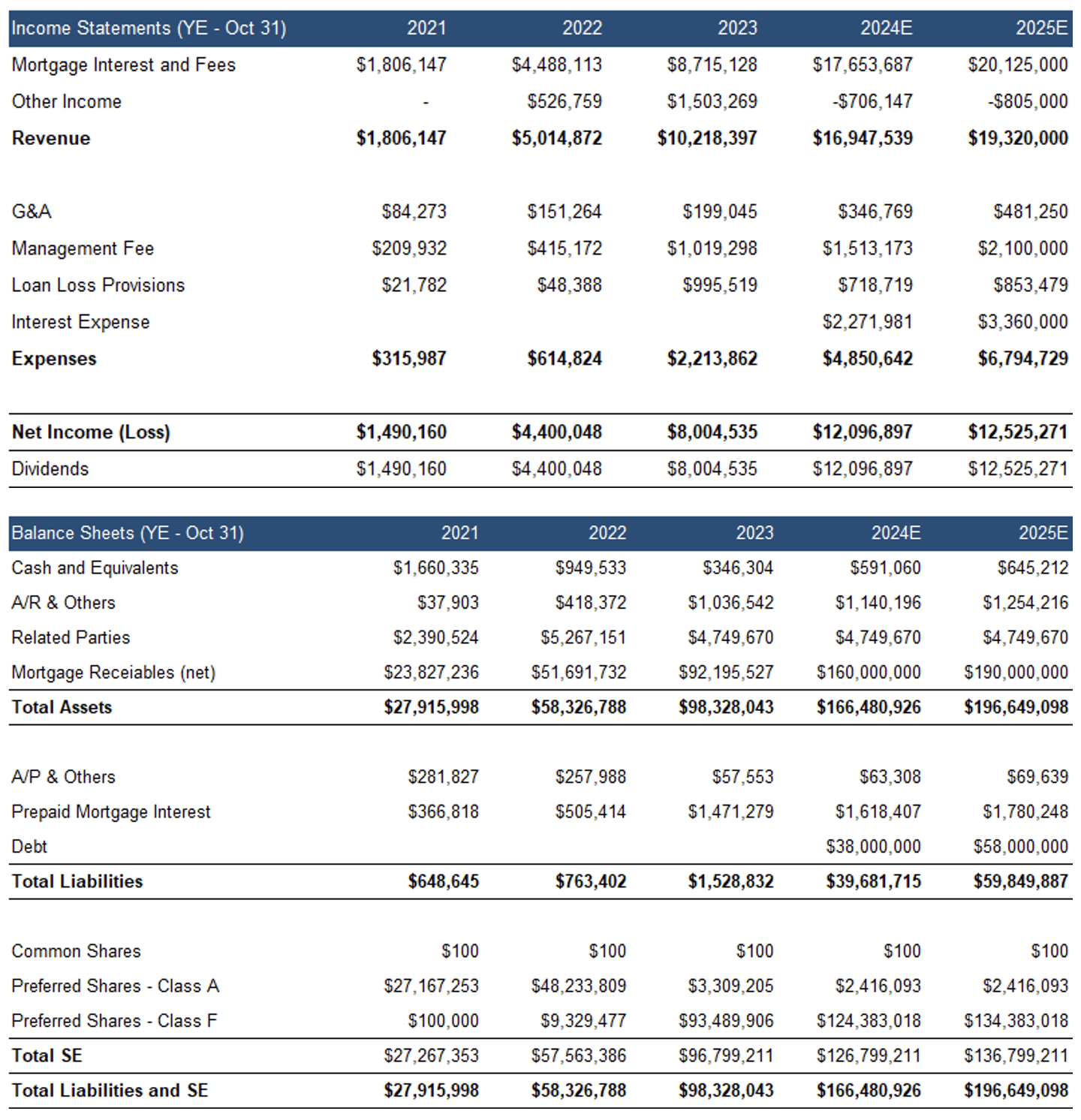
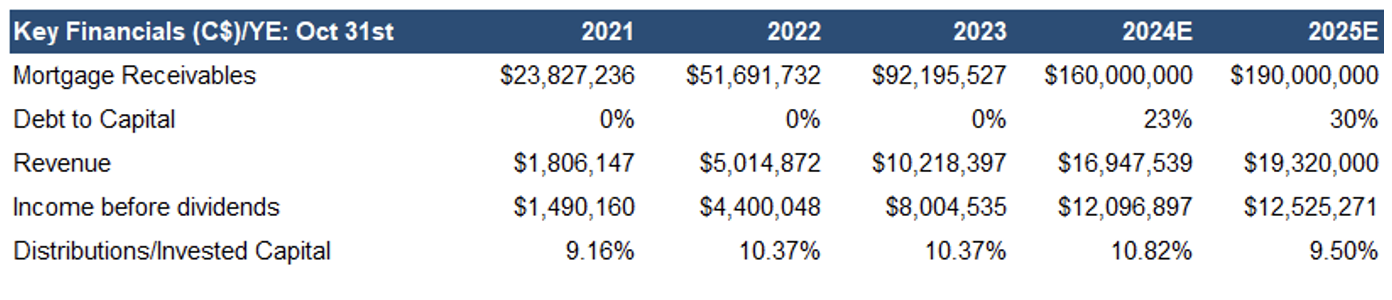
In FY2024 (9M), mortgage receivables were up 67% YTD to $154M – the highest in CMI’s history. Debt/capital is in line with the sector average
The MIC offers two classes of preferred shares:
In FY2023, originations were up 49% YoY; repayments were up 52% YoY. As of July 2024, first mortgages accounted for 18% of the portfolio
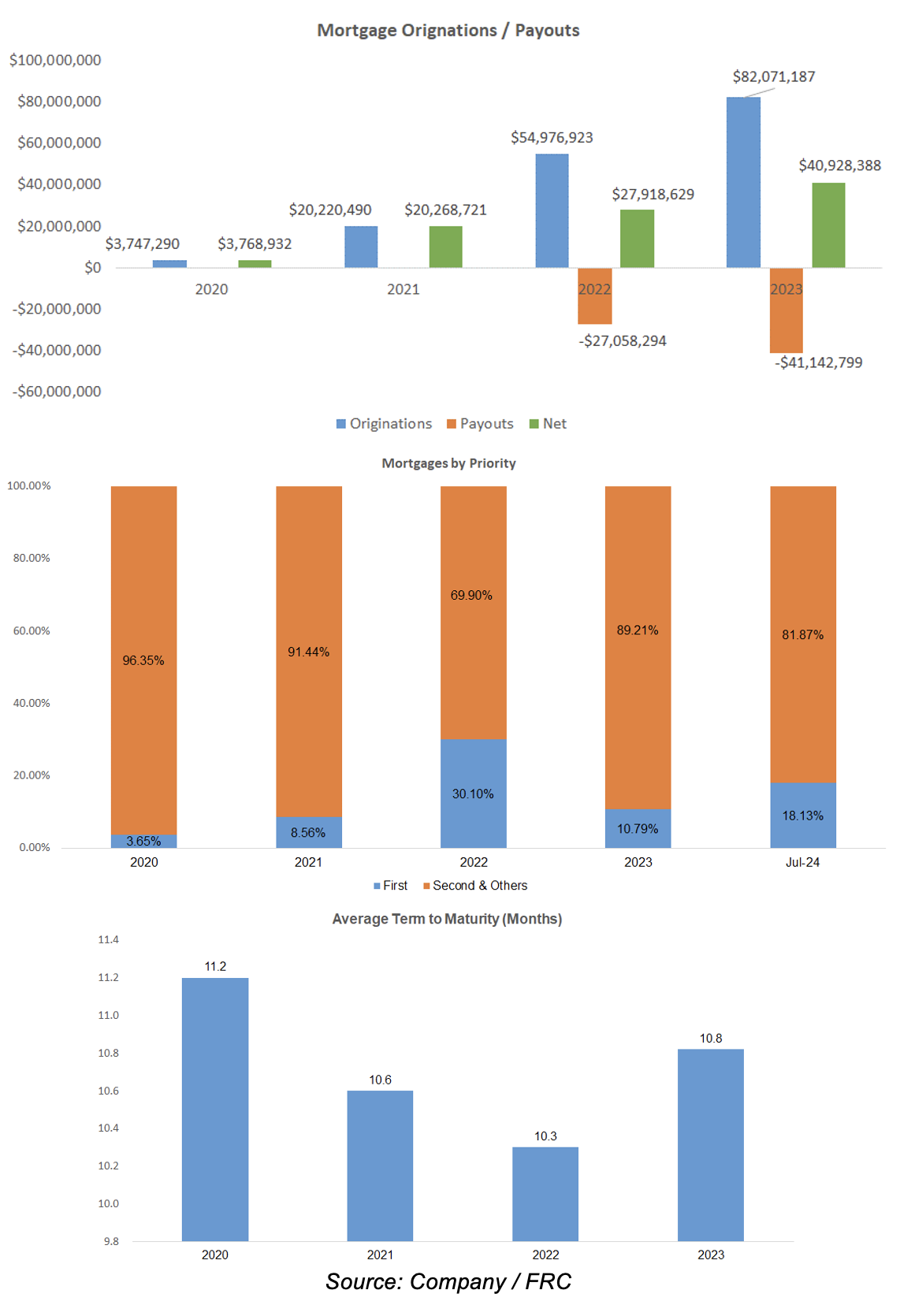
Management aims to increase this to 25%. The average term has ranged between 10 and 12 months
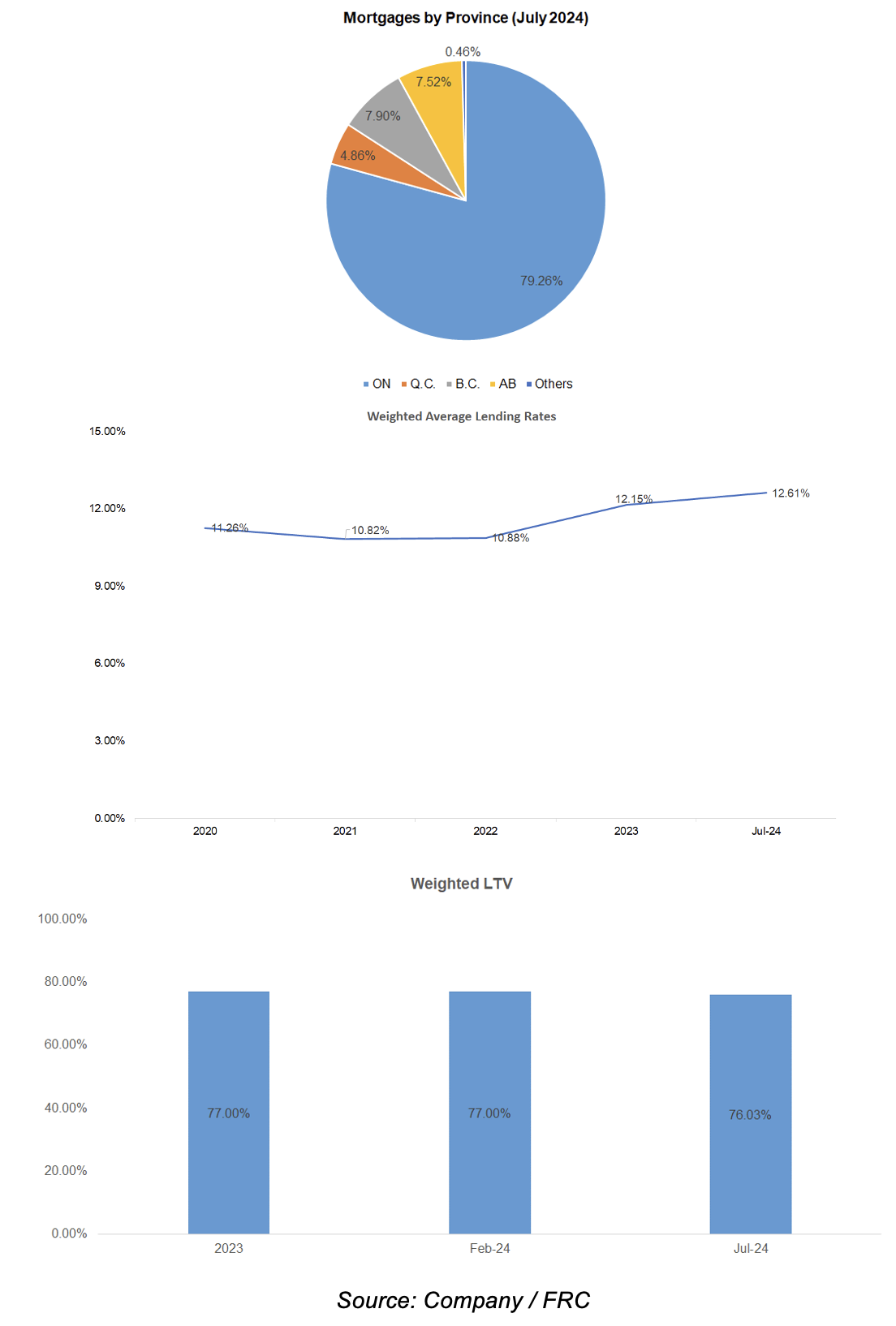
As of July 2024, 79.3% of mortgages were in ON, followed by B.C. (7.9%), and AB (7.5%). Lending rates have tracked market rates. The average LTV has remained relatively flat
Although the MIC reported an unusually high level of stage three (impaired) mortgages at the end of FY2023 (October 2023), it commendably reduced this by 4 pp to 11% of the portfolio by the end of Q3-2024.
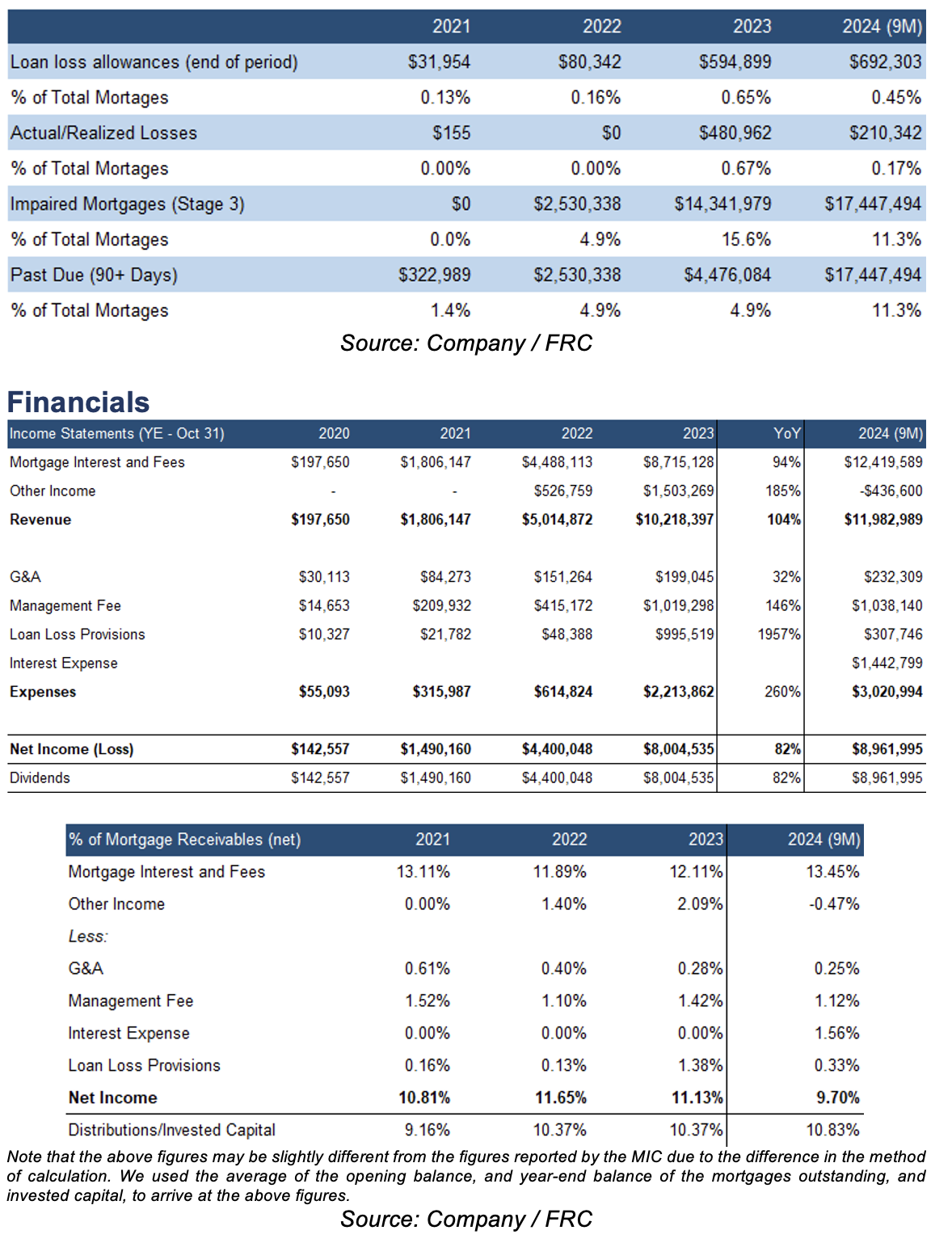
In FY2024 (9M), loan loss allowances were reduced by 0.2 pp to 0.45% of the portfolio. FY2023 revenue was up 104% YoY, and dividends were up 82% YoY, amid higher mortgage receivables, and lending rates
Distributions / Invested Capital increased from 10.4% in FY2023, to 10.8% in FY2024 (9M)
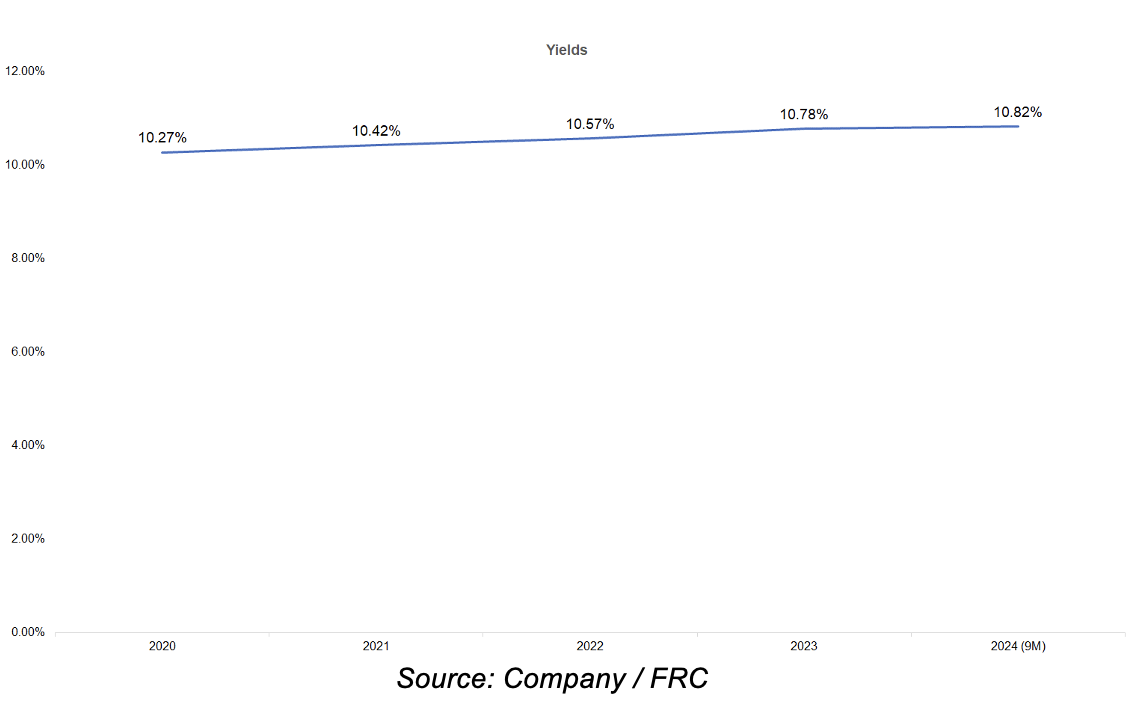
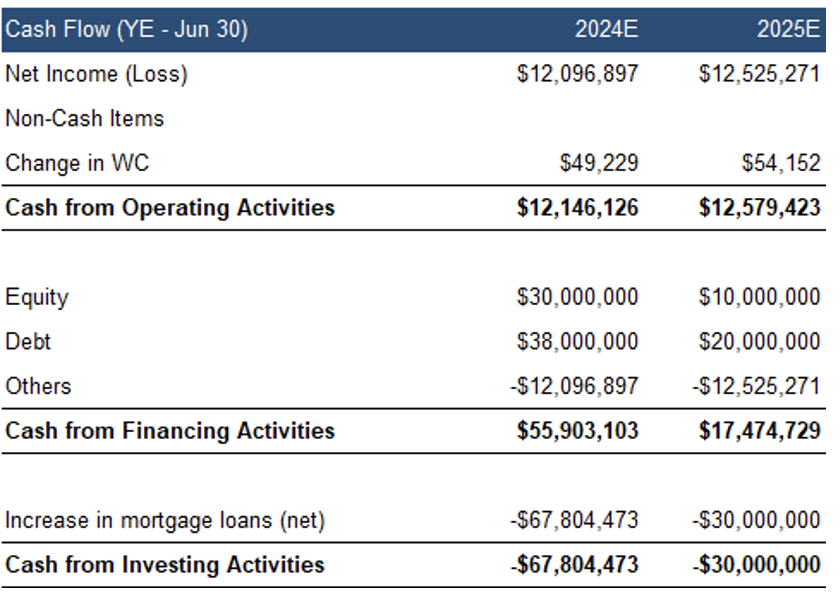
We are projecting a yield of 10.8% in FY2024, and 9.5% in FY2025. With rates expected to trend downward, we foresee yields peaking in FY2024 and then declining in FY2025
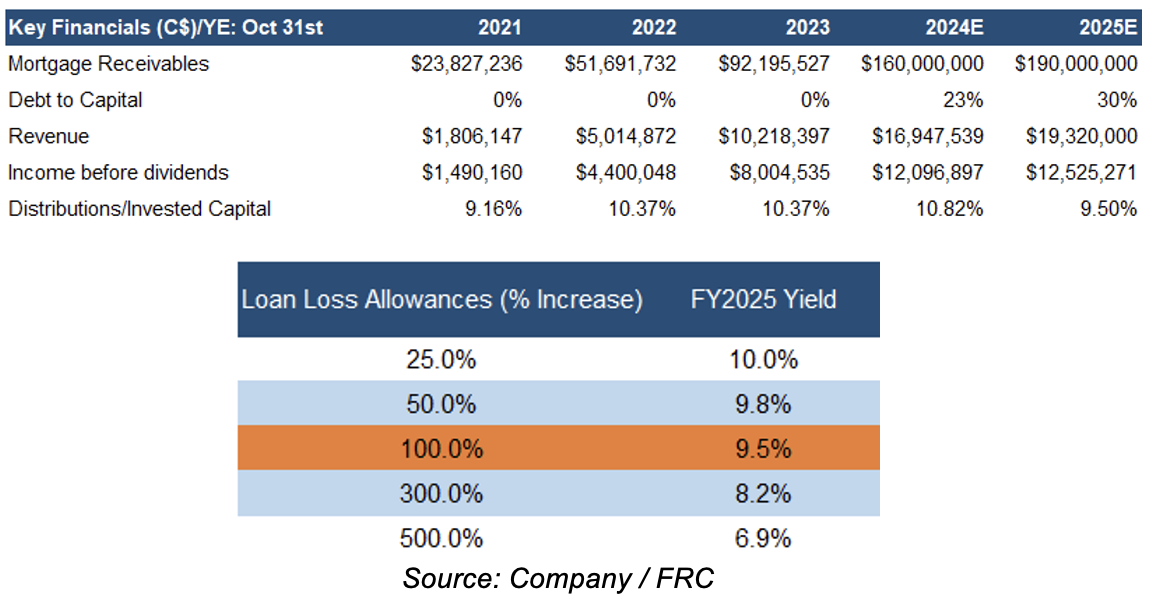
Our estimate for the FY2025 yield varies between 6.9% and 10.0% using various YoY increases in loan loss allowances
We are initiating coverage with an overall rating of 2-, and risk rating of 3. With the Bank of Canada implementing three rate cuts since June 2024, and more expected amid easing inflation, we anticipate a decline in defaults in the coming quarters. In light of these anticipated lower rates, we find high-yielding funds, such as CMI, increasingly attractive.
We believe the MIC is exposed to the following key risks (not exhaustive):
APPENDIX