

Disclosure: Energy Vault Holdings, Inc. has paid FRC a fee for research coverage and distribution of reports. This fee creates a potential conflict of interest which readers should consider. See last page for other important disclosures, rating, and risk definitions.
Price and Volume (1-year)
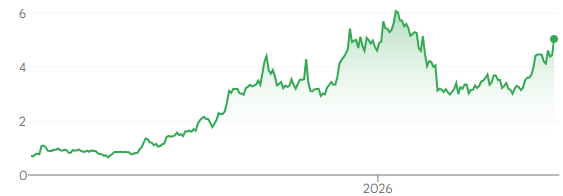
* Global X U.S. Electrification ETF

* Energy Vault Holdings has paid FRC a fee for research coverage and distribution of reports. See last page for other important disclosures, rating, and risk definitions. All figures in US$ unless otherwise specified.
In Q1-2026, the company expanded its portfolio with a 175 MW project in Texas, and a 350 MW portfolio in Japan
Both projects are designed to support grid stability, and renewable integration, with completion expected in 2027–2028
NRGV now manages 1,066 MW of assets, up 461% YoY, with 66 MW operational, and the remainder expected online within two to three years
Asset Vault Portfolio
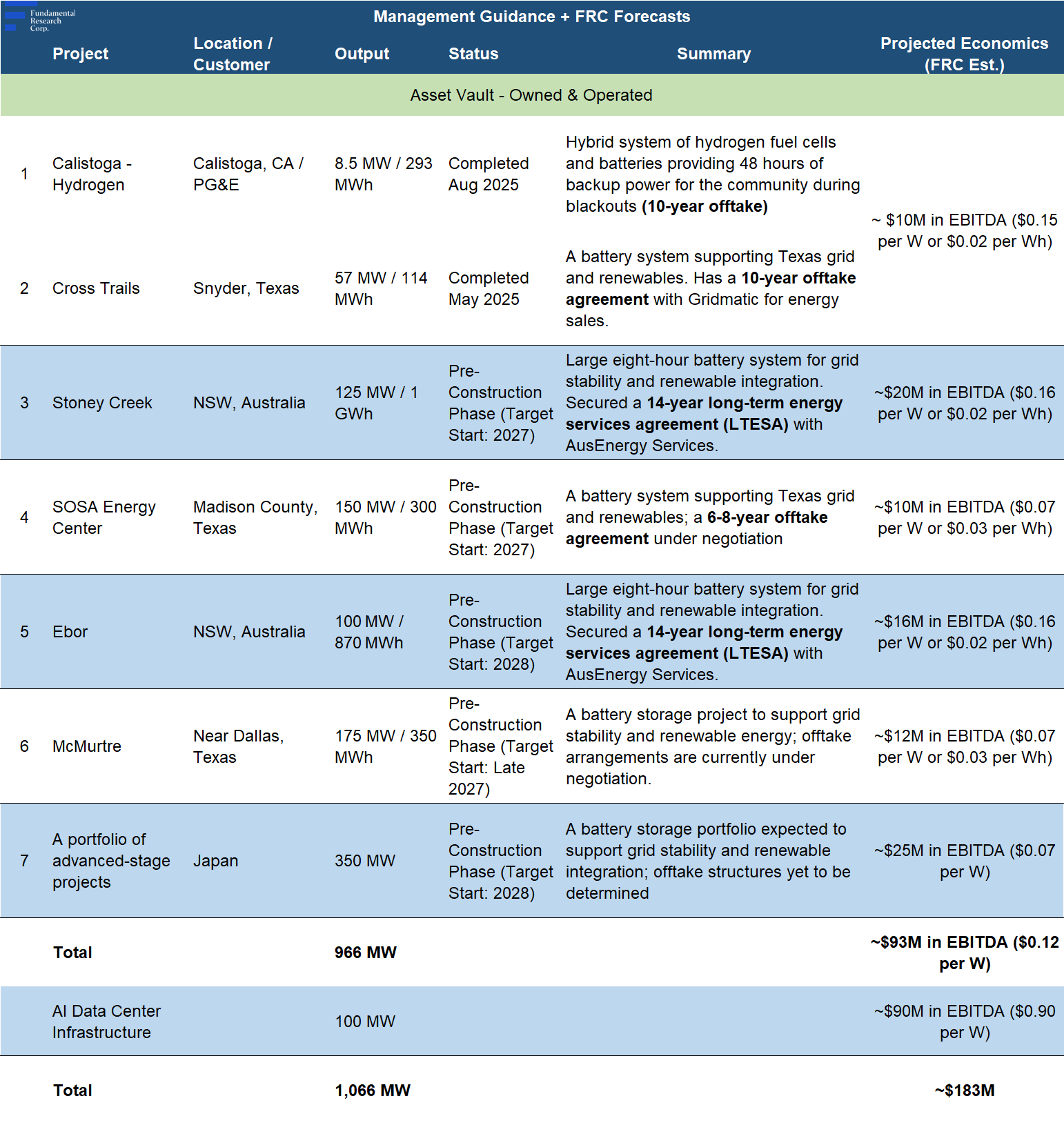
* Project economics depend on storage duration; duration refers to how long a system can supply power; longer-duration projects earn more EBITDA per MW (e.g., Sosa: two-hour → $0.07/W, Stoney Creek: eight-hour → $0.16/W)
* CAPEX to build a system is ~$0.30/Wh in the U.S., and ~$0.20/Wh outside the U.S.
Source: Company / FRC
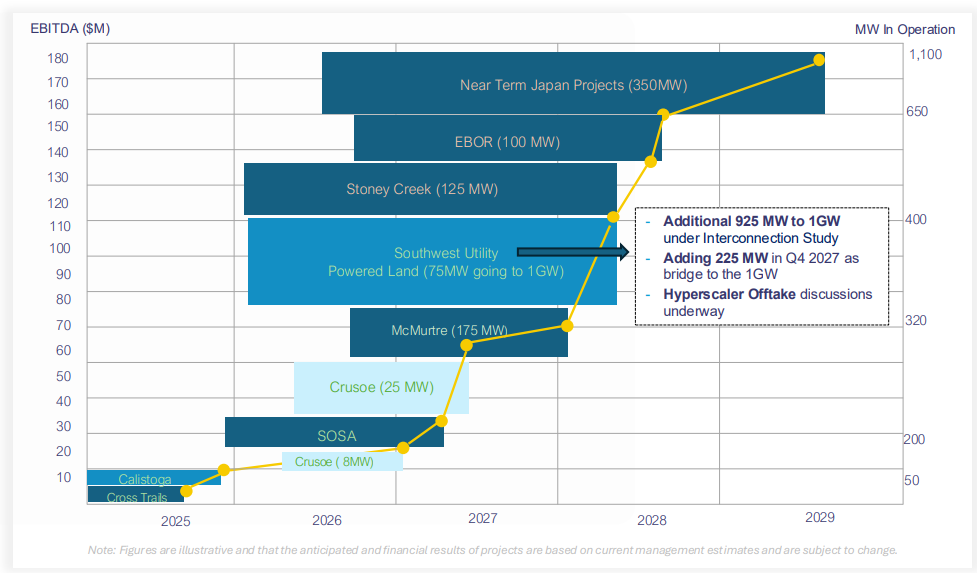
Management projects ~$180M in annual EBITDA at full operation, with a long-term target of $1.8B+ from a ~4 GW portfolio by 2030
Projected Timelines
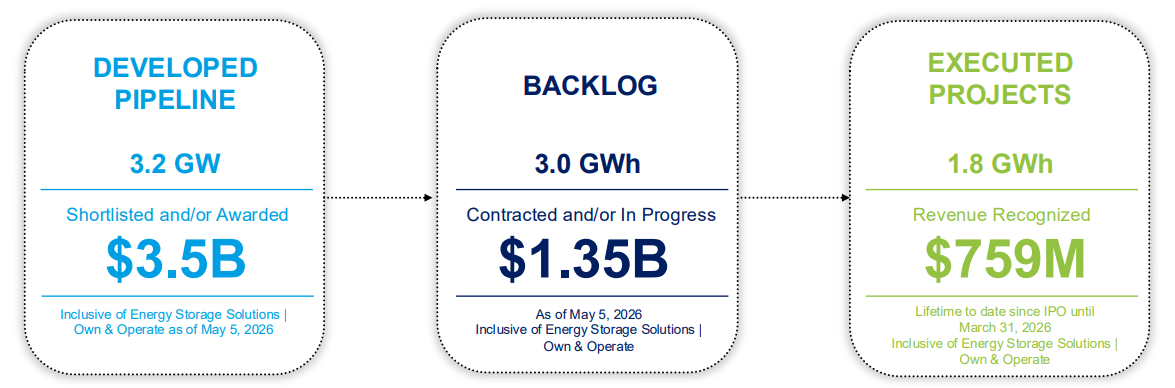
By the end of Q1-2026, NRGV had $1.35B in contracted backlog (Q4: $1.30B), and a $3.50B pipeline (Q4: $3.00B), with ~80% from its own projects, and the remainder from third-party deployments
Project Pipeline
Source: FRC
Expanding into Digital Infrastructure
The current portfolio includes a new 100 MW AI data center infrastructure project. While the rest of the portfolio consists of energy storage assets, this project integrates energy generation , and storage to power AI data centers.
Higher-margin expansion beyond core energy storage assets
This marks the company’s entry into the digital infrastructure space , which includes the energy and computing backbone for AI, cloud computing, and data centers. It is one of the fastest-growing , and most in-demand infrastructure segments, driven by accelerating AI adoption, rising cloud workloads, and increasing power intensity requirements.
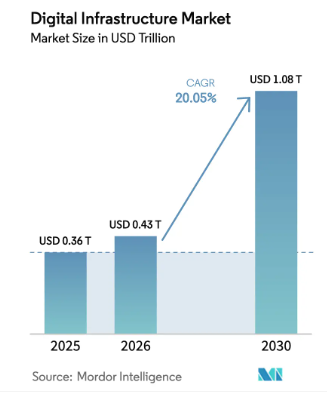
Forecast to grow at a CAGR of 21% from 20226 to 2030
Given its broader scope, such projects carry significantly higher margins (~$1/W in EBITDA vs ~$0.10/W for standalone storage). The company is increasingly focused on scaling this segment alongside its storage business. We believe this new business line is strategically important, driven by rising demand for AI-driven digital infrastructure, materially higher margins, and stronger market sentiment, with higher EBITDA multiples than traditional storage assets.
Financials
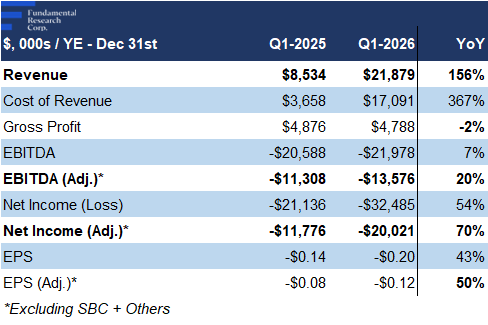
Source: FRC / Company
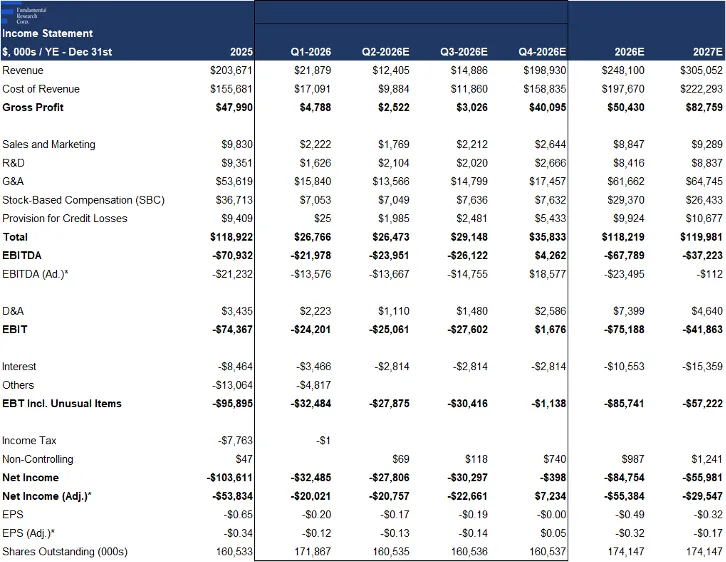
Q1 revenue, dominated by third-party deployments, was up 156% YoY, beating our estimate by 47%
Quarterly revenue remains difficult to forecast due to variability in project completion timing
We are maintaining our full-year forecast; similar to last year, we expect revenue to remain heavily weighted toward Q4
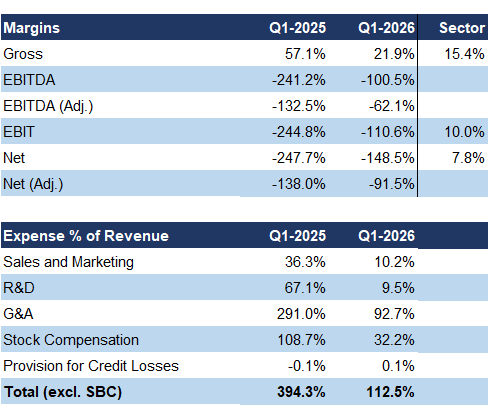
Gross margins declined significantly YoY, normalizing to levels consistent with third-party deployments. Q1-2025 was abnormally elevated due to certain non-recurring IP licensing revenue with 100% gross margins
Operating expenses increased 22% YoY, and were 4% higher than expected
Despite higher revenue, elevated operating expenses led to a decline in adjusted EPS from ($0.08) to ($0.12), missing our estimate of ($0.10)
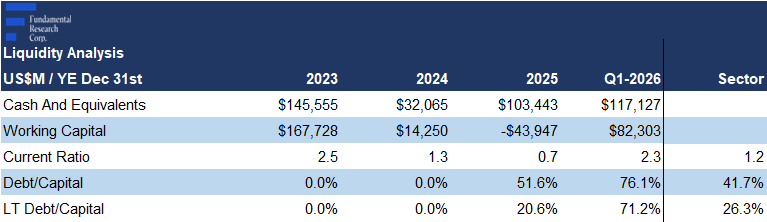
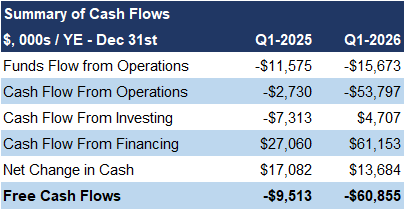
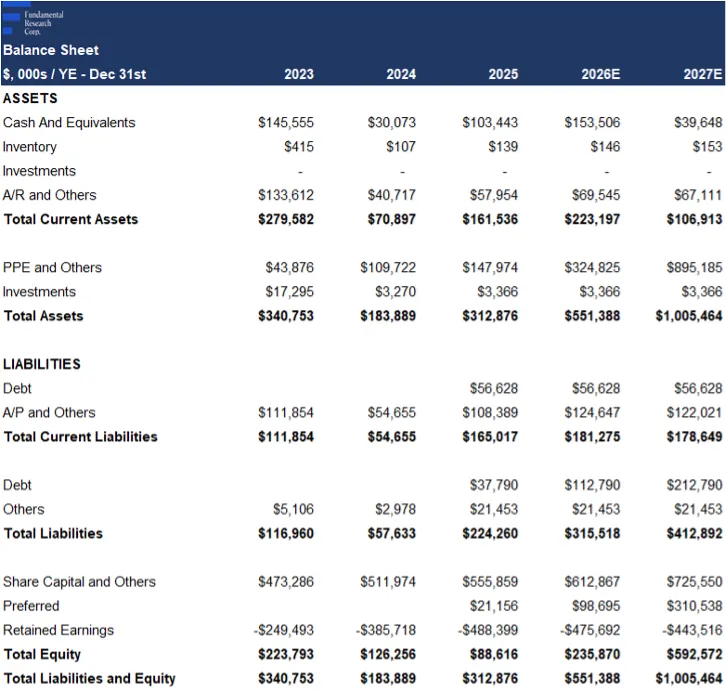
At the end of Q1, the company held $117M in cash, up 13% QoQ
Source: FRC / Company
Debt-to-capital is elevated due to a relatively low book value of equity following several years of losses
FRC Valuation and Rating
Source: FRC
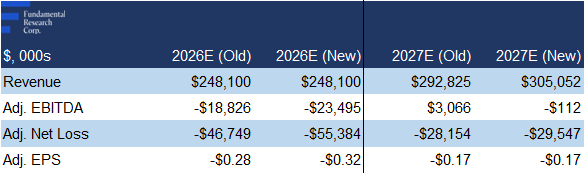
We are lowering our 2026 EPS forecast due to higher-than-expected operating and deprecation expenses, while raising our long-term (2028+) revenue and EPS forecasts following the recent project acquisitions, and entry into the digital infrastructure space
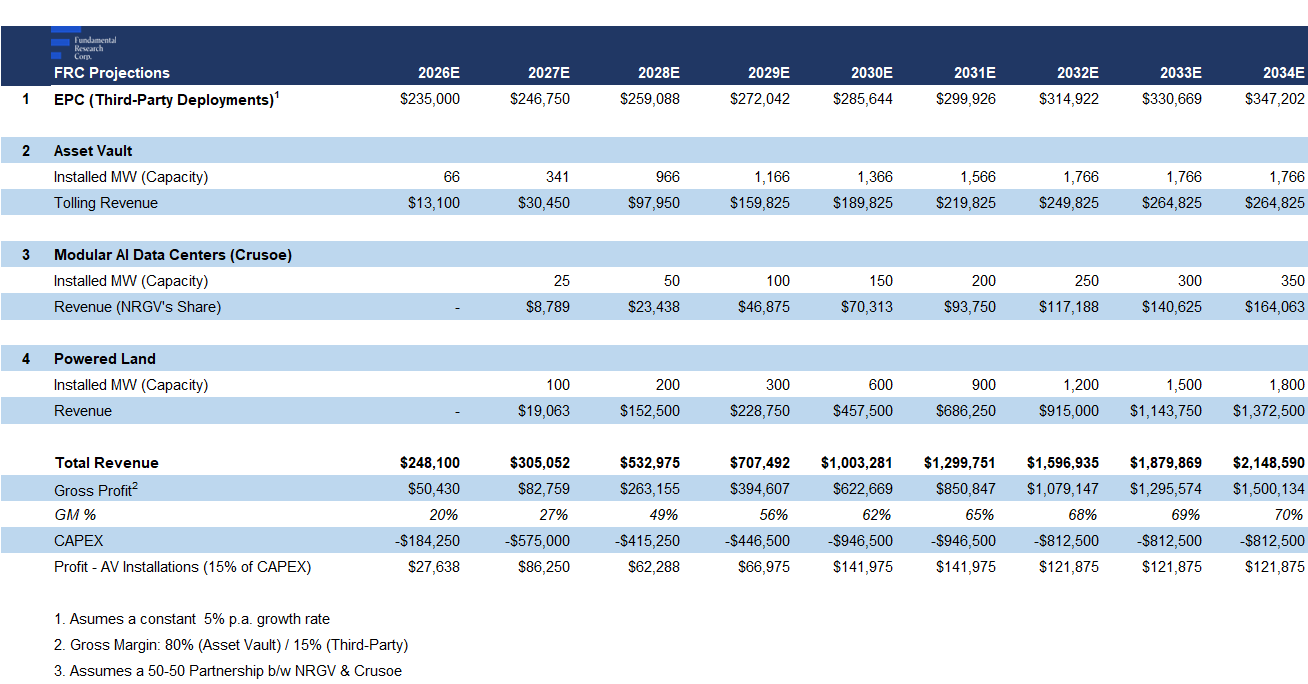
We now expect project acquisitions to scale total capacity to ~1.6 GW by 2029 (previously ~1.5 GW), and to ~4 GW by 2034 (previously ~2.4 GW)
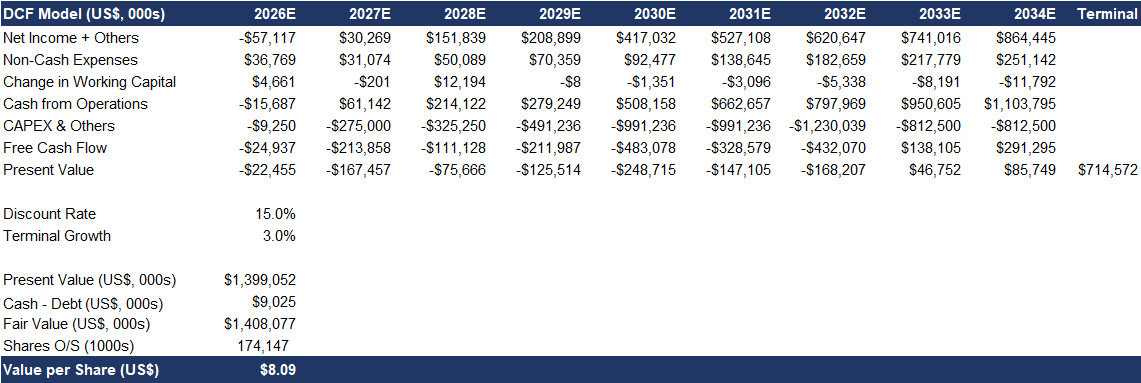
To account for execution risk, we are raising our discount rate from 10% to 15%
Source: FRC
As a result of the above changes, our DCF valuation increased from $6.53 to $8.09/share
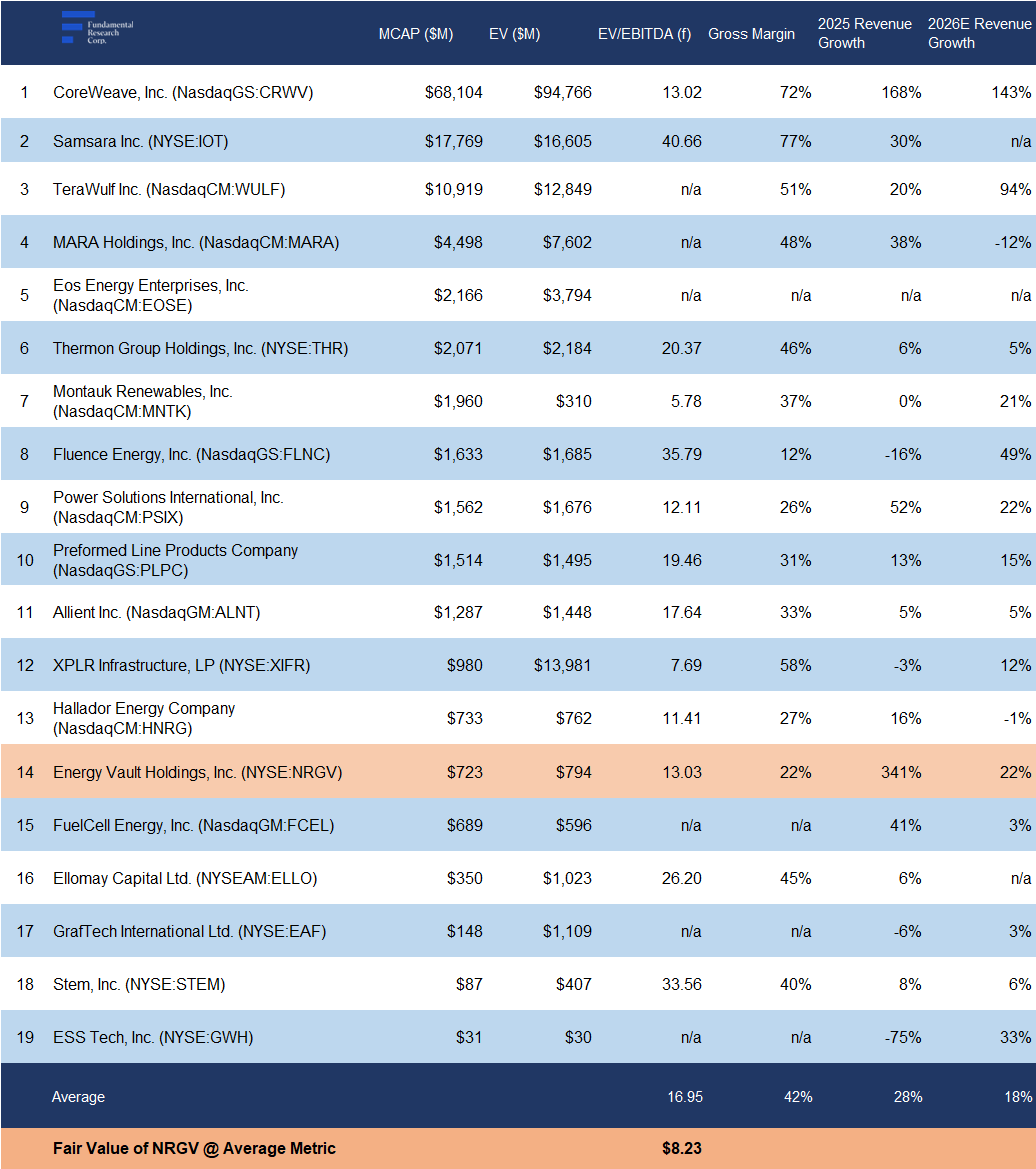
*We use the present value of our 2029 EBITDA estimate on NRGV in this calculation.
Source: FRC / S&P Capital IQ
Given the company’s entry into the digital infrastructure space, we have expanded our comparables set to include digital infrastructure companies
The average forward EV/EBITDA of comparables increased from 13x to 17x, driven by the inclusion of digital infrastructure companies, which generally trade at higher multiples, and a rise in multiples across existing energy storage and technology comparables
NRGV is currently trading at 13x, a 23% discount
Applying the sector multiple implies a comparable valuation of $8.23/share (previously $5.57/share)
We are reiterating our BUY rating, and adjusting our fair value estimate from $6.05 to $8.15/share (the average of our DCF and comparables valuations). NRGV delivered a quarter of strong top-line growth, and continued pipeline expansion. We believe the company’s accelerating global buildout, entry into digital infrastructure, and discounted valuation s position the stock favourably for those seeking exposure to high-growth energy and AI infrastructure markets.
Risks
We believe the company is exposed to the following key risks (not exhaustive):
While the company operates in a relatively low-risk market with potential for long-term steady cash flow, we believe its early-stage deployment of energy storage projects warrants a risk rating of 4 (Speculative)
APPENDIX
Discussion
Comments reflect the views of individual users, not FRC. Nothing posted in the comments section — by users or otherwise — should be taken as investment advice.