

Disclosure:
Price and Volume (1-year)
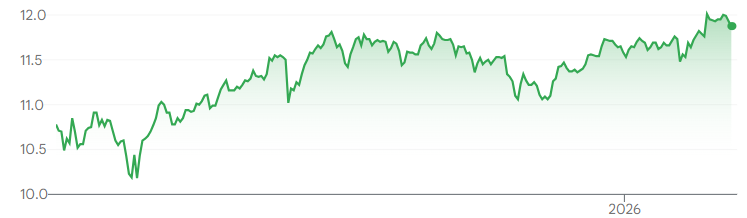
* Atrium Mortgage Investment Corporation has paid FRC a fee for research coverage and distribution of reports. See last page for other important disclosures, rating, and risk definitions. All figures in C$ unless otherwise stated.
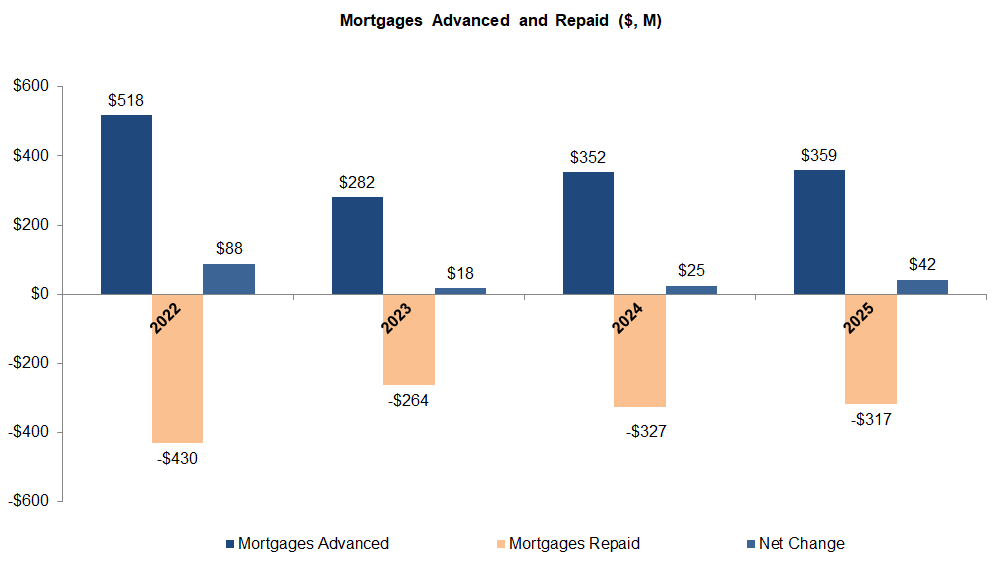
Loan advances rose 2% YoY, while repayments were down 3% YoY, resulting in net mortgages outstanding increasing 3% YoY to $892M vs our forecast of $900M
Portfolio Update
First mortgages and LTV declined slightly
Duration rose due to turnover
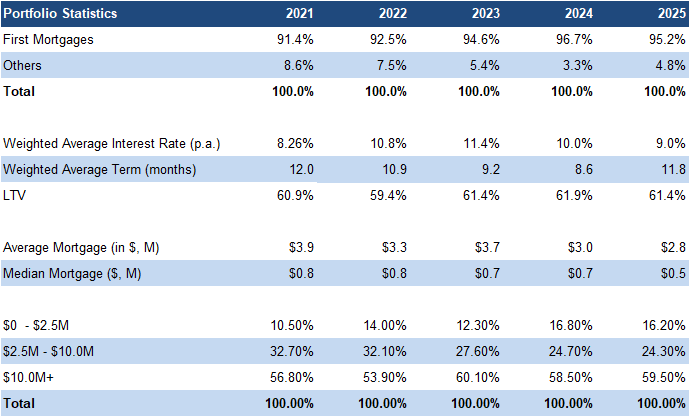
Lending rates eased following BoC rate cuts; since peaking in 2023, lending rates are down 2.40 pp vs a 2.75 pp decline in the benchmark rate, indicating MIC lending rates are less elastic
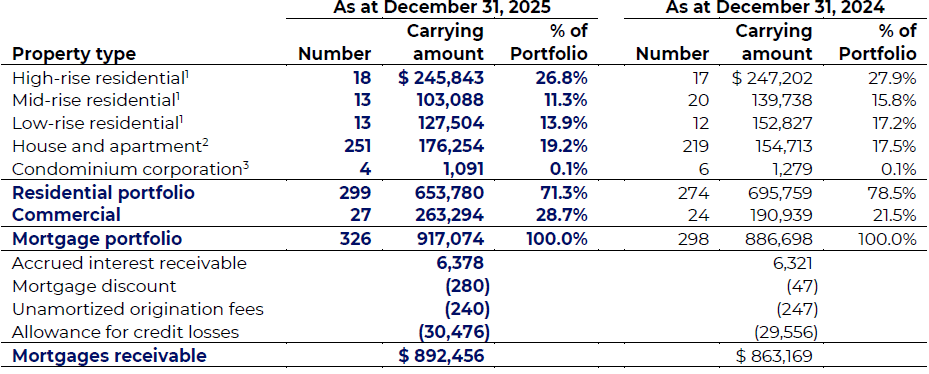
Mortgages by Property Type
Source: Company Data / FRC
Increased exposure to revenue generating commercial properties, and already built single-family units, while scaling back on residential development projects, implying a lower risk profile
Mortgages by Region
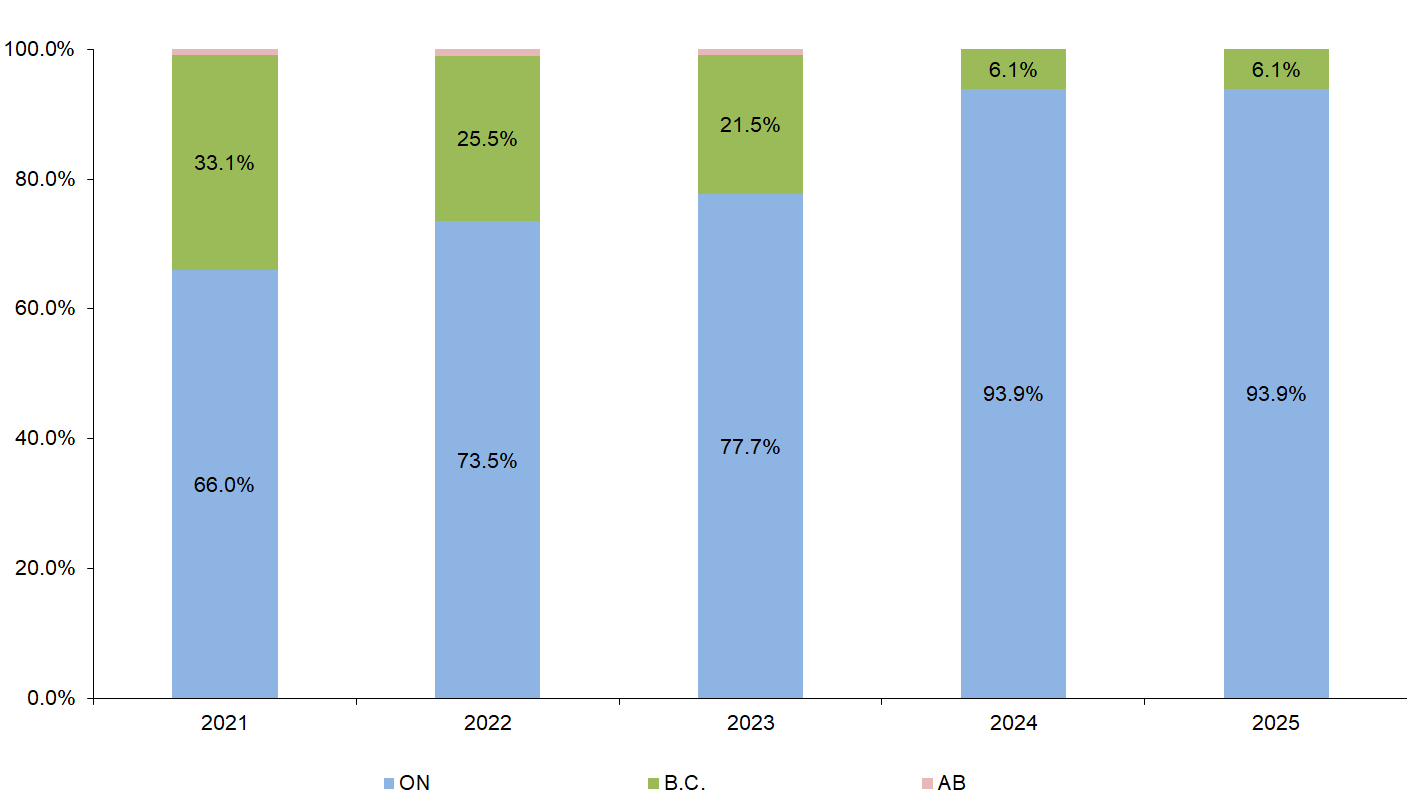
No changes in provincial exposure
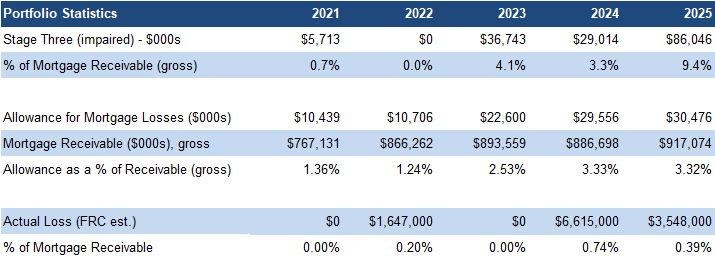
Stage two mortgages (high credit risk, not impaired) plus stage three (impaired) declined 12% QoQ
However, stage three mortgages rose 53% QoQ to 9.4% of total mortgages, driven by a single $31M loan that moved into impairment; management noted on the earnings call that this loan was fully repaid after year-end, which should reduce stage three levels
Source: FRC / Company
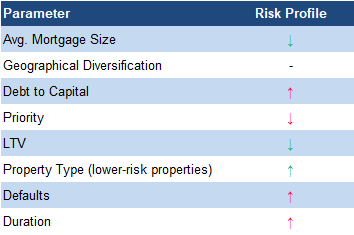
*Red (green) indicates an increase (decrease) in risk level.
Source: FRC
This explains why loan loss allowances remained largely flat QoQ
Overall, we believe the portfolio’s risk profile has edged higher, with four negative indicators versus three positive
Financials
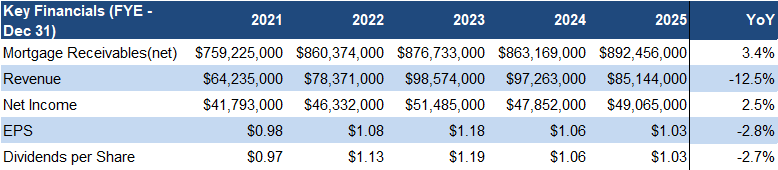
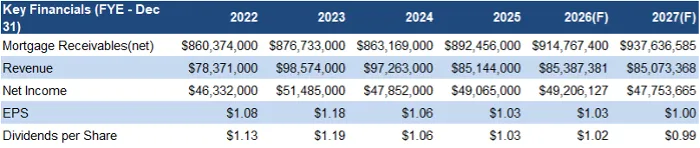
Revenue fell 13% YoY, amid lower lending rates, but beat our estimate by 0.3%
EPS declined 3% YoY, less sharply than revenue, beating our estimate by 3%, supported by lower loan loss provisions
Dividends were down 3% to $1.03/share, 4% above our estimate, reflecting an 8.84% yield
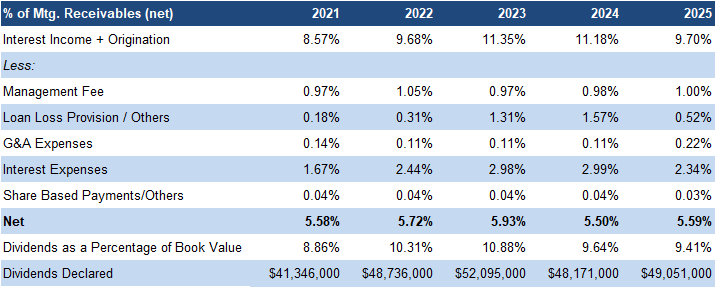
*The calculations in the above table are approximate as we used the average of beginning and end of period mortgage s outstanding.
Annual regular dividends held steady at $0.93/share, reflecting an 8.00% yield
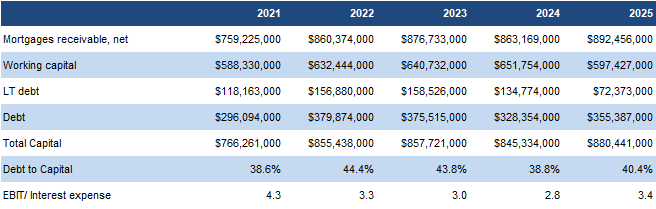
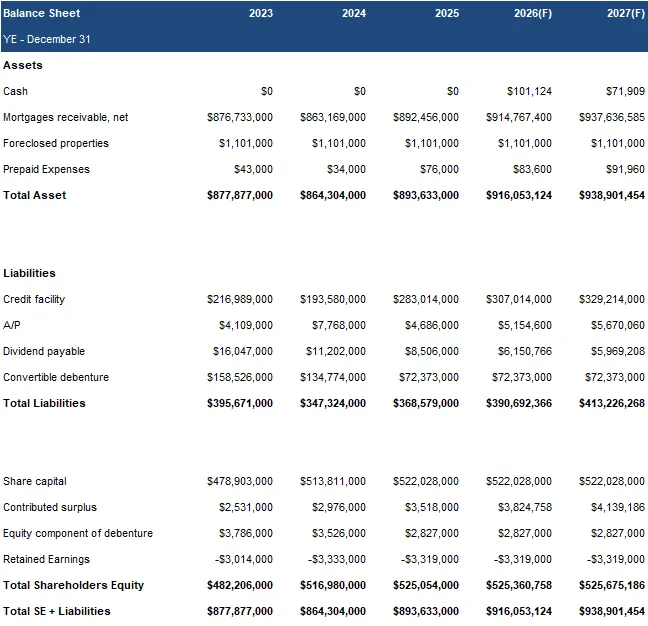
Debt-to-capital increased slightly to 40%, but stayed under the 10-year average of 42%
Source: Company / FRC
Notably, AI’s lending syndicate increased its credit facility by $40 million to $380 million, which we view as a strong vote of confidence in the company’s portfolio
FRC Forecasts & Valuation
Source: FRC
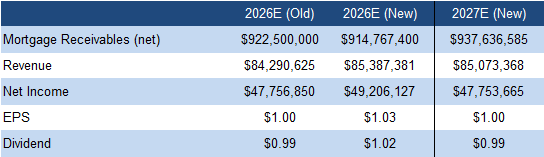
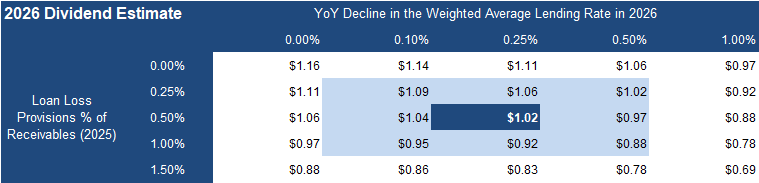
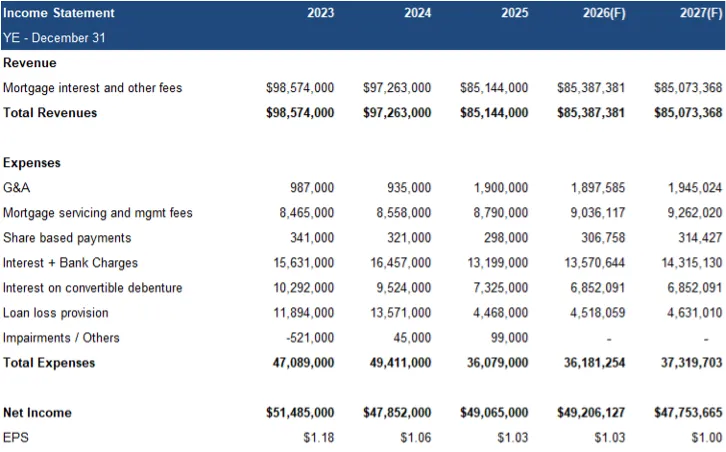
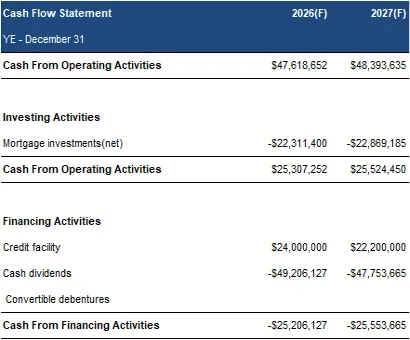
As Q4 loan loss provisions came in below expectations, we are raising our 2026 EPS and dividend forecasts
Source: FRC
Our estimate for the 2026 dividend varies between $0.88 and $1.02/share, as loan loss provisions and lending rates vary
Source: S&P Capital IQ / FRC
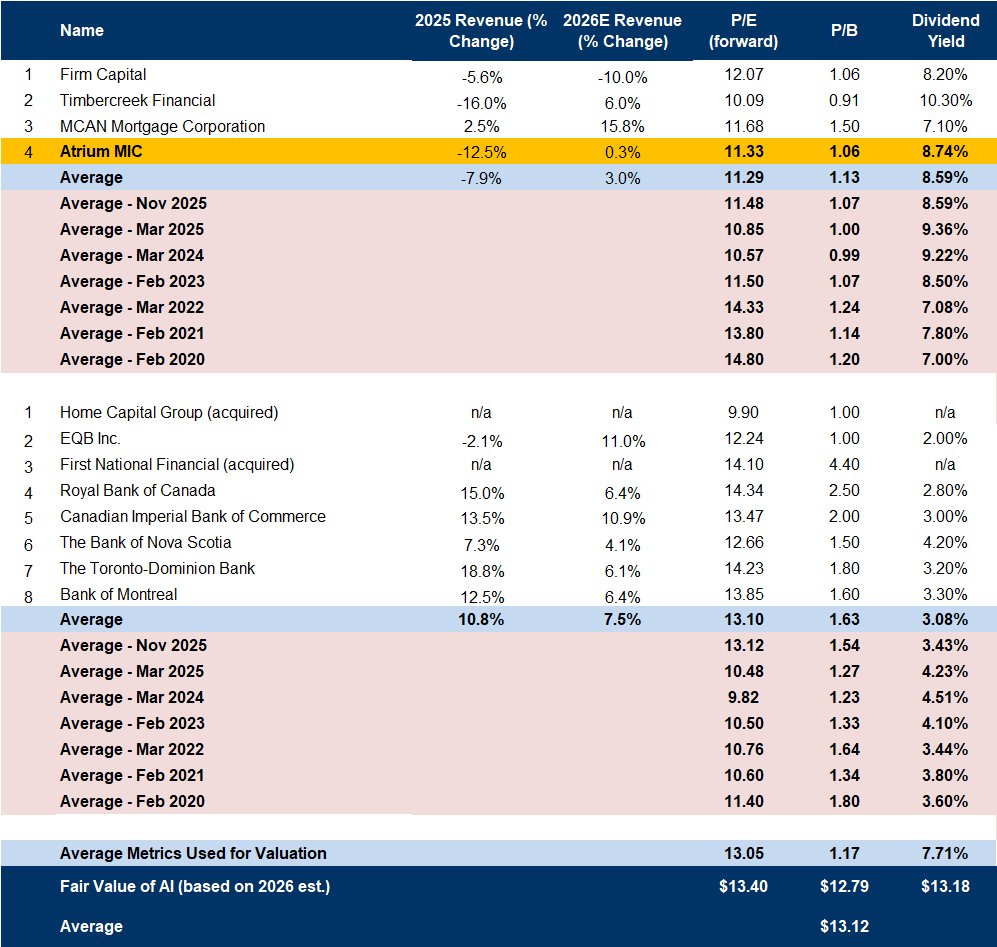
Sector multiples are up 3% YoY, and 1% since our November 2025 report
On average, MICs and banks are expected to report 6% revenue growth this year vs 3% in 2025, potentially driven by higher lending volumes
Our fair value estimate increased from $13.00 to $13.12/share, driven by higher sector multiples, and our upward revision to earnings and dividend forecasts
We are reiterating our BUY rating , and adjusting our fair value estimate from $13.00 to $13.1 2 /share, implying a potential return of 22% (including dividends) in the next 12 months. Despite a 13% YoY revenue decline, results exceeded our expectations, driven by lower loan loss provisions, and solid mortgage growth. With a growing focus on lower-risk properties, and an attractive 8-9% dividend yield, we believe AI is well-positioned to benefit from a gradual rebound in residential real estate.
Risks
We believe the company is exposed to the following risks:
Maintaining our risk rating of 3 (Average)
APPENDIX
Discussion
Comments reflect the views of individual users, not FRC. Nothing posted in the comments section — by users or otherwise — should be taken as investment advice.