

Disclosure: Global Education Communities Corp. has paid FRC a fee for research coverage and distribution of reports. See last page for other important disclosures, rating, and risk definitions.
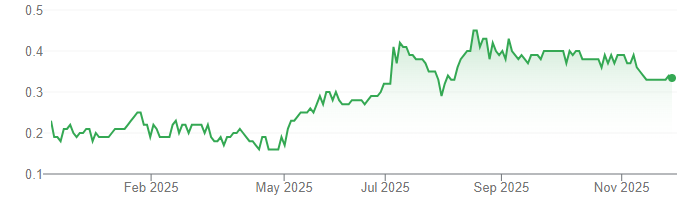
Price and Volume (1-year)
* Global Education Communities has paid FRC a fee for research coverage and distribution of reports. See last page for other important disclosures, rating, and risk definitions. All figures in C$ unless otherwise specified.
Core Business Strategy
Source: Company
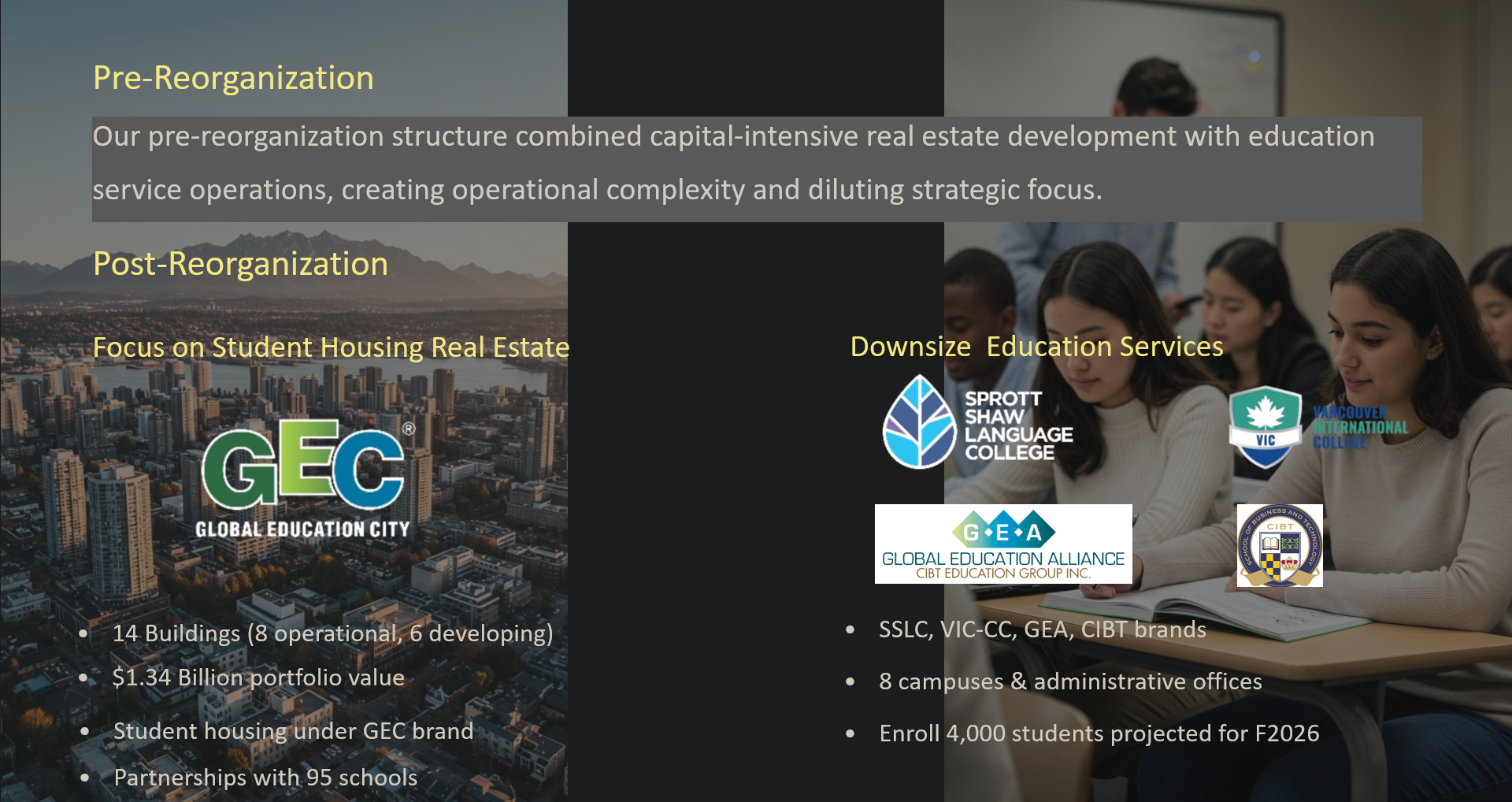
GEC operates B.C.’s largest off campus student housing platform, comprising 14 buildings: eight in operation and six in development
Per the latest audited financial statements, these projects were appraised at $306M as of August 2025
The company also owns two language schools: Sprott Shaw Language College (SSLC) and Vancouver International College (VIC
Operating Projects
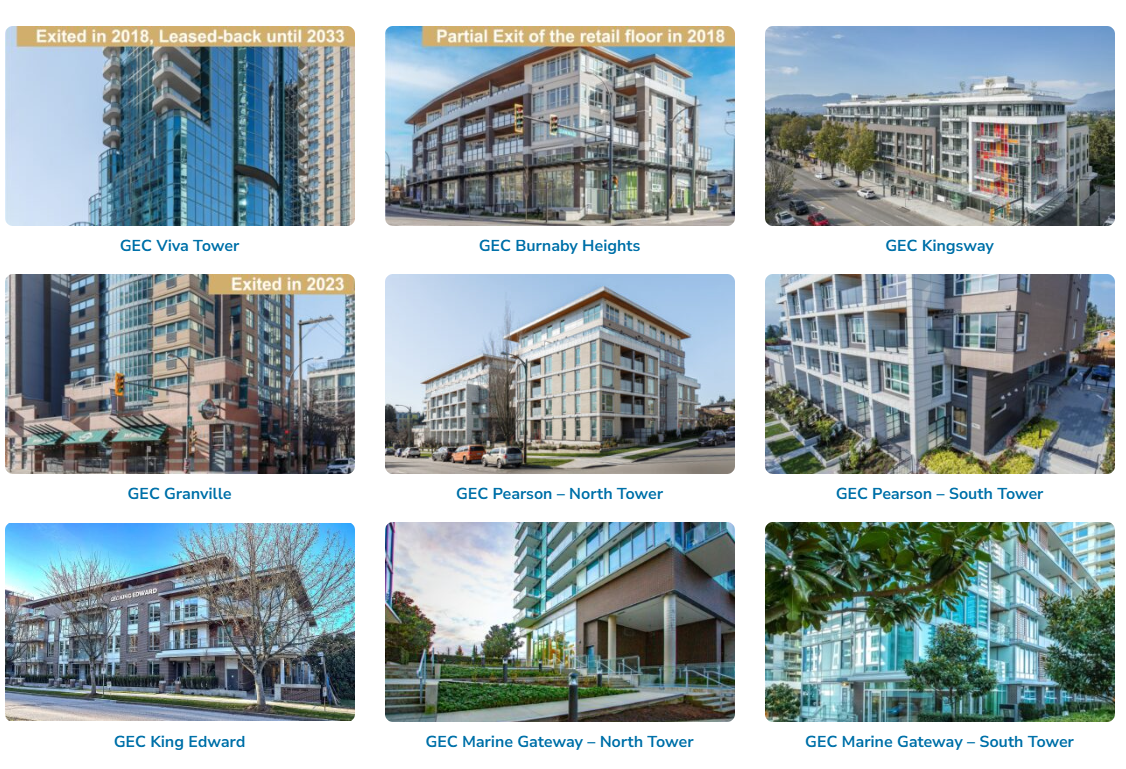
Eight operating buildings across six projects totalling 1,200+ beds
GEC holds minority interests and acts as project operator across all properties
Source: Company
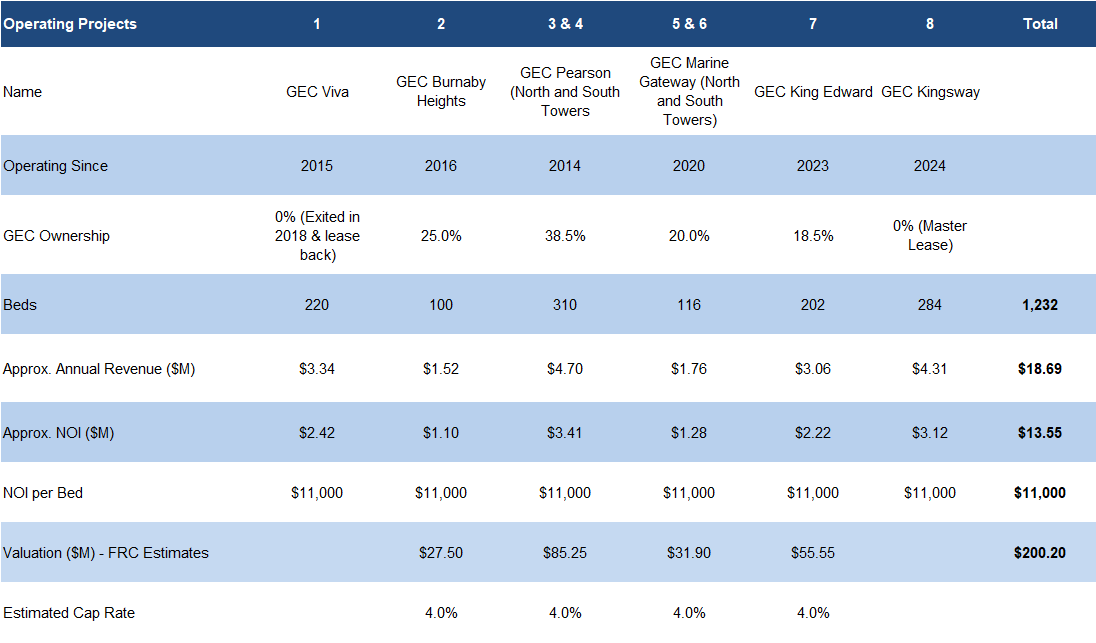
Potential to generate $14M in NOI, or $11k/bed in NOI per year
Per the latest audited financial statements, these projects were appraised at $254M as of August 2025
Source: Company /FRC
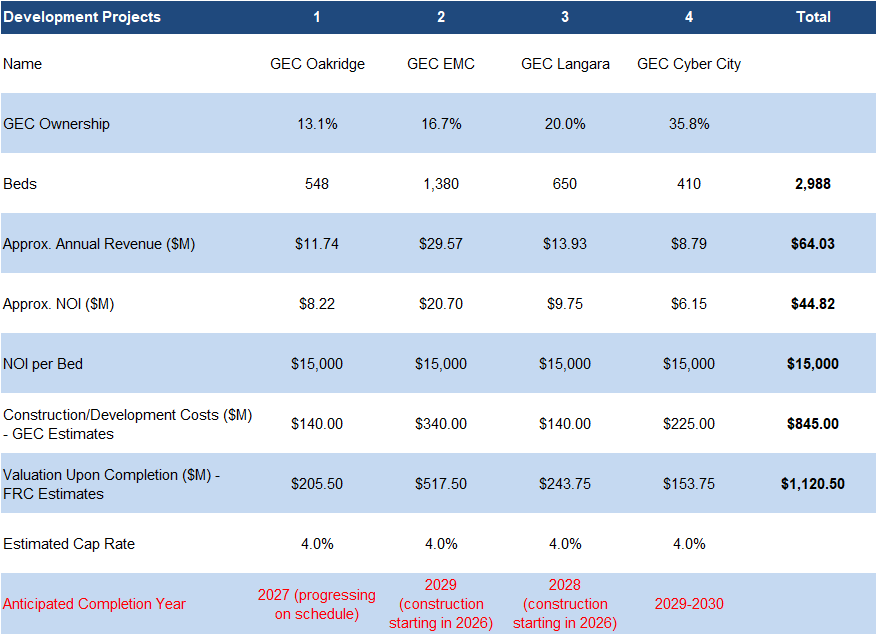
Developing six buildings across four projects, totaling 2,988 beds, and $45M in projected NOI, or $15k/bed per year
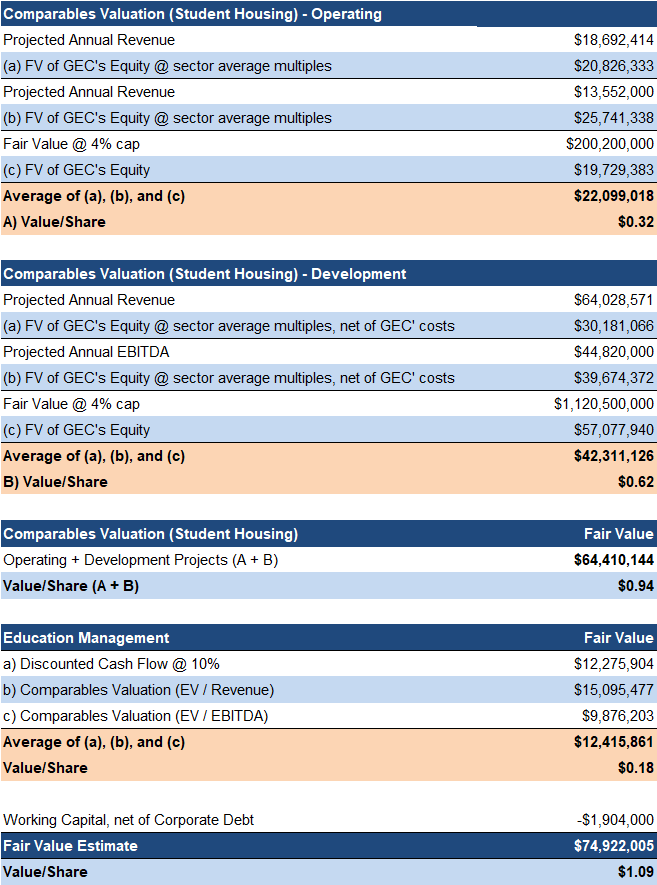
Using an average cap rate of 4%, we value these projects at $1.12B, upon completion
Management aims to complete these projects by 2027-2030; although these timelines are reasonable, we note that real estate development projects are often subject to permitting/financing delays
Financials
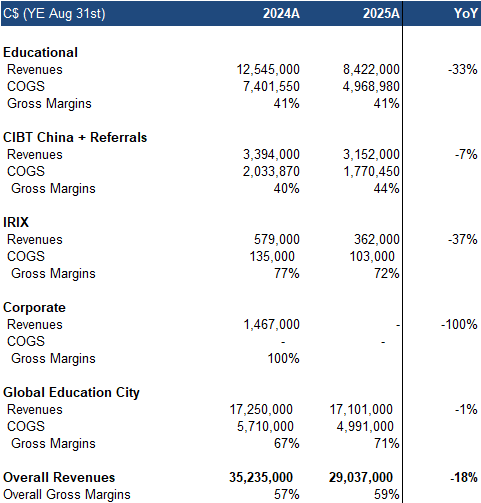
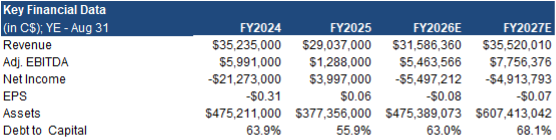
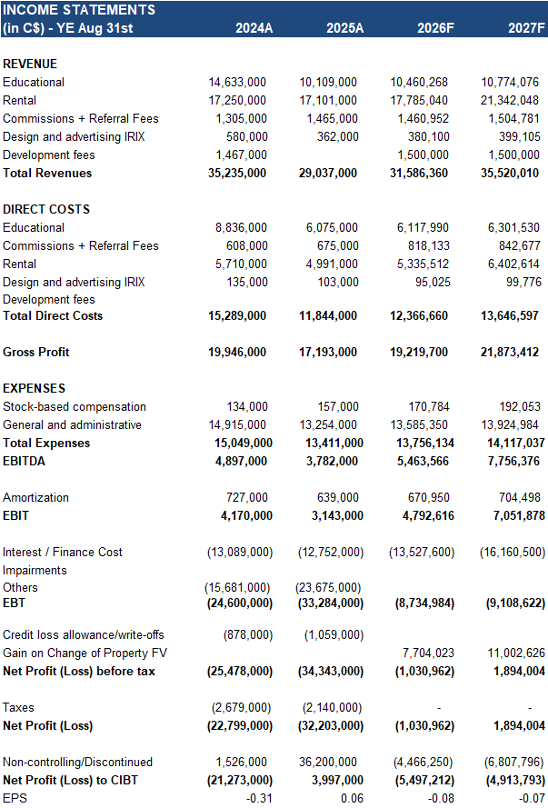
Revenue was down 18% YoY, missing our estimate by 3%, driven by softer education revenue
Revenue from the flagship rental business fell 1% YoY due to an asset sale, yet exceeded our estimate by 5%
Gross margins rose 3 pp to 59%, exactly in line with our estimate
EBITDA was down 23% YoY, missing our estimate by 25%, reflecting softer revenue and higher G&A expenses
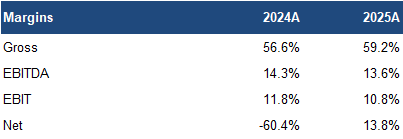
Recorded a $35M gain from the sale of SSC, and a $17M write-down on properties (5% of total value)
Excluding the unexpected write-down, net income was $21M or $0.31/share vs our estimate of $0.37/share
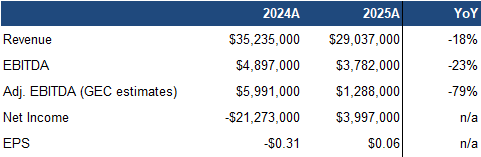
Source: FRC / Company
Several major Canadian REITs have recorded property write-downs this year. For GEC, the adjustment appears driven by lower market rents , and auditor reliance on comparable regional land sales. We believe c urrent valuations likely understate intrinsic value due to weak pre-sales and high developer financing costs. With rents and property values expected to recover in 2026, we believe GEC is positioned to report significant gains , and valuations should rise further as development projects are completed.
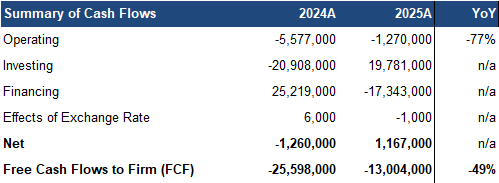
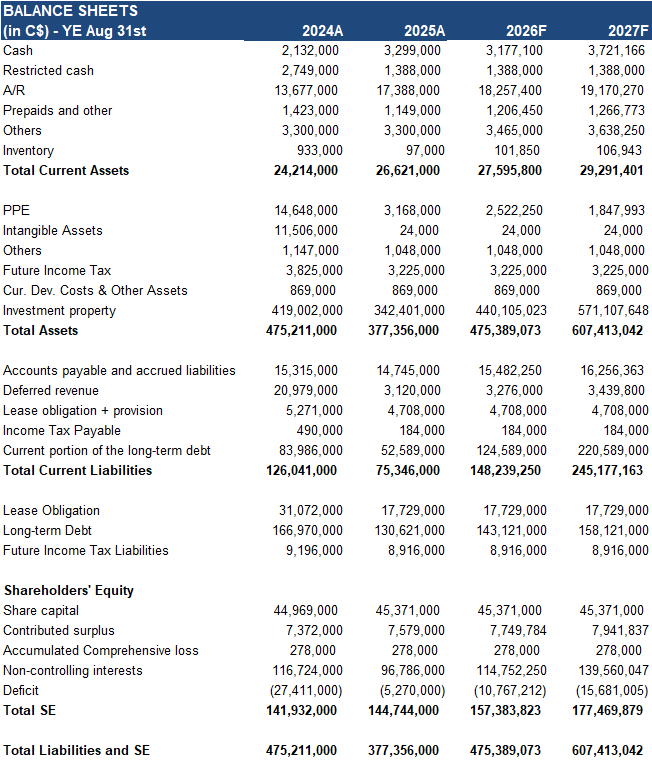
Debt-to-capital is currently above the sector average (56% vs. 46%), but this is expected to improve once development projects are completed
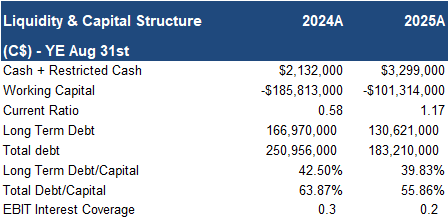
Source: FRC / Company
FRC Projections and Valuation
Recent M&A Transactions
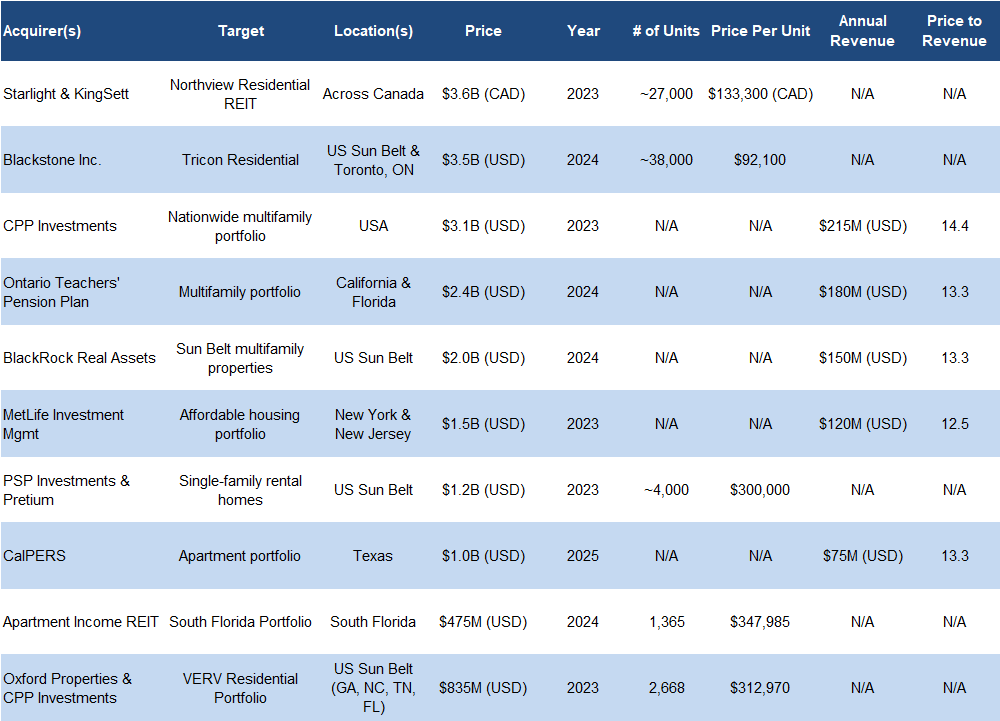
Source: FRC / Various
Rental assets offer inflation-protected income, with low volatility, making them attractive to pension funds and institutions
Major institutional investors are spending billions to acquire large portfolios of residential rental properties
These transactions indicate Price-to-Revenue multiples in a tight range of 12.5x–14.4x
Although student housing is classified separately, we use residential /multi-family property data above as a proxy because it behaves similarly in terms of occupancy dynamics and rental cash flows .
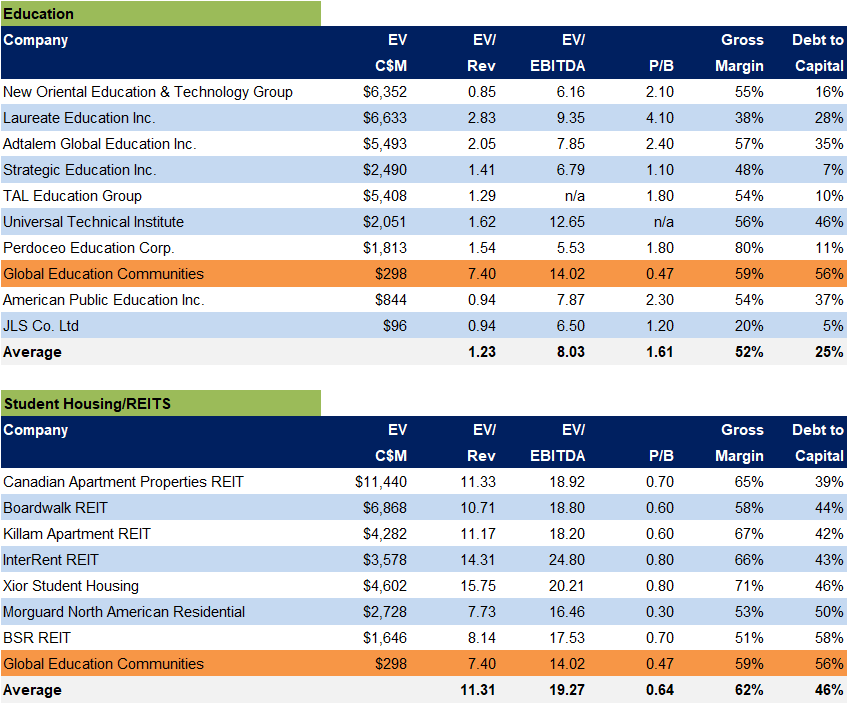
Sector Multiples and Ratios
Source : S&P Capital IQ, FRC
GEC’s EV/R and EV/EBITDA exceed that of education management peers but remain below real estate peersRelative to REITs, GEC is trading at 7x forward revenue (sector: 11x) and 14x forward EBITDA (sector: 19x), a 31% discount on average
Source : FRC
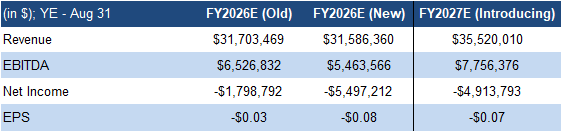
We are lowering our EPS estimates due to higher-than-anticipated G&A expenses in FY2025
Source : FRC
As a result, our fair value estimate declined from $1.22 to $1.09/share
We are reiterating our BUY rating, and adjusting our fair value estimate from $1.22 to $1.09/share. Despite property write-downs and a modest revenue decline in FY2025, margins improved, and market fundamentals indicate property values are bottoming with potential upside in 2026. Trading at a significant discount to REIT peers, we believe GEC offers an attractive entry point into Vancouver’s constrained affordable rental market, with additional upside potential from possible legal recoveries.
Risks
We believe the company is exposed to the following risks:
Maintaining our risk rating of 3 (Average)
APPENDIX
The analyst’s rating and fair value are one click away. Free FRC account, no credit card.
Already have an account?


