
Disclosure: Zepp Health Corporation has paid FRC a fee for research coverage and distribution of reports. See last page for other important disclosures, rating, and risk definitions.
The analyst’s rating and fair value are one click away. Free FRC account, no credit card.
Already have an account?
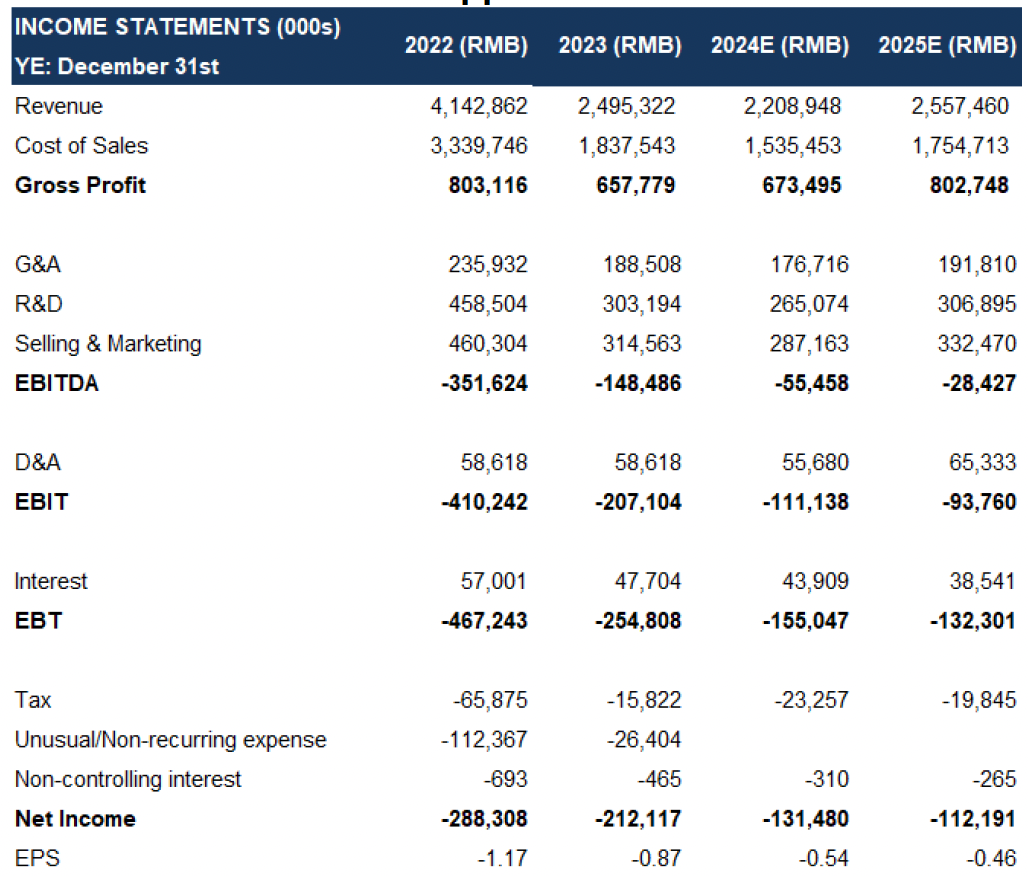
Revenue declined due to the company halting production of several low-margin products. This strategic move paid off as gross profit for self-branded units increased by 18% YoY, despite a 24% YoY decrease in revenue. Gross margins were up 7 pp to 26%, in line with our estimate.
Operating expenses were down 30% YoY, but 3% higher than expected.
While halting production of certain products affected revenue negatively, the impact was softened by new product launches last year. Zepp reported QoQ revenue growth in Q2,Q3, and Q4.
With no product launches in Q1-2024, management anticipates a 20% YoY decline in revenue from self-branded units in Q1-2024. Note that Q1 is typically soft due to seasonality. However, for the full year, management projects 5%-10% growth, driven by next generation versions of flagship products, and new product launches.
Based on consensus estimates, global smartwatch shipments are forecasted to surge by 5%-10% in 2024, driven by increasing health awareness, technological advancements, and the rising popularity of wearables.
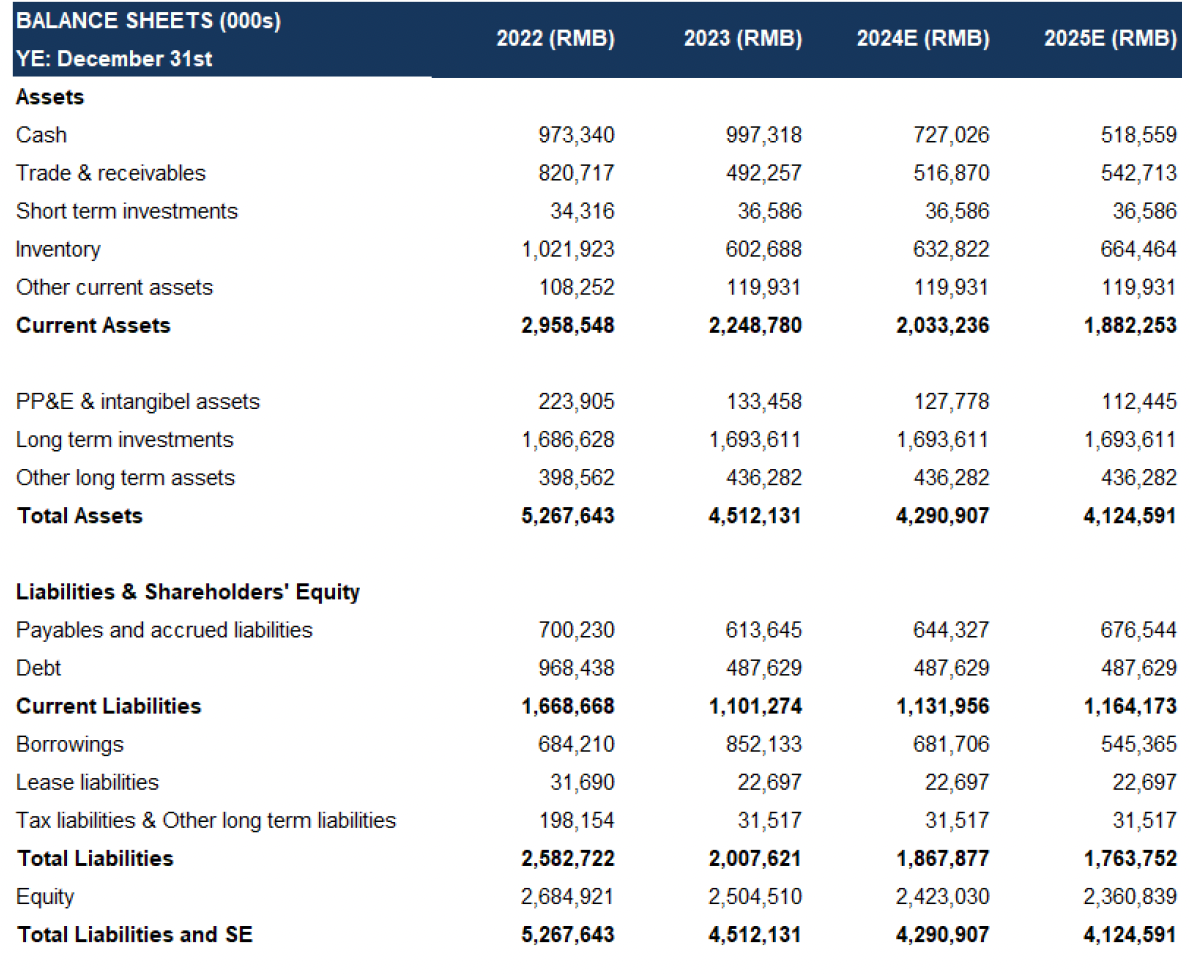
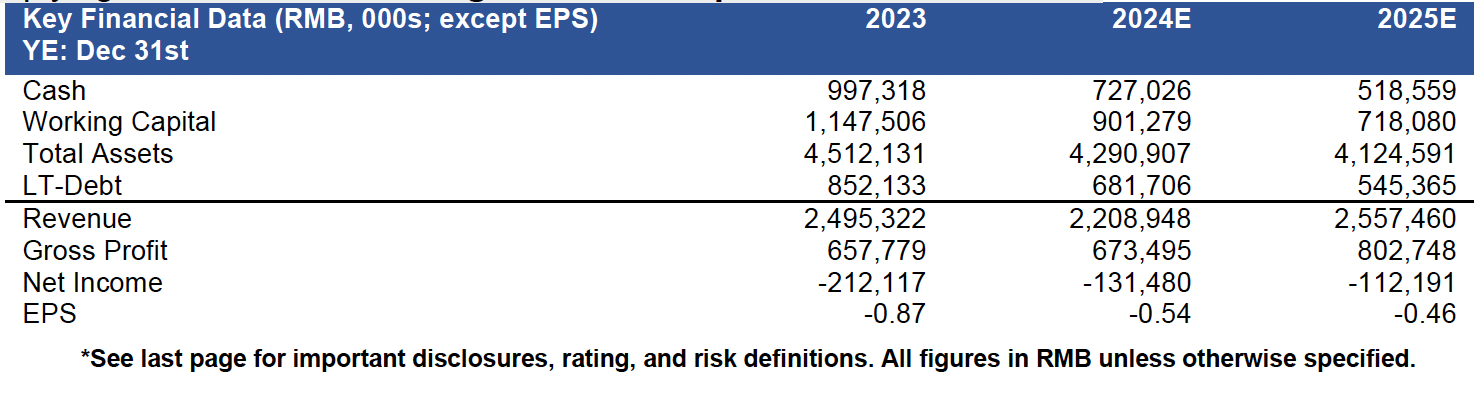
At the end of 2023, working capital, and investments, net of long-term debt, totalled RMB1.99B (US$276M) vs Zepp’s MCAP of US$61M, implying that shares are trading well below liquid assets.
In 2023, shipments were down 40% YoY to 12.1M units vs our estimate of 12.6M
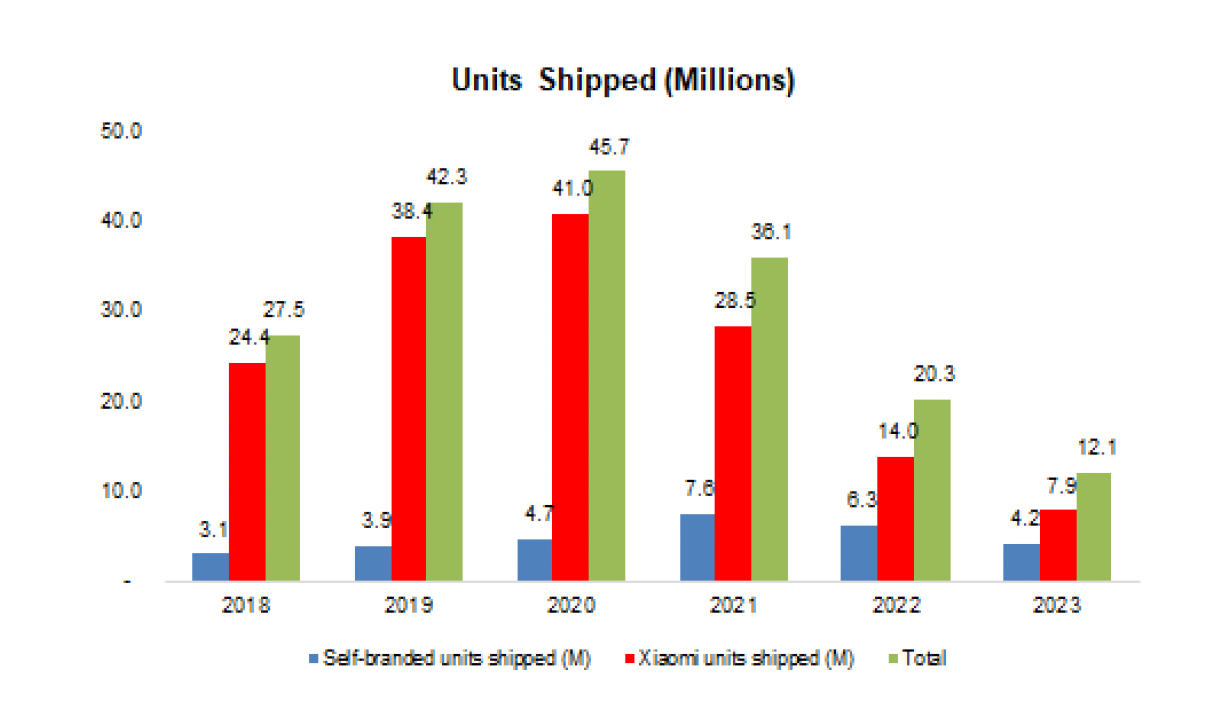
Self-branded unit shipments fell 33% YoY as Zepp halted production of several low-margin products.
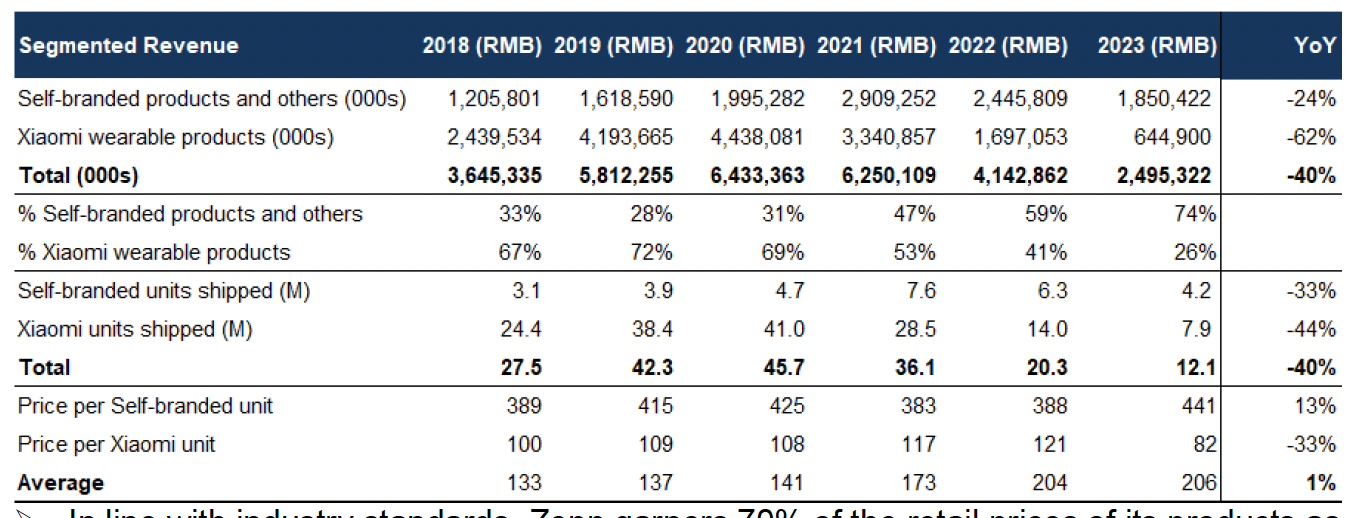
This strategic move paid off as gross profit for self-branded units increased by 18% YoY, despite a 24% YoY decrease in revenue.
Revenue was down 40% YoY, but missed our estimate by just 0.5%.
The average price of self-branded units was up 13% YoY, driven by the introduction of new products, and terminating production of low-margin items
In line with industry standards, Zepp garners 70% of the retail prices of its products as revenue, with the remaining 30% going to retailers/distributors.
Zepp does not disclose segmented results:
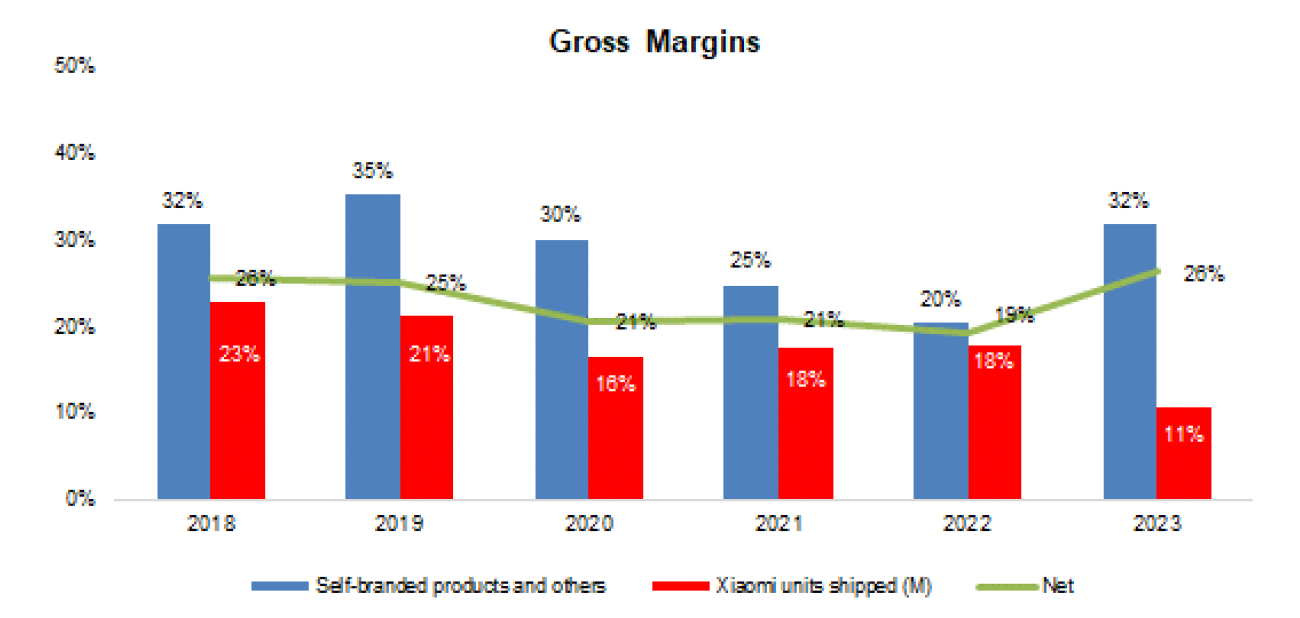
As a result, gross margins were up 7 pp to 26%, in line with our estimate
Gross margins on self-branded units spiked 12 pp to 32%, exceeding the sector average of 24%, and progressing towards Apple's 45%
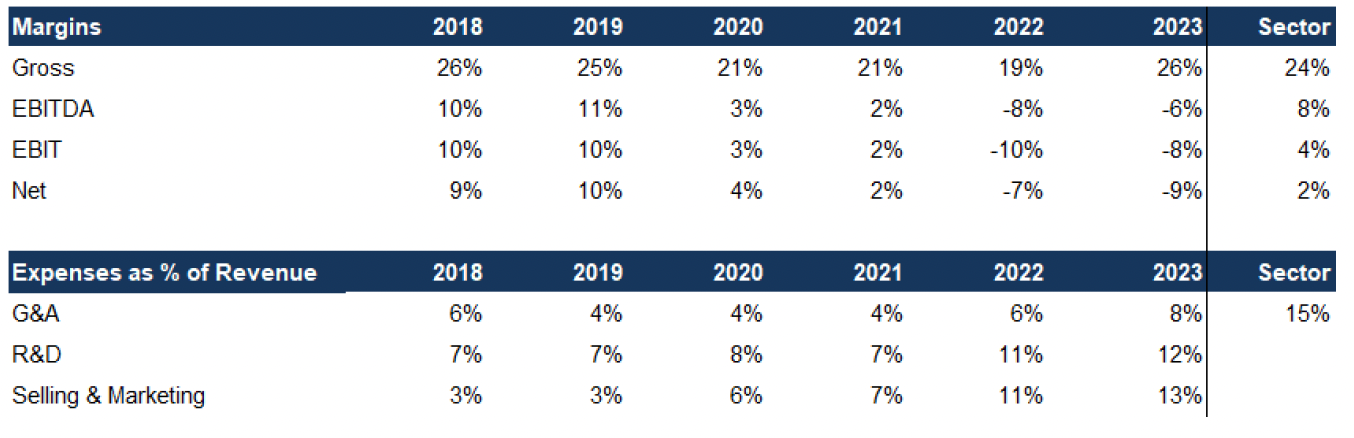
Operating expenses were down 30% YoY, but 3% higher than expected
As a result, EPS was 19% lower than expected
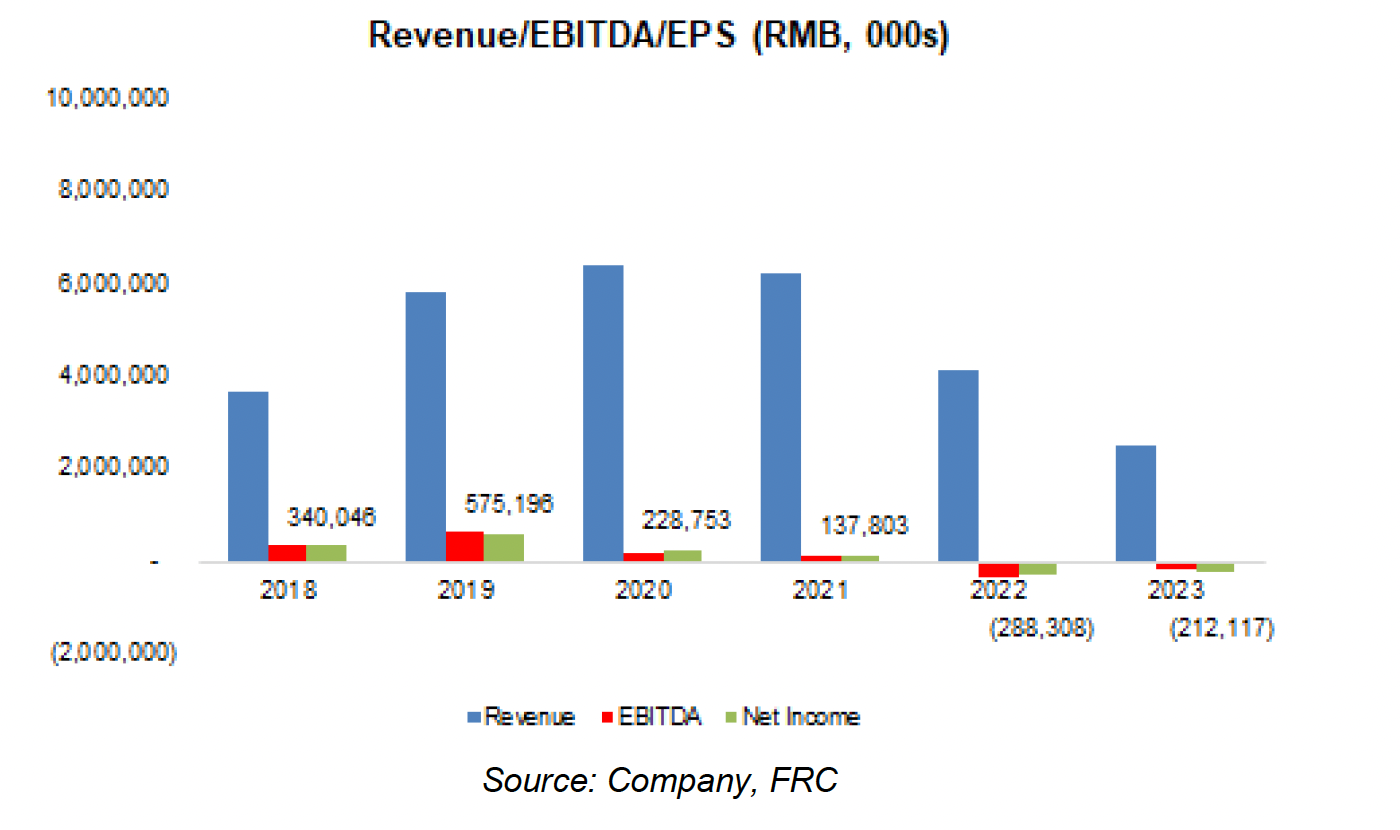
Despite lower revenue, EBITDA and EPS improved due to higher gross margins
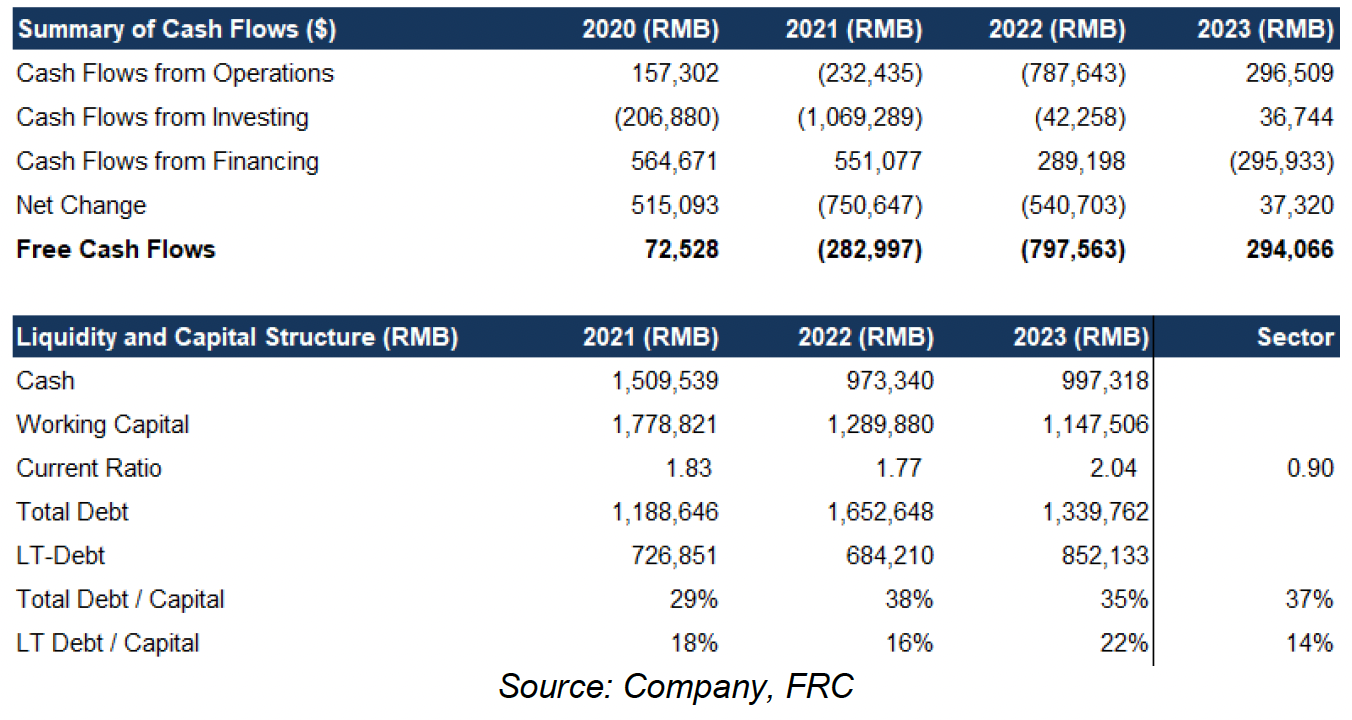
Lowered debt/capital by 3 pp
Working capital, and investments, net of long-term debt was RMB1.99B (US$276M) vs the current MCAP of just US$61M, implying that ZEPP is trading well below liquid assets
In 2023, global shipments were up 2% p.a.
Zepp’s products accounted for 2.4% of global shipments in 2023
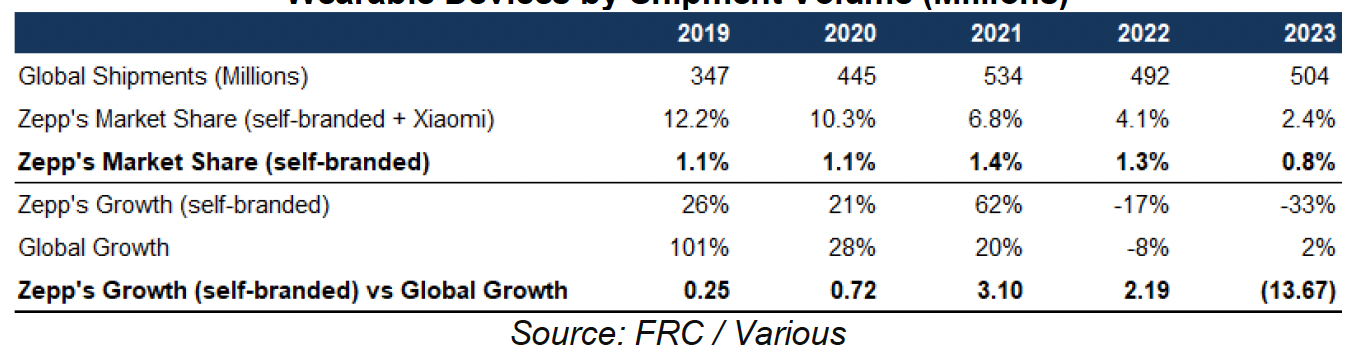
Zepp’s products accounted for 2.4% of global shipments in 2023
It is estimated that shipments will increase by 5% p.a. through 2027 (Source: IDC)
With no product launches in Q1-2024, management anticipates a 20% YoY decline in revenue from self-branded units in Q1-2024
Although management anticipates revenue to pick up in H2-2024, we are lowering our 2024 revenue/EPS estimates for conservatism
Historically, Zepp's revenue growth rate has averaged 1.6x the global growth rate.
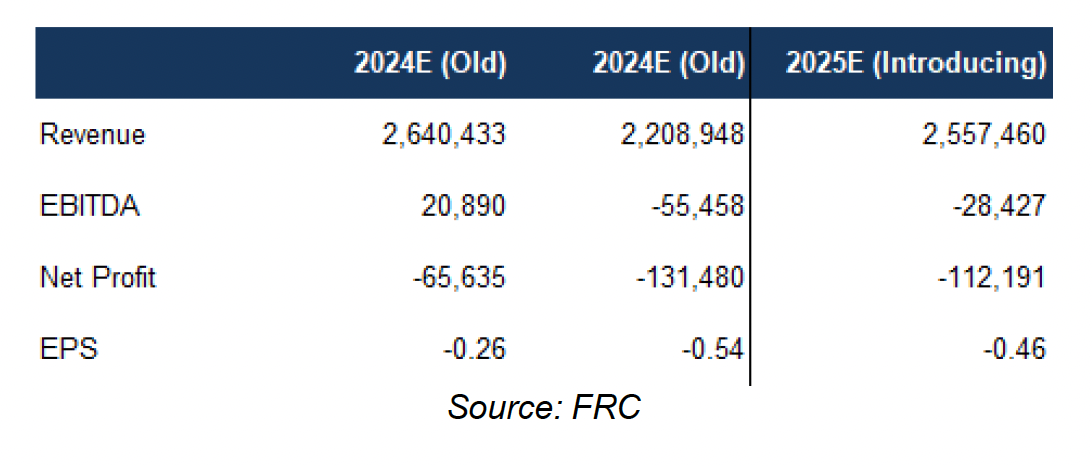
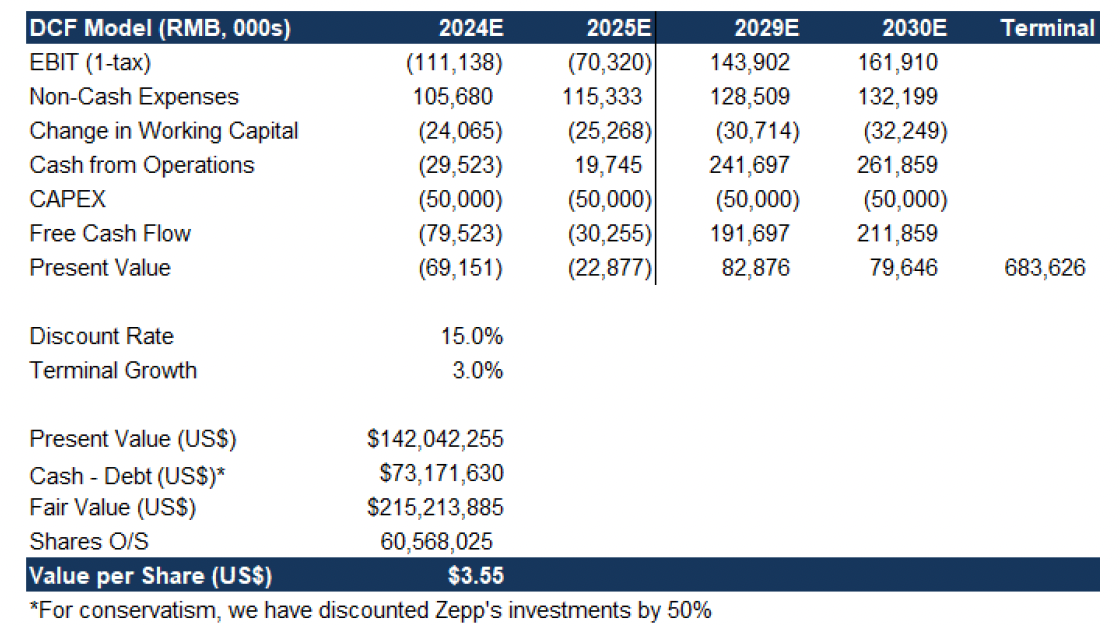
As a result, our DCF valuation decreased from US$3.83 to US$3.55/share
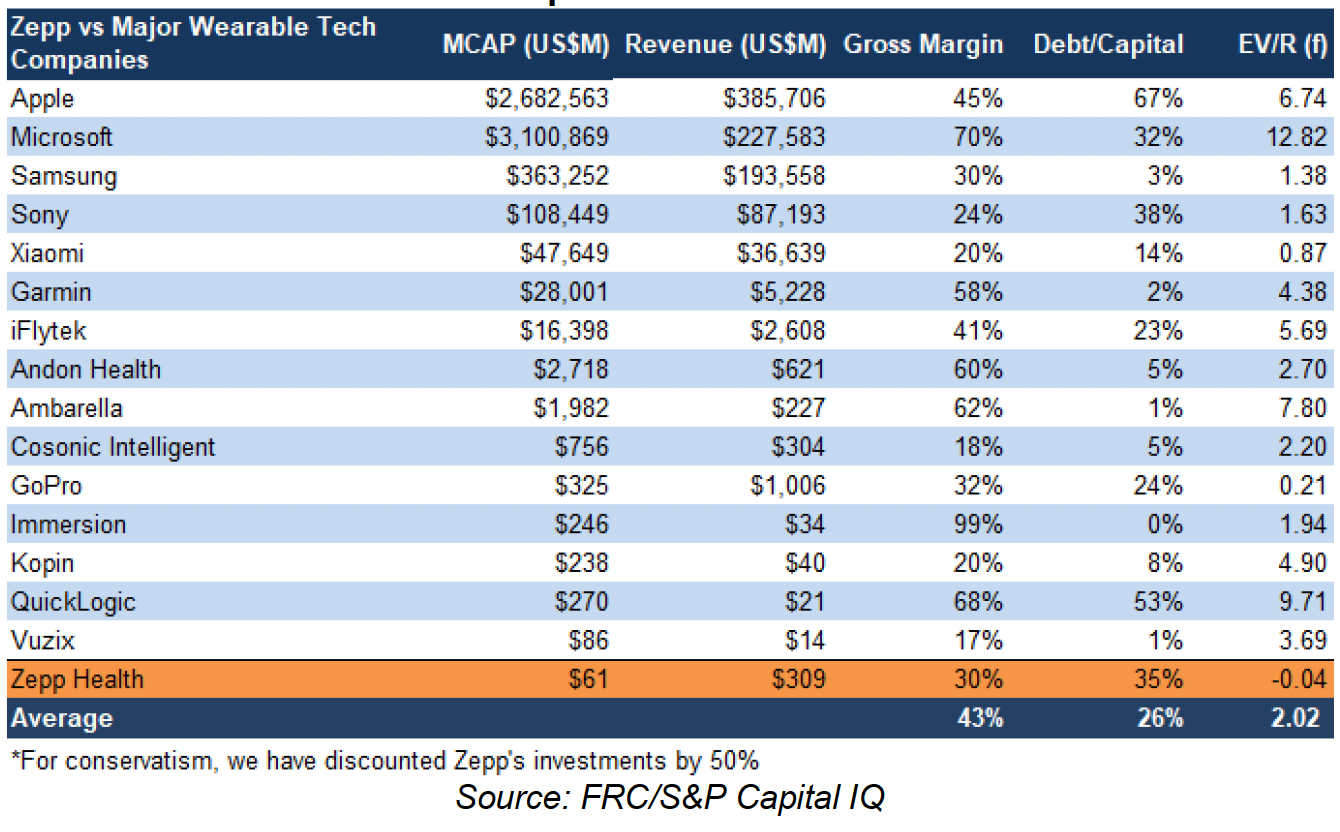
Given the company’s negative enterprise value, its shares are trading at -0.04x forward revenue (previously 0.03x) vs the sector average of 2.02x (previously 1.86x)
ZEPP is the most undervalued stock on our list of comparables
Applying 2.02x to our 2024 revenue forecast for Zepp, we arrived at a comparables valuation of US$6.36/share (previously US$6.34/share)
We are reiterating our BUY rating, and adjusting our fair value estimate from US$5.08 to US$4.96/share (the average of our DCF and comparables valuations). Given Zepp's strong foothold in the wearables space, and its shares trading below liquid assets, we believe the company is a compelling acquisition target for larger players such as Xiaomi.
We believe the company is exposed to the following key risks (not exhaustive):