
Disclosure: First Phosphate Corp has paid FRC a fee for research coverage and distribution of reports. See last page for other important disclosures, rating, and risk definitions.
The analyst’s rating and fair value are one click away. Free FRC account, no credit card.
Already have an account?
Price and Volume (1-year)
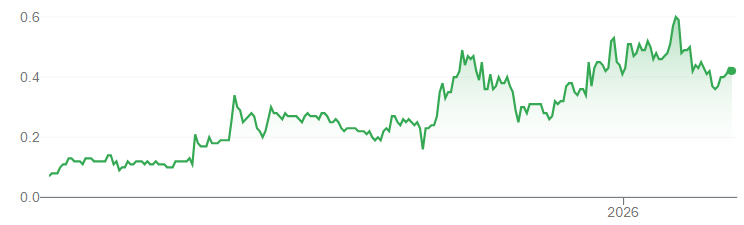
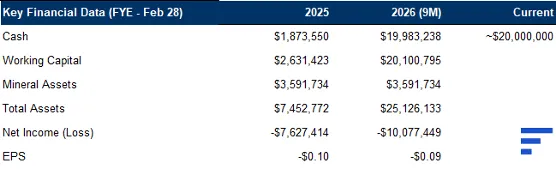
* QP: Steve Lavoie, P.Geo., Chief Geologist of First Phosphate Corp. First Phosphate Corp. has paid FRC a fee for research coverage and distribution of reports. See last page for other important disclosures, rating, and risk definitions. All figures in C$ except for commodity prices, which are in US$.
Securing Critical Mineral Supply Chains
Critical minerals are essential to EVs, batteries, semiconductors, AI, and defense technologies. With supply chains heavily concentrated in China, securing reliable access has become a strategic priority for Western economies, driving government support for mining, processing, and refining projects through loans, grants, and strategic partnerships.
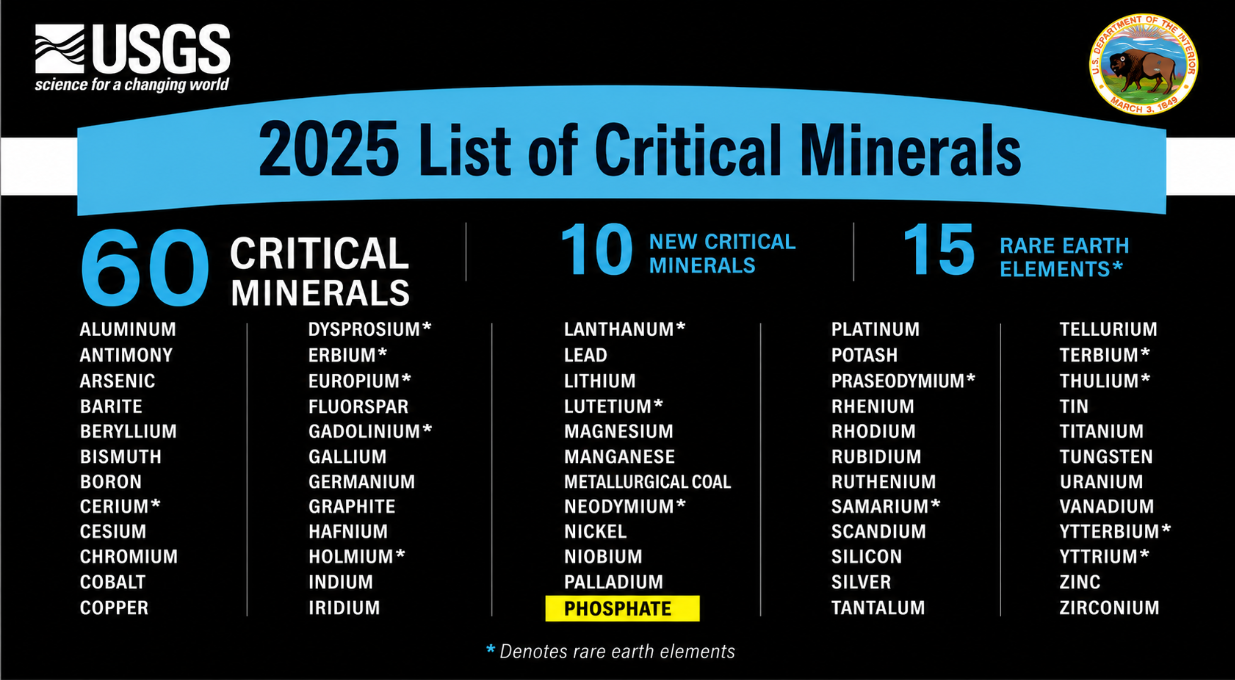
Phosphate is classified as a critical mineral by the United States Geological Survey based on its importance to the U.S. economy, energy transition, and national security
Phosphate is also included on the critical minerals lists of the European Union and Canada
Source: FRC
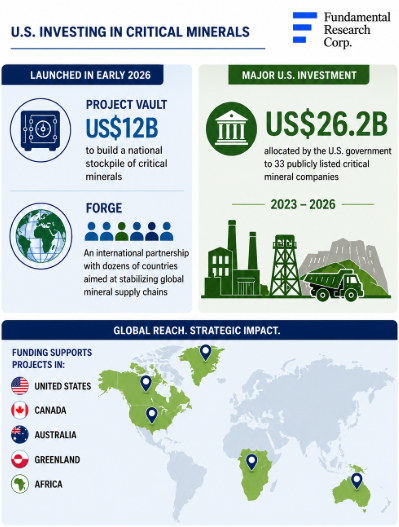
Since 2003, the U.S. government has funded 33 publicly listed critical mineral companies
Funding commitments range from several million dollars to over $2B per project
Backed projects across Australia, Canada, Greenland, and Africa highlight U.S. willingness to support strategic supply chain projects abroad, a positive backdrop for PHOS
Source: FRC
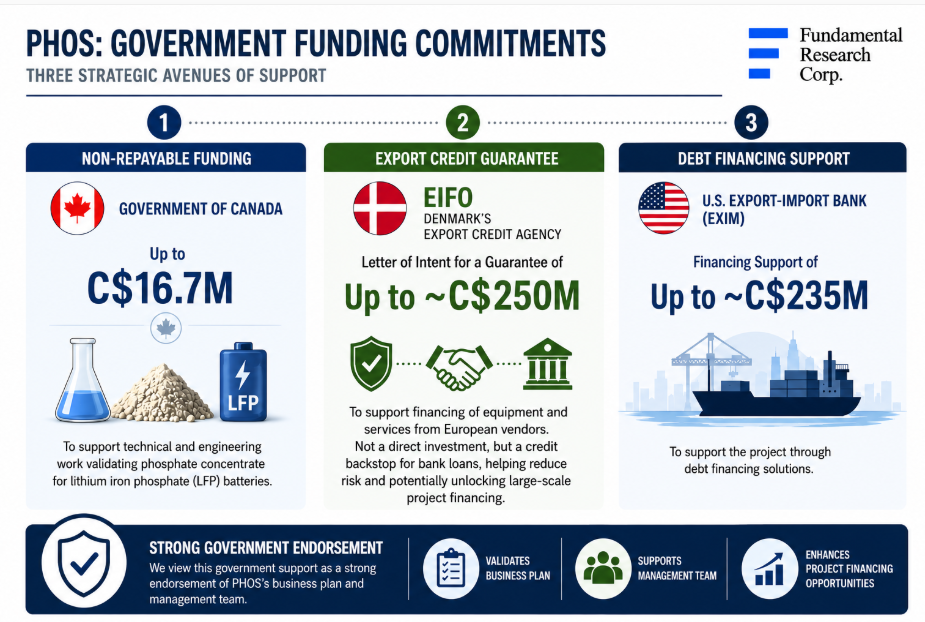
PHOS has secured significant funding commitments and government support from Canada, the U.S., and Denmark, which we view as a strong endorsement of the company’s business plan and management team
PHOS – Business Plan
Owns two advanced-stage phosphate projects in Quebec, an emerging battery metal hub in Canada
Source: Company
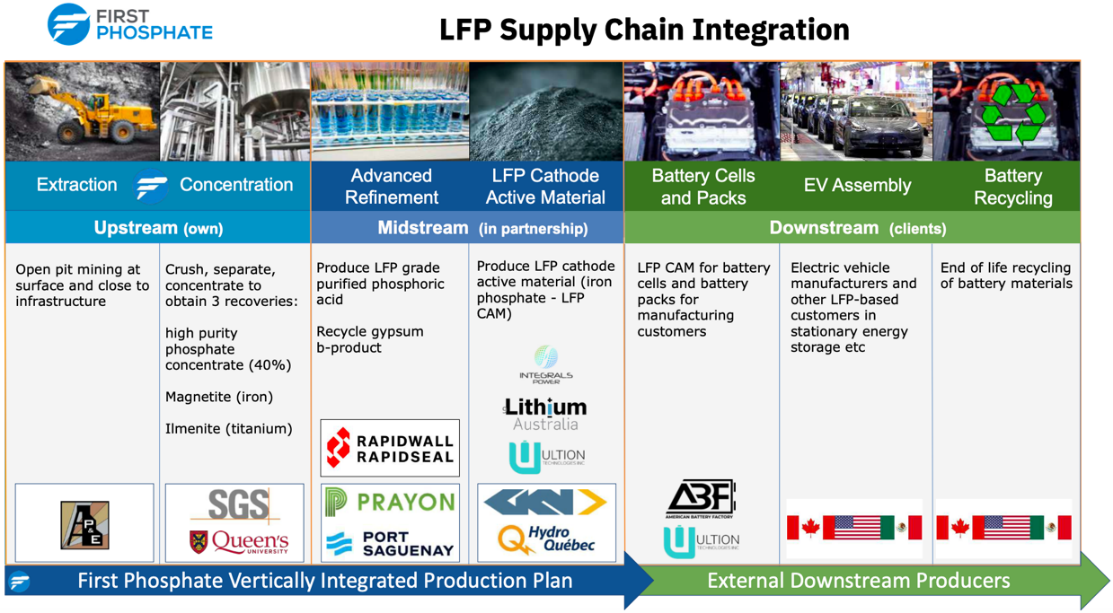
PHOS is developing a vertically integrated LFP battery supply chain, from high-purity phosphate extraction, to cathode production, targeting energy storage, EVs, AI data centers, robotics, and automation markets
Proposed Development (FRC Estimates)
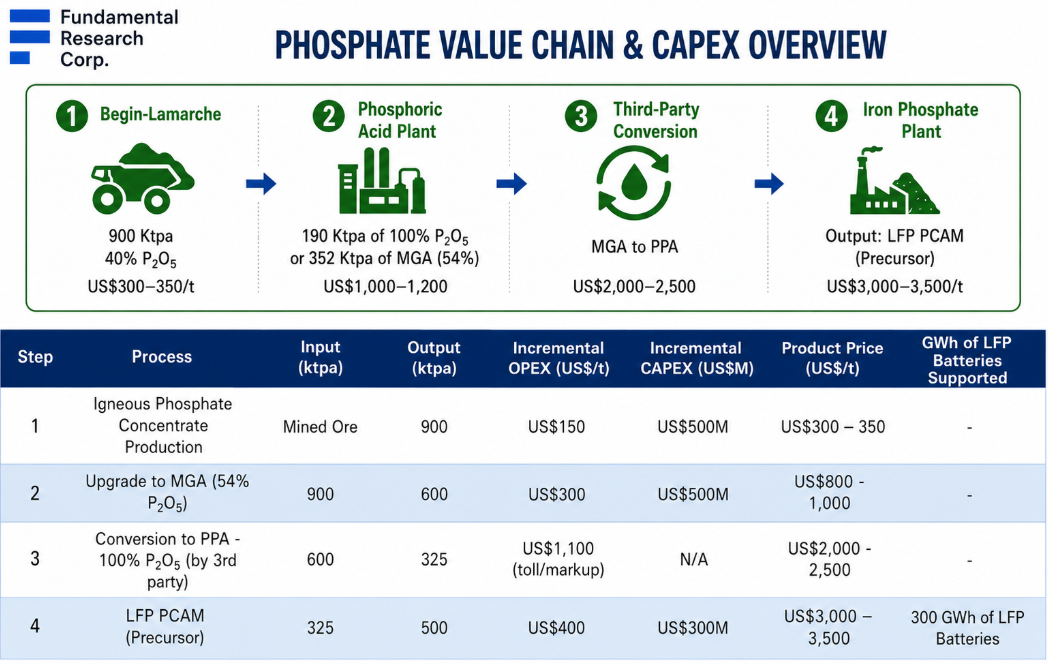
The figures presented represent our preliminary assumptions, derived from market studies, and analysis of comparable projects.
Source: FRC
Product prices increase at each stage, reflecting the value added through incremental OPEX and CAPEX
Source: FRC / Various
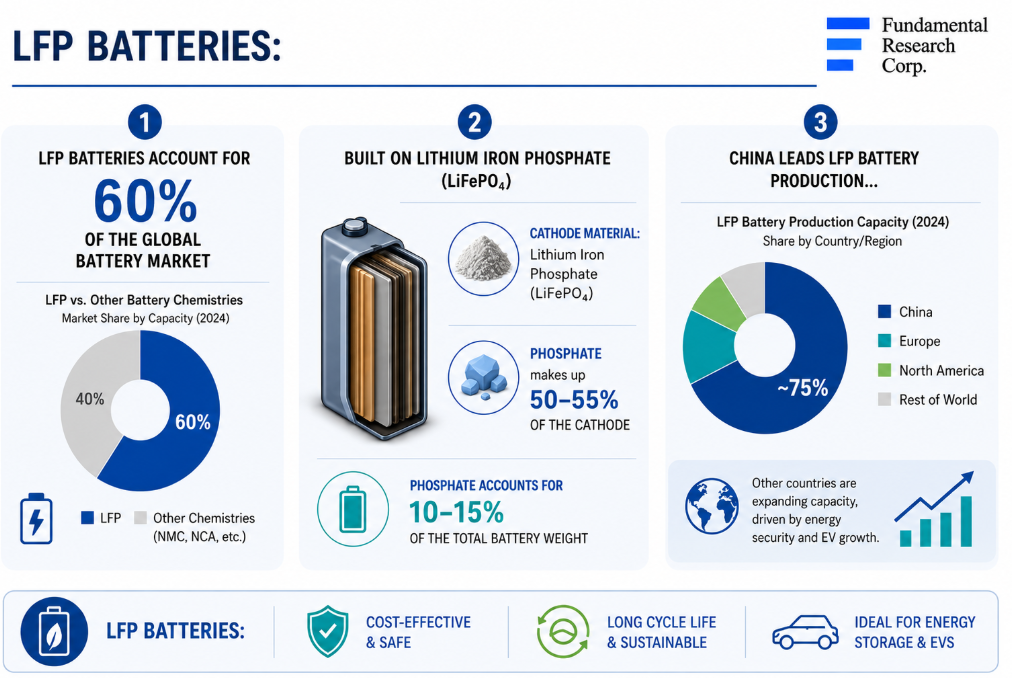
LFP batteries account for the majority of global battery demand, driving growing strategic importance for phosphate supply chains worldwide
Bégin-Lamarche Phosphate Project – Resource Update
Source: FRC
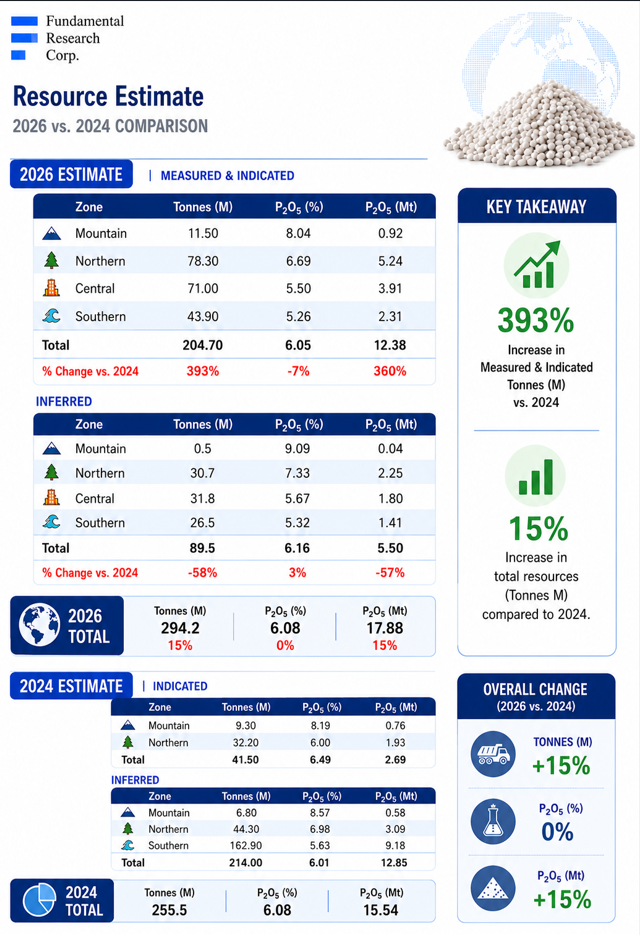
The project hosts an open-pit resource at ~6% P2O5 vs standard grades ranging from 4% to 15% P2O5
The latest resource estimate materially improved both the scale and confidence of the project
The estimate incorporates both historical and 2025–2026 drilling results, totaling 276 holes (68,345 m) across four zones over a 2.75 km strike length
The 2024 estimate was based on 120 holes (29,762 m) across three zones
Mineralization starts at surface and extends to 400 m depth
We believe there is significant resource expansion potential as the deposit remains open at depth
With a materially larger resource base, we anticipate a significant improvement in project economics relative to the 2024 PEA.
Source: Company
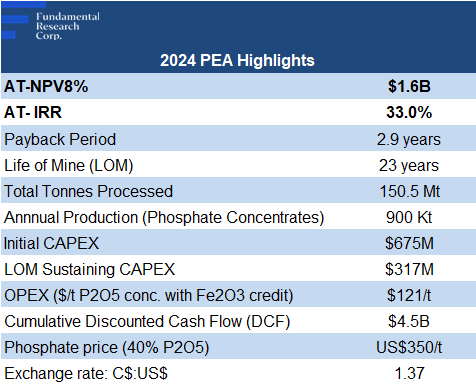
The 2024 PEA returned an AT-NPV8% of $1.59B, and a high AT-IRR of 33%, using $350/t igneous phosphate concentrate (spot: $300/t)
IRR >25% is attractive for mining projects
PHOS plans to complete a feasibility study, advance permitting, secure strategic and financing partners, with production potentially starting in 2029.
Financials
Source: FRC / Company
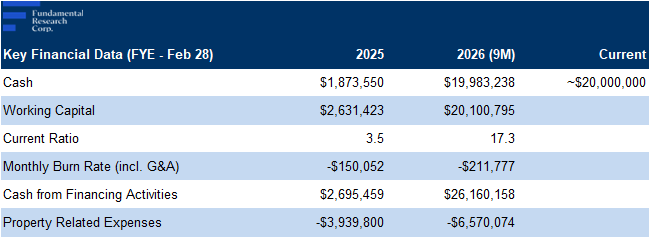
Strong balance sheet with sufficient cash to fund development over the next 12–24 months, implying limited need for near-term share dilution
Source: FRC / Company
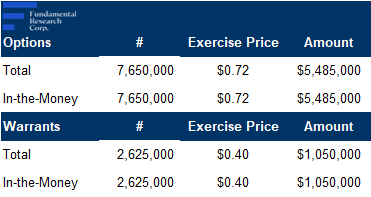
In-the-money warrants and options, all held by management and directors, could provide an additional ~$7M in funding
FRC Valuation and Rating
Source: FRC
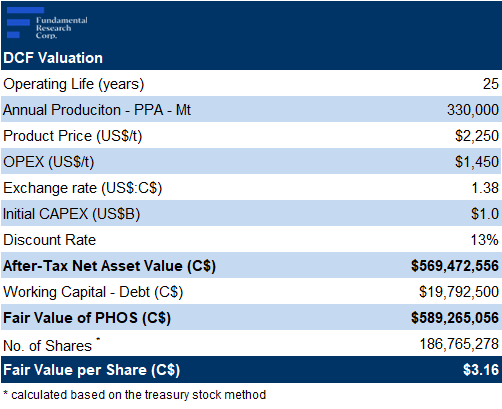
We continue to value PHOS based on a 25-year operation, but given the higher resource estimate, we are raising annual production estimates from 300 to 330 ktpa of PPA (100% P₂O₅), represented by stage three in the “Proposed Development” table presented earlier in this report
As a result, our valuation increased materially from $1.59 to $3.16/share
Sensitivity Analysis
Source: FRC
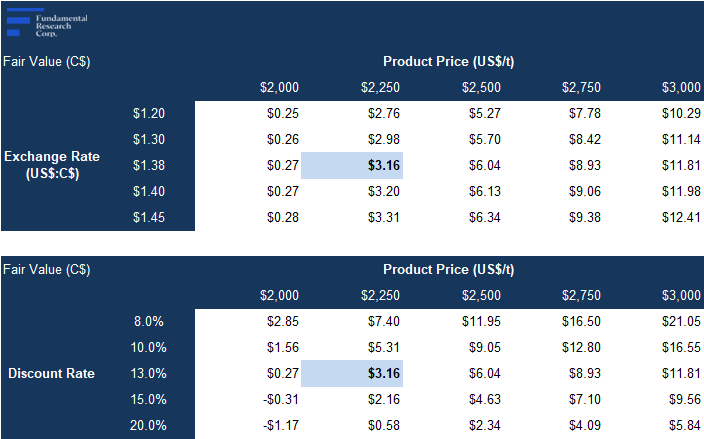
Our valuation remains highly sensitive to key inputs
We reiterate our BUY rating, and raise our fair value estimate from $1.59 to $3.16/share, driven by the significant increase in resources. We believe PHOS continues to execute strongly against a favourable critical minerals backdrop, supported by a major resource upgrade, strong government backing, and growing strategic interest in phosphate assets. The updated resource materially enhances both project scale and confidence, with meaningful upside potential to project economics as the company advances toward feasibility, permitting, and financing milestones.
Risks
We believe the company is exposed to the following key risks (not exhaustive):
We are maintaining a risk rating of 5 (Highly Speculative)