
Disclosure: Builders Capital Mortgage Corp. has paid FRC a fee for research coverage and distribution of reports. See last page for other important disclosures, rating, and risk definitions.
The analyst’s rating and fair value are one click away. Free FRC account, no credit card.
Already have an account?
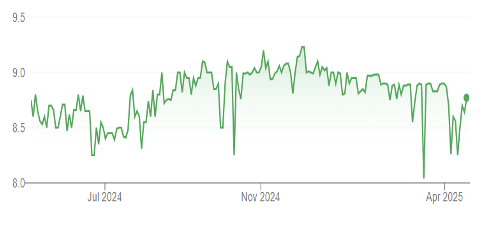
Price and Volume (1-year)
Portfolio Details
Mortgage advancements were up 24% YoY; repayments were up 1% YoY. As a result, mortgage receivables (net) were up 31% YoY, to a record-high of $43M vs our forecast of $40M
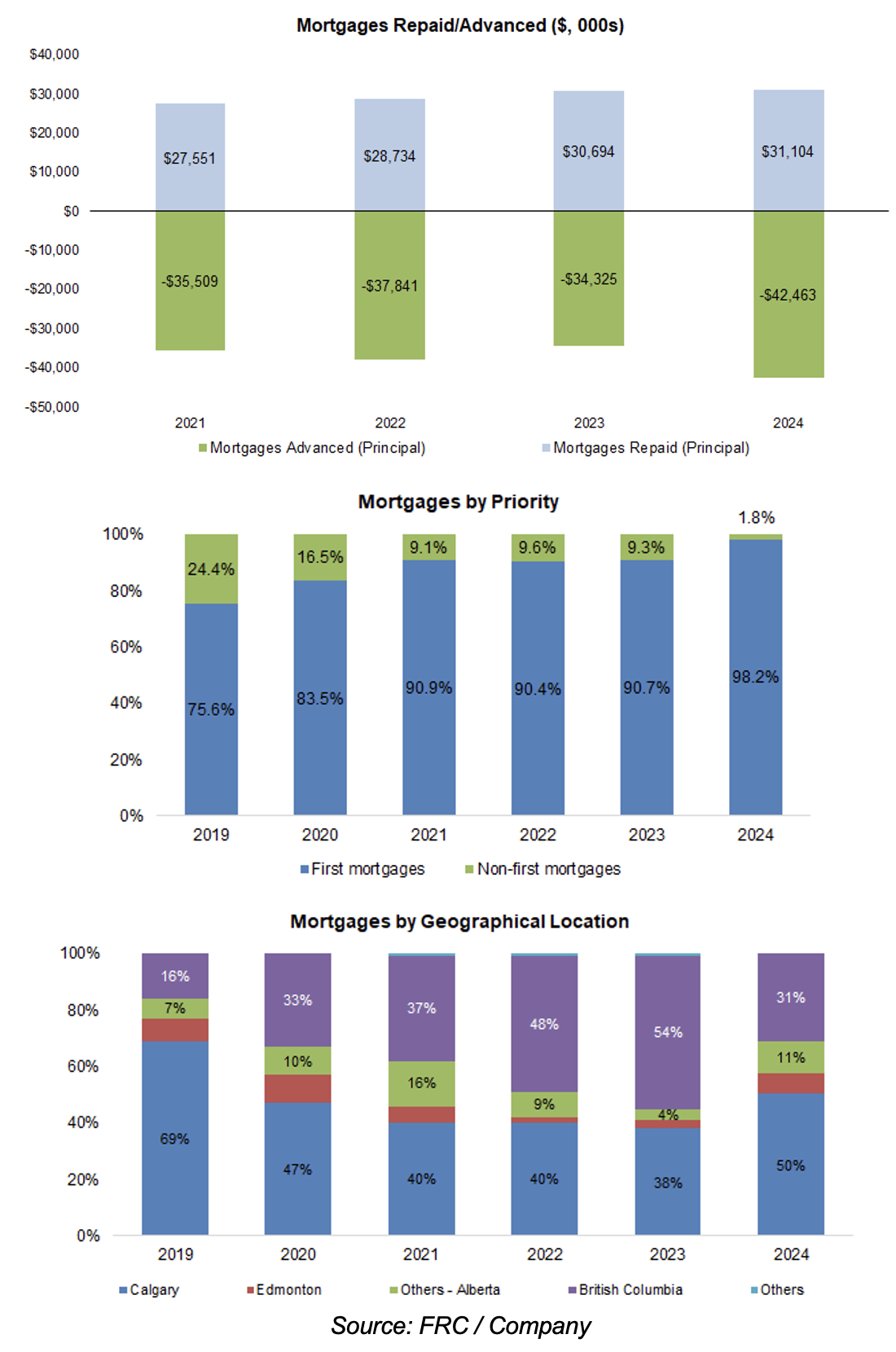
First mortgages increased 7 pp YoY to 98%, implying lower risk. Increased exposure to AB, and decreased exposure to B.C. as management is observing more attractive opportunities, and fewer competitors in AB
Remains focused on single-family units (construction)
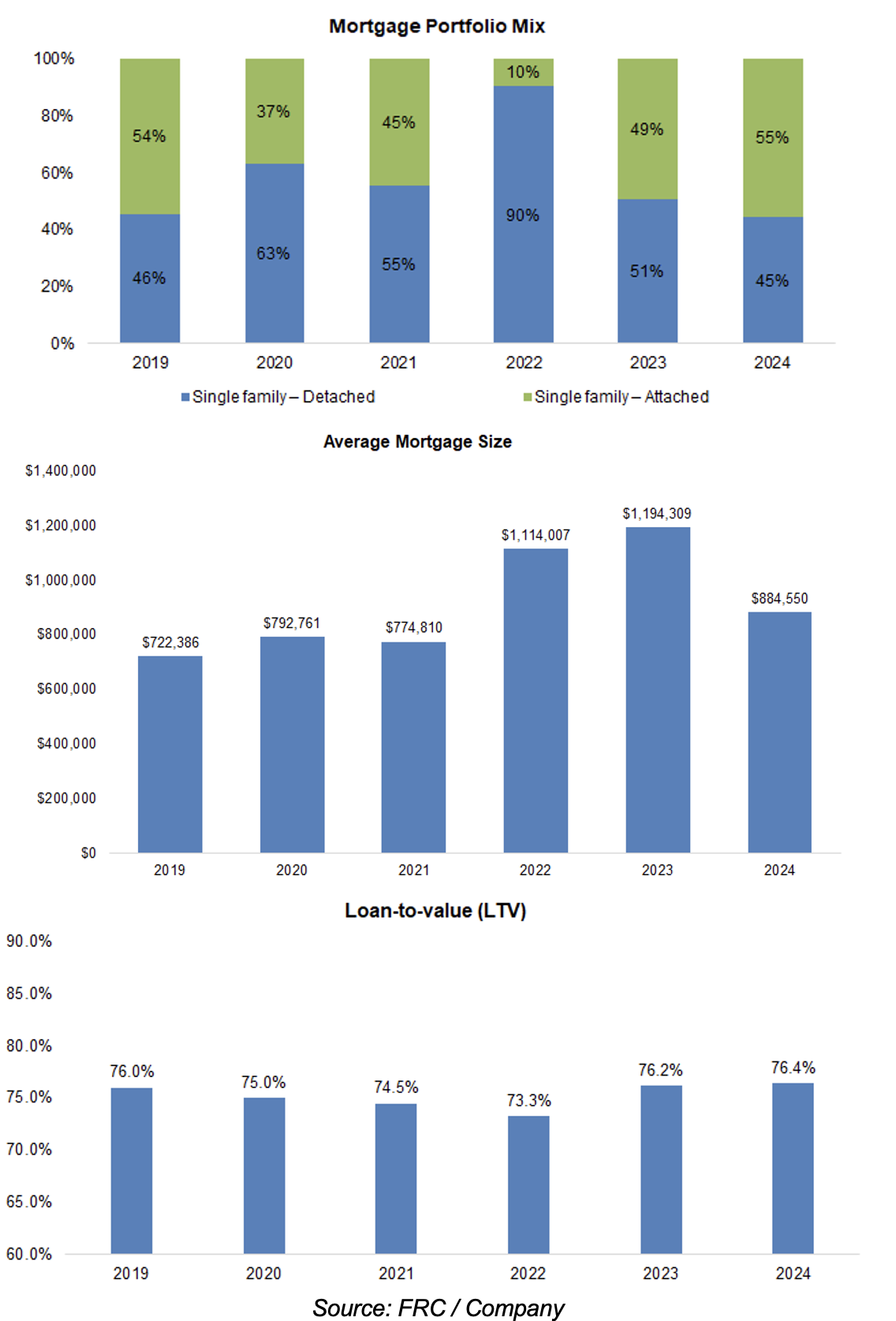
The average mortgage size was down 26%, implying lower risk. LTV remained unchanged
The average lending rate declined, primarily due to the BoC’s rate cuts
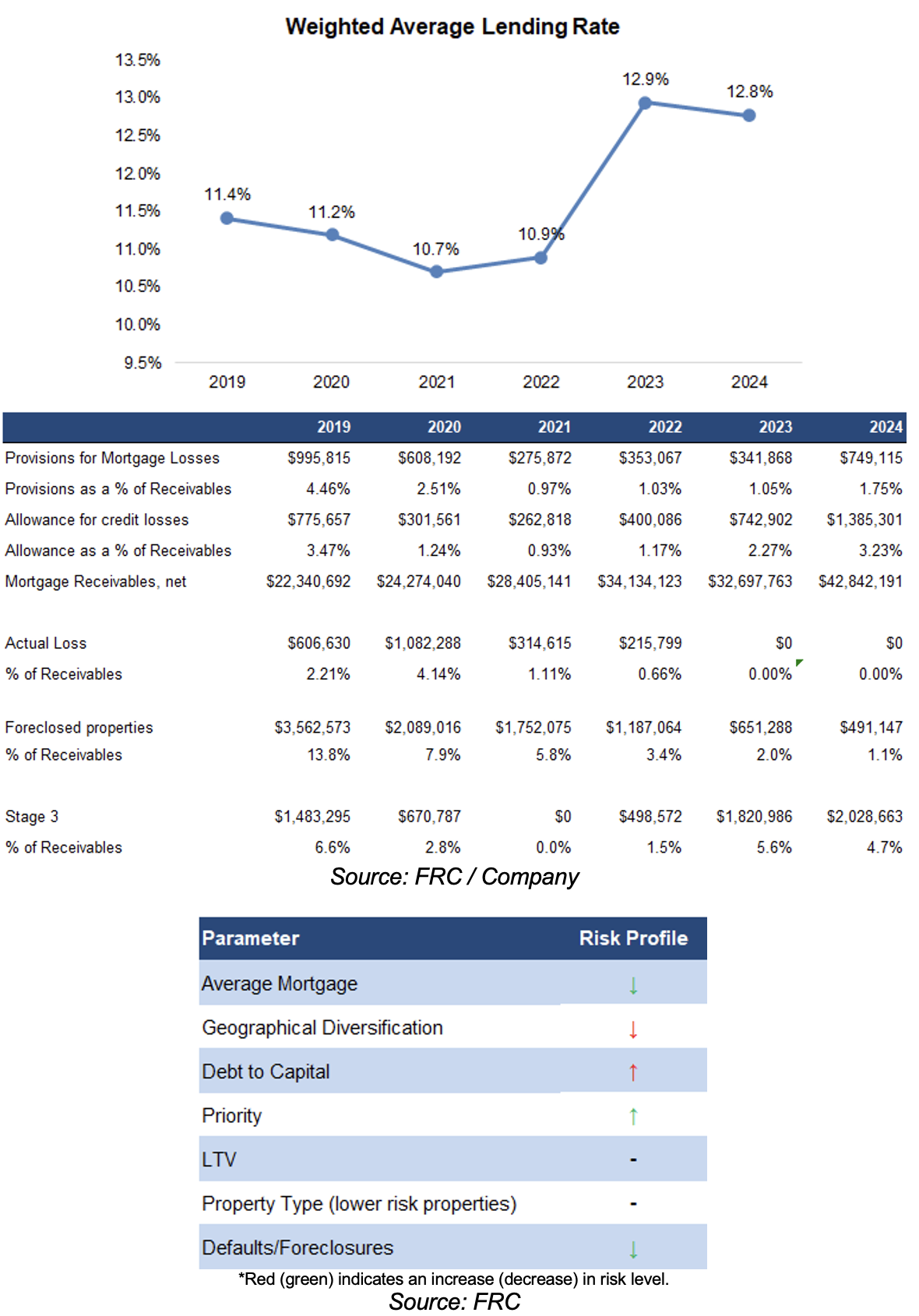
Stage three mortgages (impaired) decreased 0.9 pp to 4.7% of mortgages, a notable contrast to the broader MIC sector, which saw a rise in impairments
In summary, we believe the portfolio’s risk profile decreased (two red vs three green signals), driven by a significant increase in first mortgages, and fewer stage three mortgages
Financials
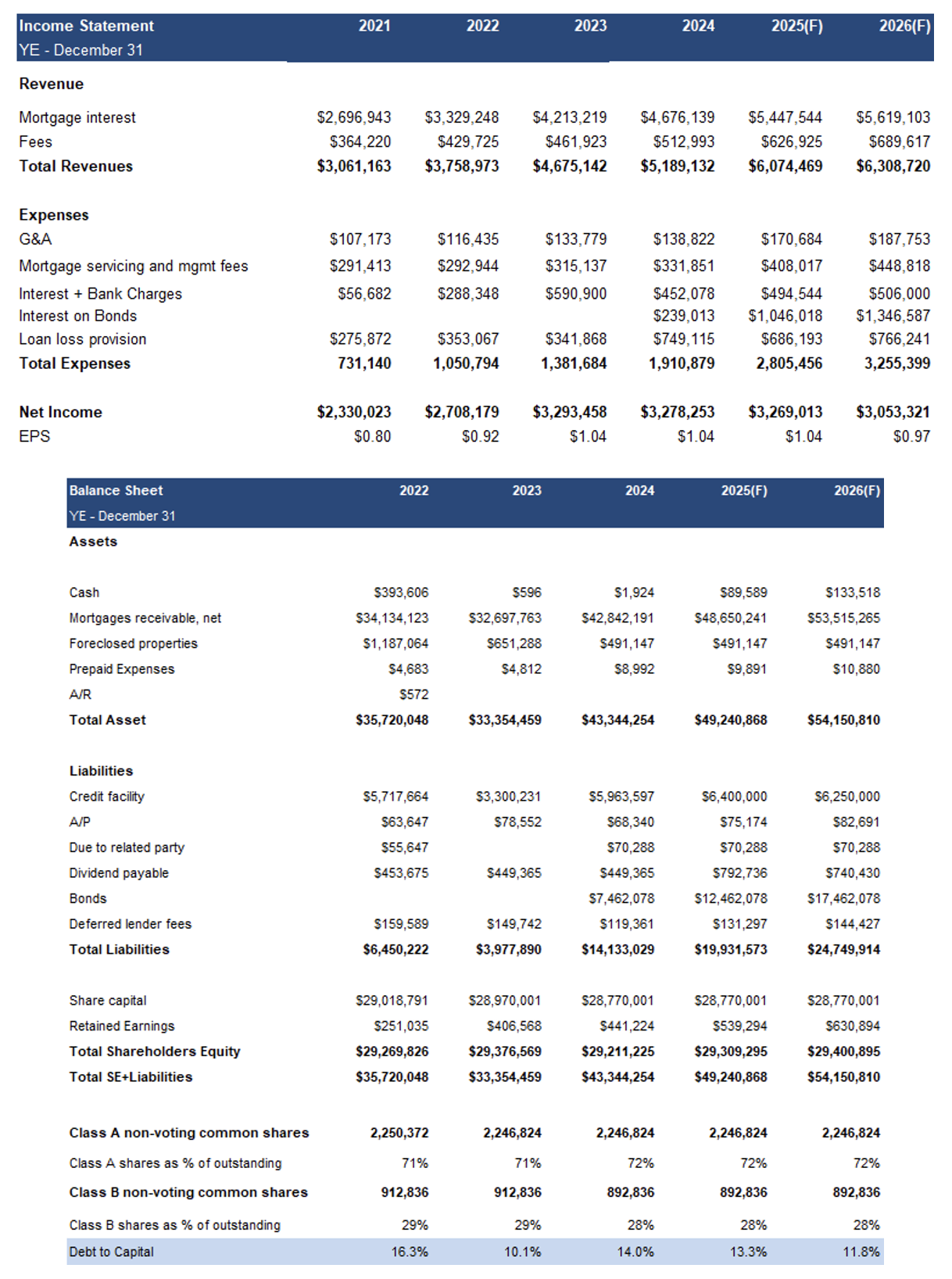
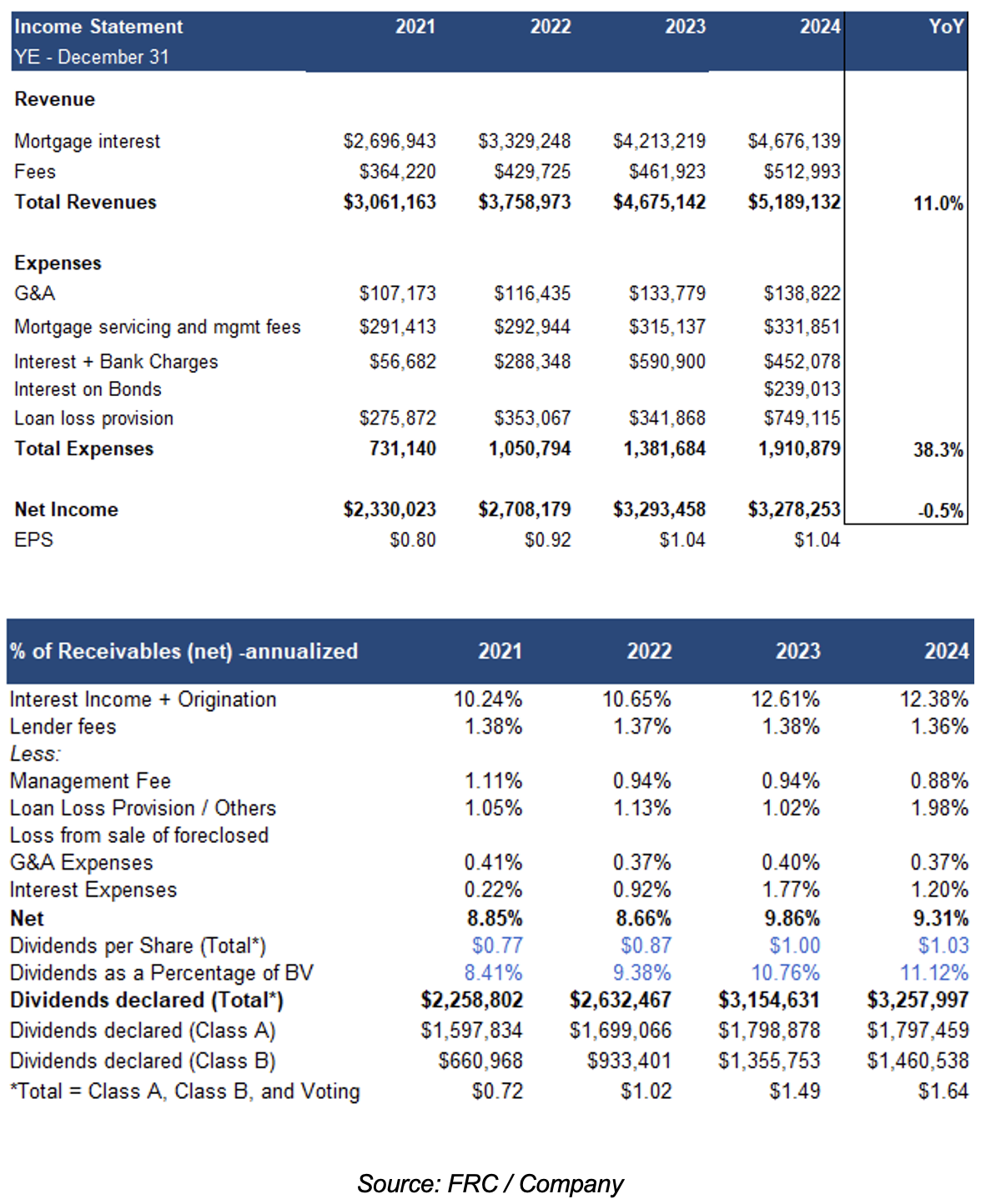
Revenue was up 11.0% YoY, beating our estimate by 1.5%, primarily due to higher than anticipated mortgage advancements. However, EPS held steady at $1.04, in line with our estimate, as higher loan loss provisions offset revenue growth
Dividends increased 0.36 pp to 11.12% of shareholders’ equity
Dividends for Class A investors remained unchanged at $0.80/share, implying a yield of 9.36
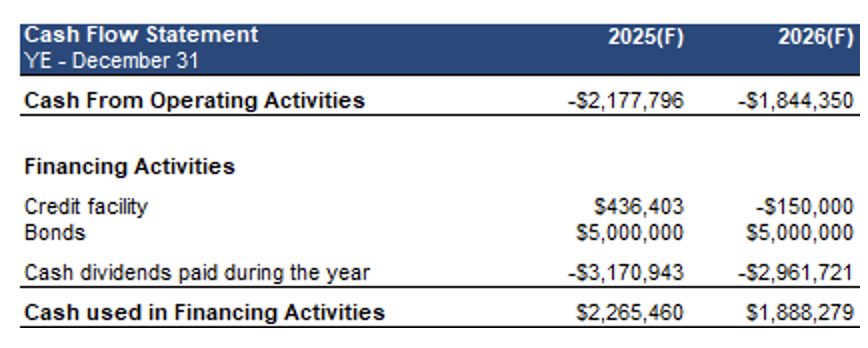
Debt/capital increased 4 pp to 14%, due to higher lending activity. In Q4, the company raised $7.5M of an ongoing $50M unsecured bond financing
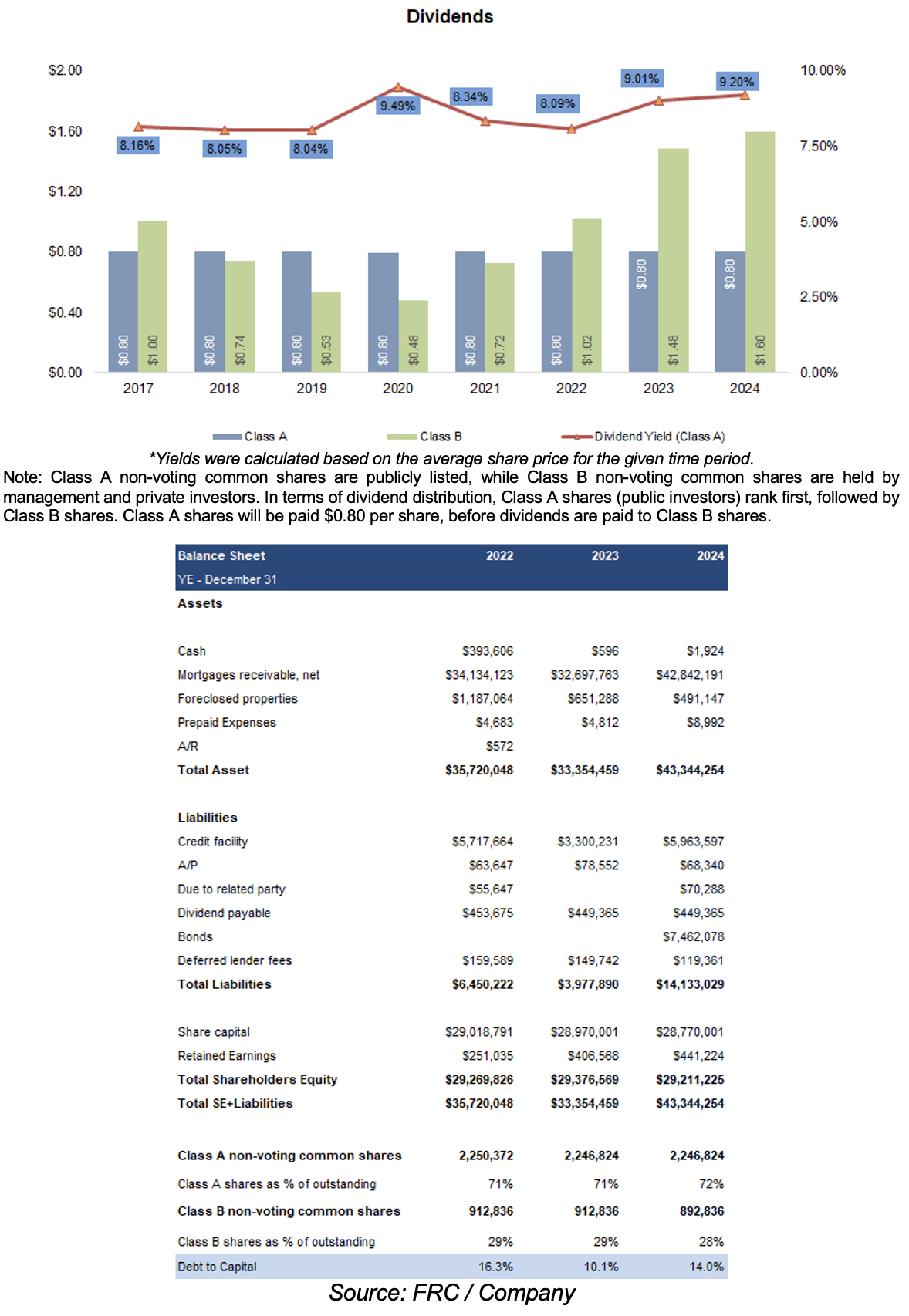
Bondholders rank pari passu (equal) with shareholders, and receive the same distributions, effectively making them equity investors
FRC’s Projections and Valuation
We believe the ongoing $50M bond financing should allow BCF to more than double its AUM; MIC credit lines are typically capped at 50% of receivables
As the bond financing carries a higher cost of capital than BCF’s line of credit, we are lowering our 2025 EPS estimate
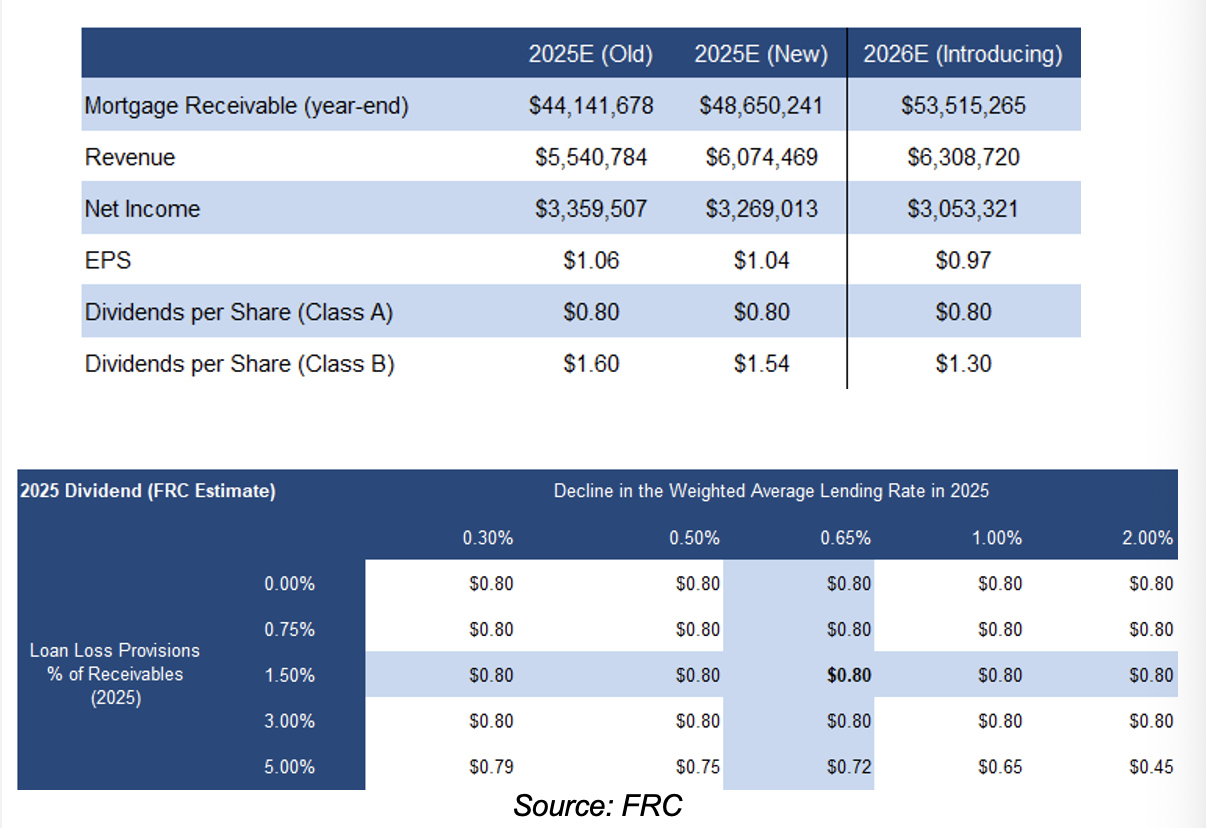
However, we believe the company can comfortably distribute its committed $0.80/share annual dividend
We note that BCF should be able to distribute $0.80/share even if lending rates decline by 2%, and loan loss provisions are increased by 250%
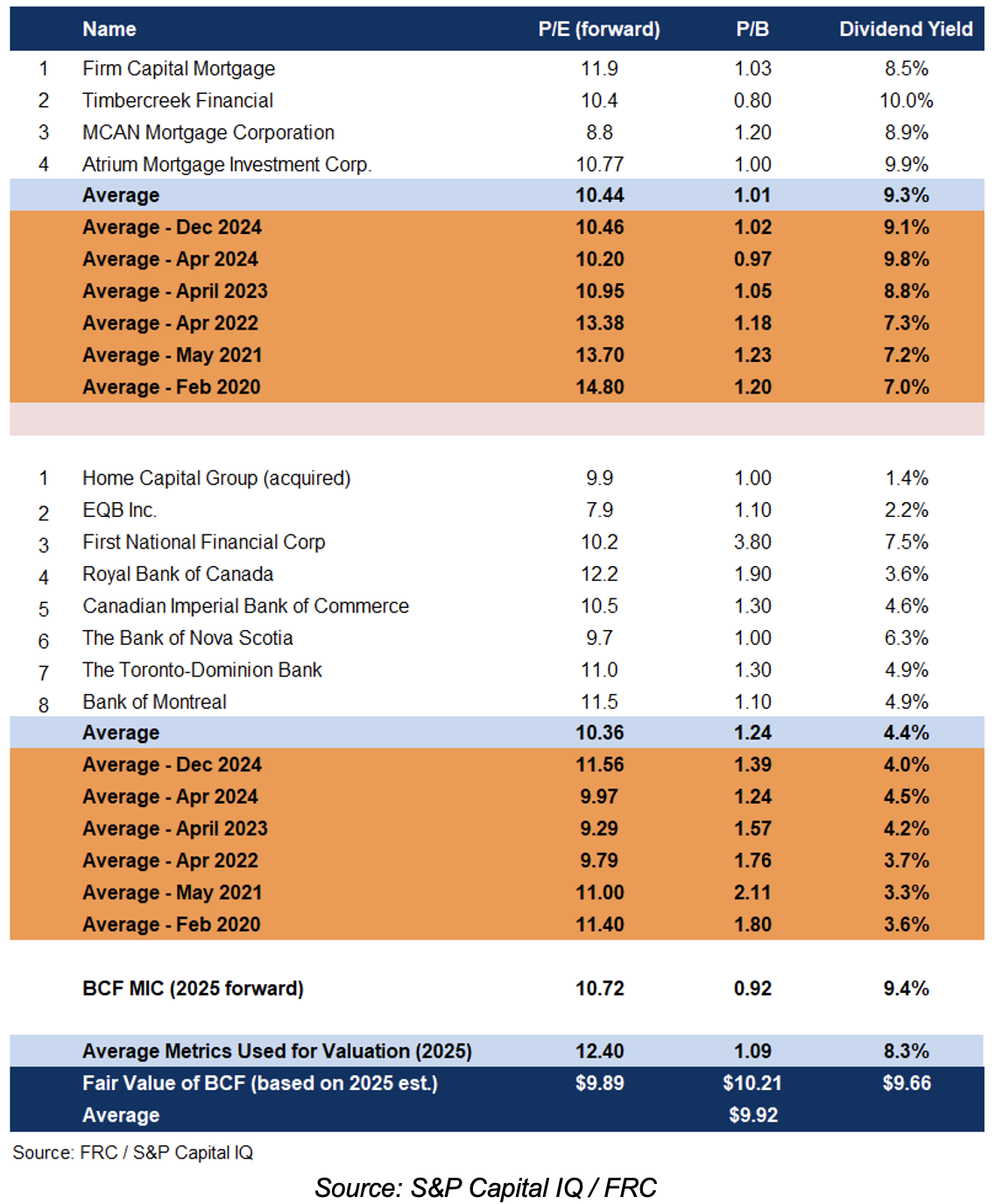
Sector multiples are down 2% since our previous report in December 2024. As a result, our fair value estimate decreased from $10.13 to $9.92/share
We are reiterating our BUY rating, and adjusting our fair value estimate from $10.13 to $9.92/share, implying an expected return of 25% (including dividends) in the next 12 months. BCF's 2024 financials largely aligned with our expectations. Although lower interest rates have historically benefited MIC/financial stocks, current geopolitical uncertainties, trade disputes, and the looming threat of a tariff-driven economic downturn are creating headwinds for the broader Canadian equity market. As illustrated in the sensitivity table above, BCF’s ability to sustain its dividend in stressed scenarios is a key strength.
Risks
Maintaining our risk rating of 3
The following, we believe, are the key risks of the company:
APPENDIX