

Disclosure:
Key Risks
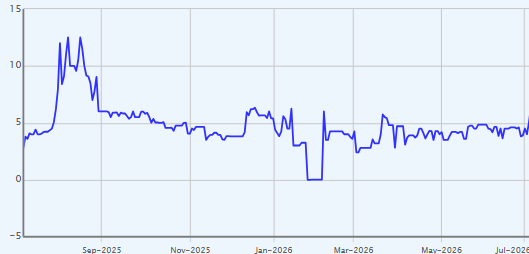
Price and Volume (1-year)
* BluSky AI Inc. has paid FRC a fee for research coverage and distribution of reports. See last page for other important disclosures, rating, and risk definitions. All figures in US$.
AI Adoption Across Industries
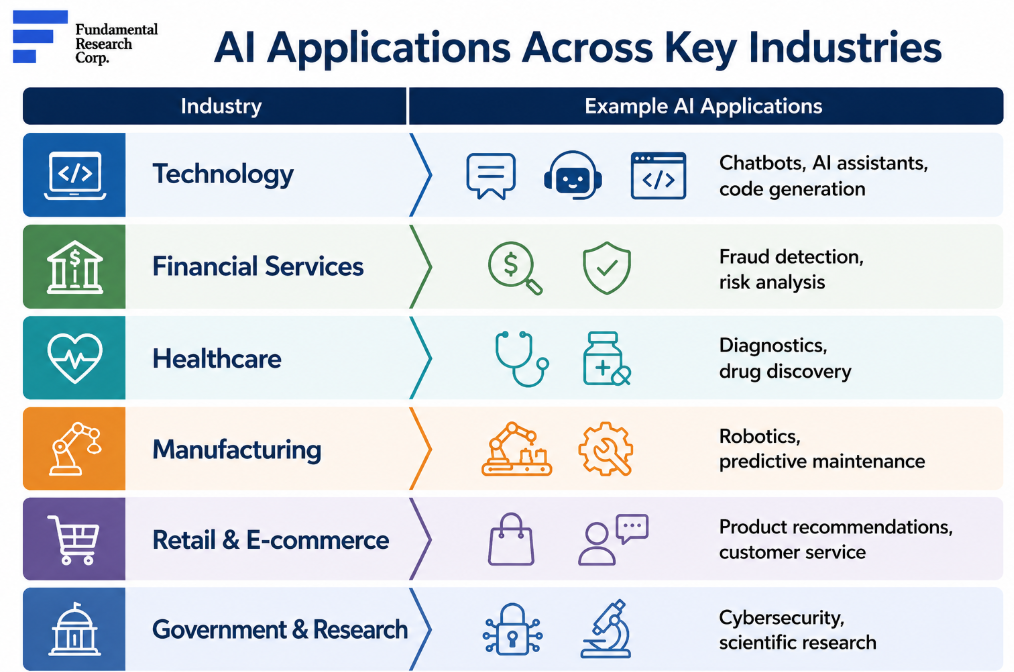
Artificial intelligence (AI) is being adopted across nearly every major industry to automate processes, improve decision-making, and develop new products and services. As adoption accelerates, demand for high-performance AI computing infrastructure continues to grow.
Organizations requiring AI computing include AI developers (e.g., OpenAI, Anthropic, and xAI), enterprises, startups, research institutions, and governments. Example applications include banks using AI to detect fraudulent transactions and hospitals using AI to analyze medical images and assist physicians with diagnosis.
Source: FRC
Organizations across virtually every industry are adopting AI to improve efficiency and decision-making
The AI Infrastructure Ecosystem
Data centers are the backbone of the AI ecosystem, providing the computing power needed to train and deploy AI models.
Organizations requiring AI computing generally have three options:
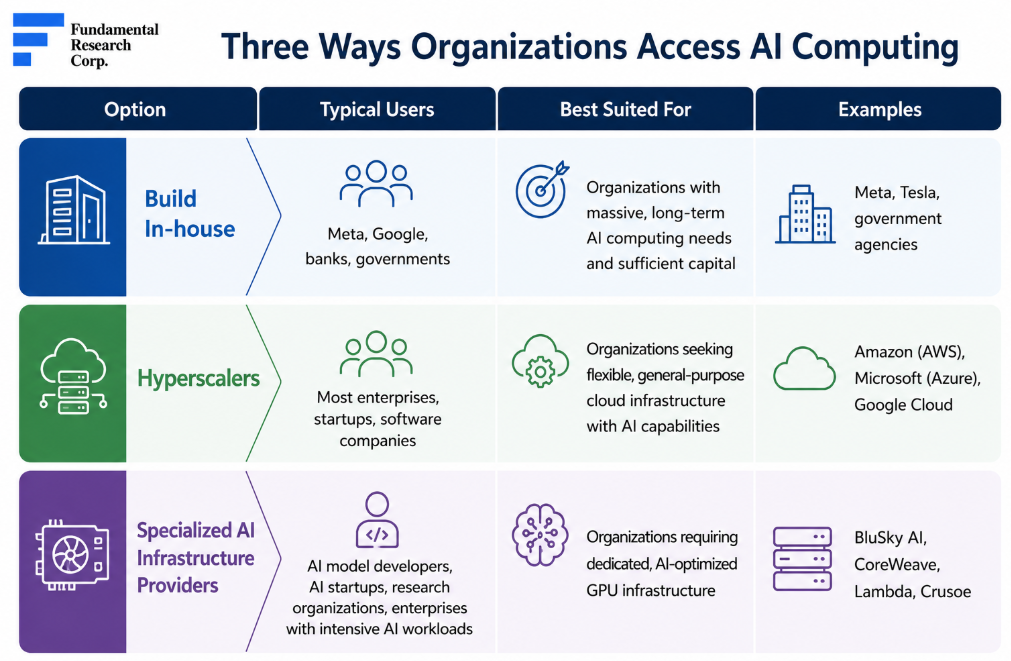
Building AI infrastructure requires significant capital, power, and technical expertise, making leased AI computing the preferred option for most organizations, while enabling on-demand scalability
Source: FRC
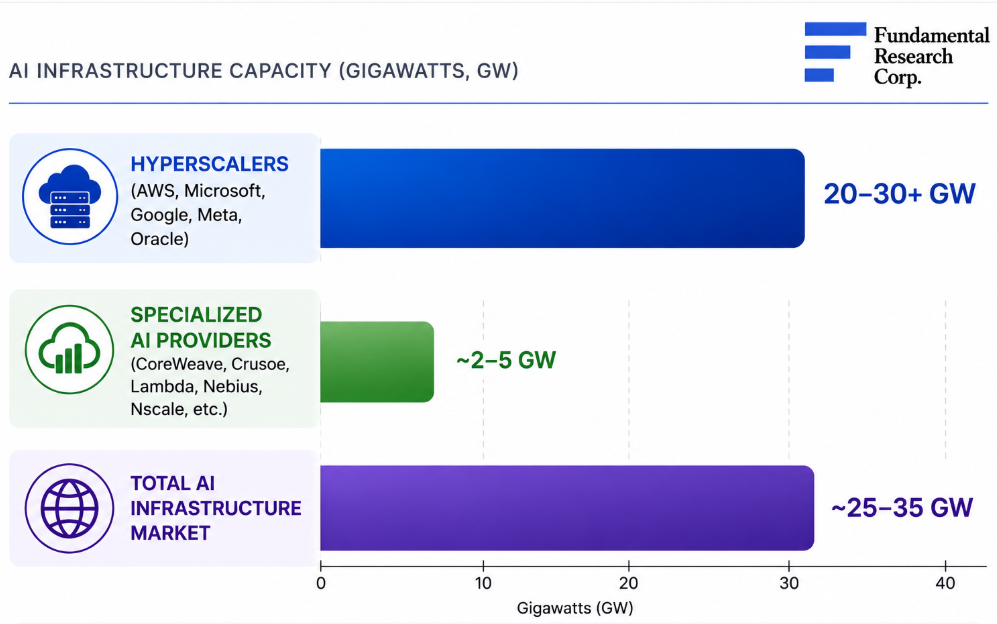
While hyperscalers dominate the market, specialized providers help meet growing AI demand
While hyperscalers offer AI as one of many cloud services, specialized providers focus exclusively on AI computing, complementing rather than replacing the major cloud platforms. We believe both business models can coexist, much like Amazon coexists with specialized retailers such as and, as the rapidly growing AI computing market is large enough to support both.
Source: FRC
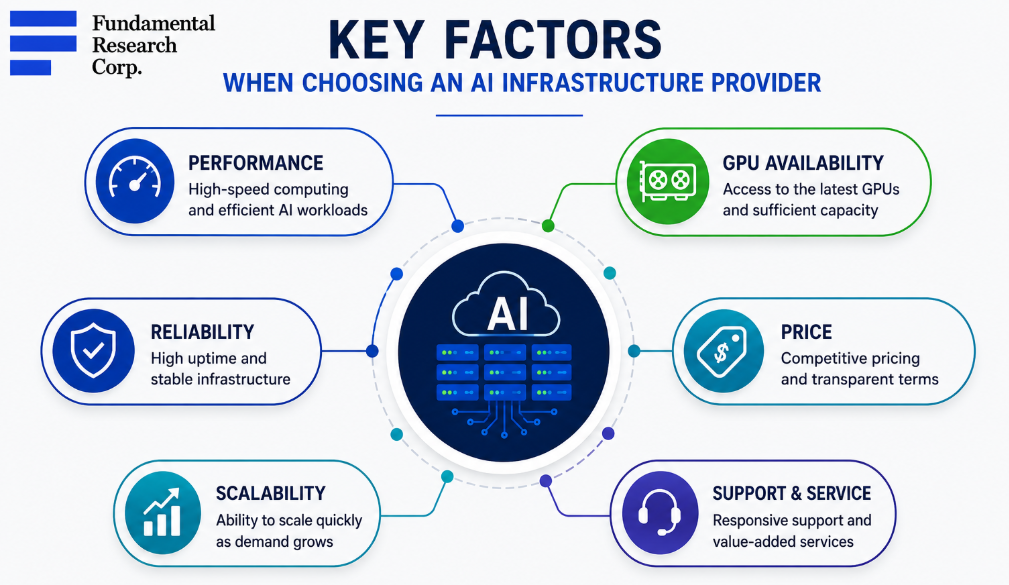
The ability to deliver reliable, scalable, and cost-effective AI computing is often the primary differentiator
Competitive Landscape
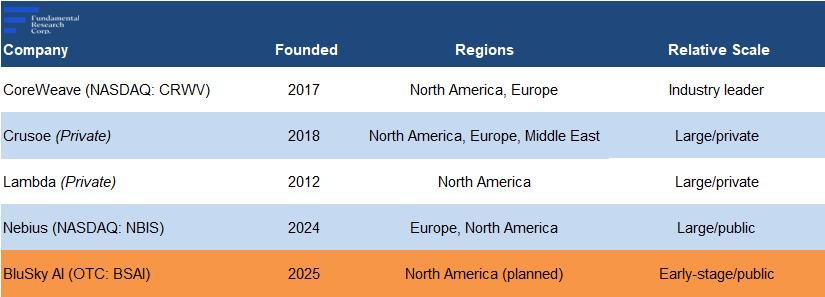
The specialized AI infrastructure market remains relatively fragmented, with a mix of established private companies, newly listed public companies, and emerging entrants.
Source: FRC / Various
While most providers operate across North America and Europe, they differ in scale, geographic reach, and stage of development
Source: FRC / Various
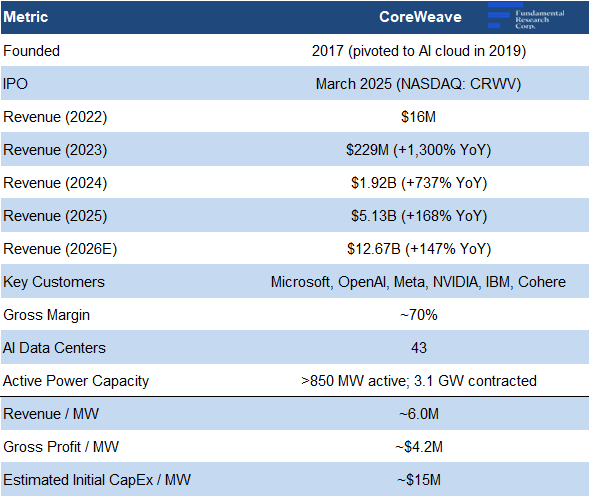
CoreWeave (Market Cap: $46B), the largest publicly traded specialized AI infrastructure company, provides a useful case study of the sector's growth potential
Revenue: $16M (2022) → $13B (2026E)
Estimated economics: ~$4.2M in gross profit per MW vs ~$15M in initial CAPEX per MW, implying an attractive payback
Headquartered in Salt Lake City, Utah
BSAI : Company Overview
While computing demand continues to accelerate, the industry faces constraints related to power availability, high capital requirements, and lengthy construction timelines. BSAI aims to help address this infrastructure gap through its modular SkyMod AI data centers, enabling faster deployment and scalable expansion of computing capacity.
Entered the AI infrastructure business in 2024
Five full-time + four part-time employees
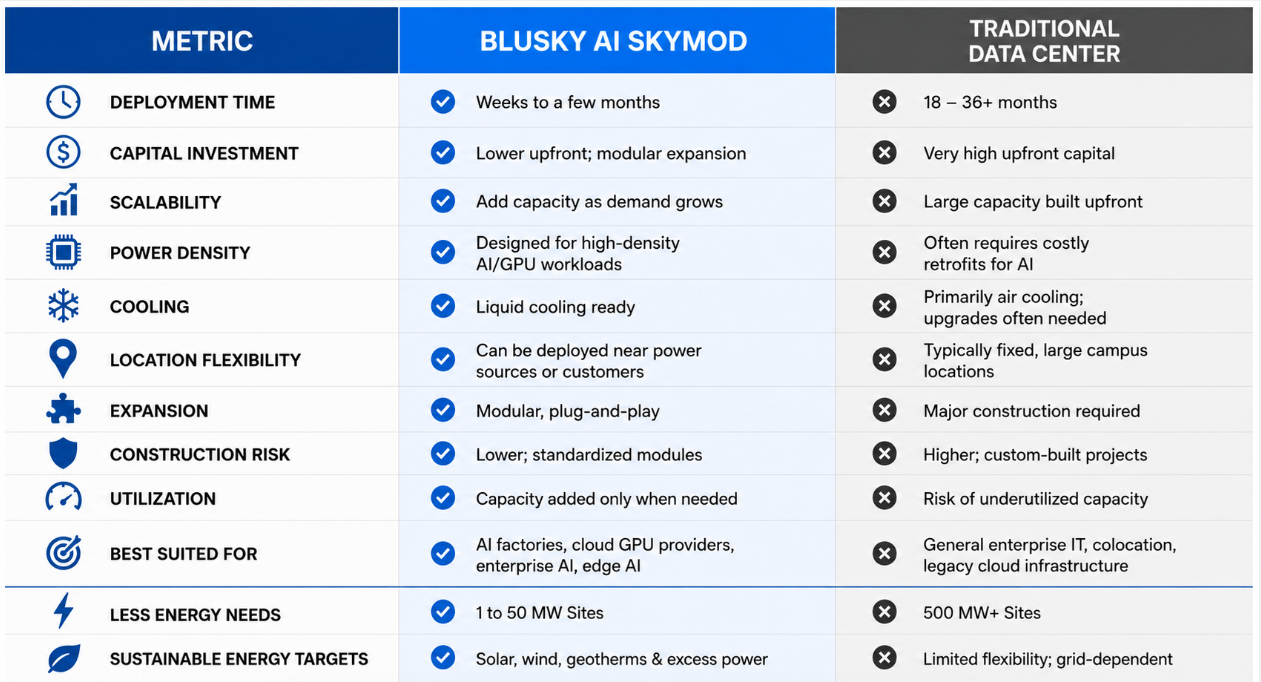
Redefining AI infrastructure with Modular Data Centers
Source: FRC
BSAI's modular SkyMod platform is designed to deliver AI infrastructure faster, cheaper, and more efficiently than traditional data center developments
Modular AI data centers are increasingly being adopted by specialized AI infrastructure providers. We believe BSAI's opportunity lies in successful execution and capturing a share of the rapidly growing AI infrastructure market, rather than in the uniqueness of its underlying technology or deployment model.
Solutions & Services
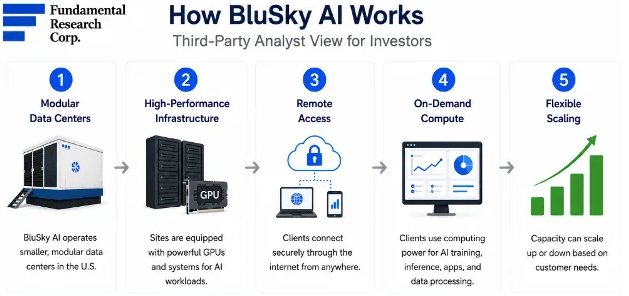
The following chart outlines how BSAI plans to deliver computing services.
Source: FRC
Customers can access AI computing resources on demand over the internet through a GPU-as-a-Service (GPUaaS) model
Primary Solutions
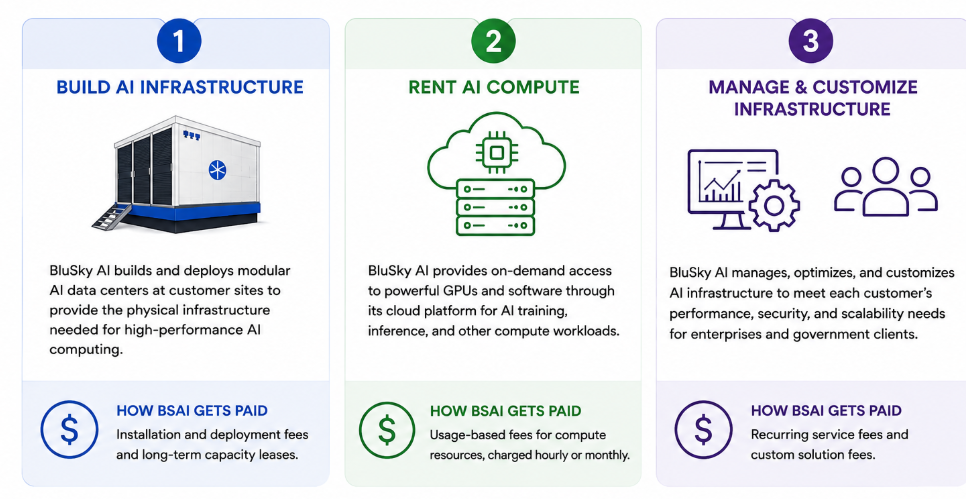
BSAI offers three complementary solutions: developing AI infrastructure for organizations building their own AI capabilities, renting AI computing through its GPUaaS platform, and managed infrastructure services, including deployment, monitoring, security, and technical support
We believe GPUaaS will be the primary long-term revenue driver
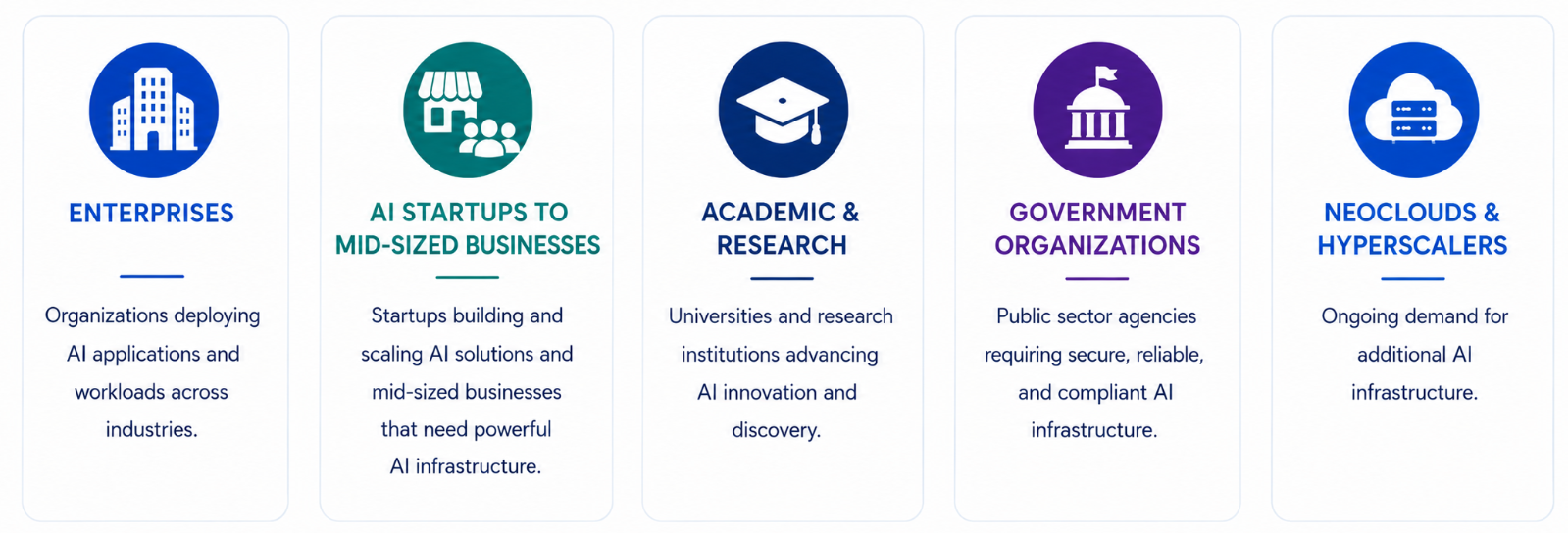
Target Clients
Source: FRC
BluSky AI targets organizations requiring AI computing infrastructure but lacking the scale, capital, or expertise to build and operate their own AI facilities
Deployment Strategy & Facilities
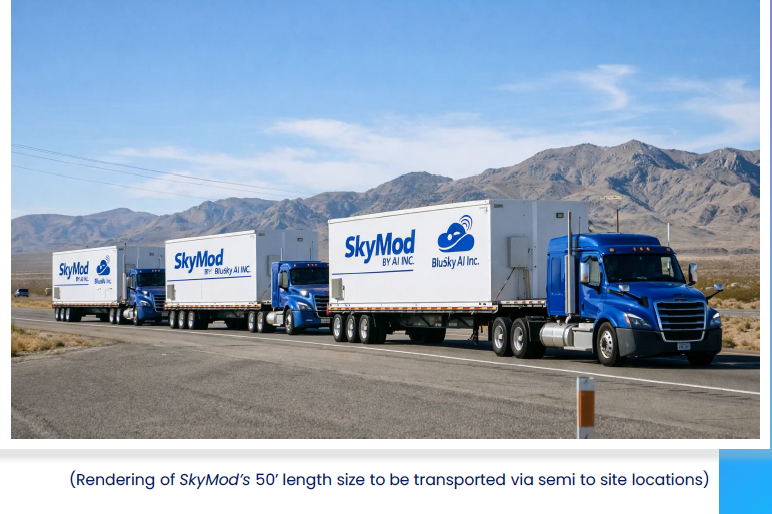
Source: Company
Illustration of BluSky AI's modular deployment model
Illustrative 4.5 MW SkyMod Design
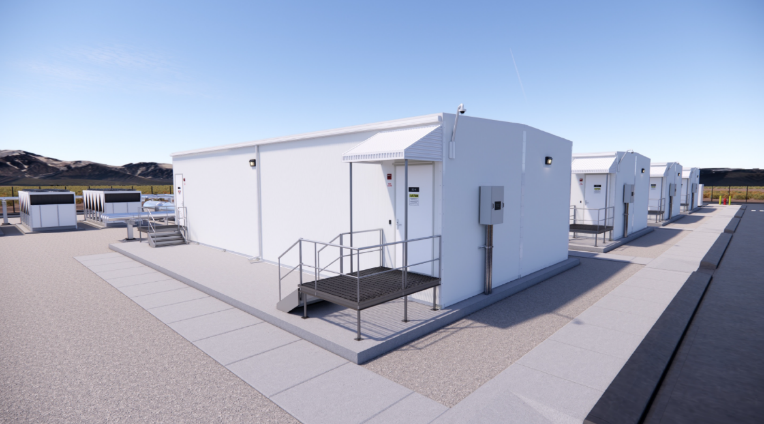
Modular, scalable designs
Illustrative 15 MW SkyMod Design
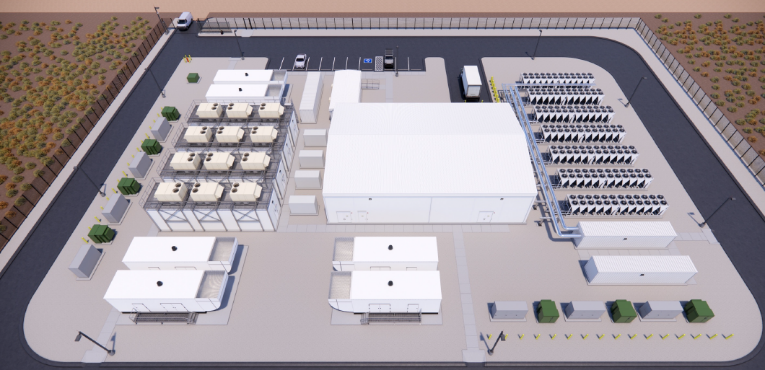
Source: Company
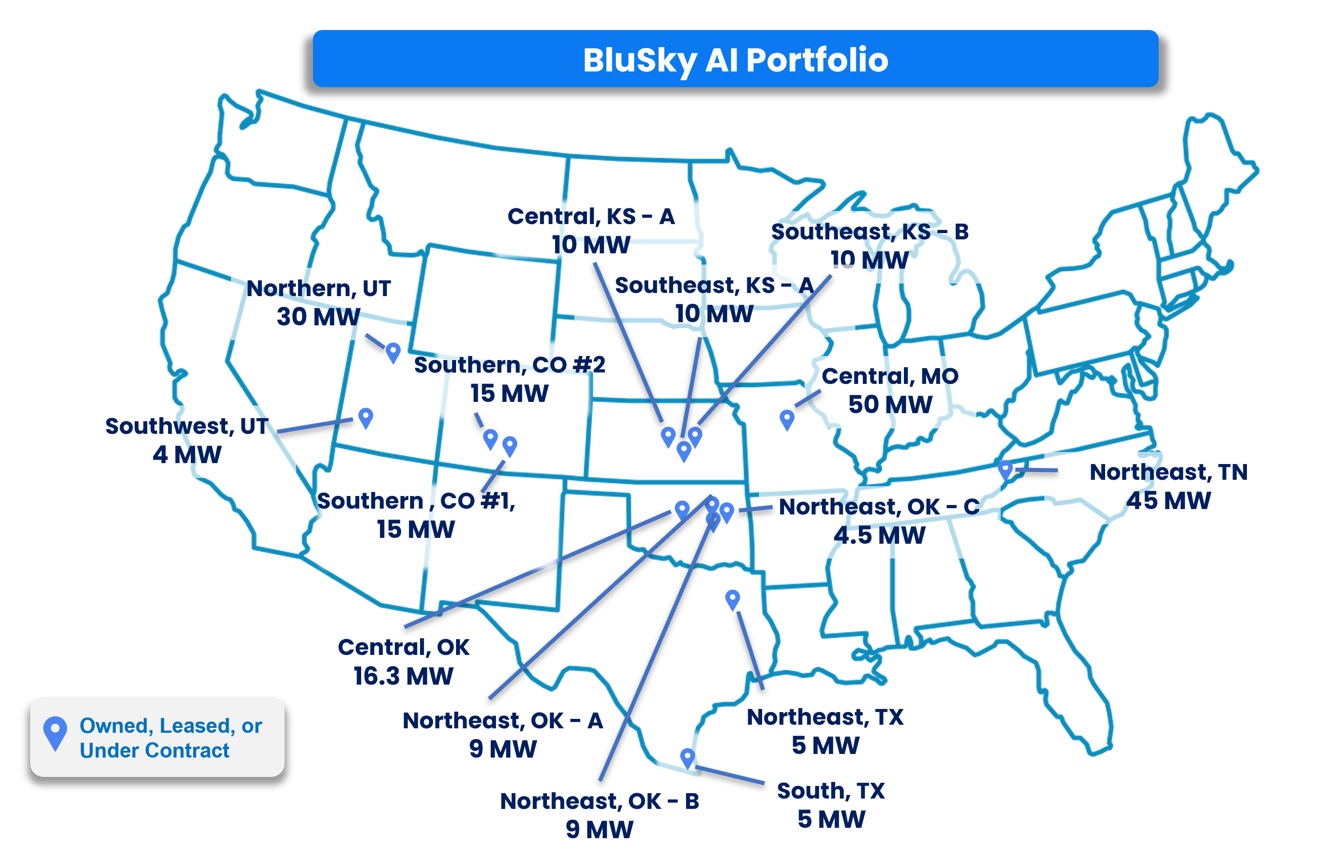
BSAI is targeting 10+ data centers with over 200 MW of planned capacity
For context, the U.S. AI infrastructure market is estimated at 25–35 GW

Source: FRC
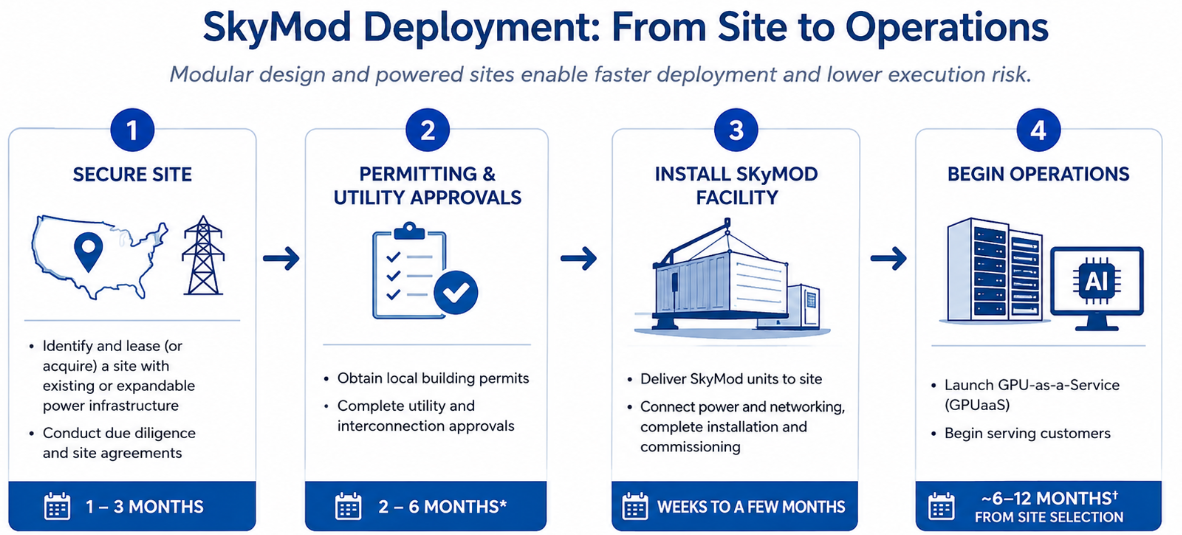
SkyMod facilities are designed to move from site selection to operations in months, subject to permitting
Market Overview
Global AI Market Size
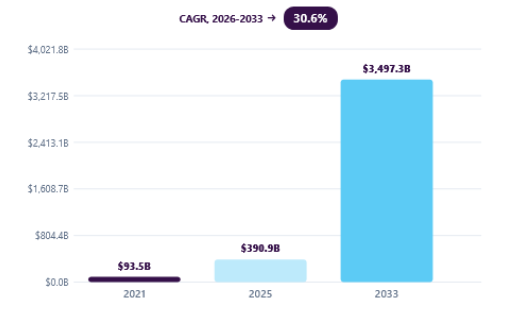
Global AI market projected to grow from $391B (2025) to $3.5T (2033), a 31% CAGR
Source: Grandview Research
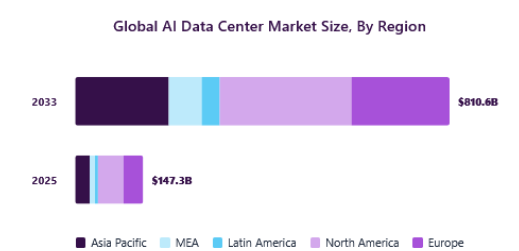
Global AI data center market expected to expand from $147B (2025) to $811B (2030), a 24% CAGR
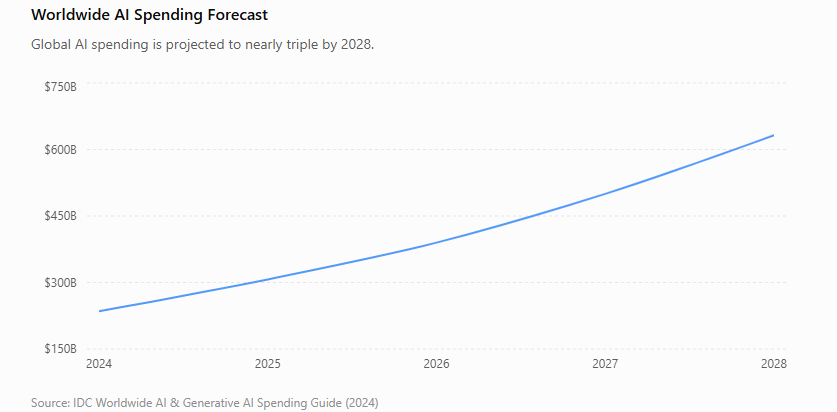
Global AI spending forecast to increase from $235B (2024) to $632B (2028), a 29% CAGR
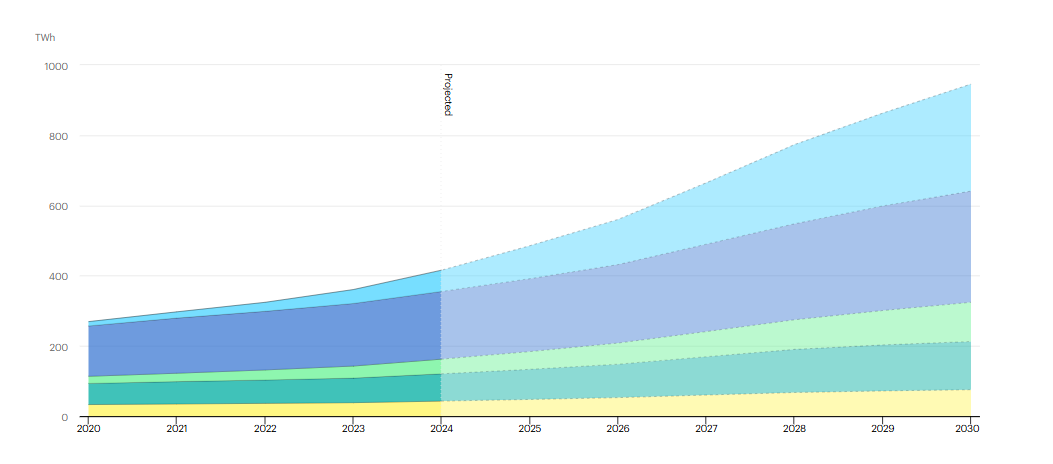
Data center electricity demand is projected to grow 15% p.a. through 2030, over 4x faster than other sectors
Global Data Centre Electricity Consumption
Source: IEA
In summary, we believe the above-mentioned trends provide a favorable backdrop for specialized AI infrastructure providers such as BSAI
Management and Directors
Brief biographies of the company’s management team and board members follow:
Trent D'Ambrosio – Founder, CEO & Director
25+ years of executive leadership across Fortune 500 companies and startups. Background in AI infrastructure, energy, finance, and digital transformation. Former Interim CEO/CFO of Inception Holdings and executive at Montana Power, leading digital infrastructure initiatives. Founded BluSky AI and led its strategic evolution into modular AI infrastructure. B.S. (Business), and MBA.
Founder-CEO currently owns ~80% of the company, though the ongoing and upcoming financings will dilute this stake
Dan Gay – COO & Director
30+ years of leadership in data centers, enterprise IT, telecommunications, cloud, and AI. Former executive at Catapult Solutions, BlockCerts , RackScale , NTI, Montana Power, Qwest, and MCI. Extensive experience in business development, data center development, enterprise sales, M&A, cloud transformation, and commercialization. B.Sc., Arizona State University.
Riley Cooney – Corporate Development & Strategy Officer
~10 years in corporate development, capital markets, M&A, and digital infrastructure. Advised on US$30B+ of infrastructure transactions and 800+ MW of data center deployments. Expertise in financing, investor relations, and growth strategy.
Three out of five directors are independent
Andrea Huels – Chief AI & Growth Officer
18+ years in enterprise AI, commercialization, and go-to-market strategy. Former AI executive at Lenovo and Vody. Named among the "50 Most Powerful Women in Technology"; speaker at NVIDIA GTC, IBM Think, and Yotta. Expertise in AI strategy, partnerships, and enterprise adoption.
Jules Bedard - Chief Technical Officer
15+ years leading IT security teams, specializing in automation, AI, and information security. Developed the first Bitcoin escrow service and anti-fraud service. Developed AI applications for a SaaS company and a proprietary LLM for an AdTech company. CDI College, Canada, Networking, Development, Security.
We believe management's expertise aligns closely with BSAI's business strategy, spanning digital infrastructure, data centers, cloud computing, and capital markets
Rodney Sperry - Chief Financial Officer
18+ years leading accounting services firms serving in manufacturing, distribution, mining, and energy. Served as an outside controller for 14 years for public companies responsible for SEC filings and compliance.
Theodore P. Botts – Independent Director
40+ years of experience in investment banking, corporate finance, capital markets, M&A, and corporate governance. Former executive at Chemical Bank, Goldman Sachs, and UBS. President of Kensington Gate Capital since 2001 and Chair of the Audit Committee at Remark Holdings. Appointed to BluSky AI's Board in May 2026.
Whit Cluff – Independent Director
35+ years in commercial real estate, land development, mixed-use, industrial properties, and asset management. Extensive public and private company experience in site selection, infrastructure planning, negotiations, and project execution. U.S. Army veteran.
Mort Aaronson – Independent Director
35+ years of executive leadership experience. Former senior executive at MCI, CEO of KN Energy, Enable, and Ricochet Networks, and founder of three adtech companies. Currently advises Fortune 500 CEOs through Marshall Goldsmith's 100 Coaches.
Financials
Source: FRC / Company
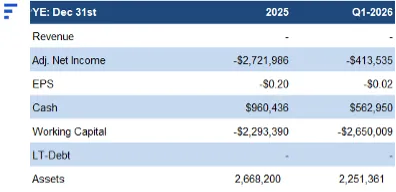
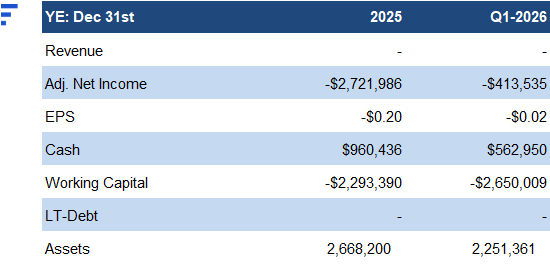
At the end of Q1-2026, the company had $0.56M in cash, ($2.65M) in working capital deficit, and no debt
Subsequent to quarter-end, BSAI launched a $62.5M equity offering
Comparables Valuation
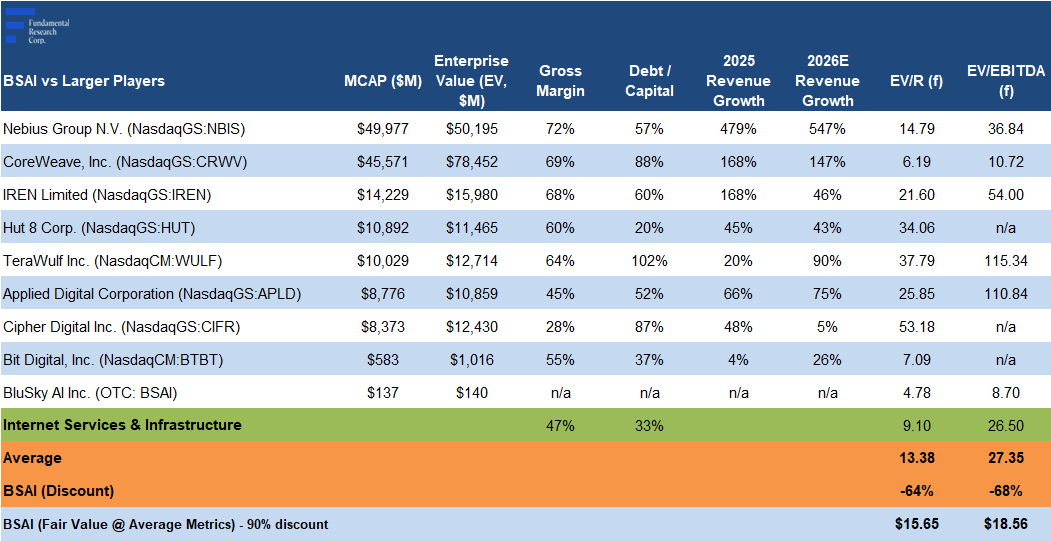
* BSAI's EV/Revenue and EV/EBITDA multiples are based on our projected revenue and EBITDA at 200 MW of installed capacity.
Source: FRC / S&P Capital IQ
BSAI trades at a 66% average discount to forward multiples (5x vs 13x revenue; 9x vs 27x EBITDA)
Applying sector average multiples to our estimates implies fair values of $15.65/share based on revenue, and $18.56/share based on EBITDA
Given BSAI's early-stage status relative to larger, more established peers, we apply a 90% discount for conservatism
FRC Projections and Valuation
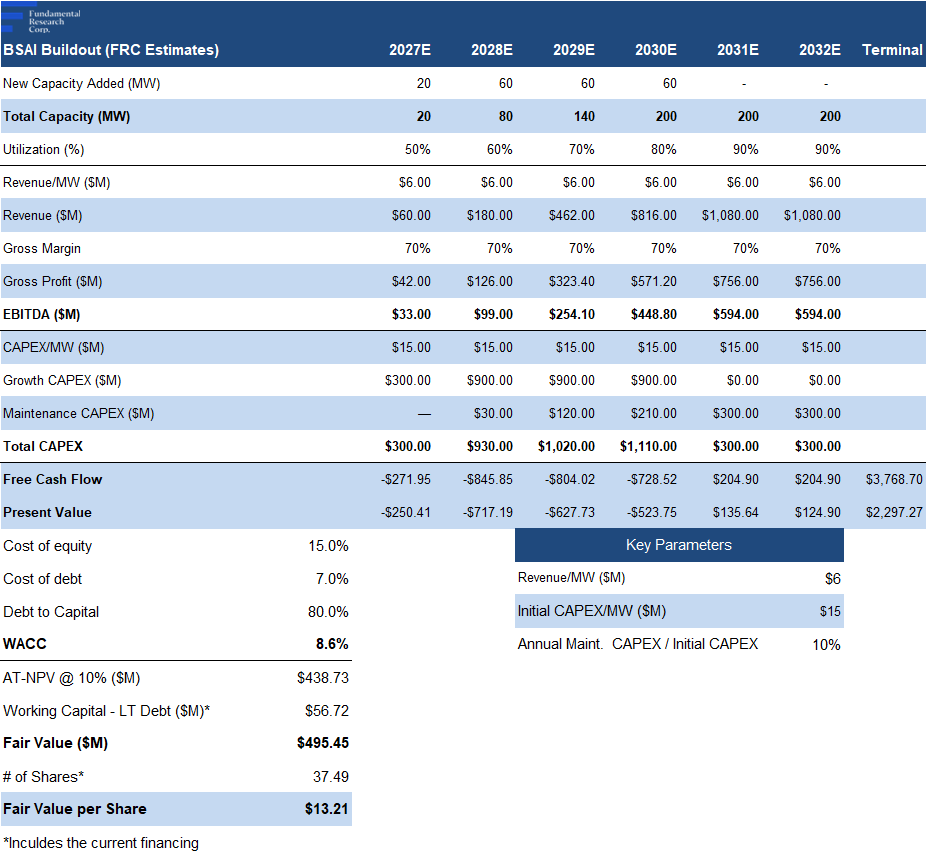
We assume the SkyMod infrastructure has a useful life of approximately 25 years, while GPUs and AI servers are replaced every five years, consistent with industry practice. Accordingly, our model assumes annual maintenance CAPEX of 10% of initial CAPEX to reflect ongoing GPU refreshes and infrastructure maintenance.
Source: FRC
Our DCF valuation is $13.21/share, based on BSAI reaching 200 MW of installed capacity by 2030
Our assumptions for unit revenue, gross profit, initial and maintenance CAPEX, and capital structure are broadly in line with comparable companies
We are initiating coverage with a BUY rating and a fair value estimate of $15.81/share, based on the average of our three valuation methodologies. BSAI offers investors exposure to one of the fastest-growing technology markets, with significant upside if management successfully executes its 200+ MW AI infrastructure strategy. While execution, financing, and commercialization risks remain high, we believe the current valuation does not fully reflect the company's growth potential.
Risks
We believe the company is exposed to the following key risks (not exhaustive):
We are assigning a risk rating of 4 (Speculative)
.webp&w=128&q=75)
.webp&w=128&q=75)



Discussion
Comments reflect the views of individual users, not FRC. Nothing posted in the comments section — by users or otherwise — should be taken as investment advice.