

Risks
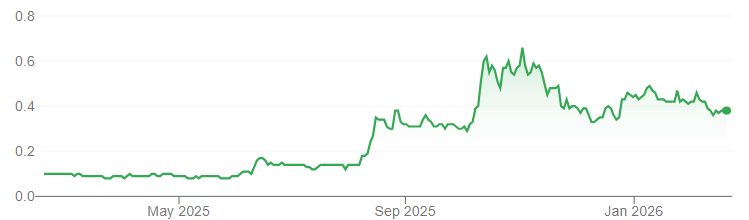
Price and Volume (1-year)
* Qualified Person: Réjean Girard, P.Geo. (QC), President of IOS Geosciences Inc., a consultant to Focus Graphite
* Focus Graphite Inc. has paid FRC a fee for research coverage and distribution of reports. See last page for other important disclosures, rating, and risk definitions. All figures in C$; commodity prices in US$.
A key component for defense applications, lithium-ion batteries for energy storage and electric vehicles, and other industrial uses
Graphite: Market Overview and Outlook
Graphite is used in a wide range of applications including energy storage, thermal management, engineering products, graphite powder additives, lubricants, and plastic polymers. Certain products, such as battery anode materials, use a blend of natural graphite (NG) and artificial/synthetic graphite (AG), while in other cases only one type is suitable.
Demand for NG is rising, as AG is often more expensive to produce, and carries greater environmental concerns due to its energy-intensive manufacturing process. AG is highly sensitive to rising oil and energy costs. As the battery materials market grows, so does the demand for greener, responsibly sourced alternatives, making high-quality natural graphite increasingly attractive.
Graphite and lithium are the only materials used in all major battery types
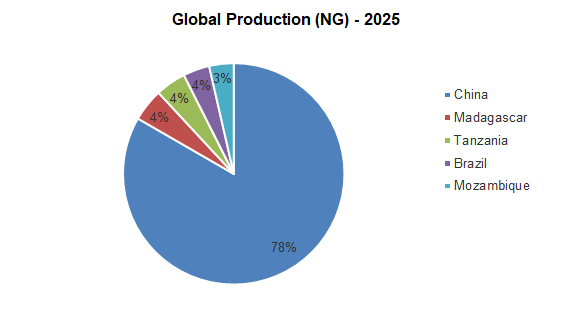
Source: USGS/FRC
As battery demand grows, NG stands out for its lower production costs and smaller environmental footprint
Asia accounts for over 80% of global NG (1.5 Mt/year) and AG (2.5 Mt/year) demand.
China is a major producer of advanced graphite products, accounting for 75-80% of global production of both NG and AG
Graphite Demand and Supply
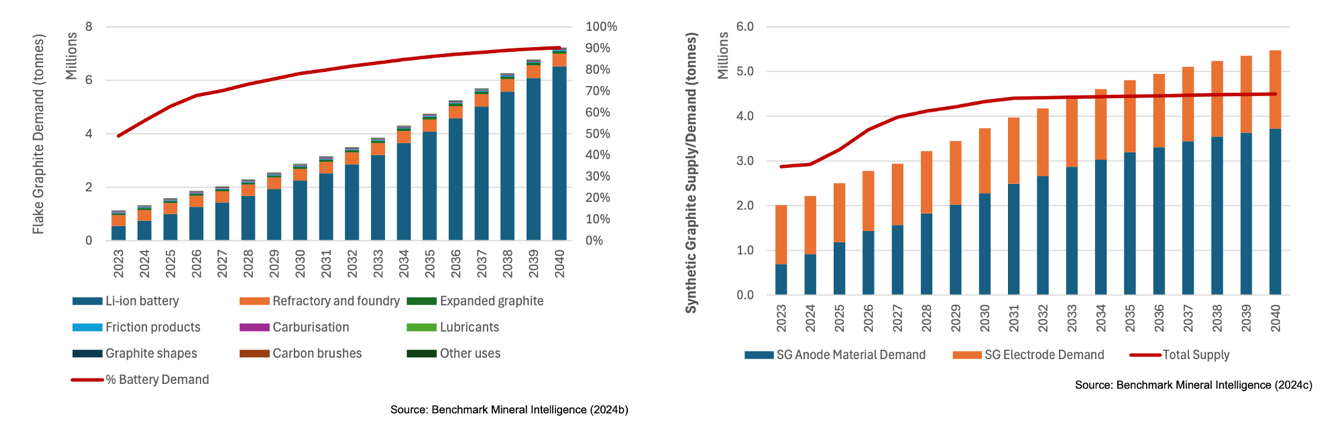
NG demand is projected to rise to 7.2 Mtpa, and AG to 5.4 Mtpa, by 2040, mainly fueled by growth in EV battery and storage markets
Graphite Prices
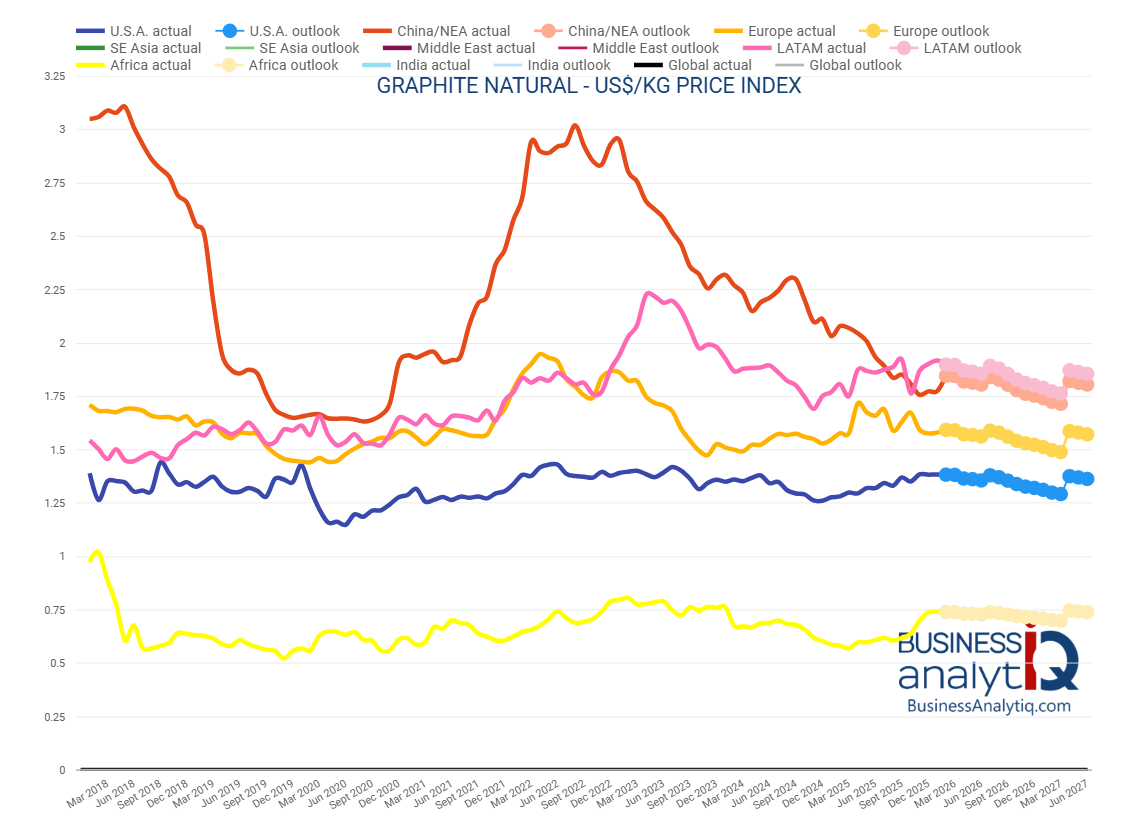
The graphite market, currently in surplus, is expected to shift to a deficit by decade’s end, widening thereafter, suggesting a strong long-term price outlook
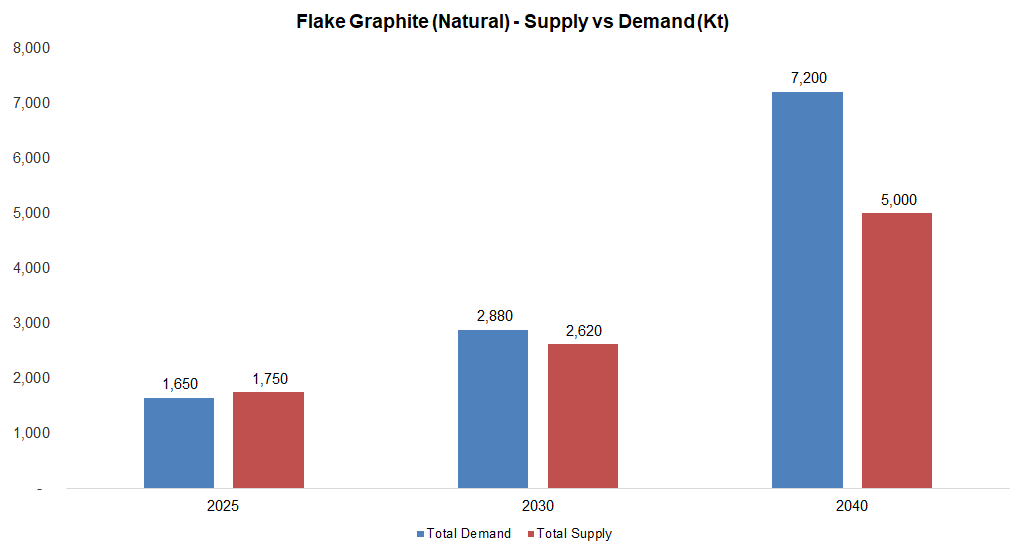
Source: IEA, Benchmark Mineral Intelligence, and Others
Securing Domestic Graphite for U.S. Energy and Defense Needs
Graphite is a critical mineral for the U.S., essential in lithium-ion batteries and defense applications, and listed under NATO Defence Critical Raw Materials. We believe the U.S. has a pressing need for domestic graphite production, as it imports 100% of its graphite consumption. With U.S. tariffs on Chinese battery-grade graphite ranging from 160% to 20 0%, domestic demand for graphite projects is rising .
Company Overview
Portfolio Summary
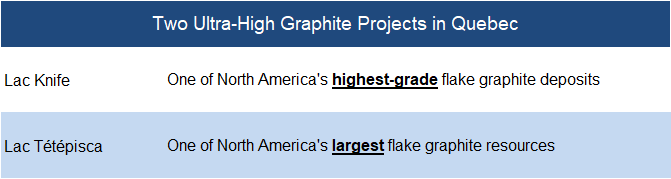
Source: FRC
Aims to supply graphite anodes for lithium-ion batteries in North America for defense, energy storage, and high-performance applications
Lac Knife Graphite Project (100% owned)
Ownership and Location
The Lac Knife project covers 29,863 hectares in northeastern Quebec. Quebec is home to the only natural graphite mine in North America, and several advanced-stage graphite projects. We believe this makes Lac Knife a prime location for graphite development, within a leading region for North America’s battery and graphite industry.
FMS acquired the project in 2010
Project Location
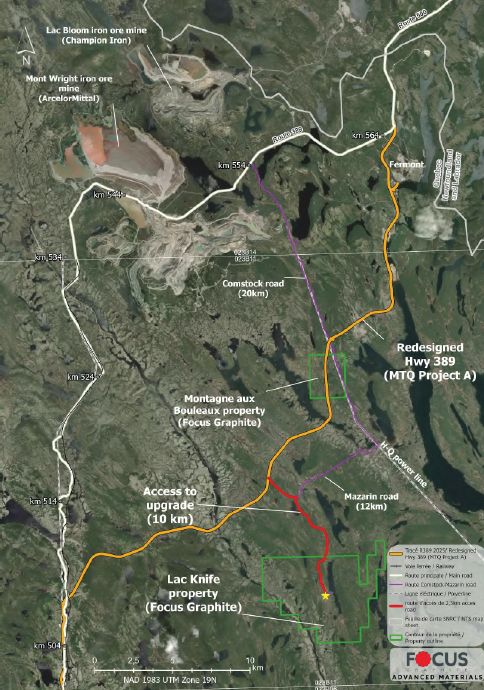
Source: Company
Strategic location: 27 km south of Fermont, near major iron ore operations including ArcelorMittal (NYSE: MT), Rio Tinto (LSE: RIO), and Champion Iron (ASX: CIA)
Developed infrastructure: Easy access to roads, rail, power, and ports
Resources and Feasibility Study
2023 Resource Estimate (4.0% Cg cut-off)
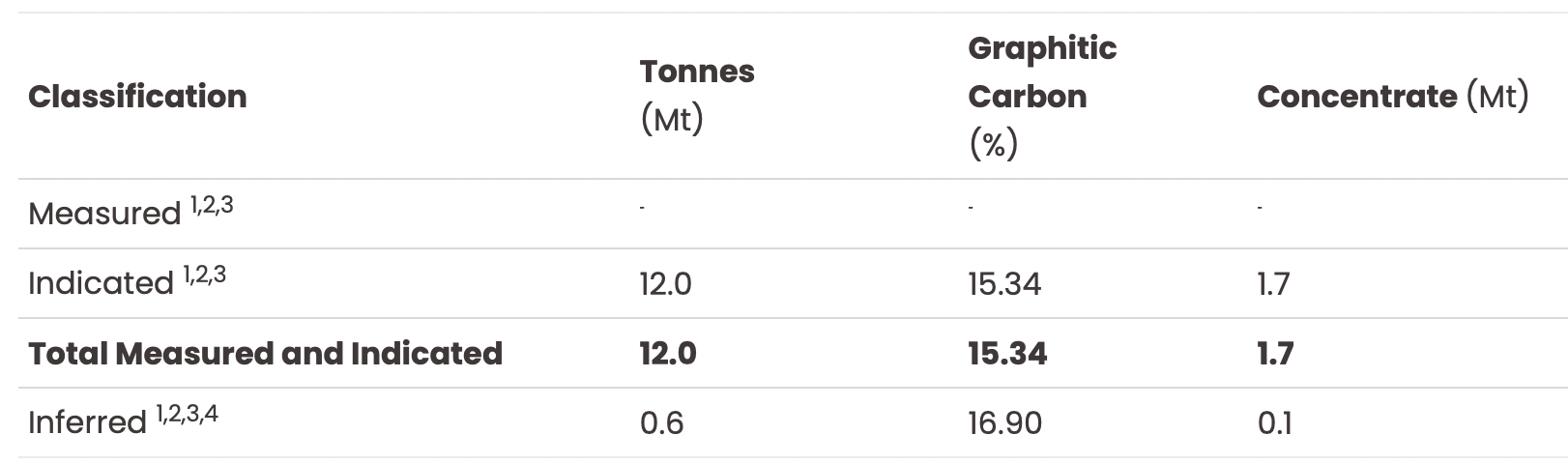
The project is ideal for open-pit mining, with one of the world’s highest grades at 15% Cg, well above the usual 3–5%, allowing for relatively low extraction costs
Although the resource is modest, there is significant expansion potential, with mineralization open along strike and below the proposed pit (1.13 km × 400 m × 150 m), and several targets still untested
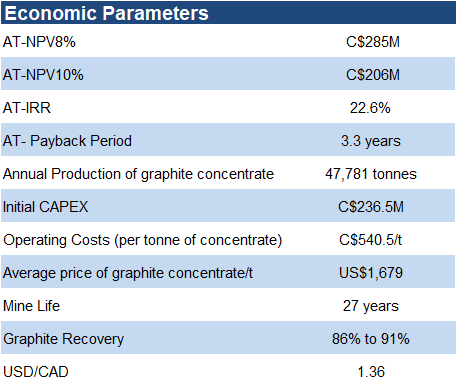
2023 Feasibility Study Highlights
QP : Marc-André Bernier géo. (QC), P.Geo., (ON), M.Sc., Technical adviser for Focus Graphite
Source: Company / FRC
High grades, low-cost hydro power, and open-pit mining make this project one of Canada’s lowest CAPEX and OPEX opportunities—a major advantage for economics
27-year mine life; attractive for buyers seeking long-term supply
After-tax NPV8%: $286M, IRR: 23%; we view IRR >20% as very attractive
The study used a weighted average product price of $1,679/t vs the current spot price of $1,000-$1,500/t
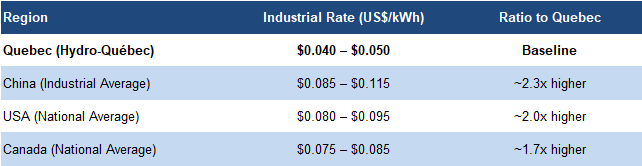
Quebec projects benefit from very low electricity costs, thanks to abundant hydroelectric power. Electricity typically represents 10–20% of a graphite mine’s operating costs globally, but only 5–10% in Québec.
Electricity Cost Comparison
Source: FRC / Various
Electricity rates in Quebec are far below those in China, the U.S., or across Canada
Tests show the project can produce high-purity graphite for batteries and high-end applications. Batteries made with Lac Knife graphite showed almost no capacity loss in their first charge cycle, compared with 3.5–6.5% capacity loss for synthetic graphite.
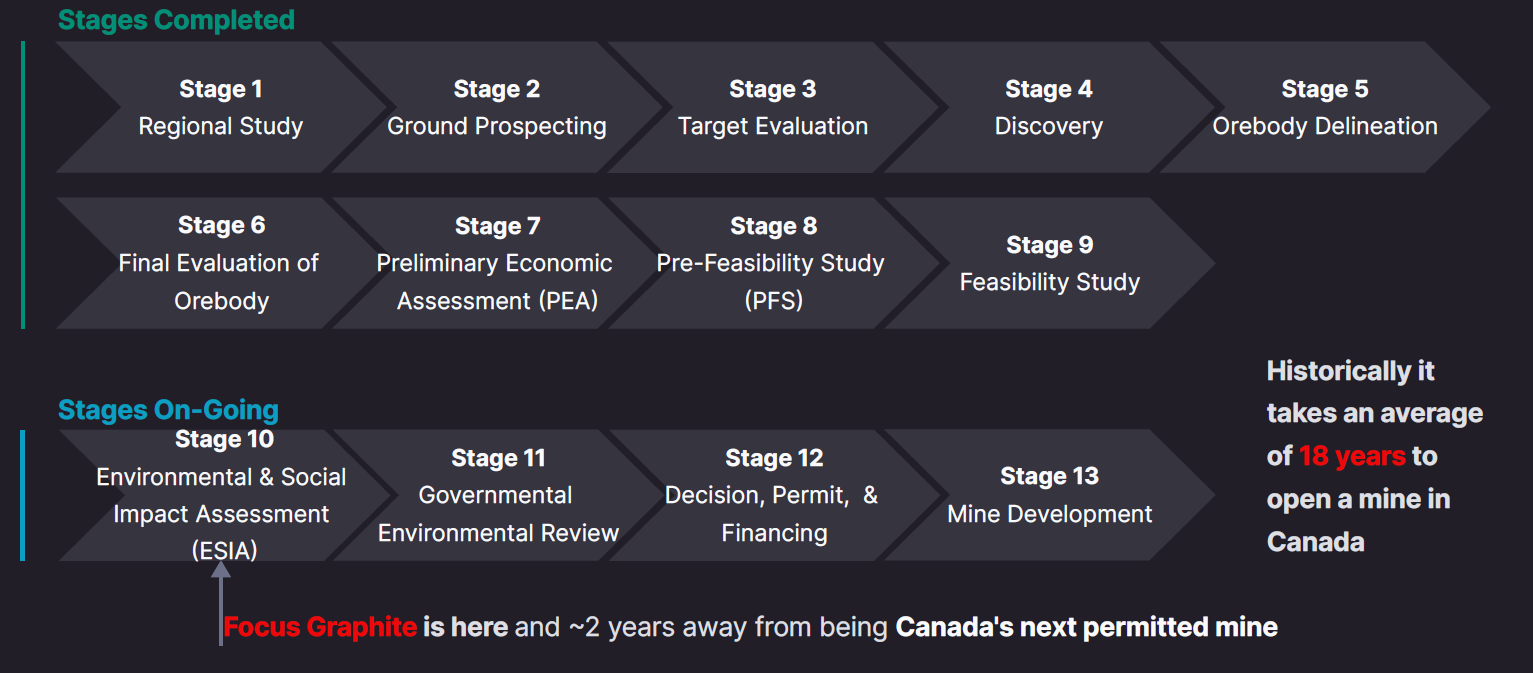
Next steps include off-take testing and approval with strategic partners, an environmental assessment and permitting, and project financing toward construction. Management intends to advance the project to production within two to three years , which we believe is a reasonable timeline.
Project Development Stages
Source: Company
Permitting underway; production expected by 2028-2029
Tétépisca Graphite Project (100% interest)
Ownership and Location
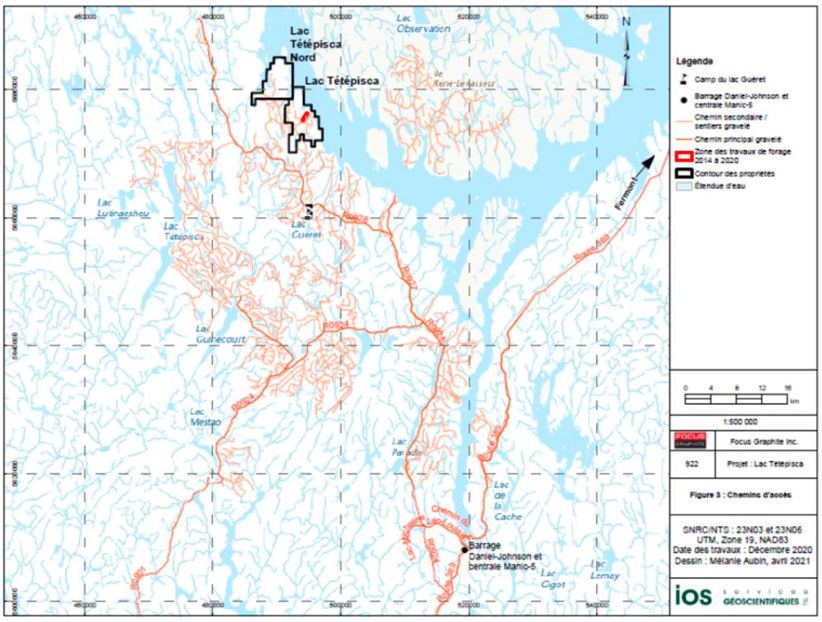
The project covers 6,738 hectares , and includes two connected properties, Lac Tétépisca and Lac Tétépisca Nord.
FMS acquired the project in 2011
Location Map
Source: Company
It is 180 km southwest of the Lac Knife project, which could act as the main hub while Tétépisca supplies material for processing, reducing the need for its own processing facility, lowering capital costs, and speeding up production
Resources
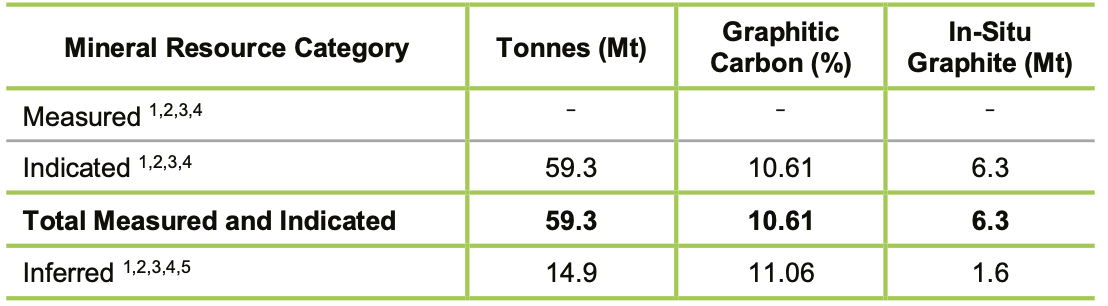
2022 Resource Estimate (at 3.9% Cg cut-off)
QP: Schadrac Ibrango, P.Geo. (QC), PhD, MBA, Consultant of DRA Global Limited
Source: Company
Hosts one of the largest graphite resources in North America — almost five times larger than the company’s Lac Knife deposit
At 10–11%, grades are slightly lower than Lac Knife, but still above the typical 3–5% range
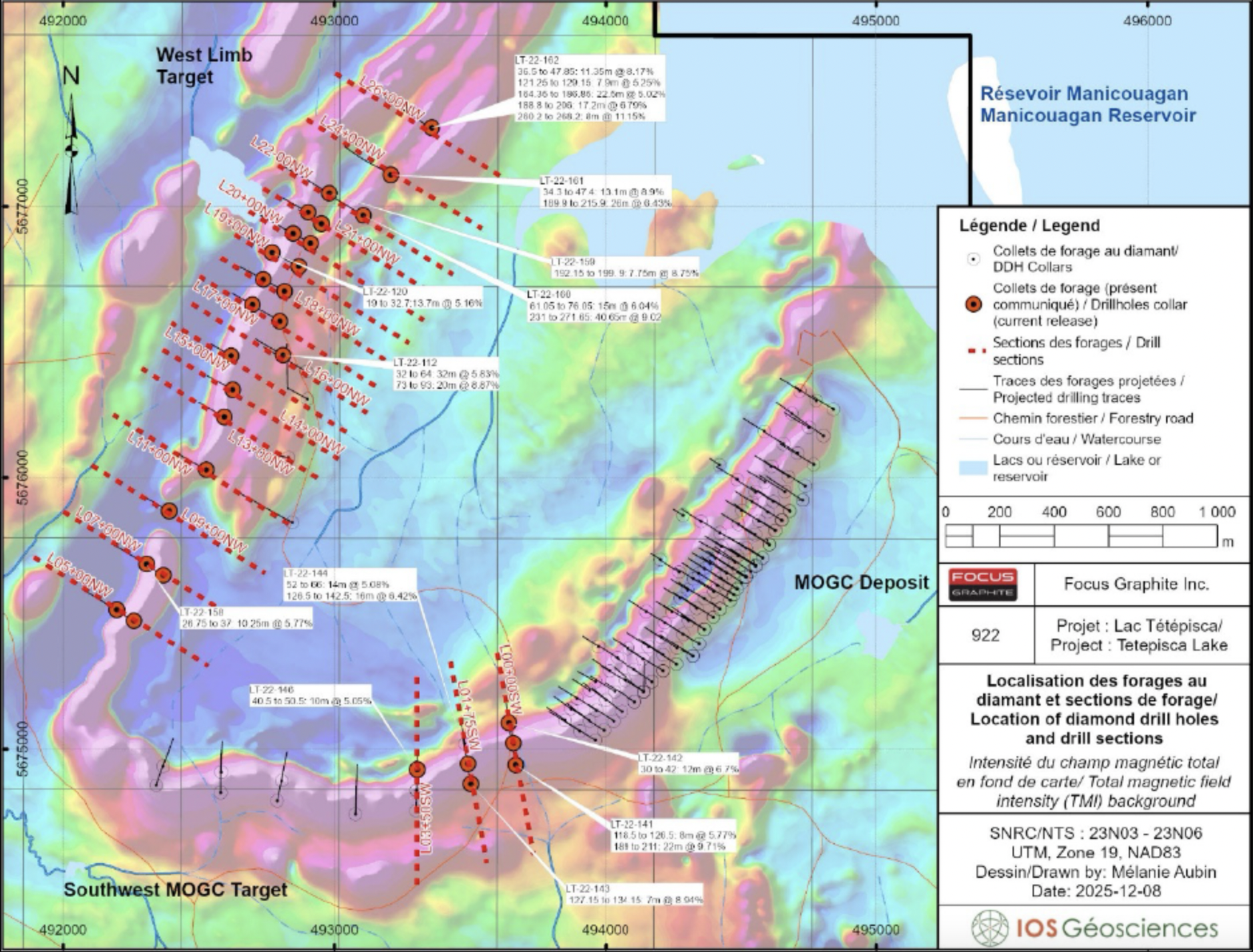
The above-mentioned resource estimate was based on 106 drill holes completed between 2014 and 2021 . Subsequently, FMS completed a 74-hole (14,900 m) drill program in 2022 . The program expanded known mineralization, indicating the project likely hosts more graphite than previously estimated. It also returned certain high-grade intercepts, including 10.5 m at 24.5% Cg. We believe the drilling has clearly increased the project’s resource, though overall grades are expected to remain similar.
Resource Upside
QP: Réjean Girard, P.Geo. (QC), President of IOS Geosciences Inc., a consultant to FMS
Source: Company
The current resource (1.5 km × 0.09 km × 0.2 km) covers only 19% of an 8 km long mineralized zone, and could extend deeper, showing potential to grow
Next Steps: FMS is currently updating the resource estimate to include results from the above-mentioned drill program, expected in the coming weeks, followed by metallurgical testing (to see how much metal can be recovered), and a n independent economic assessment (PEA). Given the promising drill results compared to the last resource estimate, we anticipate a significant increase in the resource.
Management aims to complete a resource update this quarter
Technology Initiatives
In addition to its mineral projects, the company is actively advancing innovative technologies aimed at enhancing graphite value, improving battery performance, and expanding downstream applications. We believe these initiatives not only leverage the company’s resource base, but also create potential for strategic partnerships, offtake agreements, and future revenue streams.
Government-backed, ultra-pure graphite plant
Next-gen battery anode tech
Management and Board
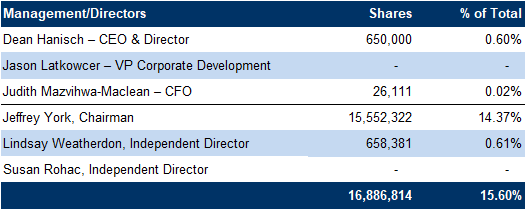
Share Ownership
Source: Sedi/FRC
Management and board own 16% of the company’s equity
Management experience includes leading large-scale mining, industrial, and battery technology projects
Three out of four directors are independent
Brief biographies of the management team and board members, as provided by the company, follow:
Dean Hanisch – CEO & Director
Jason Latkowcer – VP Corporate Development
Judith Mazvihwa-Maclean – CFO
Jeffrey York, Chairman
Lindsay Weatherdon, Independent Director
Susan Rohac, Independent Director
Financials
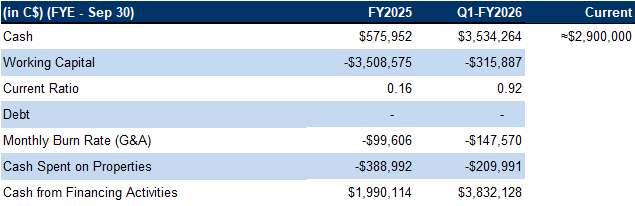
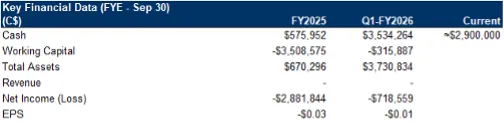
A reasonably healthy balance sheet
Source: FRC / Company
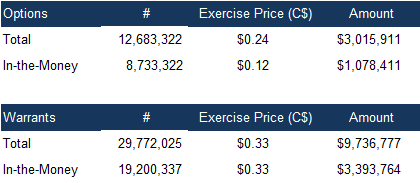
In-the-money options and warrants can bring in up to $5M
FRC DCF Valuation
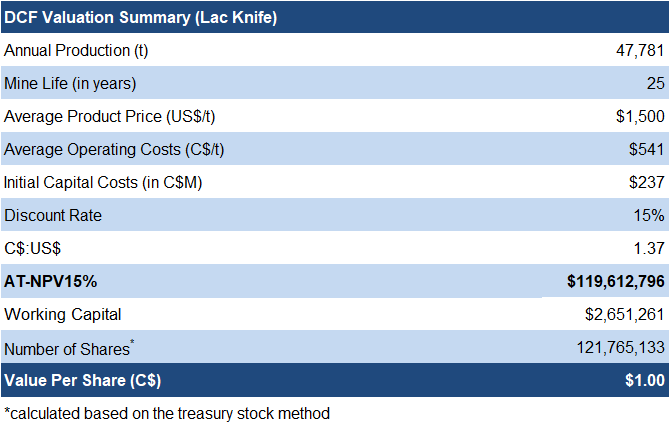
Our DCF valuation returned a fair value estimate of $1.00/share
We take a conservative approach by using a high 15% discount rate vs our typical 11.6%
This valuation only includes LAC Knife, being the advanced-stage asset, and does not include Tétépisca
Source: FRC
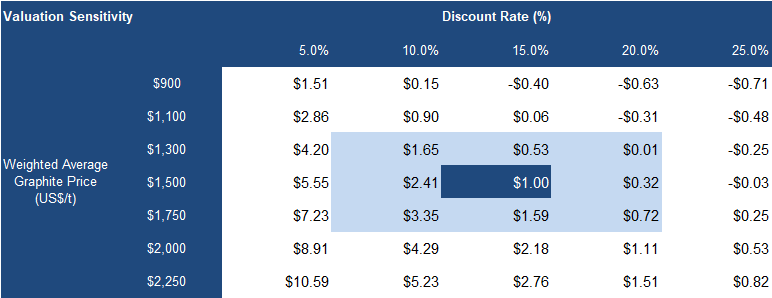
Our valuation is highly sensitive to graphite prices
FRC Comparables Valuation
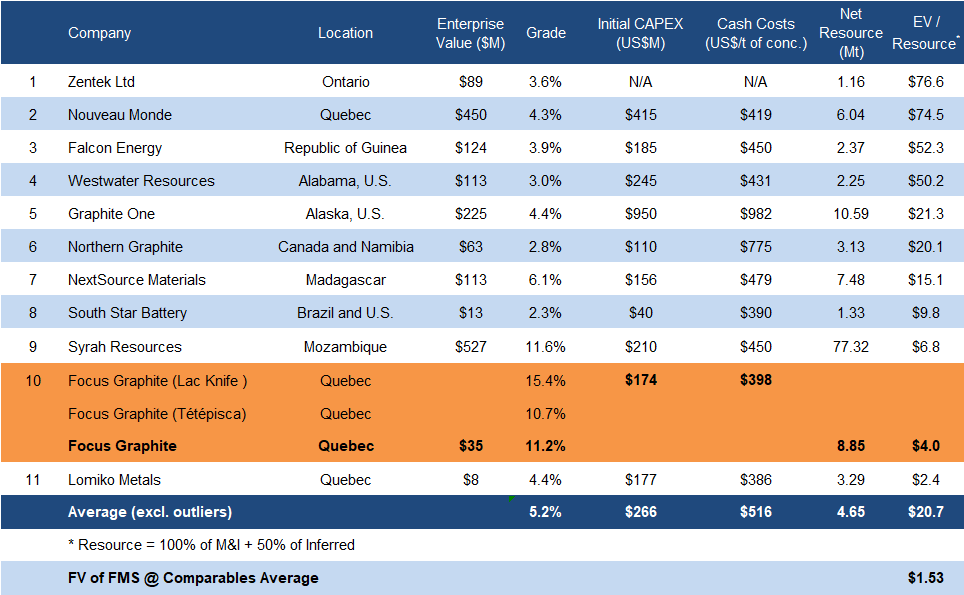
FMS outperforms comparables in both resource size and grade, while its projected capital and operating costs remain below industry norms
Despite these attractive metrics, FMS is trading at just $4/t, compared with the sector average of $21/
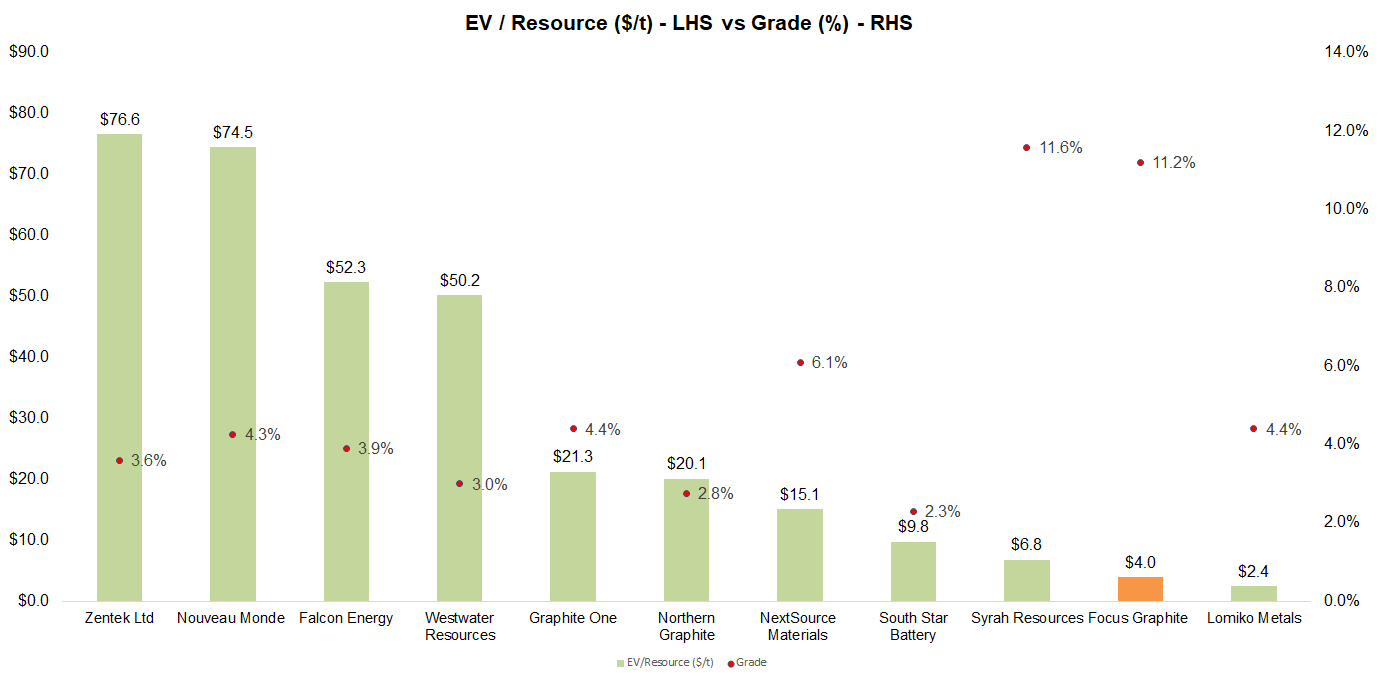
Source: S&P Capital IQ / Various / FRC
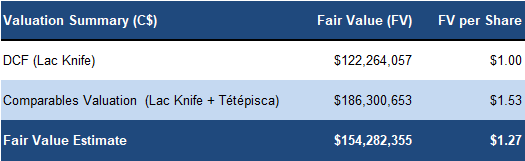
Applying the sector average to FMS’s resources, we arrived at a comparables valuation of $1.53/share
Source: FRC
The average of our DCF and comparables valuation is $1.27/share
We are initiating coverage with a BUY rating, and a fair value estimate of C$1.27/share. We believe FMS’s high-grade, low-cost graphite projects, supported by government funding, long mine life, and strong economics, position the company to serve the growing North American and European battery markets. Despite these strengths, FMS trades at a notable discount to peers, reflecting both undervaluation, and potential upside from strategic M&A interest from companies seeking secure North American graphite supply.
Risks
We believe the company is exposed to the following key risks (not exhaustive):
We are assigning a risk rating of 5 (Highly Speculative)
Discussion
Comments reflect the views of individual users, not FRC. Nothing posted in the comments section — by users or otherwise — should be taken as investment advice.