
Disclosure: Zepp Health Corporation has paid FRC a fee for research coverage and distribution of reports. See last page for other important disclosures, rating, and risk definitions.
The analyst’s rating and fair value are one click away. Free FRC account, no credit card.
Already have an account?
Unit Sales & Other Key Metrics
Zepp is the seventh-largest global smartwatch maker by unit sales, trailing Apple (NASDAQ: AAPL), Samsung (KOSE: A005930), Garmin (NYSE: GRMN), Fitbit (Google/NASDAQ: GOOGL), Xiaomi (SEHK: 1810), and Huawei. For comparison, Apple sells ∼25M units annually, while Zepp sells ∼2-3M units
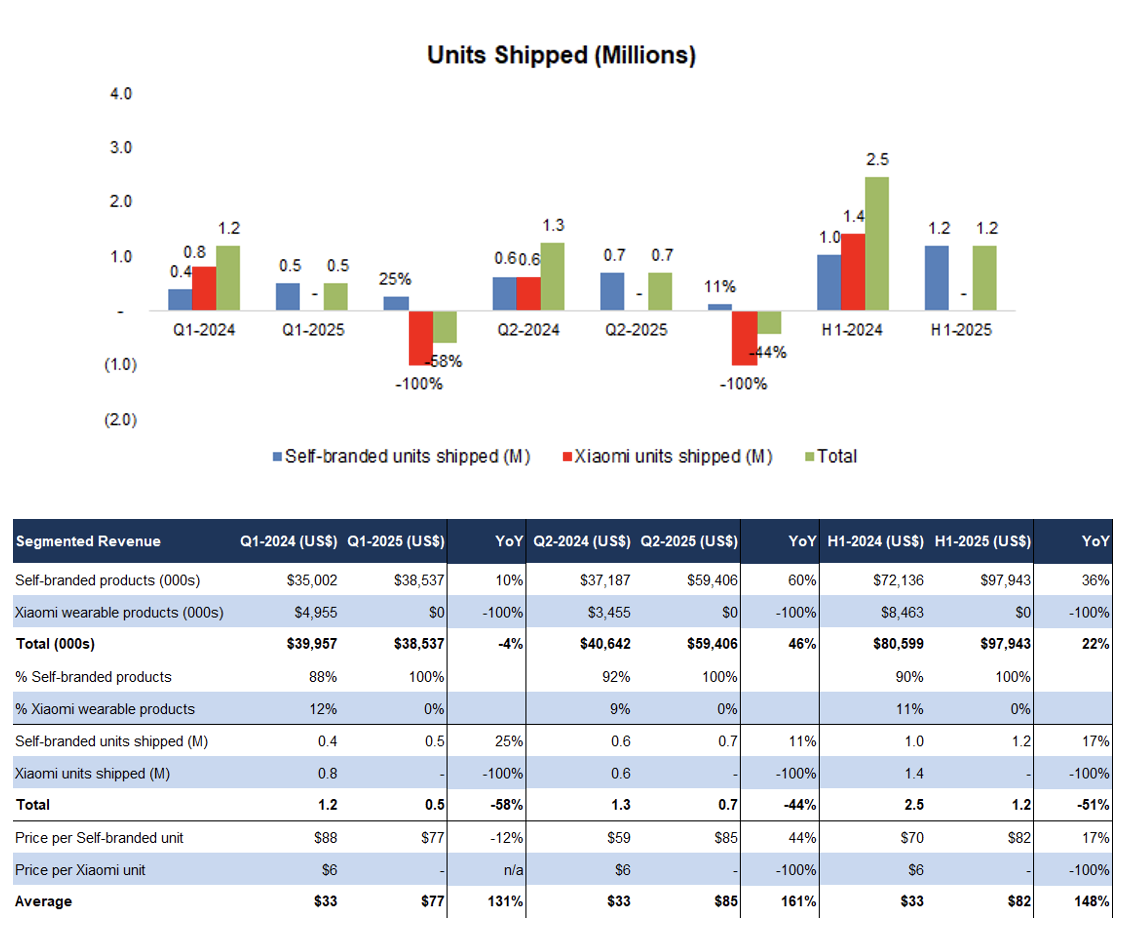
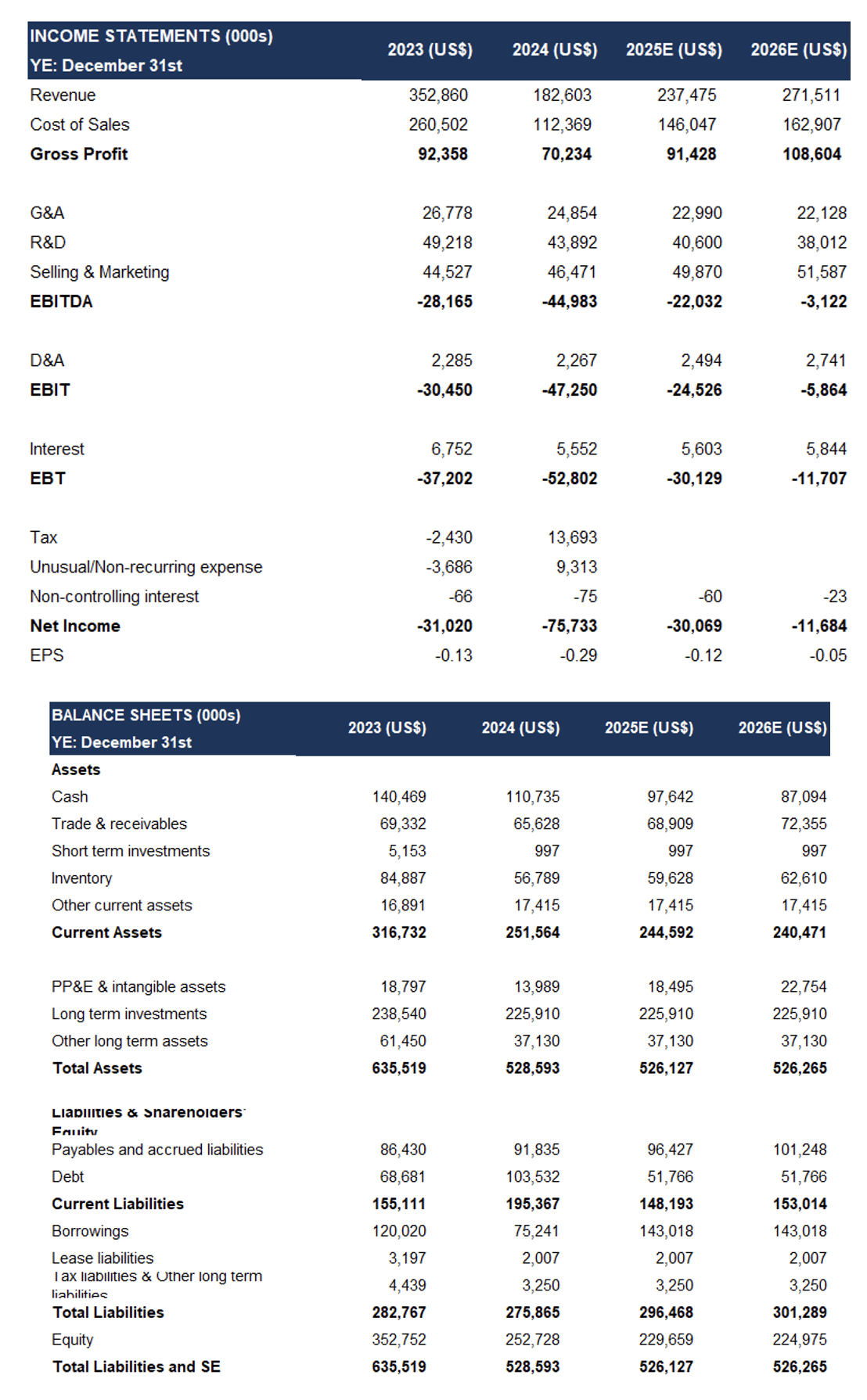
Zepp’s Q2 shipments of self-branded products were up 11% YoY, aligning with our estimate
Revenue from these products increased 60% YoY, beating our estimate by 17%, driven by a higher average selling price per unit, which rose 44% YoY
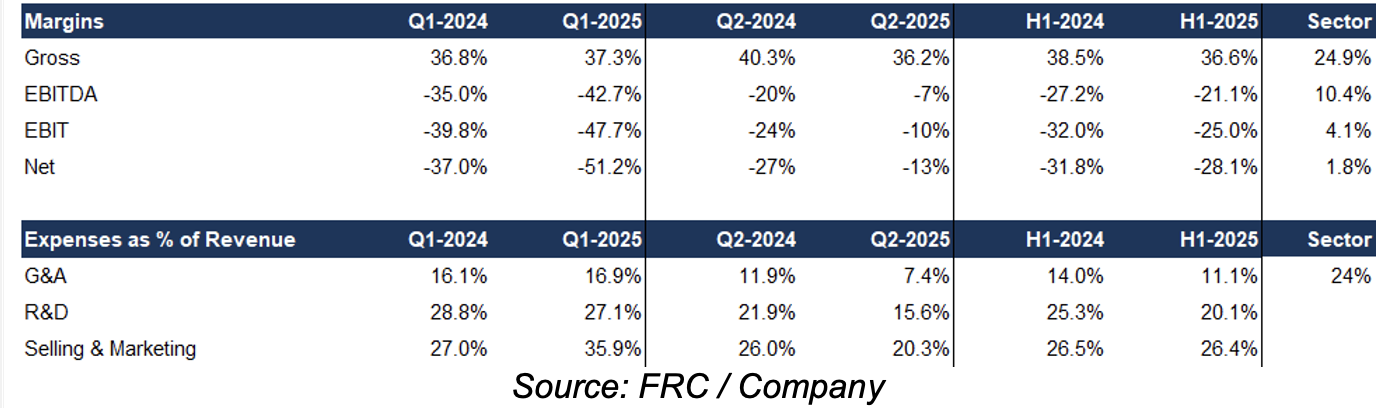
Gross margins fell 4 pp YoY, and 1 pp QoQ, due to a higher mix of lower-margin/entry-level products like the Amazfit Bip 6 and Active 2, missing our estimate by 2 pp, and trailing the 43% average for leading wearable brands; management anticipates improvement in Q3 given recent product launches
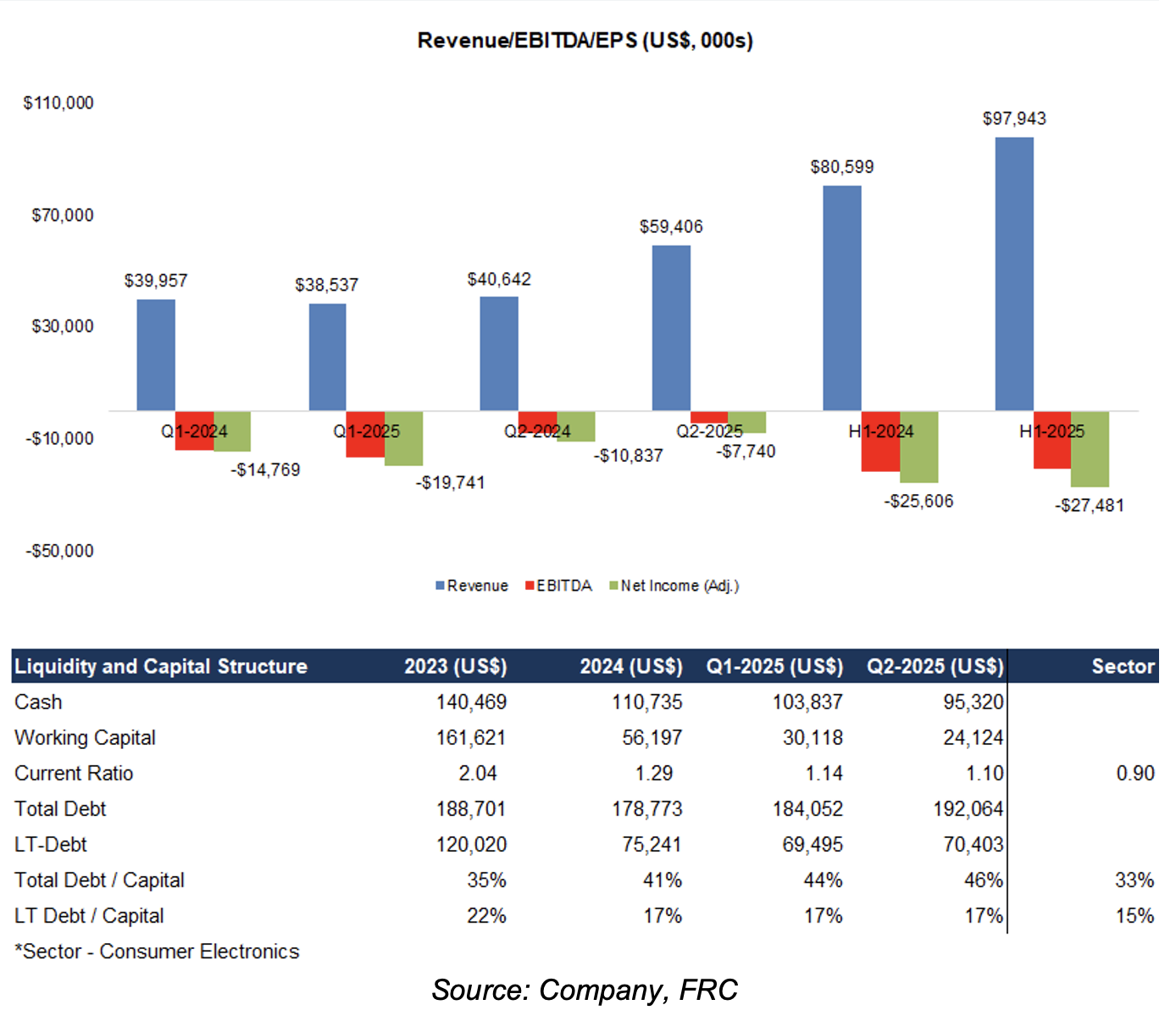
Zepp spent 20% of revenue on sales/marketing, while other majors typically spend 5-10%. Operating expenses were up 6% YoY, and 3% higher than our estimate, primarily due to higher marketing expenses
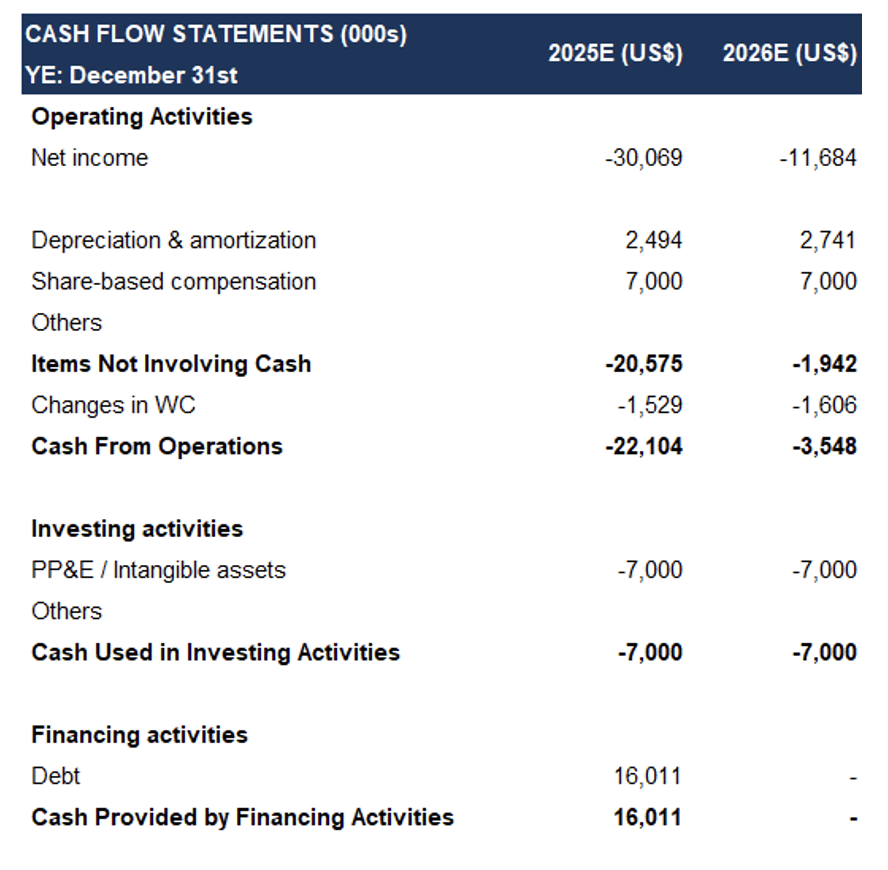
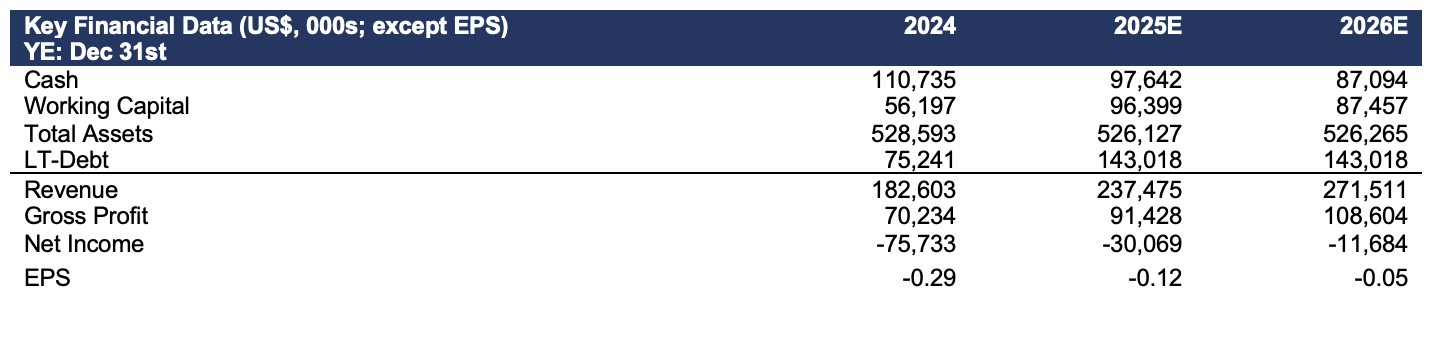
As a result of higher revenue, partially offset by lower gross margins, EPS improved from -$0.04 to -$0.03, beating our estimate by 13%. Working capital, and investments, net of long-term debt was $173M, or $12/share
FRC Projections and Valuation
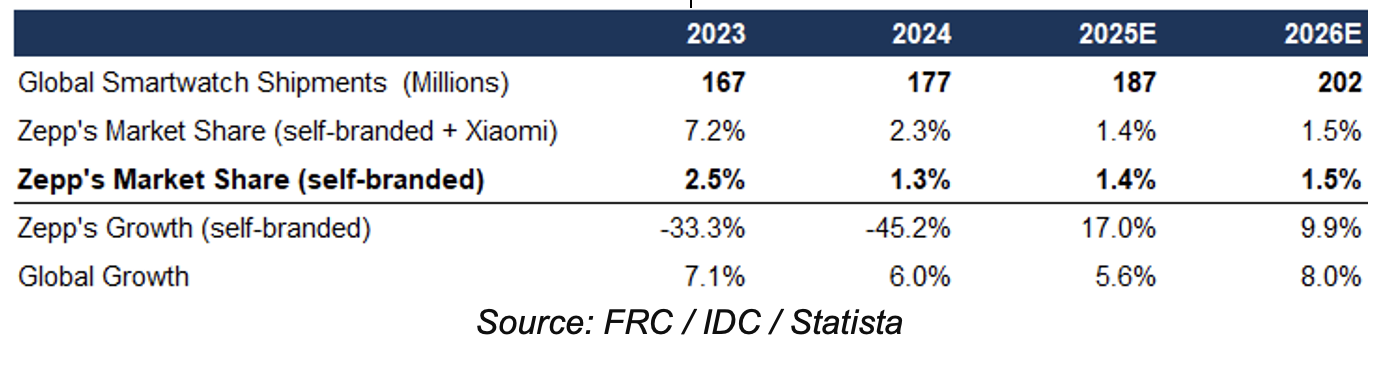
According to Research and Markets, the global smart wearables market should grow from $109B in 2023, to $304B by 2029, reflecting a CAGR of 19%.
Wearable Devices by Shipment Volume (Millions)
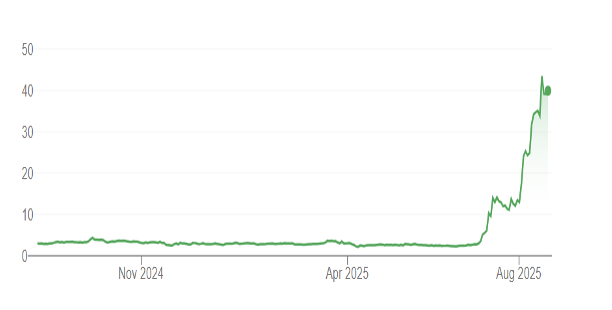
Given recent developments, including rising institutional interest and the transition from micro- to small-cap status, we are making two key changes to our models:
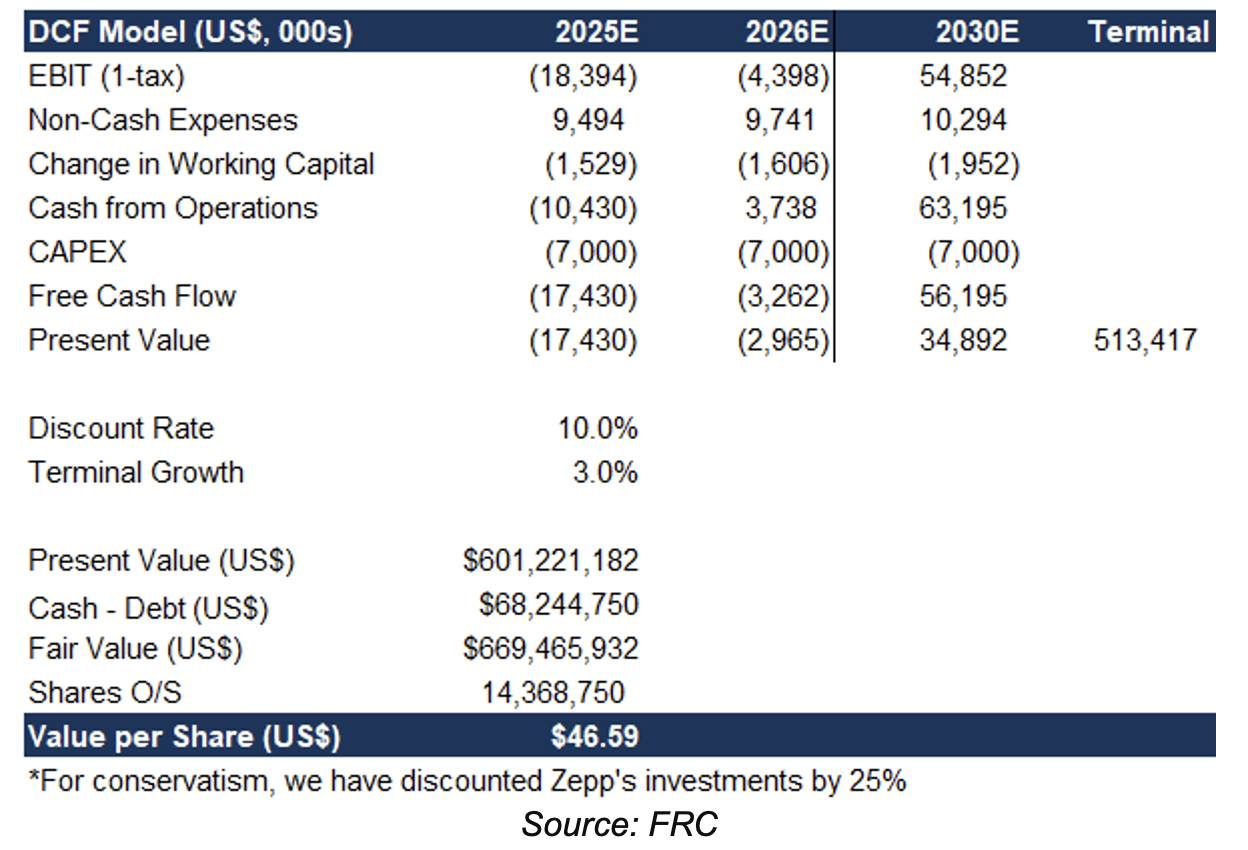
a) Lowering our discount rate from 15% to 10% (for context, large-cap tech stocks typically have a cost of capital of 6–8%).
b) Zepp retains equity in several key suppliers and partners, including a 30% stake in Jiangsu Yitong High-Tech (SZSE: 300211, MCAP: $394M). We had previously applied a 50% discount for conservatism; this is now reduced to 25%.
As a result of the above changes, our DCF valuation increased from $10.11 to $46.59/share
Comparables Valuation
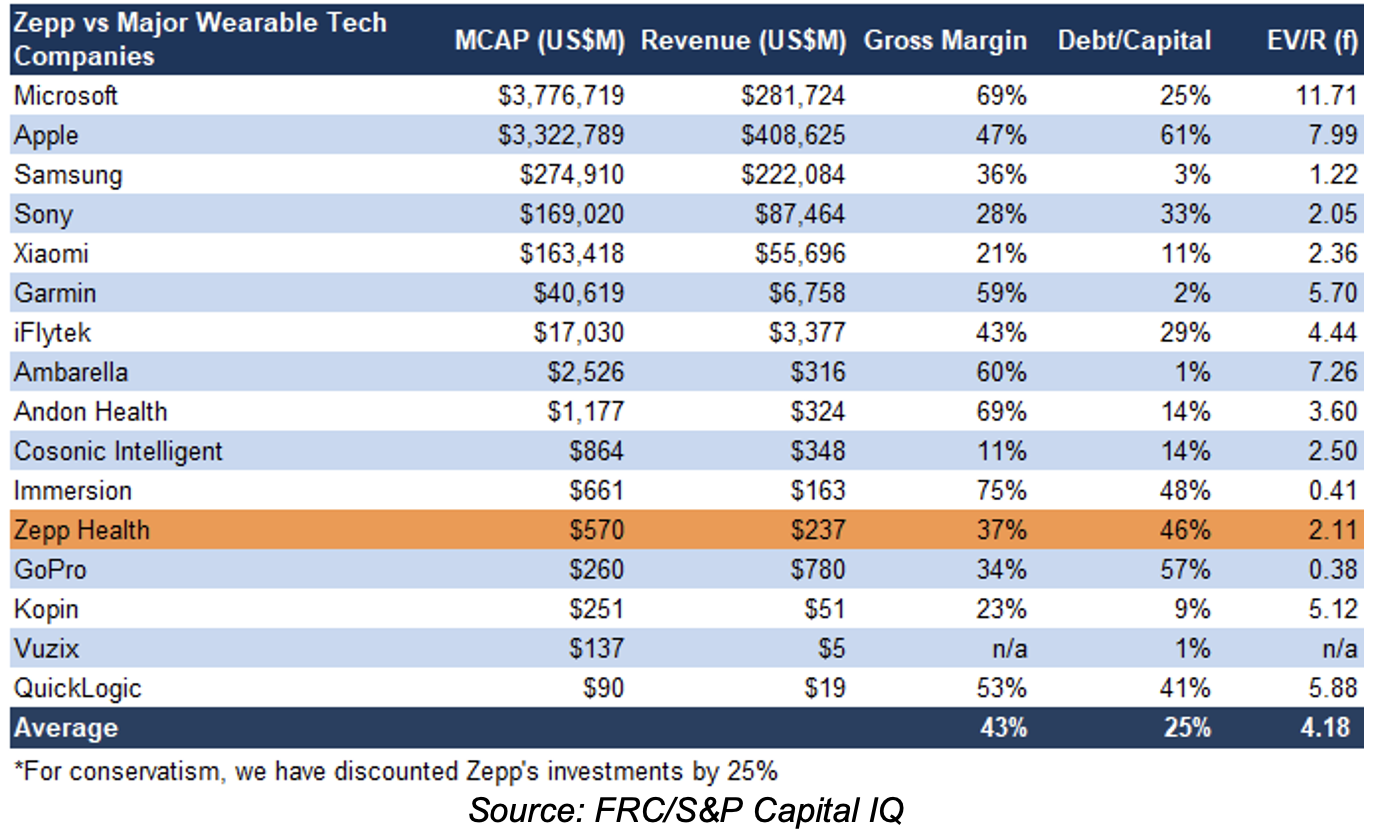
Despite the share price spike, ZEPP remains undervalued, trading at 2.11x forward revenue (up from 0.04x), well below the sector average of 4.18x (previously 3.71x)
Applying 4.18x to our 2025 revenue forecast for Zepp, we arrived at a comparables valuation of $73.87/share (previously $14.52/share)
We are reiterating our BUY rating, and adjusting our fair value estimate from $12.32 to $60.23/share (the average of our DCF and comparables valuations). Zepp’s Q2 beat, strong Q3 guidance, and accelerating product momentum highlight a clear turnaround story. Despite the recent rally, we believe the stock remains undervalued relative to peers, supported by a solid balance sheet, and rising institutional ownership. We believe continued execution, AI integration, and sector tailwinds position Zepp for further upside.
Risks
We believe the company is exposed to the following key risks (not exhaustive):
APPENDIX