.webp&w=1920&q=75)
Disclosure: Unknown Company has paid FRC a fee for research coverage and distribution of reports. See last page for other important disclosures, rating, and risk definitions.
The analyst’s rating and fair value are one click away. Free FRC account, no credit card.
Already have an account?

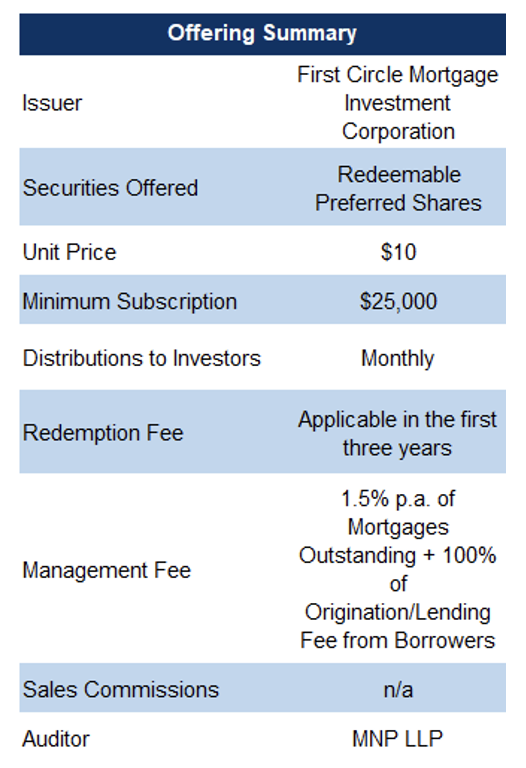
Short-term loans secured by real estate. FCMIC has a lower risk-profile, driven by higher first mortgages, and lower LTV
The following table shows how FCMIC’s portfolio compares to other MICs (with AUM of $100M+) focused on single-family residential units.
FCMIC's portfolio is concentrated in B.C., indicating limited geographic diversification
In FY2024, FCMIC achieved above-average yields while maintaining a lower risk profile, primarily due to its substantial share of floating-rate mortgages. In contrast, most MICs consist entirely of fixed-rate mortgages
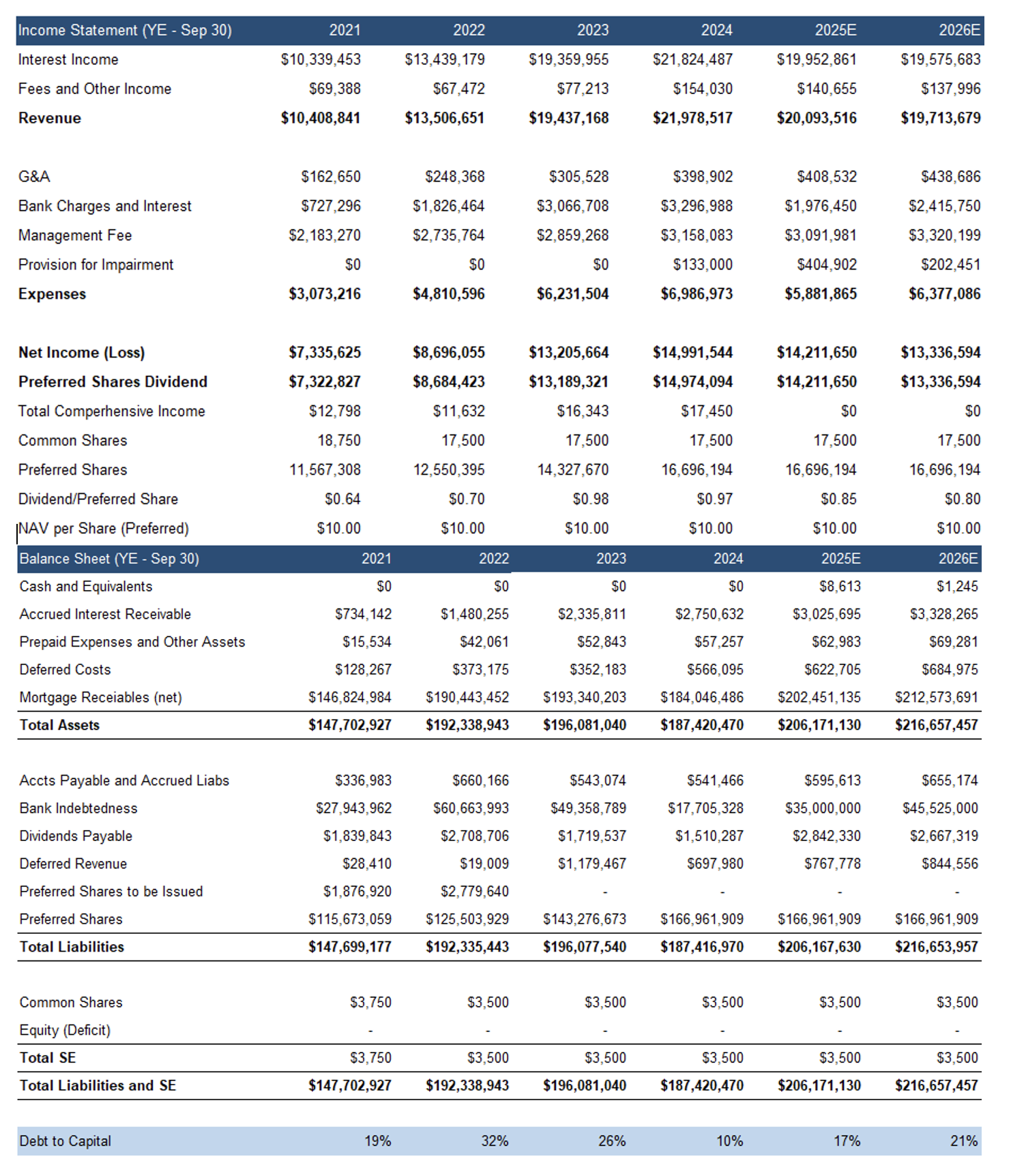
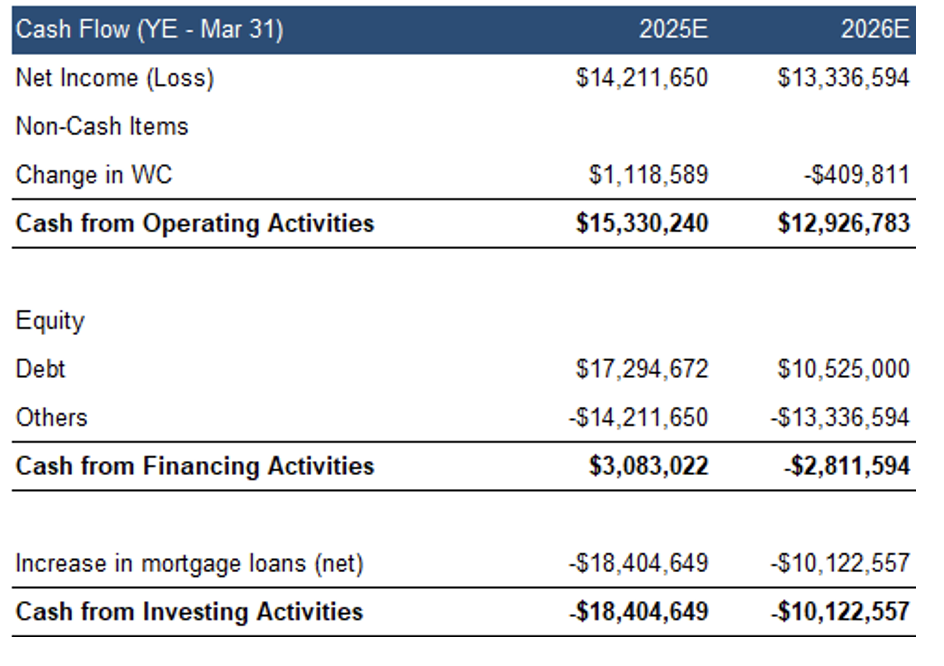
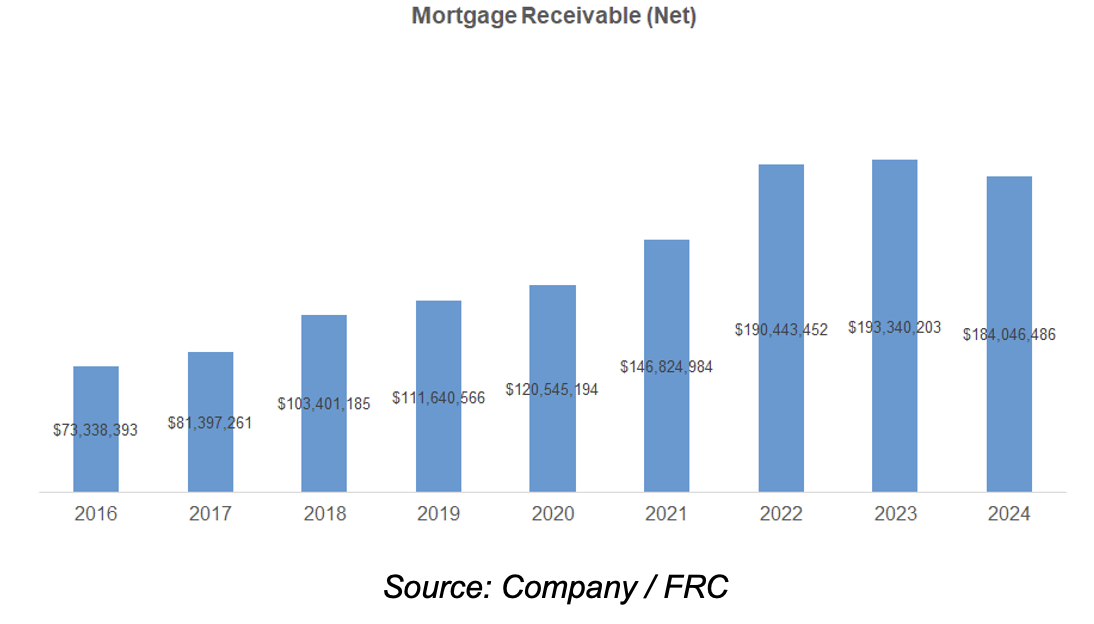
In FY2024, mortgage receivables were down 5% YoY to $184M, 13% lower than our estimate, due to higher repayments
Debt/capital declined 16 pp to 10%, driven by softer lending activity, and higher equity
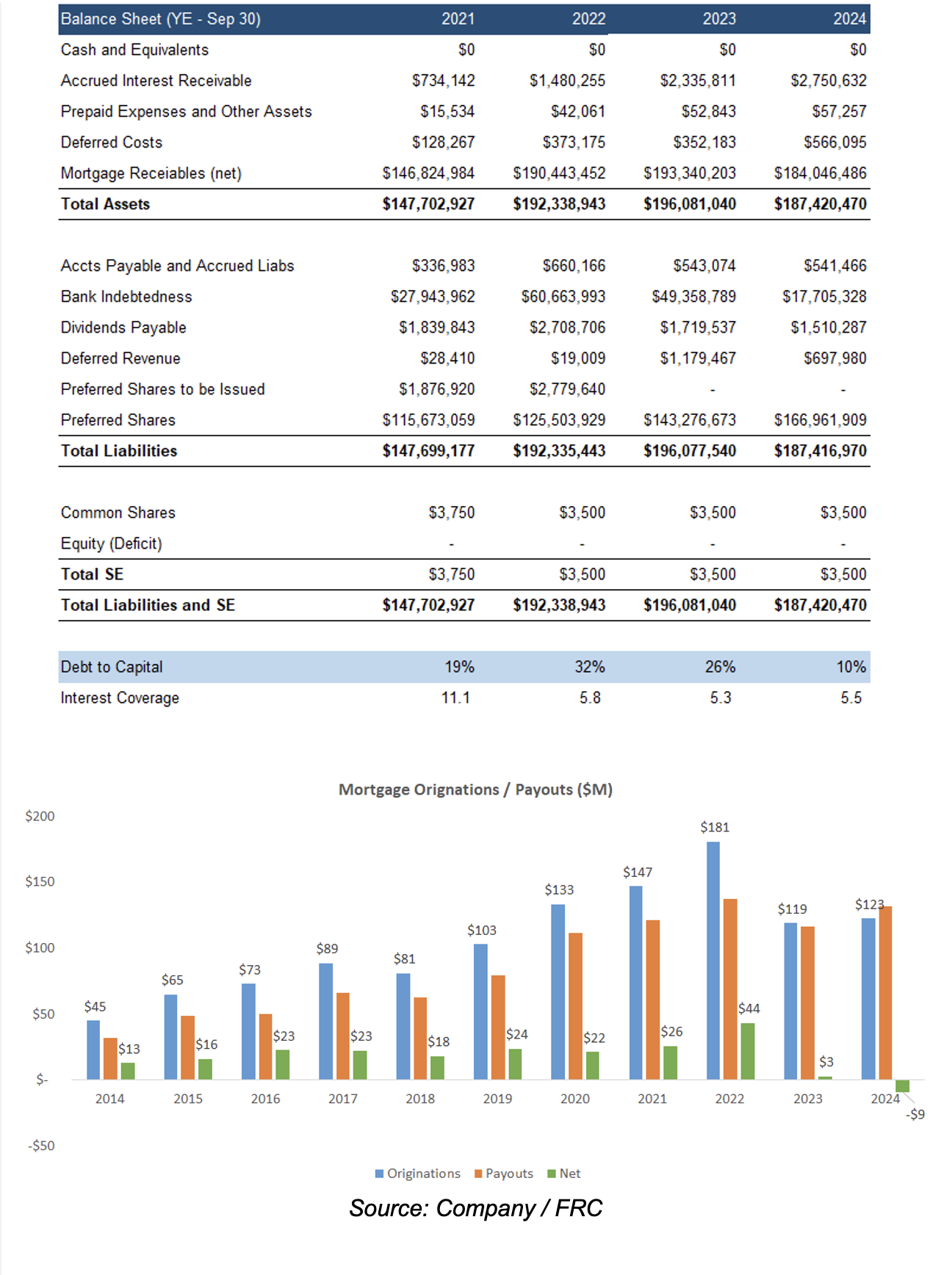
In FY2024, mortgage originations were up 3% YoY, while repayments were up 13%
Exposure to first mortgages declined, implying higher risk
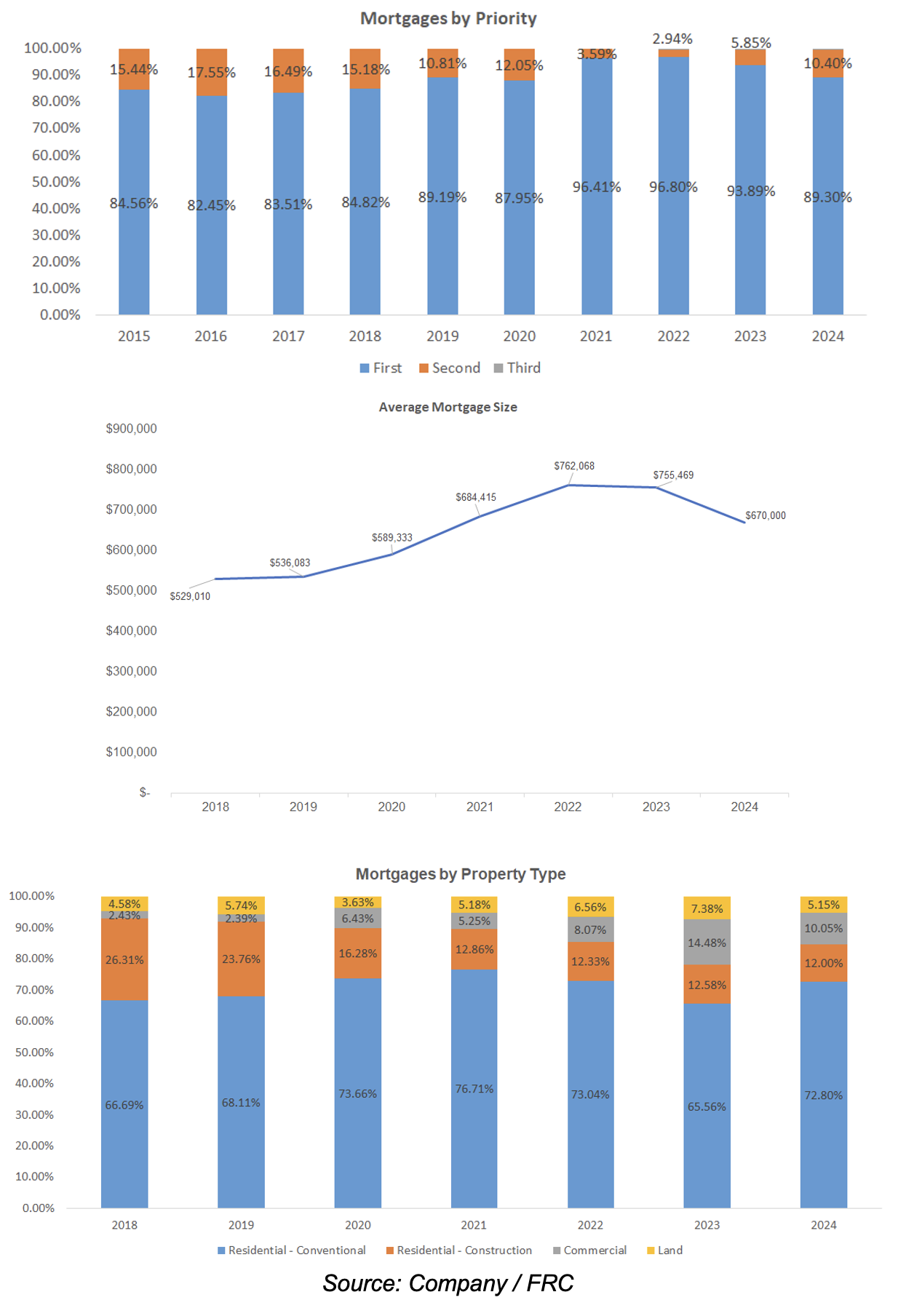
The average mortgage size was down 11% YoY, implying lower risk. Exposure to residential units (already built) increased 7 pp to 73%, implying lower risk
At the end of FY2024, 56% of mortgages were in the Greater Vancouver area
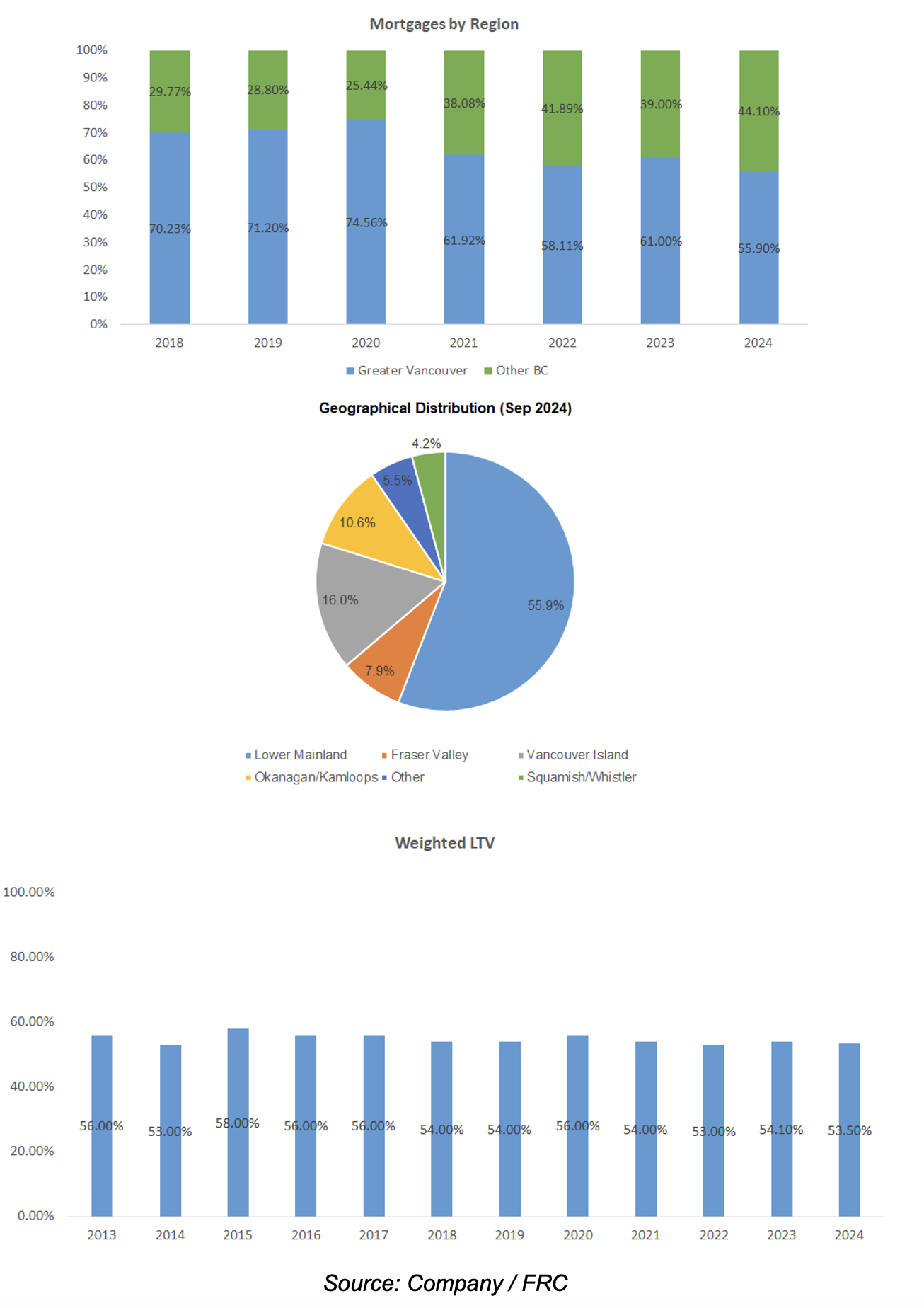
LTV decreased marginally
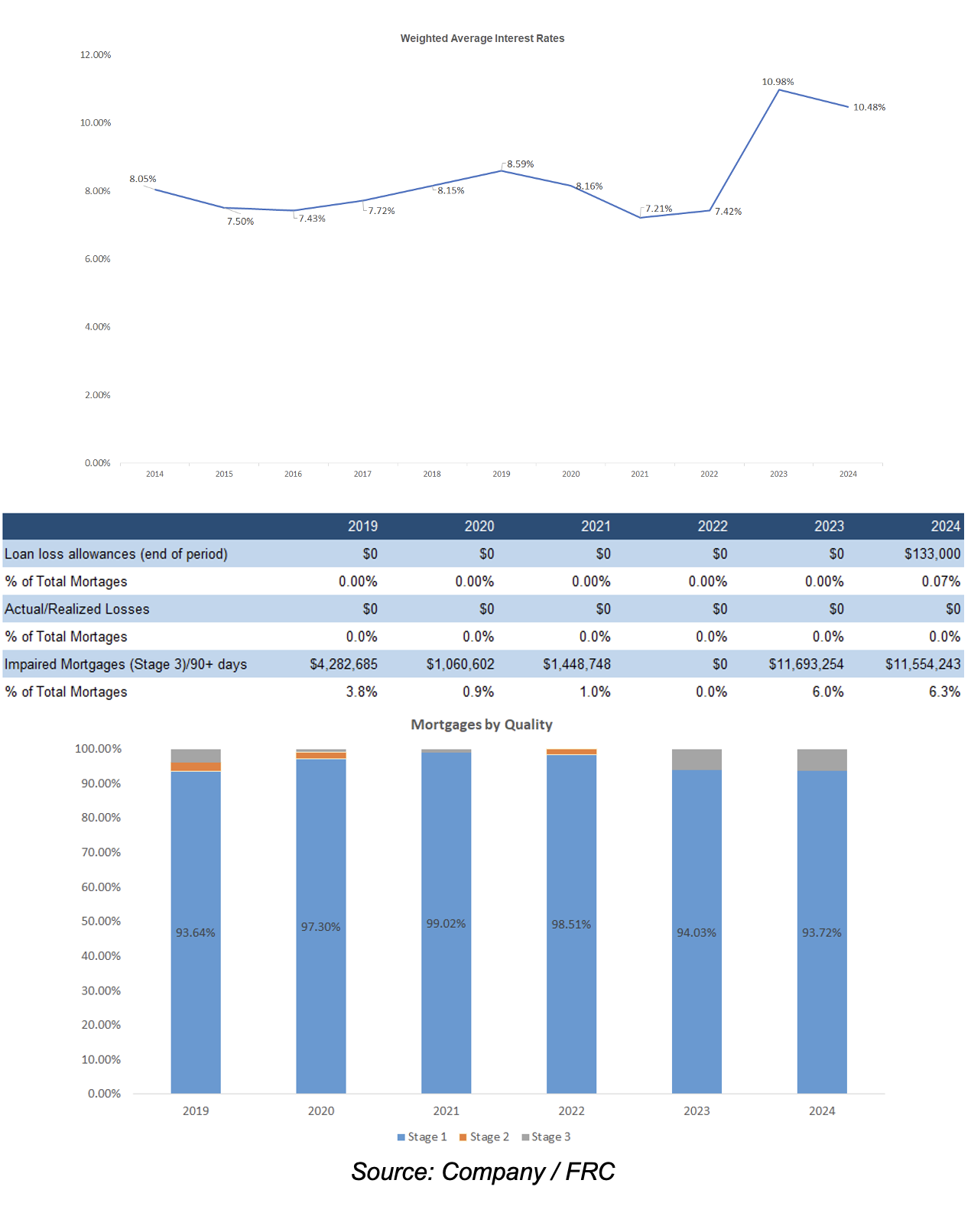
FCMIC’s lending rates have quickly responded to market rates, as 70% of its mortgages are floating rate
Nil realized losses. Stage three (impaired) mortgages remained largely unchanged at 6% of mortgages
Management has not allocated any material loan loss allowances as they are not expecting any material losses from impaired mortgages, given the security held against them; we note that this is highly unusual as most MICs typically allocate 0.2%-1.0% of their mortgages to loan loss allowances
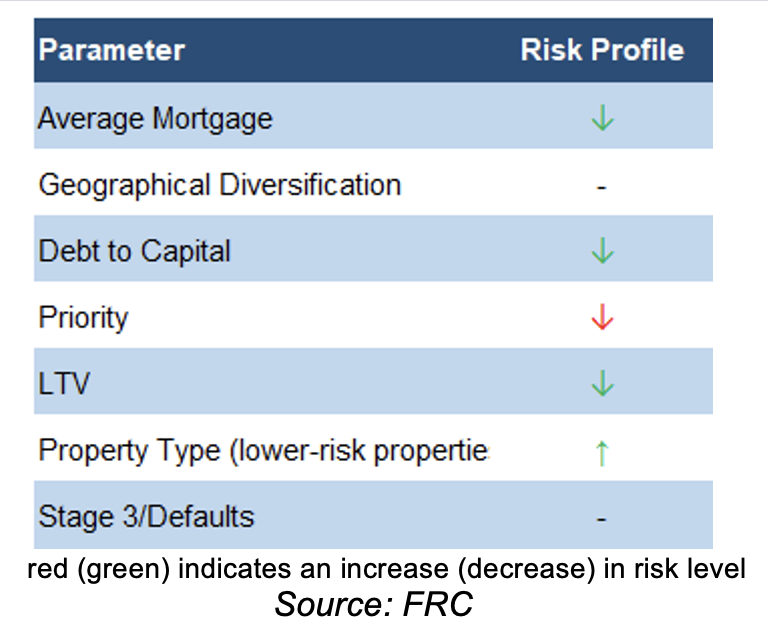
In summary, we believe the portfolio’s risk profile has decreased, with one red, and four green signals
FY2024 revenue was up 13% YoY, beating our estimate by 7%, due to higher lending rates
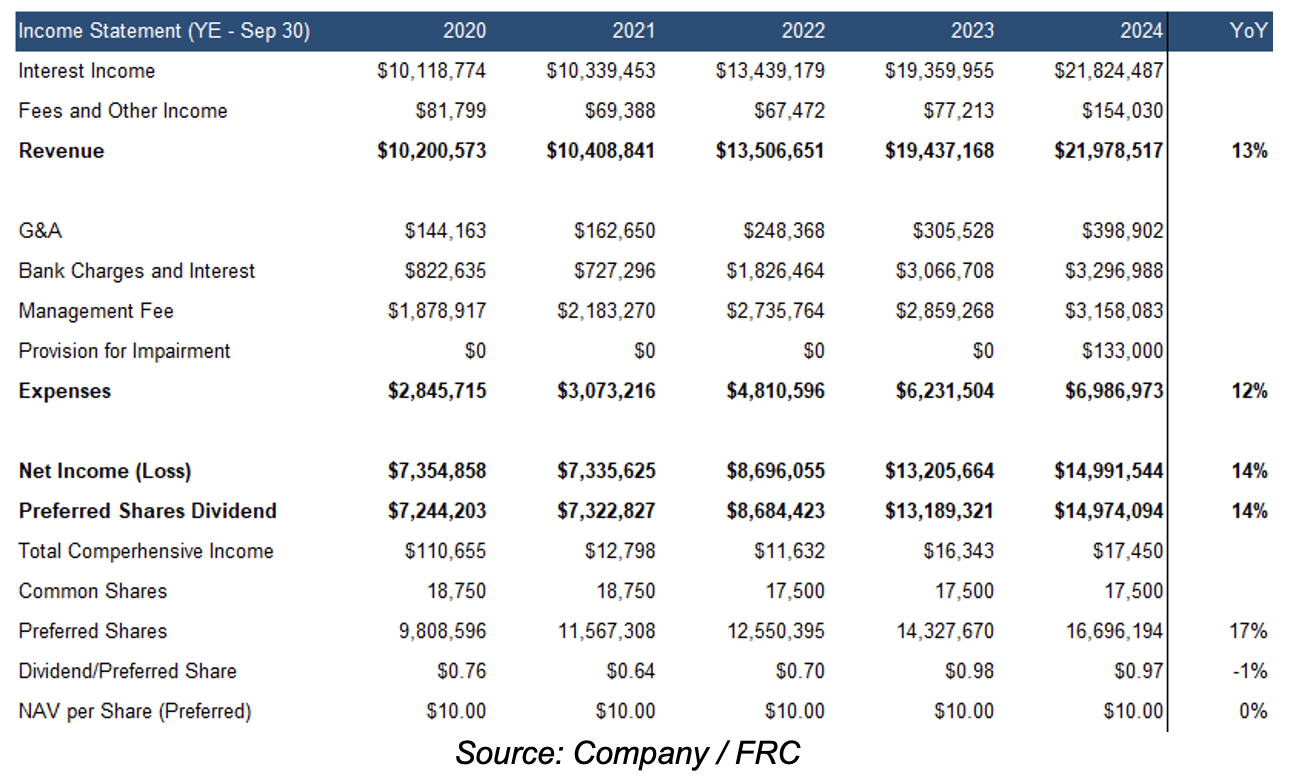
Net income was up 14% YoY, beating our estimate by 11%
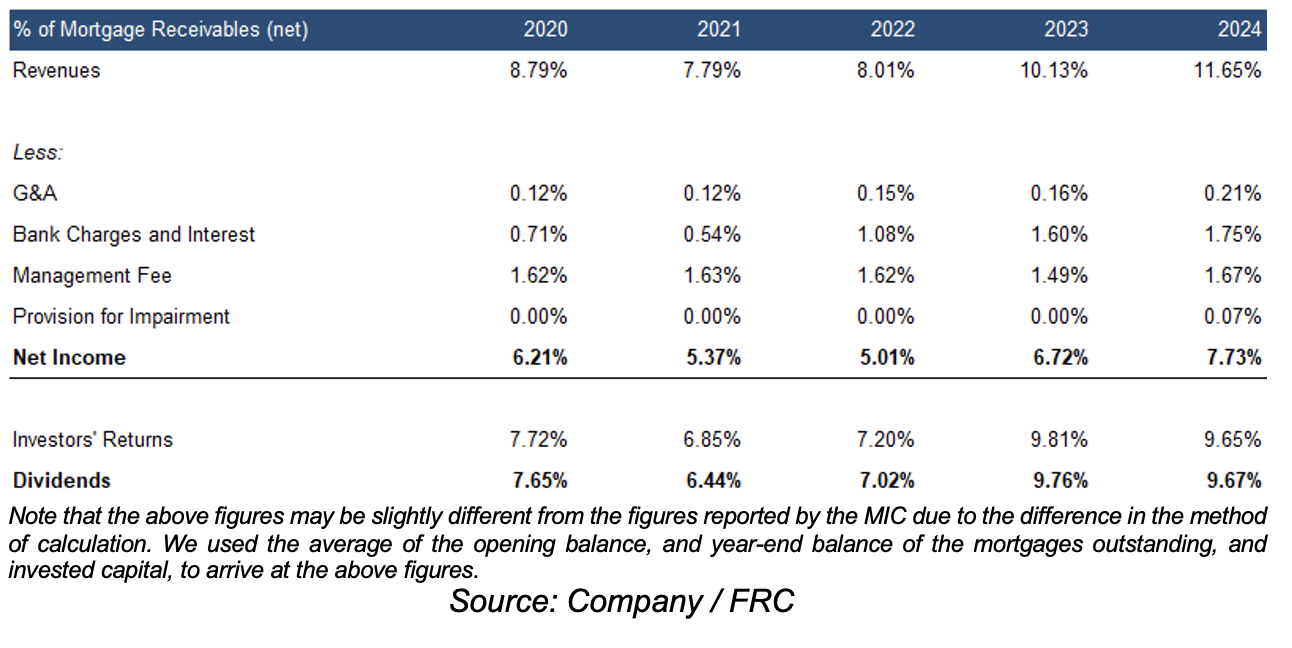
The yield declined slightly, down 0.1 pp to 9.7%, but exceeded our estimate by 0.6 pp
With rates expected to trend downward, we foresee yields declining in 2025
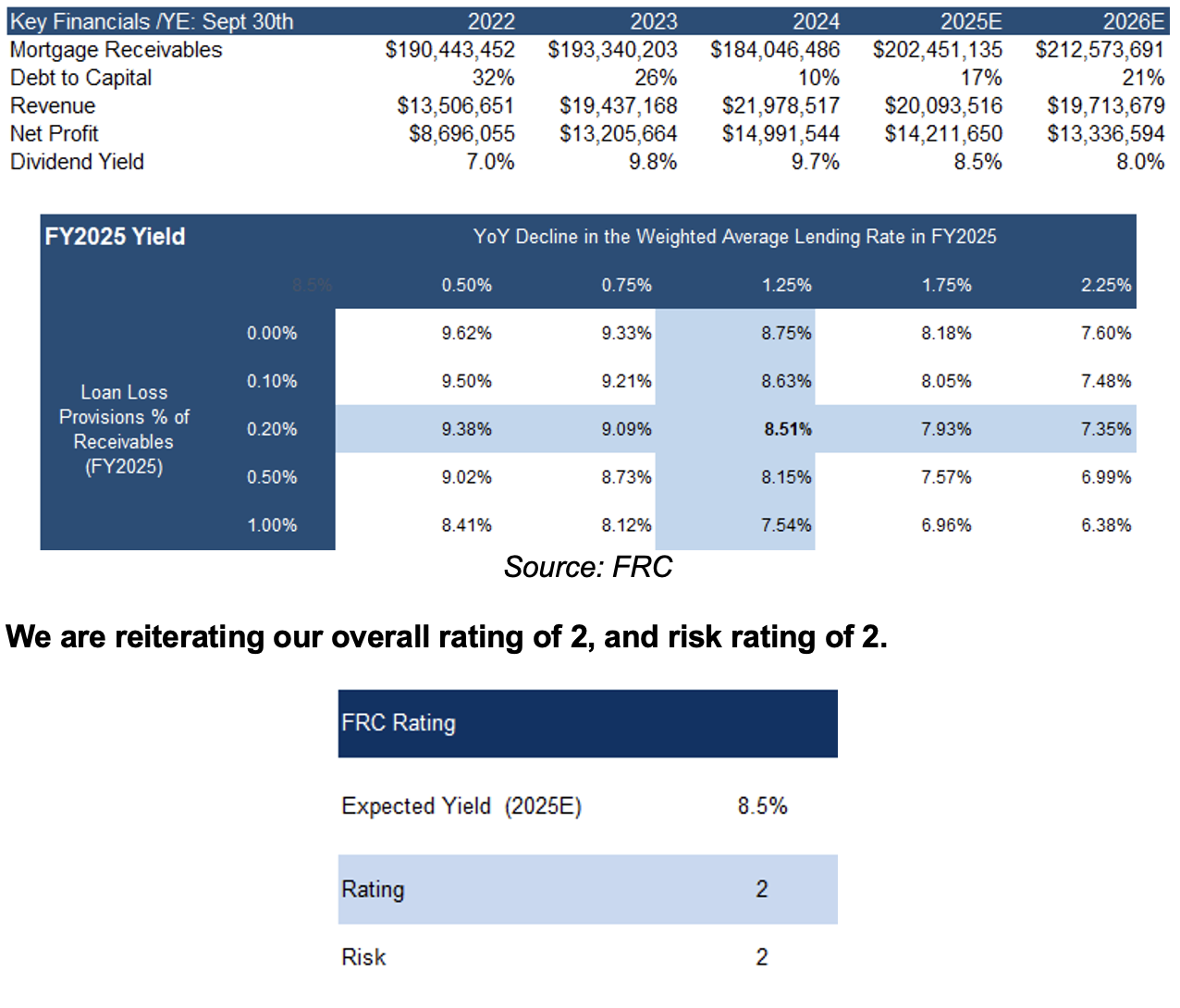
We are projecting yields of 8.5% in FY2025, and 8.0% in FY2026
Our estimate for the FY2025 yield varies between 6.4% and 9.6%, as loan loss provisions and lending rates vary
Given the recent and anticipated rate cuts by the BoC, yields are set to decline. However, we believe the risk of higher default rates is easing, and the mortgage origination market is likely to gain momentum in 2025. We find high-yielding funds, like FCMIC, increasingly attractive in the current declining rate environment. This is because MIC lending rates are less elastic, meaning their yields tend to decline less in a falling rate environment, and rise more slowly in a rising rate environment.
Risks
We believe the MIC is exposed to the following key risks (not exhaustive):
APPENDIX