Disclosure: Doubleview Gold Corp. has paid FRC a fee for research coverage and distribution of reports. See last page for other important disclosures, rating, and risk definitions.
The analyst’s rating and fair value are one click away. Free FRC account, no credit card.
Already have an account?
Price Performance (1-year)
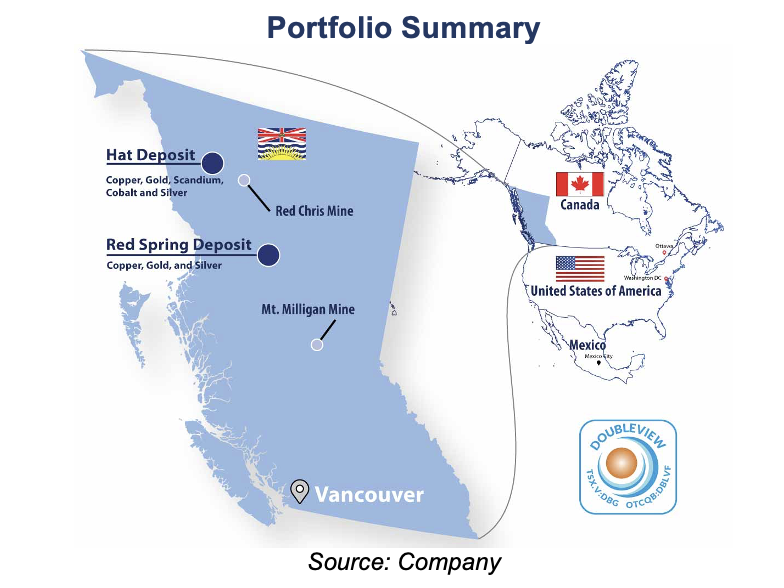
Two gold-copper projects in B.C
Hat Polymetallic Project (100% interest)
Location
This property, covering 5,214 hectares, is located in B.C.’s Golden Triangle, where 130 Moz gold, 40 Blbs of copper, and 800 Moz of silver have been discovered to date. The Golden Triangle hosts several world-class deposits, including Skeena Resources’ (TSX: SKE) Eskay Creek project, Seabridge’s (TSX: SEA) KSM project, and Newmont’s (TSX: NGT) Brucejack, and Red Chris mines.
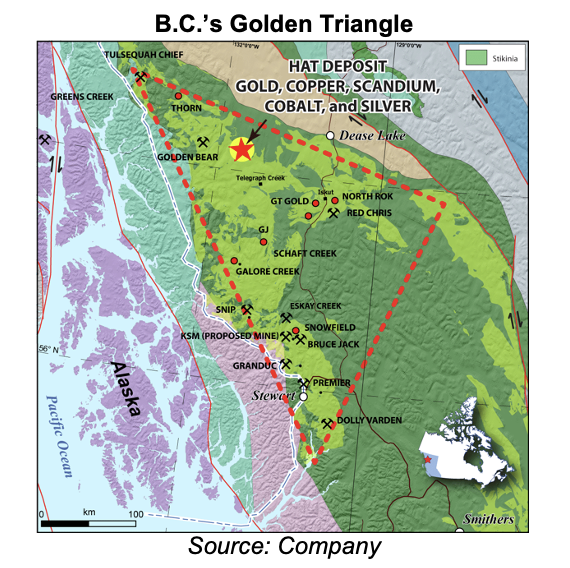
The Golden Triangle is one of the most mineralized areas in the world. Located in northwestern B.C., 95 km southwest of Dease Lake, and 190 km south of Atlin
The project is situated 10 km north of the historic Golden Bear road, a former mining route. Currently, there is no direct road access, so the site is accessible by fixed-wing aircraft from Dease Lake or Whitehorse to nearby airstrips, or by helicopter directly. While the property is remotely located, road access could be established by restoring the aforementioned historic road, should the project progress to production. Power infrastructure includes the Northwest Transmission Line, located within 120 km of the property, and the Red Chris mine powerline, situated 90 km away
The project has access to power, water, and skilled labor. Highway 37 is 95 km east of the project
In July 2024, the B.C. government, and the Tahltan Central Government, announced a joint funding initiative of $195M to improve highways in the region
The project features polymetallic porphyry mineralization, containing copper, gold, silver, cobalt, and scandium. Past exploration included geophysical surveys, geochemical soil surveys, geological mapping, and diamond drilling. A 3D Induced Polarization (IP) survey, encompassing 25% of the property, revealed a sulphide footprint with dimensions of 2.7 km by 3.7 km. Approximately 15% of the project area has been drilled to date.
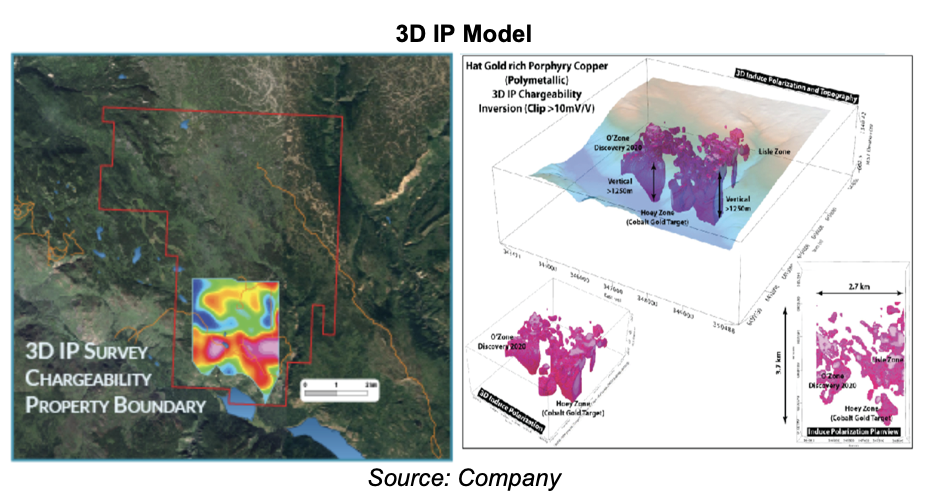
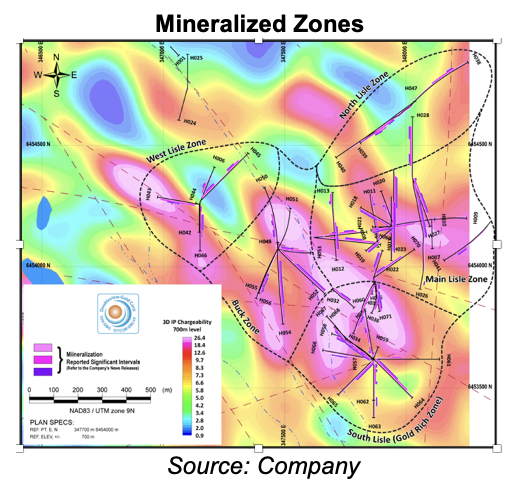
In 2014, DBG discovered the Lisle zone, and subsequent drilling has identified mineralization in multiple zones. The Main Lisle gold-copper zone, which currently accounts for 7% of the explored targets, is an alkalic-type gold-copper porphyry, similar to other well-known mines in B.C., such as Copper Mountain, Mt. Polley, Mt. Milligan, and Red Chris
Alkalic porphyry deposits tend to occur in clusters, hosting relatively high grade gold and PGE mineralization vs typical porphyry deposits
DBG recently completed a maiden resource estimate based on 71 holes totaling 30,000 m.
Mineralization at Lisle, covering an area of 1.4 km by 1.4 km, and ranging in depth from 0 to 0.85 km, is distributed across the Main Lisle, North Lisle, West Lisle, Buck, and South Lisle zones
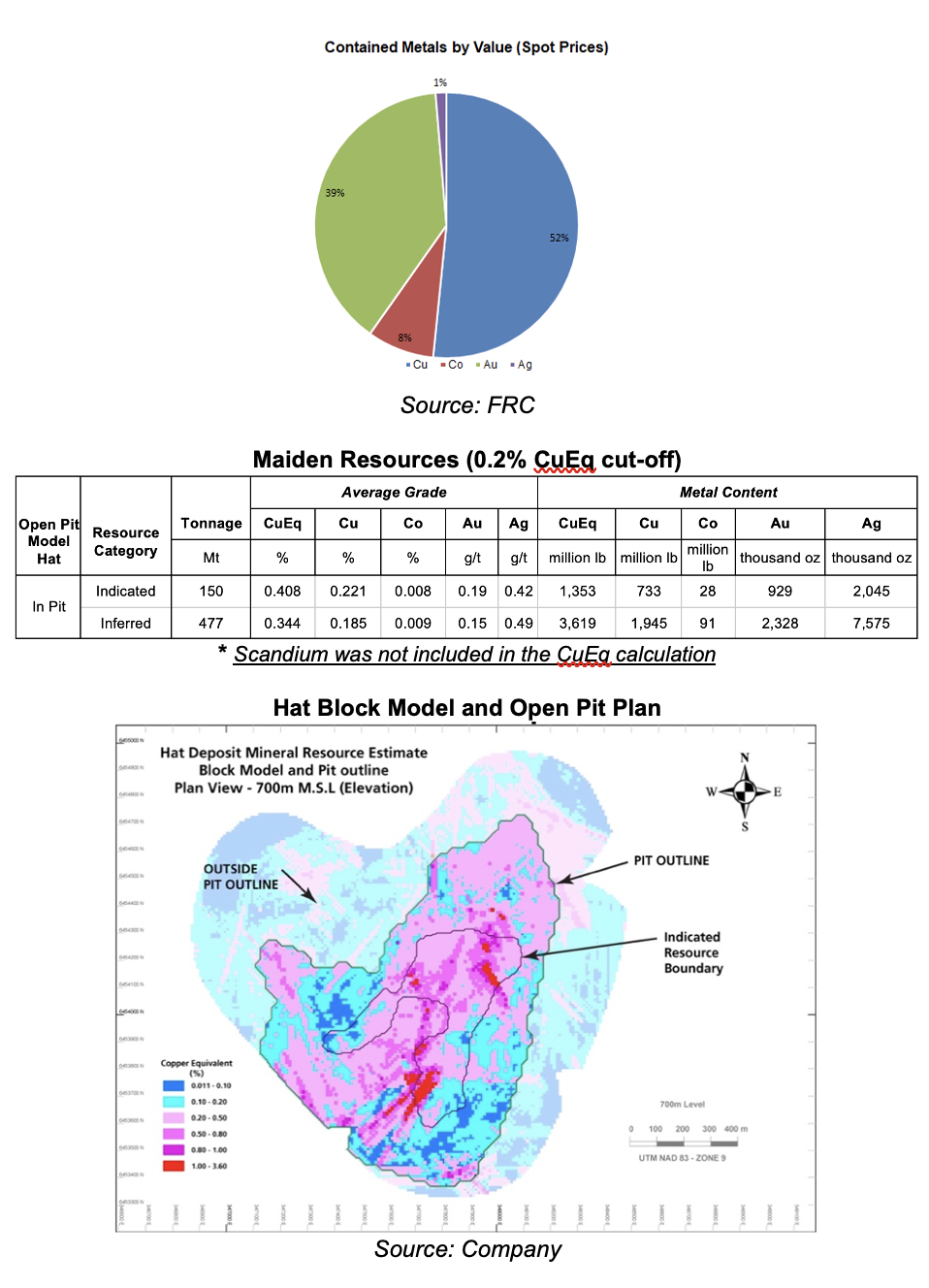
Open-pittable resources totaling 5 Blbs CuEq; grades are relatively low, but are in line with typical porphyry projects
We note that the maiden resource is very close to the estimate (540 Mt at 0.38% CuEq, containing 4.5 billion pounds) from our previous report in July 2022
Based on spot prices, Cu accounts for 52% of total resources, followed by Au (39%), Co (8%), and Ag (1%)
The resource estimate excluded scandium, as the company is still confirming the potential to produce marketable scandium products
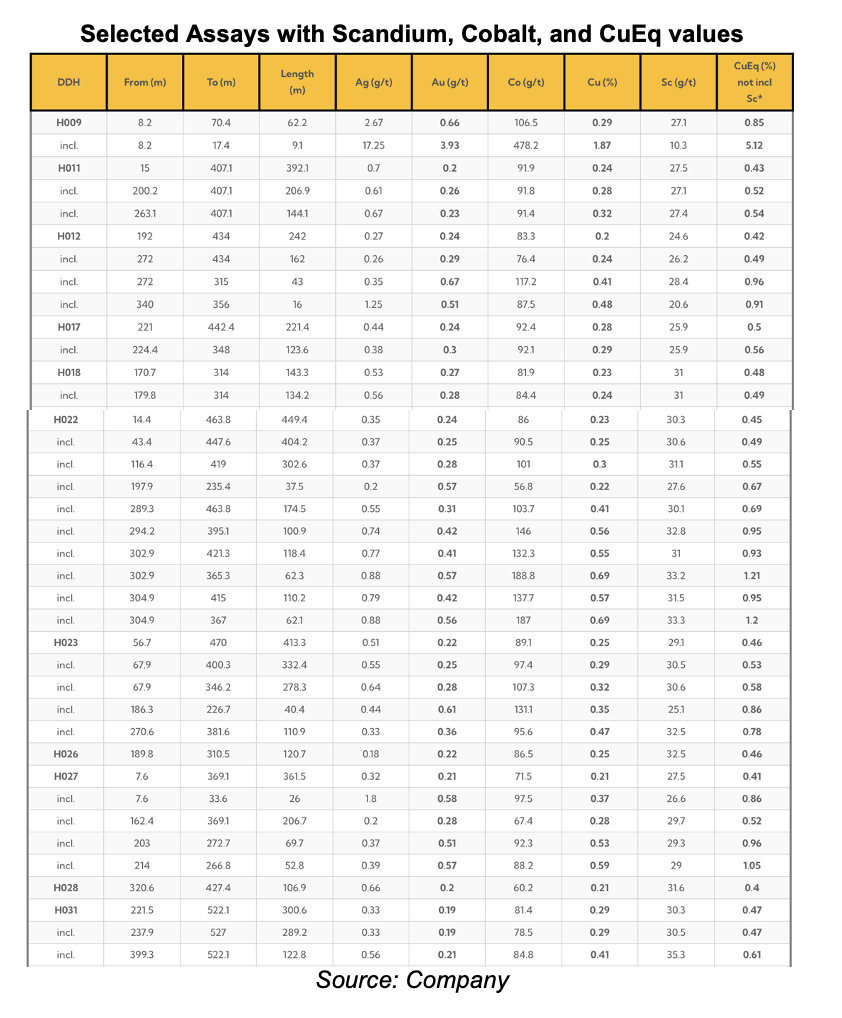
The Hat deposit contains scandium (45 ppm to 50 ppm), with attractive recoveries, a distinctive feature not commonly found in copper-gold porphyry projects. We believe this represents a significant advantage for the Hat project, as scandium can serve as a valuable by-product, especially given its status as a critical mineral in the U.S., Canada, and the EU.
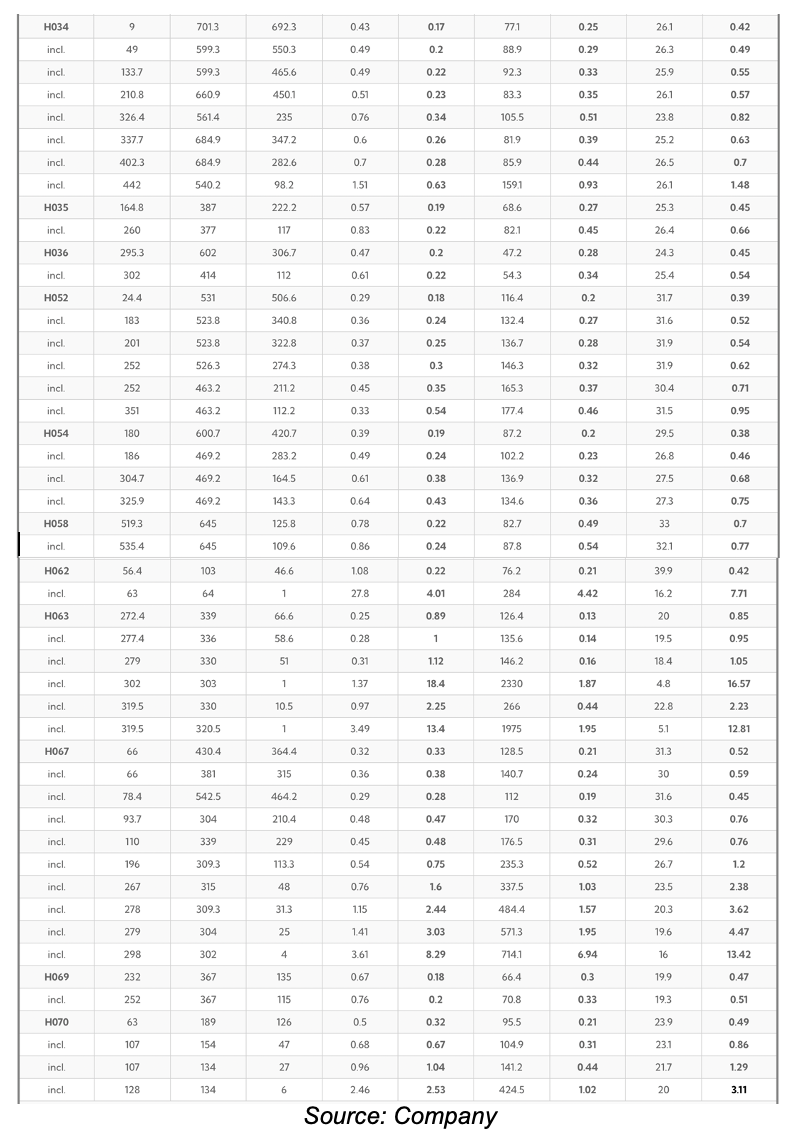
DBG estimates that the project has the potential to host 300-500 Mt of scandium at an average grade of 40 ppm (0.004%) Sc2O3, which we believe is a reasonable estimate based on the drill results presented below. This represents a high-tonnage, low-grade resource compared to other deposits containing scandium. Management is currently evaluating the potential to produce marketable scandium products, such as scandium fluoride.
Scandium, recognized as a critical mineral, is a rare earth element primarily used in the manufacturing of super-alloys, and ceramic fuel cells
It is primarily produced as a by-product of titanium, zirconium, cobalt, and nickel production in China, Kazakhstan, Russia, Ukraine, and the Philippines
Need for domestic scandium producers
Given the niche market, we note that there are few scandium explorers and developers. However, the U.S. imports all its scandium from major producers such as Japan, China, Germany, and the Philippines, highlighting a need for domestic scandium production in North America. In Canada, Rio Tinto’s (ASX: RIO) Sorel-Tracy demonstration plant produces scandium oxide from waste generated during titanium dioxide production at its Lac Tio mine in Quebec. Additionally, Scandium Canada’s (TSXV: SCD; MCAP: $6M) Crater Lake scandium-REE deposit in Quebec boasts a high-grade scandium resource.
Tests show scandium can be extracted from the Hat project's tailings during copper and gold recovery, potentially yielding scandium oxide. While it is too early to predict its impact, we believe the presence of significant scandium is a key advantage, setting HAT apart from typical porphyry projects.
Resource Expansion Potential
In addition to the Lisle zone, geophysics and geochemical surveys have identified multiple anomalies, including the E, A, C, D (West Gossan), and the Hoey zones. Mineralization at Hoey is estimated to cover an area of 550 m by 850 m, while that at West Gossan is estimated to span over 1,400 m by 700 m. Rock sampling at Hoey has returned high values of up to 8.11 gpt gold, 7% copper, and 0.5% cobalt, while soil sampling at West Gossan has returned 55.2 gpt gold, and 0.2% copper.
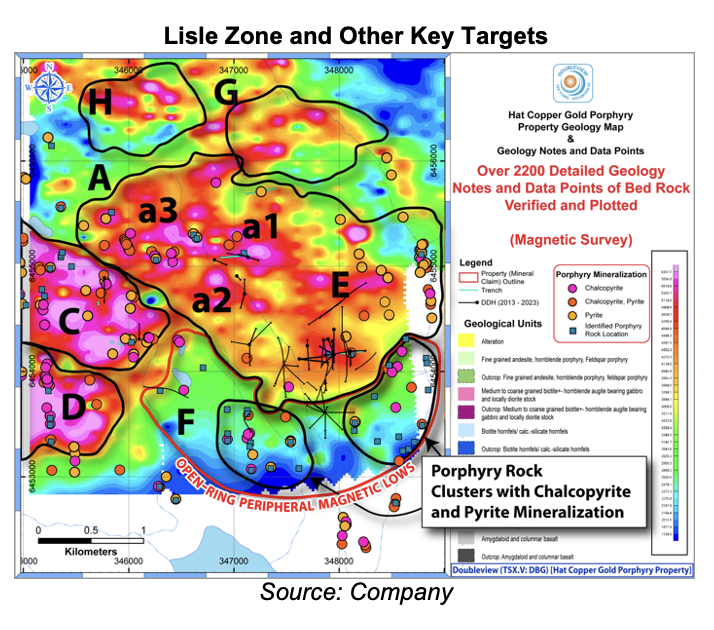
Several targets have never been drilled
Hoey and West Gossan targets are located 1 km south, and 1.4 km southwest, respectively, of the Lisle target
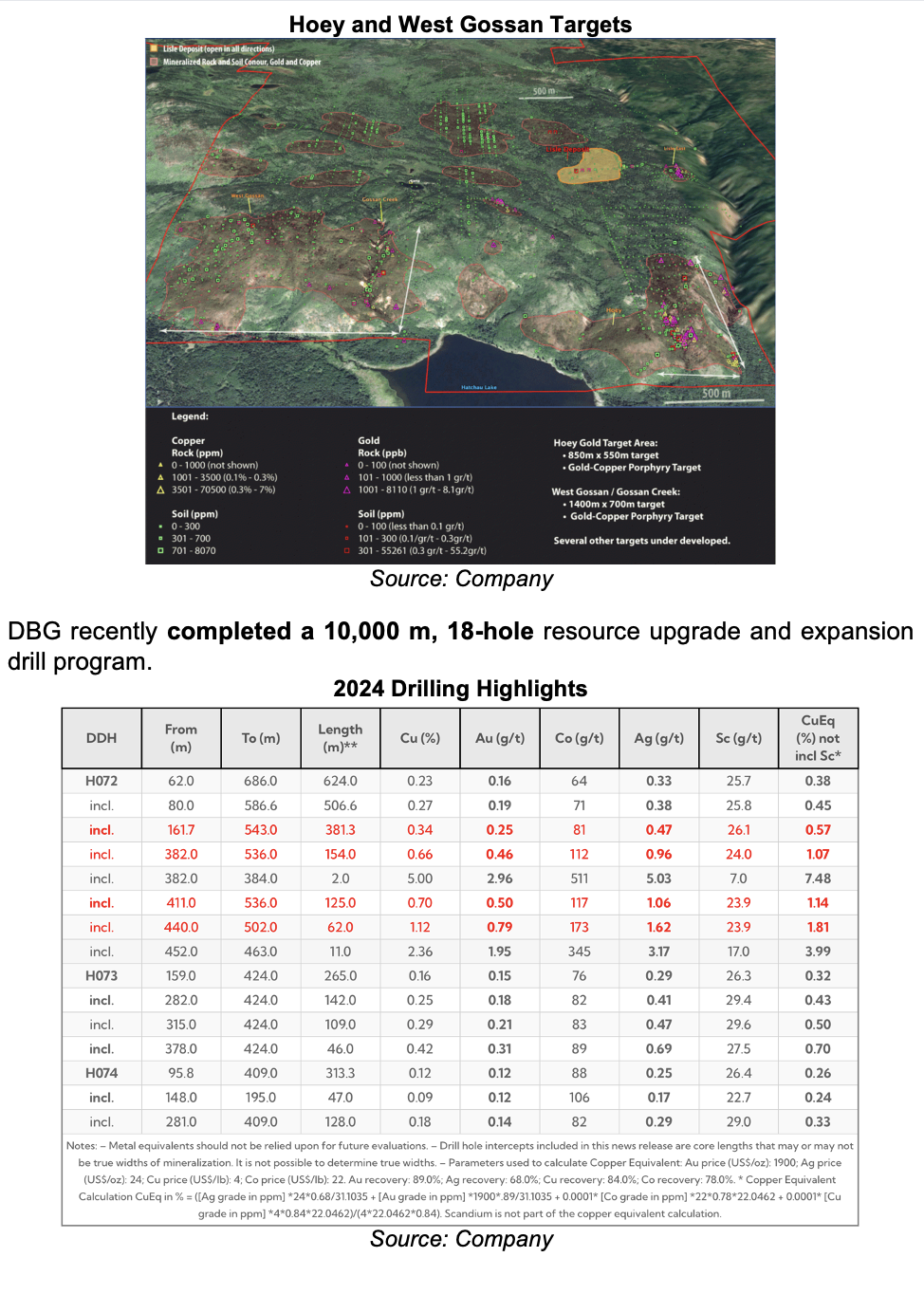
Initial holes returned long intervals of copper mineralization, validating the block model of the Hat deposit. Awaiting results for the remaining holes
The CEO owns 16% of the outstanding shares. Three out of four directors are independent
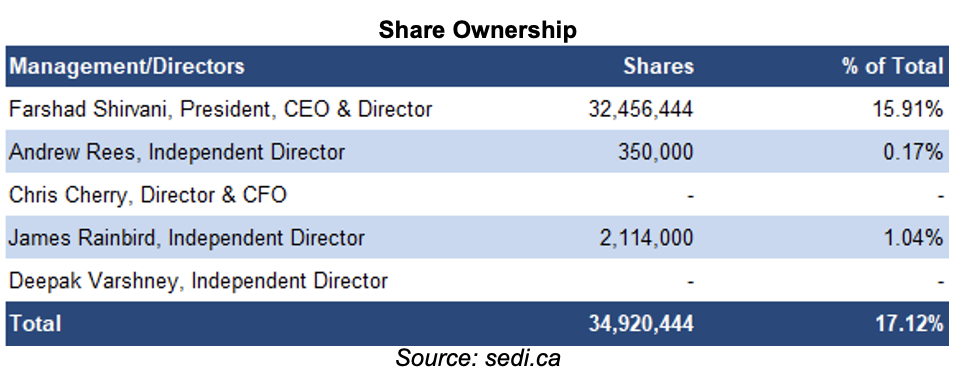
Brief biographies of the management team and board members, as provided by the company, follow:
Farshad Shirvani MSc. Geol. - President, CEO and Director
Mr. Shirvani has a B.Sc. and M.Sc. in geology from the Shiraz University in Shiraz, Iran and has more than 30 years of geological experience in mineral exploration. Mr. Shirvani is the President of Terracad Geoscience Services Ltd. and served as a member of the Board of Directors of several Junior Mining Companies including Gold Producer Barkerville Gold Mines Ltd. (BGM-TSXV) for more than 7 years (recently bought out by Osisko Gold Royalties Ltd. worth $ 338 million). Mr. Shirvani brings to Doubleview a wealth of experience in Mining Property Acquisition, Exploration, and Development.
Andrew Rees, B.Com – Independent Director
Mr. Rees, B.Comm. has over 20 years experience working with oil and gas and mining companies, and has raised over $100 million in the public markets. In executive management roles, Mr. Rees has taken projects from discovery to commercial production. Mr. Rees currently serves as a director of a number of publicly traded resource companies. Mr. Rees holds a Bachelor of Commerce from Royal Roads University (British Columbia).
Chris Cherry – CFO
Mr. Cherry has over 14 years of corporate accounting and audit experience. Mr. Cherry has extensive corporate experience and has held senior-level positions for several public companies including Director, Chief Financial Officer, and Secretary. Mr. Cherry has been a Chartered Accountant since February 2009 and a Certified General Accountant since 2004. In his former experience as an auditor, he held positions with KPMG and Davidson and Co. LLP in Vancouver, where he gained experience as an auditor for junior public companies, and as an IPO specialist.
James Rainbird – Independent Director
Mr. Rainbird has decades of management and development experience in public and private agencies. He has worked in the financial industry for about 17 years and subsequently held officer and director positions in several junior mining companies. For the past 10 years he has focused on economic development in the public sector.
Deepak Varshney – Independent Director
Mr. Varshney is a professional geologist and has over 15 years of experience in the capital markets and mineral exploration and development sector. He has developed long-standing relationships with an extensive network of high net worth retail investors, brokers, and private equity groups, and has personally raised over $40 million in the past 3 years. He is a director of multiple publicly traded issuers and holds a Bachelor of Science in Earth Sciences from Simon Fraser University.
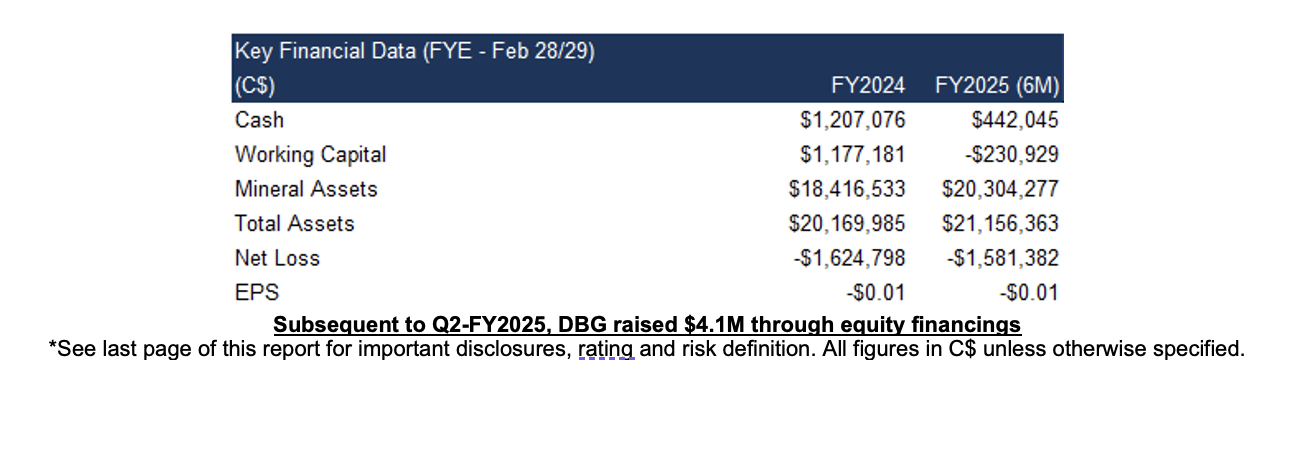
Strong balance sheet. Subsequent to Q2-FY2025, DBG raised $4.1M through equity financings
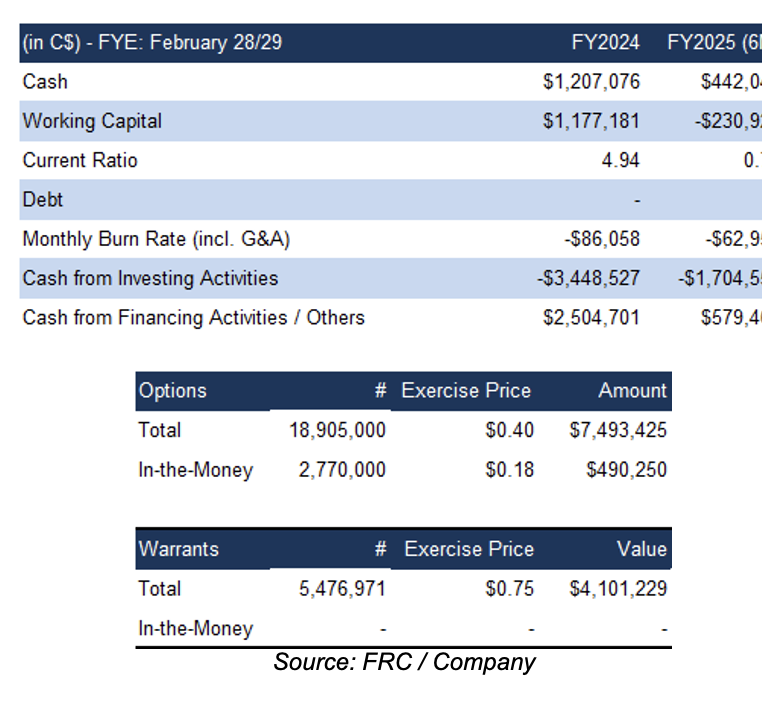
In-the-money options can bring in $0.5M
DBG is the most undervalued junior on our list of gold exploration companies. DBG is trading at $13/oz vs the sector average of $43/oz, a 71% discount
Applying the sector average EV/oz of $43/oz to DBG’s resources, we arrived at a comparables valuation of $1.10/share
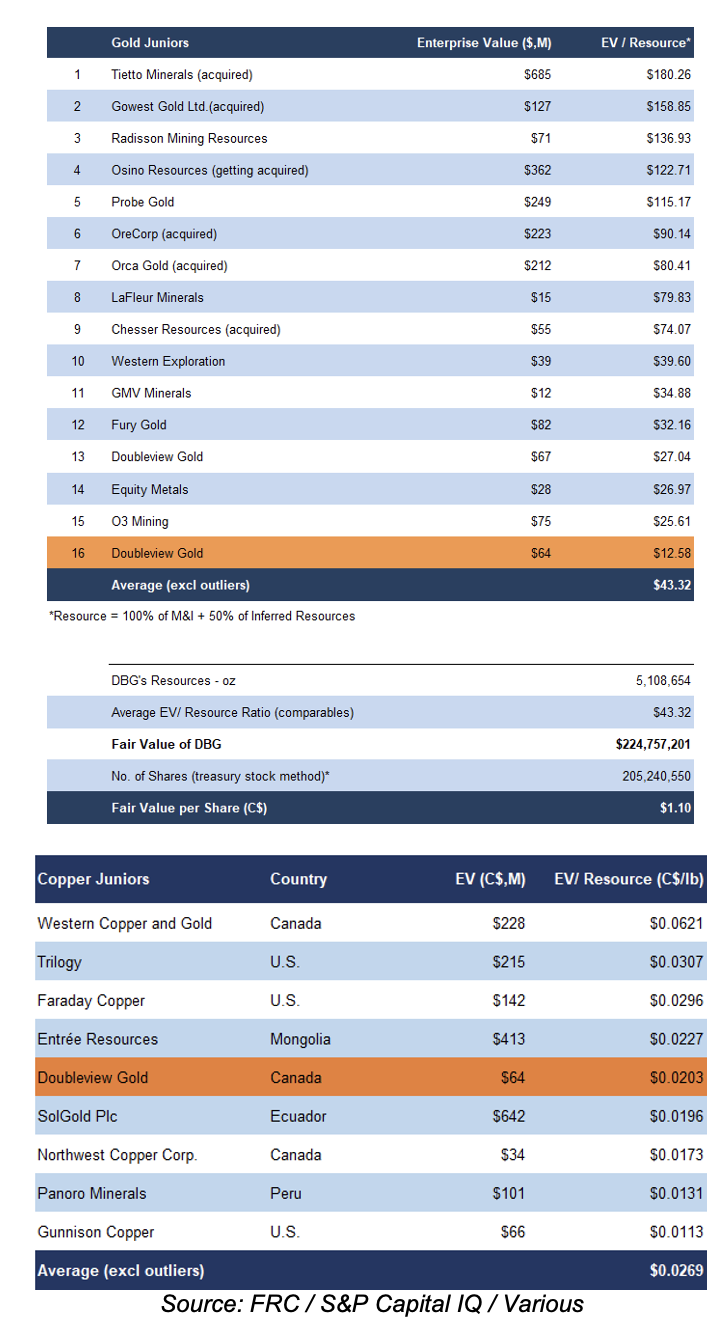
DBG is trading at just $0.020/lb vs the junior copper sector average of $0.027/lb, a 25% discount
Applying the sector average EV/lb of $0.027/lb to DBG’s resources, we arrived at a comparables valuation of $0.43/share
We are resuming coverage with a BUY rating, and a fair value estimate of $0.77/share. We believe DBG presents a compelling opportunity, driven by its undervalued valuation metrics, and the significant resource expansion potential of its flagship Hat project. The project is enriched with critical minerals like scandium and cobalt. Additional metallurgical results confirming the viability of recovering these valuable metals, along with the upcoming PEA, should further enhance market confidence in the project’s potential.
Maintaining our risk rating of 5 (Highly Speculative)
We believe the company is exposed to the following key risks (not exhaustive):