

Disclosure: Grid Battery Metals Inc. has paid FRC a fee for research coverage and distribution of reports. This fee creates a potential conflict of interest which readers should consider. See last page for other important disclosures, rating, and risk definitions.
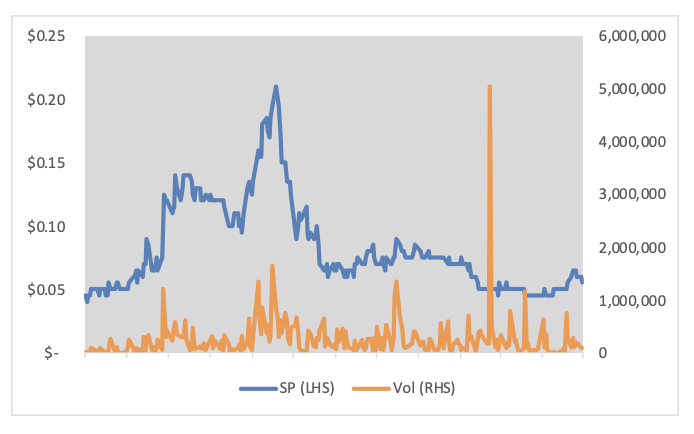
Price Performance (1-year)
*See important disclosures at the bottom of this report rating and risk definitions. All figures in US$ unless otherwise specified.
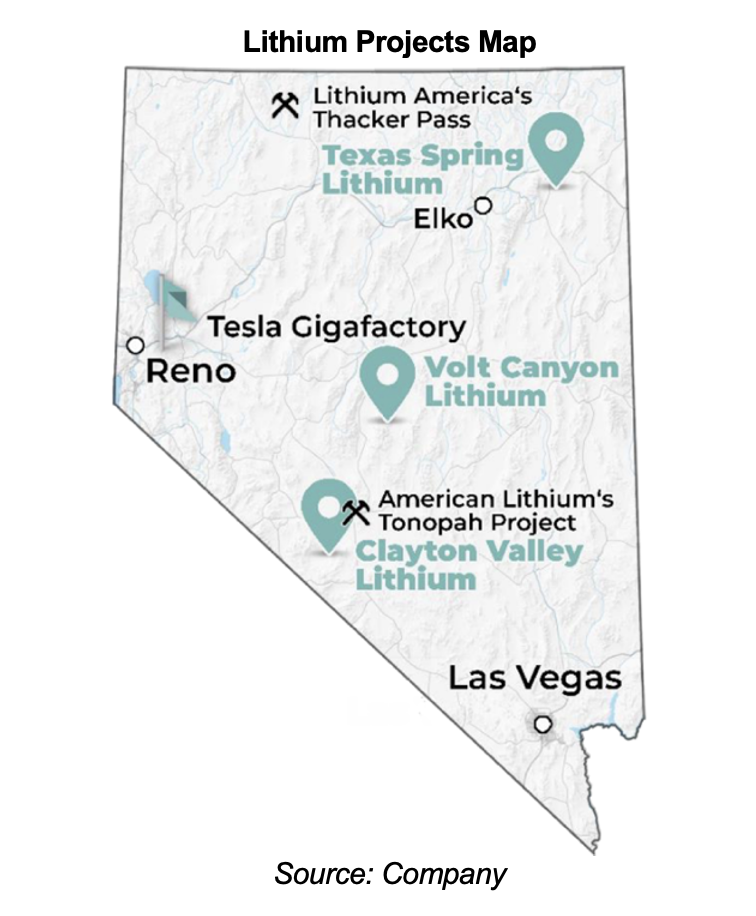
Three early-stage lithium projects in Nevada, and one nickel project in B.C
Two flagship assets: Texas Spring and Clayton Valley
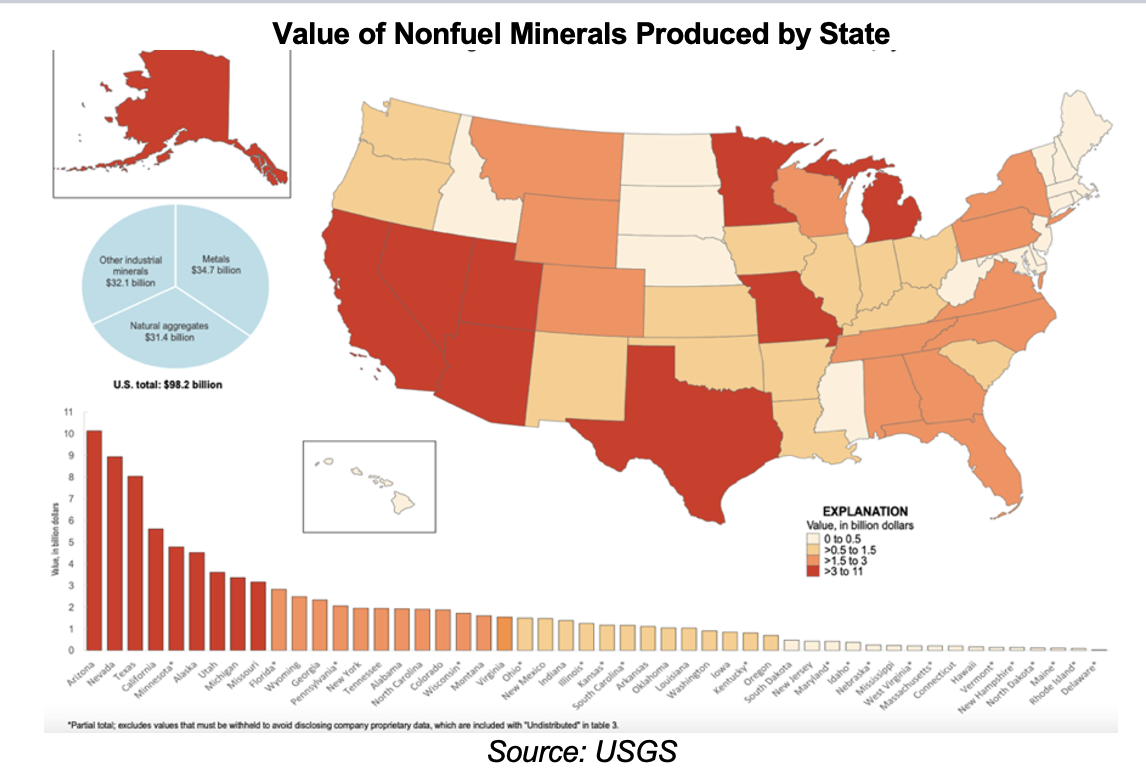
Nevada is the second largest producer of non-fuel minerals in the U.S. Its primary commodities include copper, diatomite, gold, and sand gravel. The state has been producing lithium since 1966.
Nevada is well-known for its claystone lithium deposits
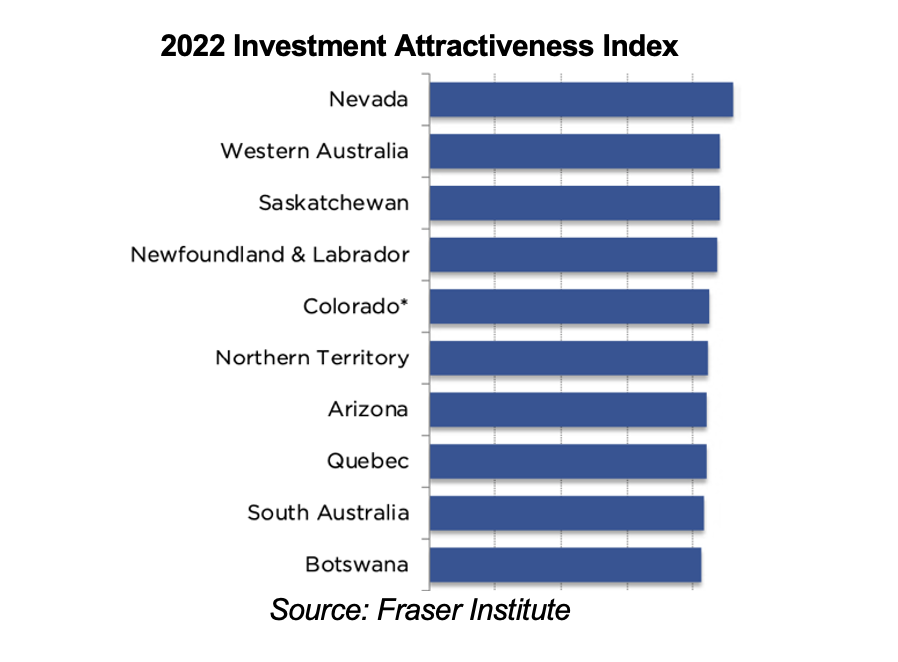
In 2022, Nevada was ranked the most attractive mining jurisdiction in the world, per the Fraser Institute’s survey of mining and exploration companies
According to the U.S. Geological Survey (USGS), the U.S. hosts approximately 12 Mt of lithium resources or approximately 12% of global resources. Silver Peak is the only commercial lithium mine in North America, accounting for 2% of global production. We believe the discrepancy between production and resources in the U.S. suggests significant potential for the country to become a major global producer.
The Clayton Valley hosts America’s lone lithium mine, and several advanced stage lithium projects
In 2022, the U.S. introduced the “Inflation Reduction Act”, which includes provisions aimed at encouraging the production of EVs and their batteries within North America. We note that battery/EV manufacturers/miners are actively seeking stable/long-term supply sources in the country. In early 2024, the U.S. Department of Energy (DOE) approved a US$2.3B loan to Lithium Americas to finance the construction of a lithium processing facility at its Thacker Pass project. CELL’s Texas Spring project is located east of the Thacker Pass project in northern Nevada.
Currently, over 25% of the U.S.’ lithium consumption is imported, suggesting a need for domestic producers. We believe these reasons, and the relatively lower exposure to political, geographic, and currency risks, offers companies such as CELL a significant advantage over comparable juniors focused on South America.
The U.S. imports 25% of its lithium consumption
Texas Spring Lithium Project
This 349-hectare property, located in Elko County, Nevada, is adjacent to Surge Battery’s NNLP, which hosts the highest-grade lithium resource in the U.S. (4.7 Mt LCE at 2,839 ppm Li).
Located 73 km northeast of Wells, Nevada, and adjacent to Surge Battery’s NNLP
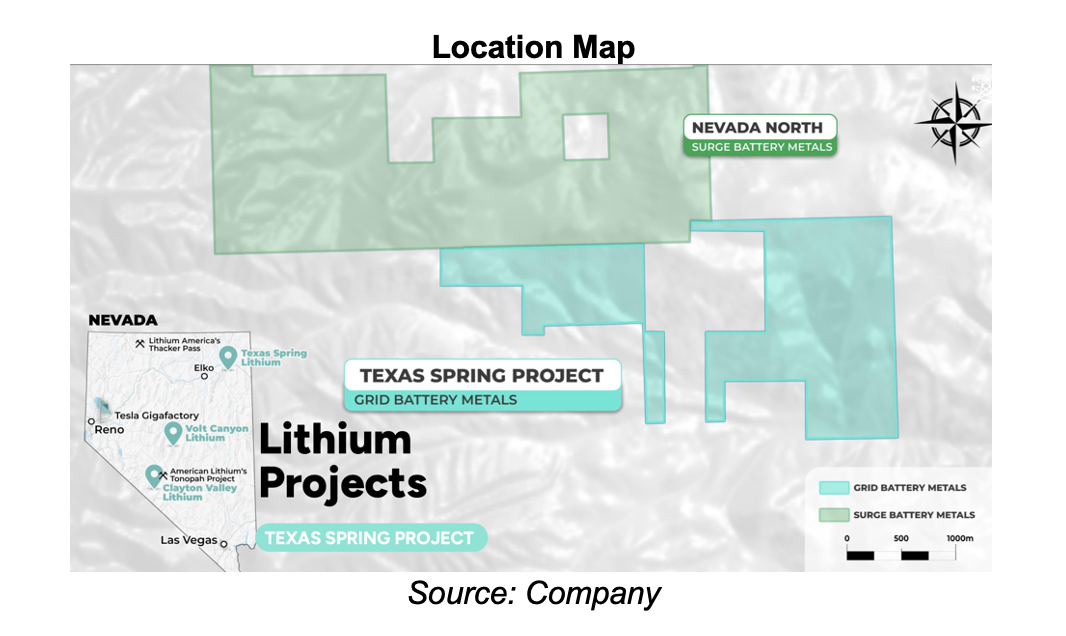
The project can be accessed through a gravel road
Lithium primarily occurs in three types of deposits: pegmatites (hard rock), brines, and clays. Pegmatites and brines account for most of the global resource-base. Exploration for lithium clay mineralization is relatively new. Currently, there is no active commercial mining of lithium clay deposits. However, recent developments have demonstrated the feasibility of extracting lithium from clays through leaching, filtration, purification, concentration, and electrolysis, ultimately yielding lithium hydroxide.
Texas Spring has been subject to surface sampling, and geophysical surveys. Soil sampling has identified two zones of mineralization: one in the northwest measuring 0.85 km long by 0.47 km wide, and another in the southeast measuring 0.20 km long by 0.17 km wide. We note that Texas Spring’s average grade (2,010 ppm Li) is comparable to that of NNLP’s 2,839 ppm.
Prospective for lithium clay deposits
We note that grades of clay deposits typically fall between those of brine and pegmatites. Brine and clay deposits typically exhibit higher tonnage
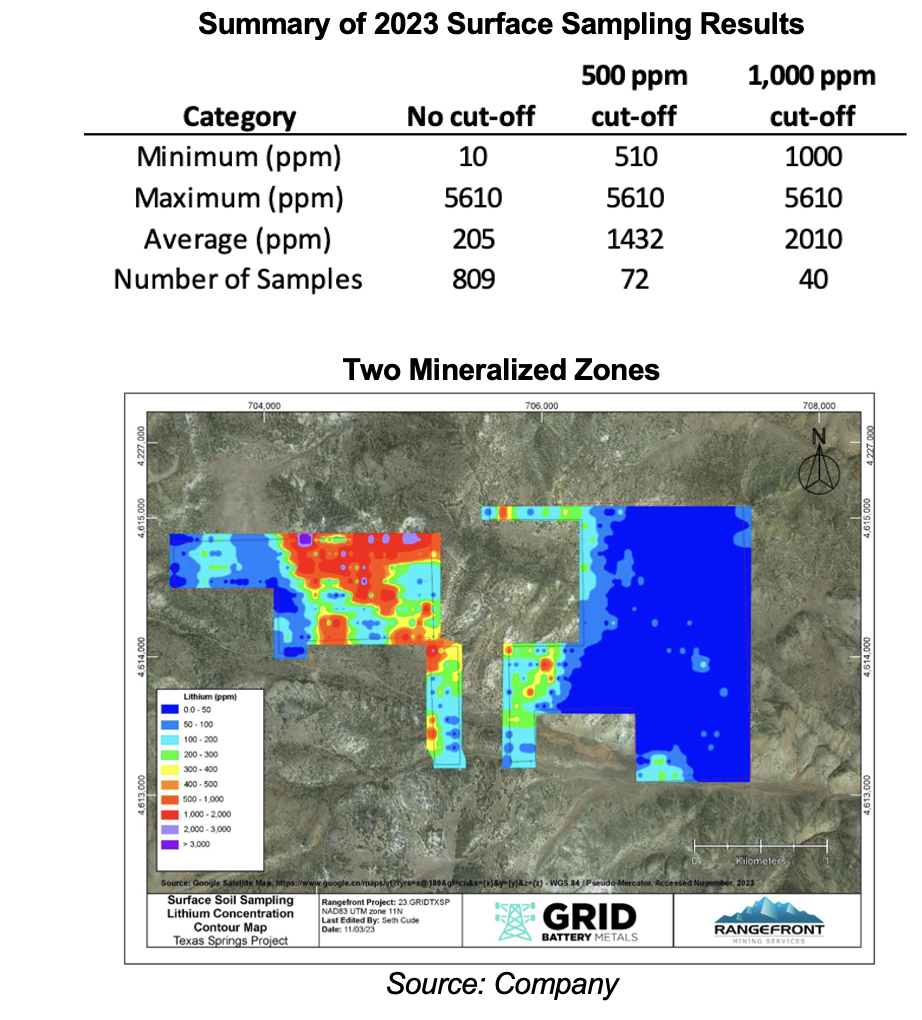
Sampling returned bonanza lithium grades of up to 5,610 ppm Li; grades in the region typically range between 700 and 2,000 ppm
Based on our review of all the published data, we are assigning a preliminary speculative estimate of 0.7 Mt LCE on Texas Spring.
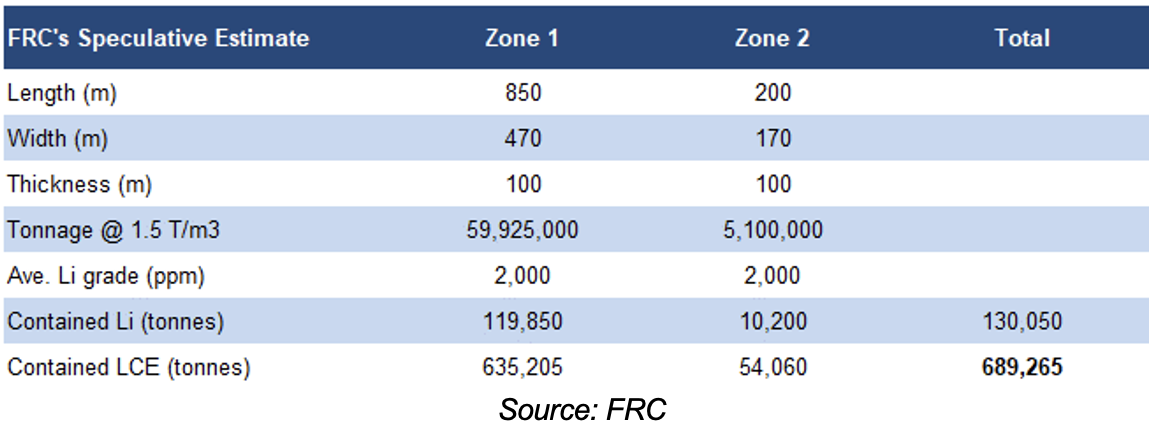
Potential for a high-grade resource
Management is planning a four-six hole drill program, followed by a maiden resource estimate by the end of this year. We note that delineating a lithium resource is a faster and cost-effective process vs mainstream metals such as gold and copper.
This 640 ha property borders Albemarle’s Silver Peak lithium project. The Silver Peak mine has been producing lithium since the 1960s.
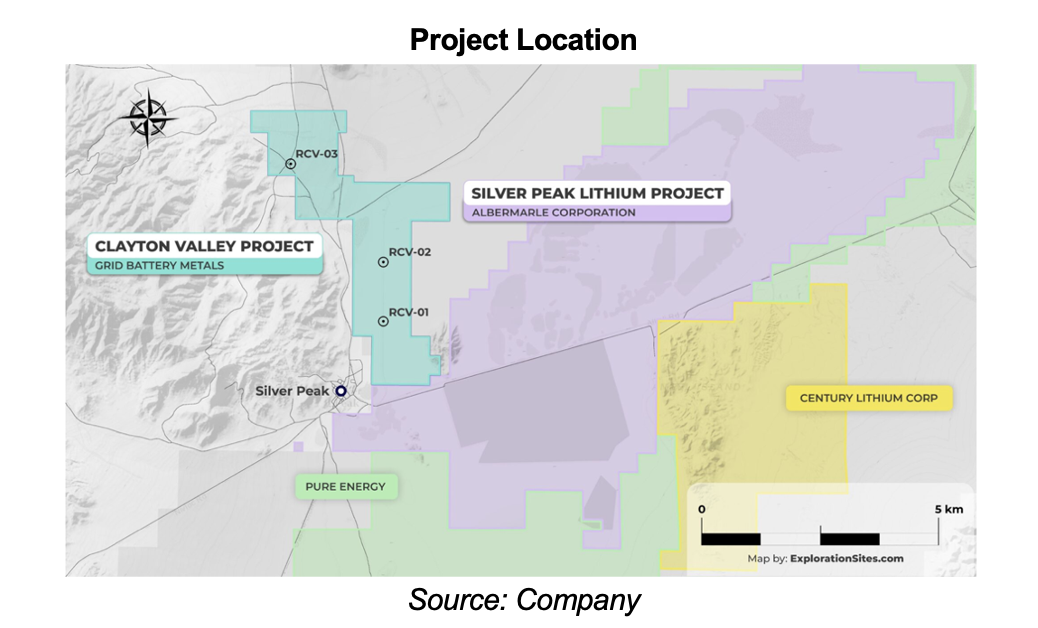
Last month, Century Lithium completed a robust feasibility study, based on annual production of 34,000 tonnes LCE over 40 years. The project’s initial CAPEX is US$1.5B. The study returned an AT-NPV8% of US$3.01B, with an AT-IRR of 17.1%, using US$24,000/t LCE, and cash costs of US$8,223/t.
Located approximately 273 km southeast of Reno, and 315 km from Tesla’s (NASDAQ: TSLA) Gigafactory
The project is located in the Clayton Valley – a closed basin hosting multiple layers of lithium-bearing volcanic ash containing lithium brine and clay deposits. Past exploration and drilling (three holes/356 m) returned encouraging results (172 ppm to 576 ppm Li), but inadequately assessed the claystone potential of the property. Management intends to pursue a drill program, upon completing an ongoing geophysics/soil sampling program.
Well-established infrastructure including access to paved highways, country roads, and a power station
Adjacent to Albemarle’s Silver Peak mine, and Century Lithium’s Clayton Valley project
Potential to host both lithium brine and clay deposits
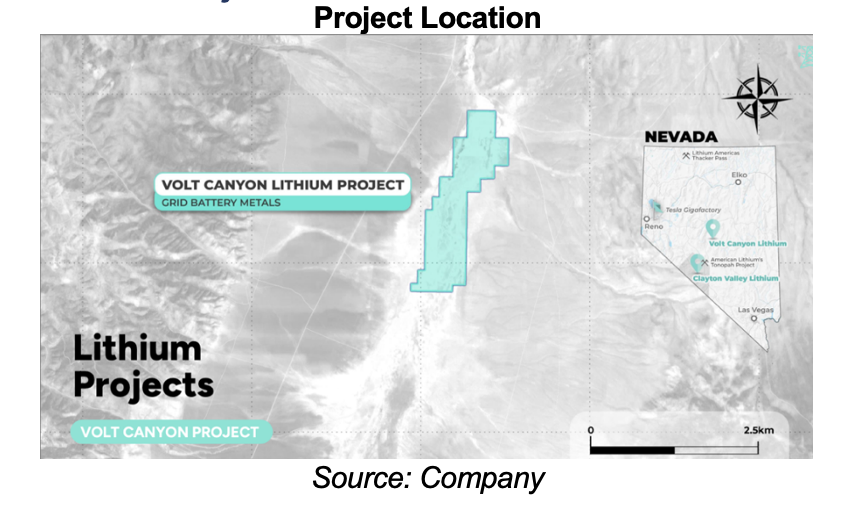
This 653 ha project is located 122 km northeast of Tonopah, and 150 km south of the Thacker Pass project
The property is prospective for lithium-bearing clay deposits similar to Clayton Valley deposits. Management is completing a NI 43-101 compliant geological report, and awaiting results of a soil sampling program, prior to commencing follow-up surface sampling, and drilling.
Five mineral claims covering 5,000+ ha in central B.C
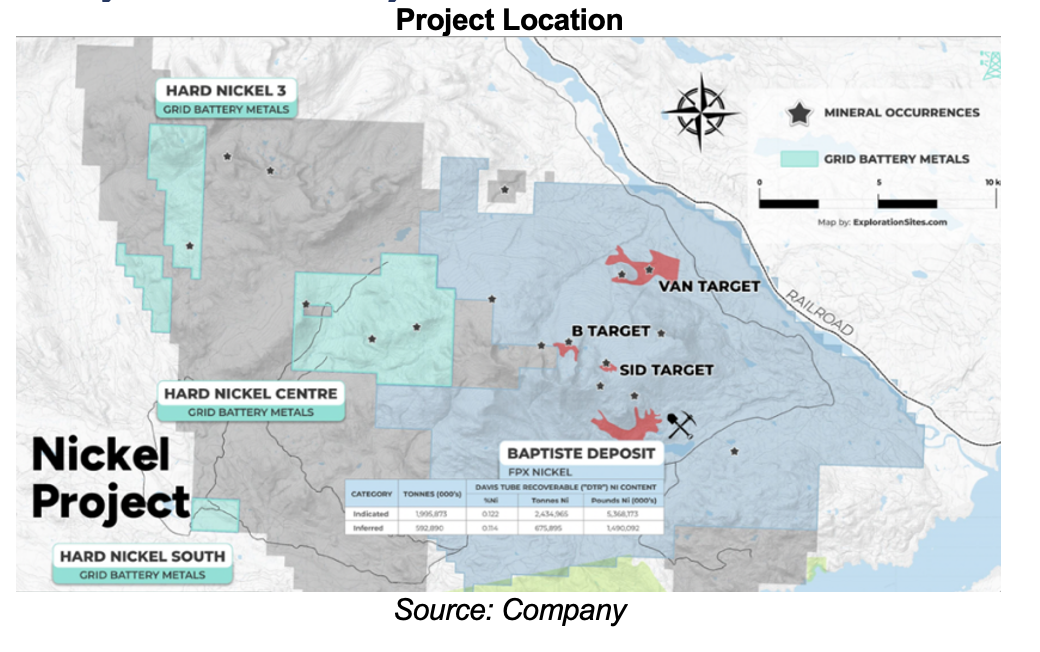
Favorable location and infrastructure including hydroelectric power, and rail access
Adjacent to FPX Nickel’s Decar nickel project – one of the largest undeveloped nickel projects in the world
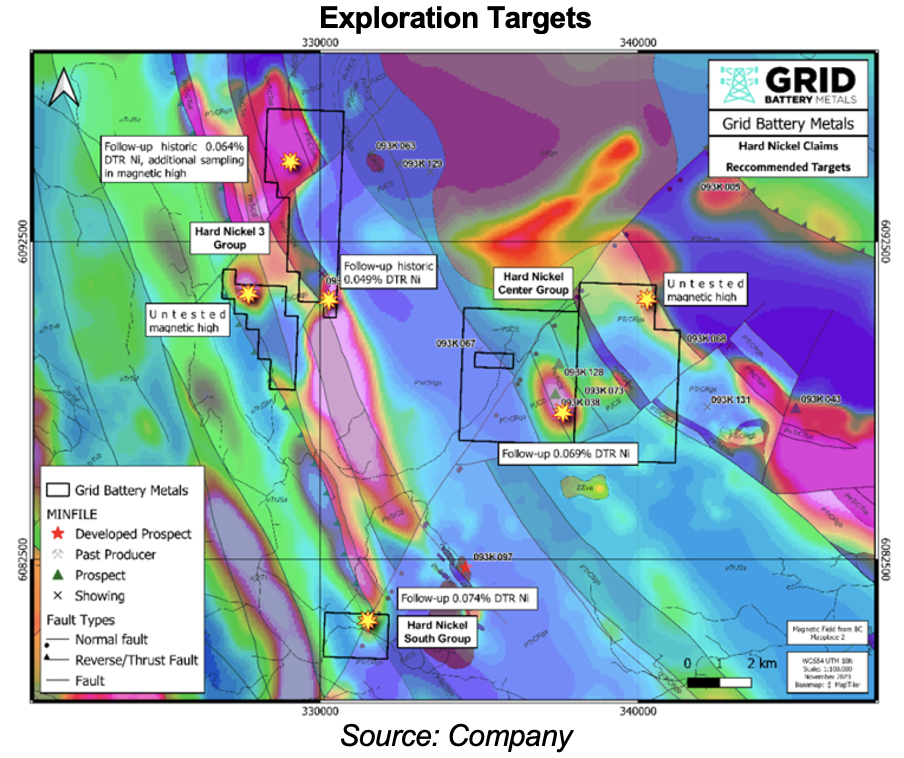
Prior exploration has delineated a 1.4 km x 0.5 km mineralized footprint, with nickel values ranging between 1,000 and 2,696 ppm
58% of samples returned >1,800 ppm
The property's geology and mineralization resemble FPX's awaruite deposits, known for their large-scale and consistent grades, despite typically being low-grade.
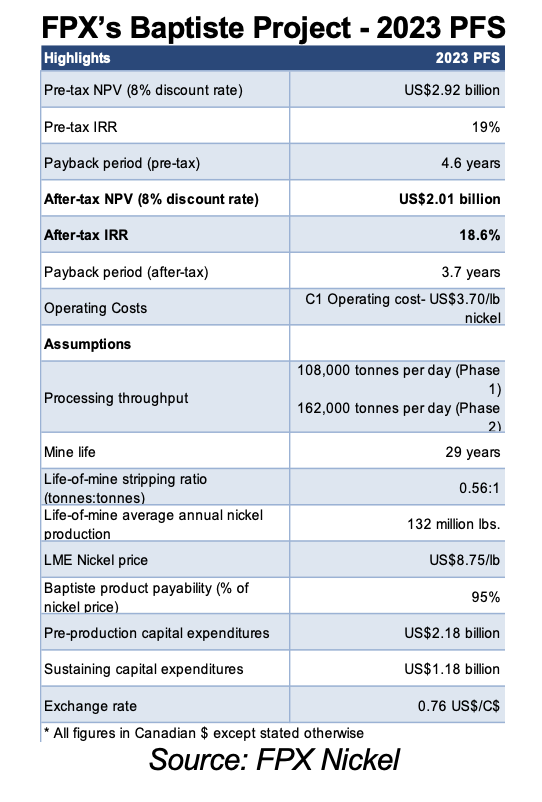
A 2023 PFS returned an AT-NPV8% of US$2B, using US$8.75/lb Ni
Earlier this year, FPX received a $14M equity financing from Sumitomo Metal
CELL is spinning out this project into a new TSXV listed entity in the coming weeks. Once the transaction is completed, shareholders of CELL will receive a share of the new company for every 20 CELL shares held.
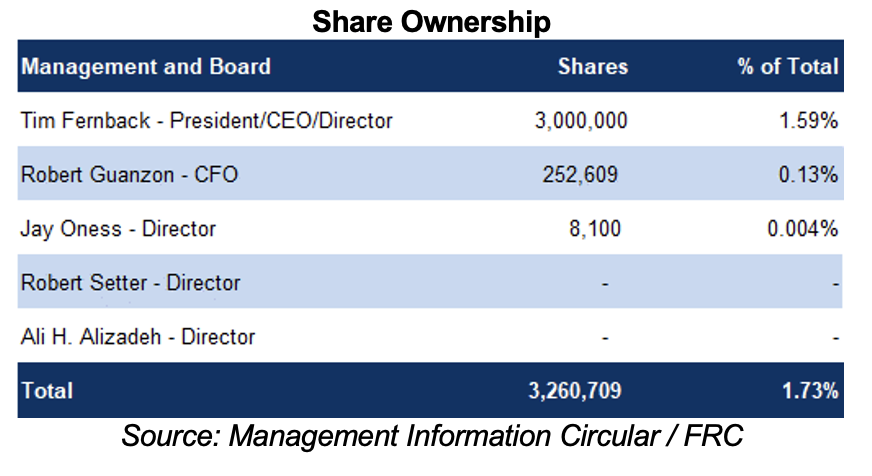
Management and board own 1.73
Brief biographies of the management team and board members, as provided by the company, follow:
Tim Fernback – President and CEO
Mr. Fernback brings over 30 years of experience in financing public and private companies in Canada. Mr. Fernback obtained a Bachelor of Science, Honours (B.Sc.) from McMaster University in Hamilton, Ontario and a Master of Business Administration (MBA) with a concentration in Finance from the University of British Columbia. Mr. Fernback is a former investment banker and venture capitalist, and has acted as either CFO or CEO for several successful public companies in the past. He holds a Certified Professional Accounting (COA, CMA) designation in Canada and is currently director of several publicly traded companies in Canada.
Robert Guanzon – CFO
Mr. Guanzon serves as Chief Financial Officer for the company, and has held this position for several junior resource companies listed on the TSXV in the past. Mr. Guanzon holds a Bachelor of Science degree in Accounting, a Certified Professional Accounting (CPA, CMA) designation and brings extensive experience in dealing with financial and accounting matters as well corporate strategy.
Jay Oness – Director
Mr. Oness has extensive experience in all aspects of corporate management with particular strengths in strategic planning, business development & investor relations for public companies. He has served as a Director, senior executive and consultant to public companies in resource and non-resource sectors over a successful 20 year career. He is currently VP, Business/Corporate Development of Southern Silver Exploration Corp.
Robert Setter – Director
Mr. Setter is the former Senior Financial Editor for Report on Mining and has been consulting with publicly trading companies for over a decade. He sits on the boards of several mining companies and holds a degree in Economics from UBC. Since 2000 he has held several key positions including Research Manager, Corporate Research and Analytics and has been involved in the launch of dozens of new enterprises assisting with financing, cash flow forecasting, strategic client acquisition and planning.
Ali H. Alizadeh – Director
Mr. Alizadeh is a senior geologist possessing extensive experience in mineral exploration & project management. He graduated with a Geology degree in 1991 a M.Sc. in Petrology in 1995 and an MBA at Queen’s University in 2010. He has been responsible for a number of uranium, gold and base metal projects during his exploration career with various exploration companies.
Our net rating on the company’s management team is 3.8 out of 5.0
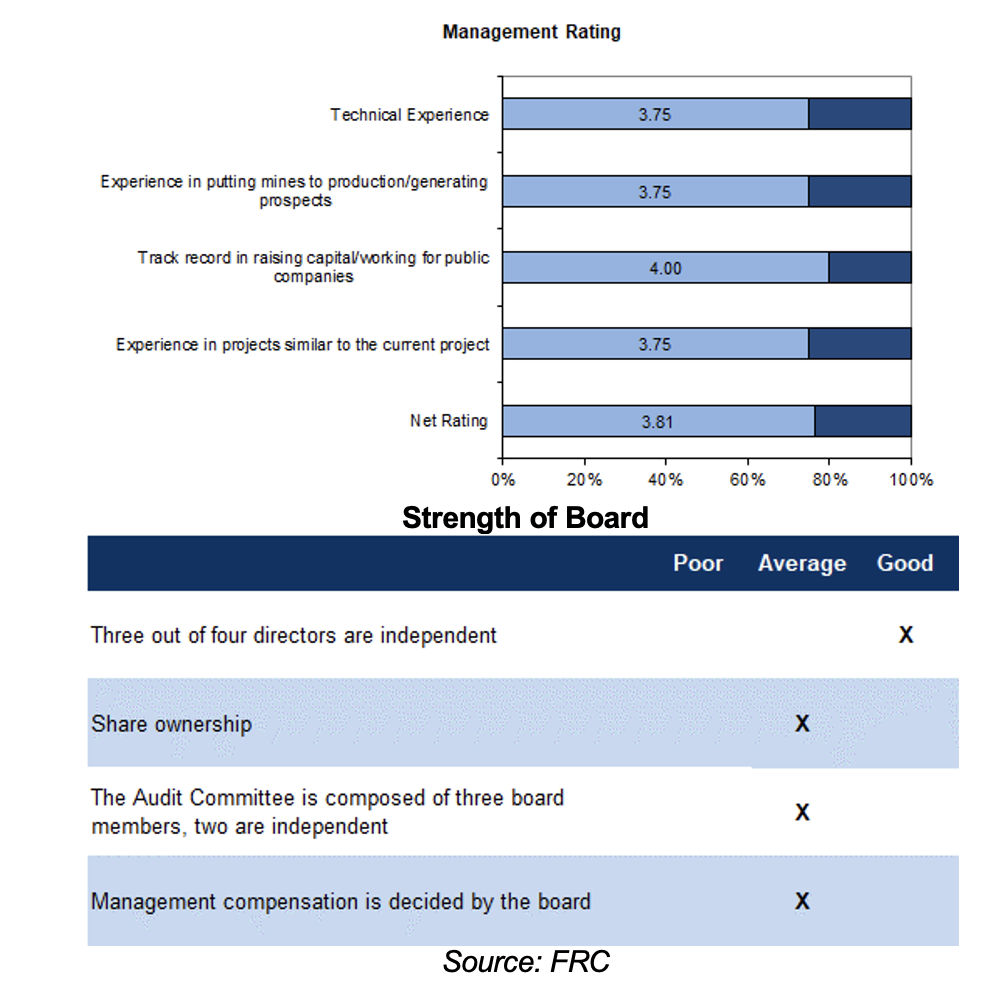
Three out of four directors are independent
Lithium prices are down 37% YoY, but up 24% YTD to US$15.4k/t vs the five-year average of US$21k/t
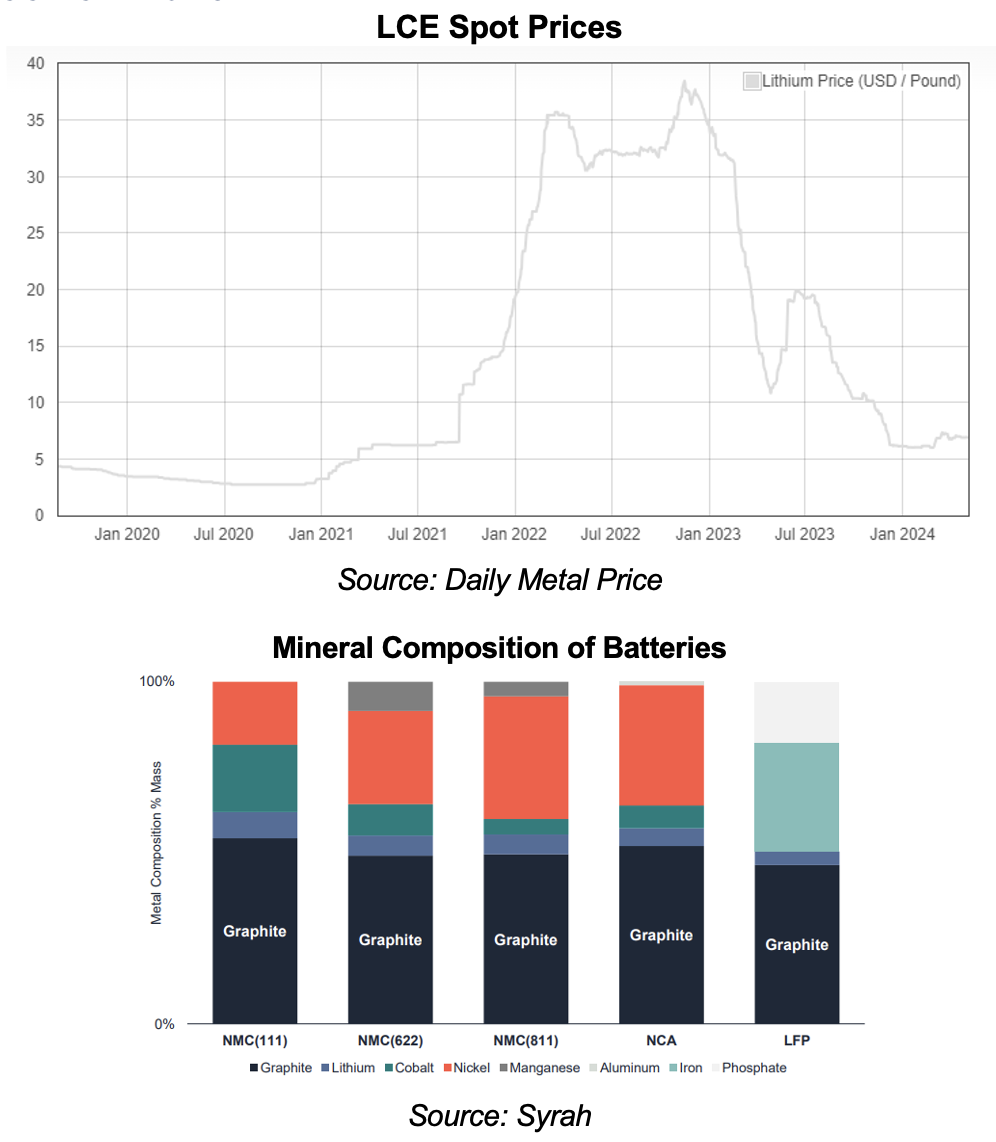
Graphite and lithium are the only two primary inputs used in all of the major types of batteries
At the end of 2023, 40M EVs were in use globally, up from 10M at the end of 2020. Per consensus forecasts, annual EV sales should increase to 35-40M by 2030, up from 14M in 2023. We expect lithium demand in batteries will grow from 1 Mt/year currently, to 2.75 Mt/year by 2030.
We believe lithium demand growth will outpace that of most other EV metals over the next decade
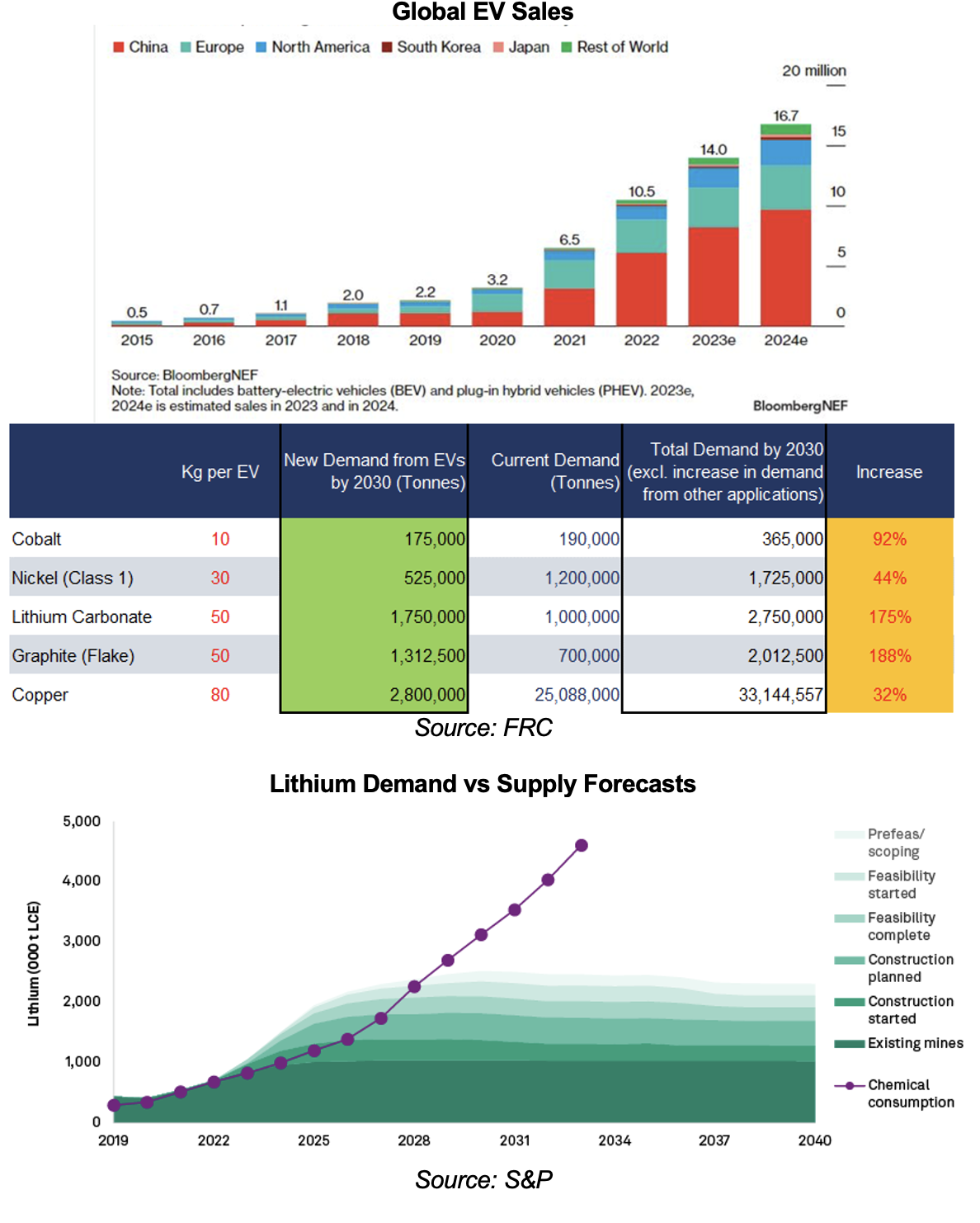
Demand is expected to outpace supply in the long-term
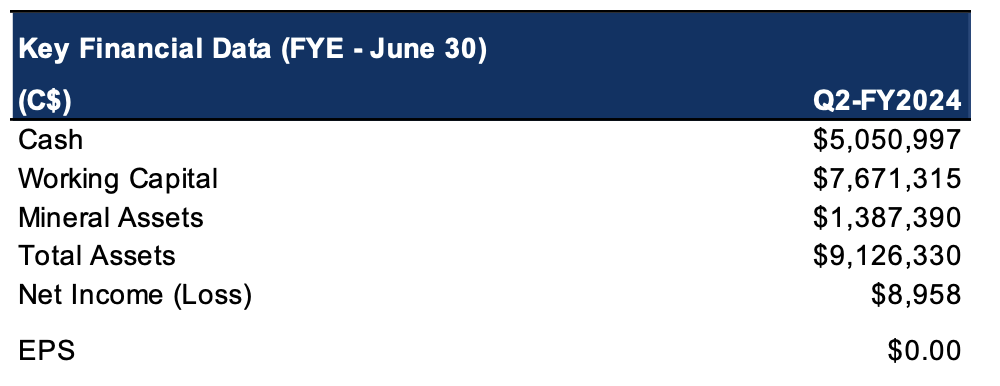
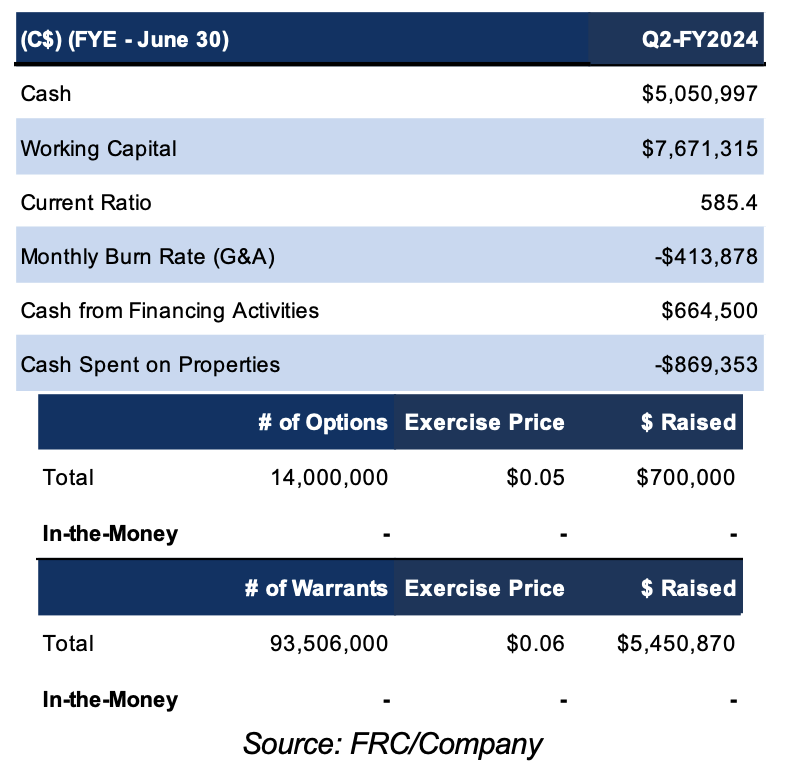
$7.67M in working capital at the end of December 2023
Lithium clay projects in Nevada exhibit high tonnage, and have long mine lives, with attractive NPVs of US$1B+, and IRRs of 20%+
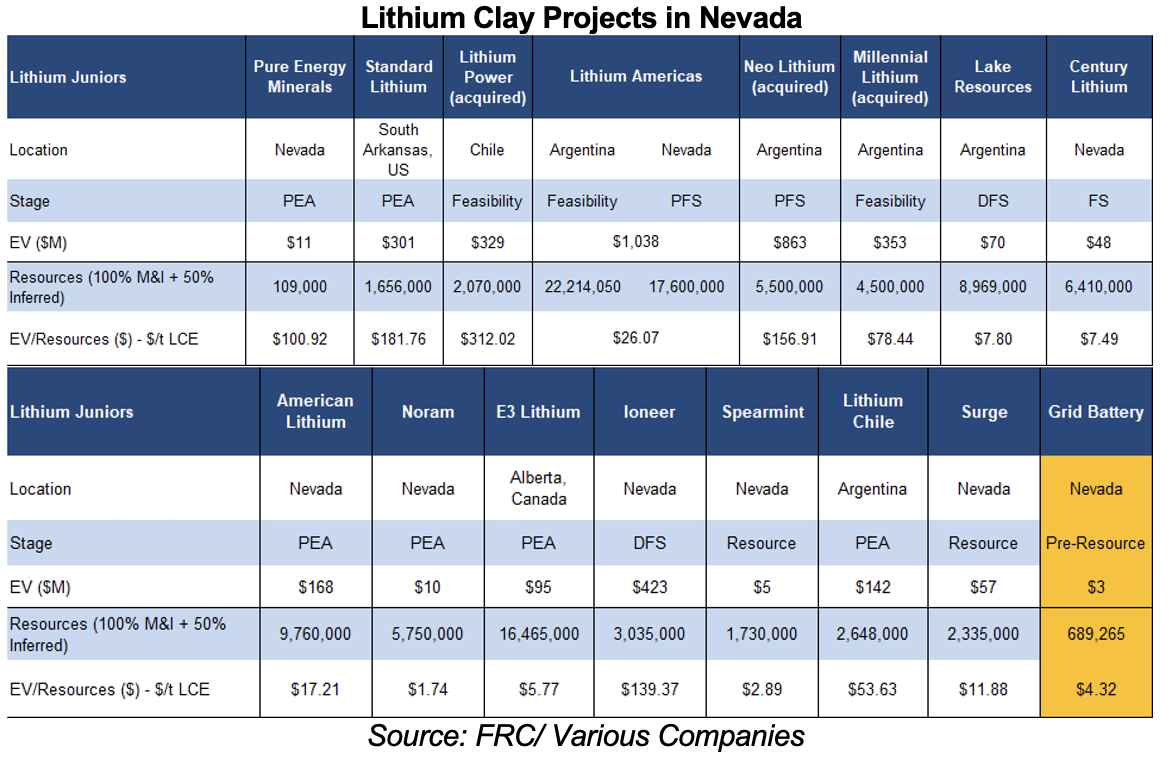
Using our preliminary speculative estimate of 0.7 Mt LCE on Texas Spring, we note that CELL is trading at $4/t vs the sector average of $51/t
We are initiating coverage with a BUY rating, and a fair value estimate of $0.22/share. For conservatism, we have refrained from assigning any value to the company’s other projects, as well as the potential 5% stock dividend resulting from the impending spin-off of the nickel project.
Upcoming catalysts include drilling, and positive sentiment towards juniors focused on EV metals. As Grid is a relatively new company, we believe it is currently flying under the radar. The lack of an NI 43-101 compliant resource estimate may deter investors. However, we believe our preliminary resource estimate in this report should bolster market confidence. We anticipate the stock will gradually align with our fair value as investor awareness of the company grows.
Applying $51/t to our resource estimate, we are arriving at a fair value estimate of $0.22/share
We believe the company is exposed to the following key risks (not exhaustive):
We are assigning a risk rating of 5 (Highly Speculative)
Discussion
Comments reflect the views of individual users, not FRC. Nothing posted in the comments section — by users or otherwise — should be taken as investment advice.