

Disclosure: Fisgard Capital Corporation has paid FRC a fee for research coverage and distribution of reports. This fee creates a potential conflict of interest which readers should consider. See last page for other important disclosures, rating, and risk definitions.
Investment Strategy
Short-term loans secured by real estate
The following table shows how Fisgard’s portfolio compares to other MICs (with AUM of $100M+) focused on single-family residential units.
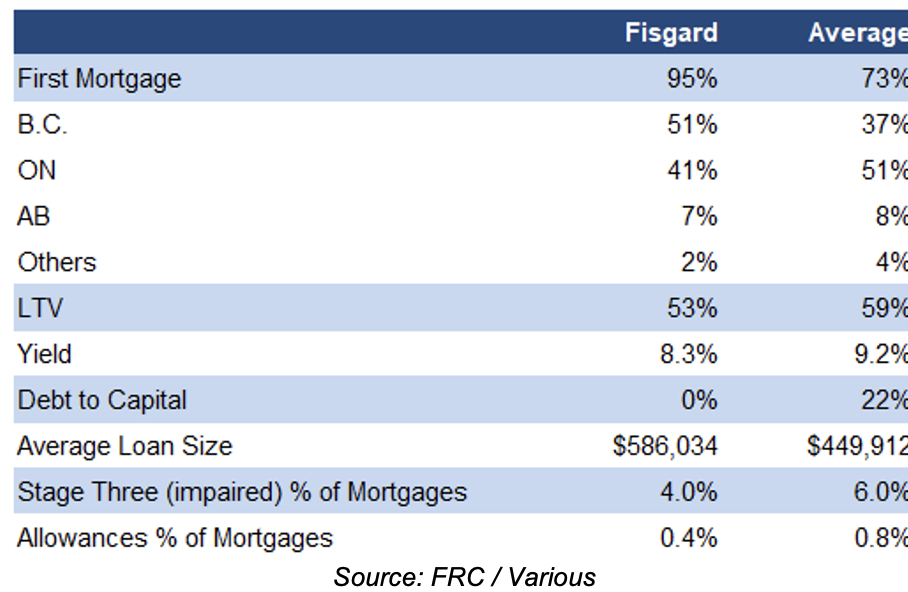
FCC’s yield is lower than comparables as it operates a relatively low-risk fund, driven by high exposure to first mortgages, and low LTV, and debt/capital. FCC has fewer stage three mortgages
Portfolio Details (YE: December 31st)
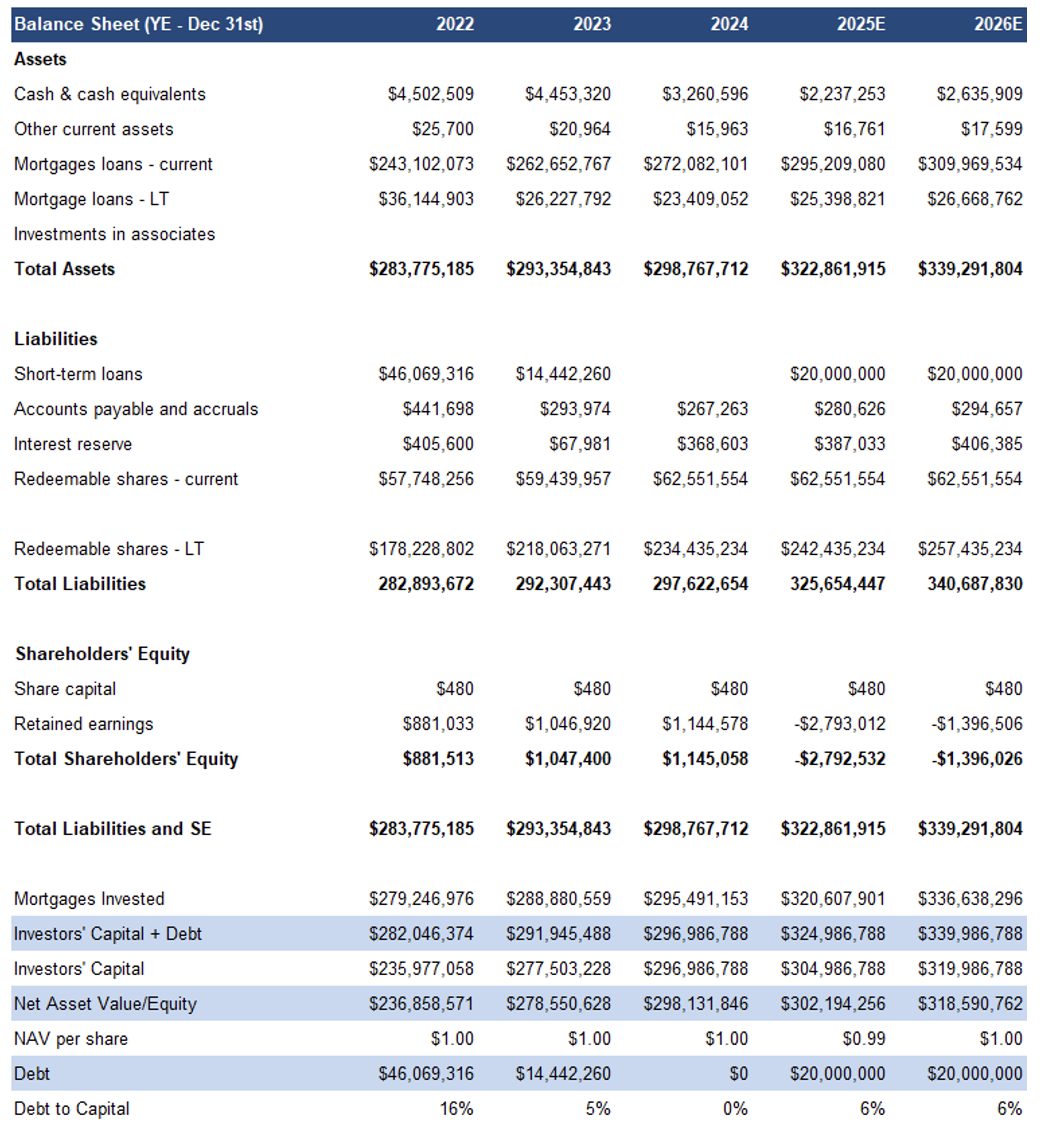
In FY2024, mortgage receivables were up 2% YoY to $295M vs our forecast of $313M
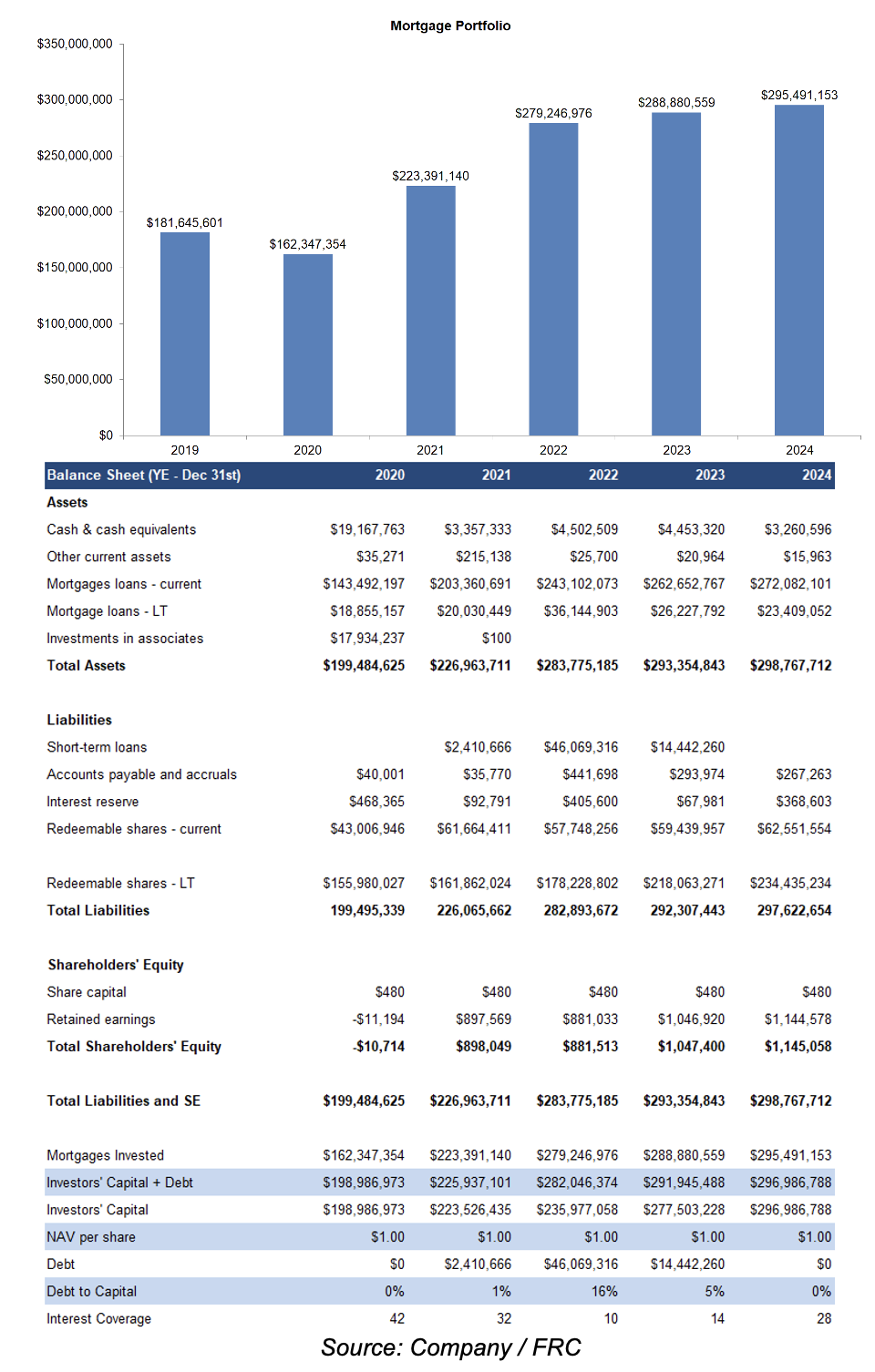
NAV remained flat at $1/share. Debt to capital decreased YoY from 5% to nil vs the sector average of 22%. Unlike many comparable MICs, the fund does not use leverage to enhance yields
Despite market rates falling in H2-2024, the MIC's largely fixed-rate portfolio led to a modest YoY increase in lending rates. As mortgages mature, we expect cash to be reinvested at lower rates
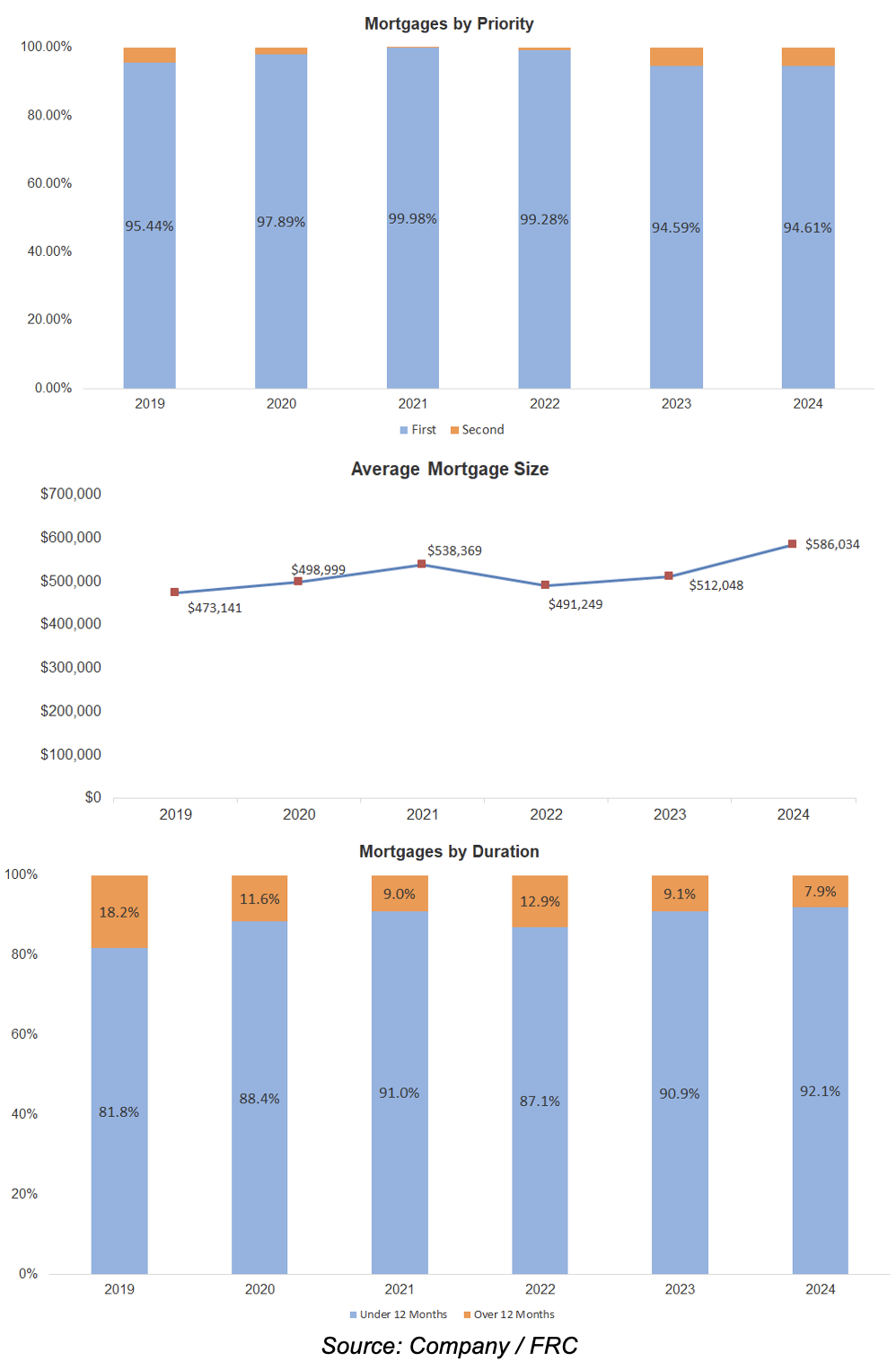
First mortgages remained stable at 95%, reflecting management's focus on maintaining a low-risk profile. The average mortgage was $586k, up 14% YoY. Duration decreased, implying lower risk
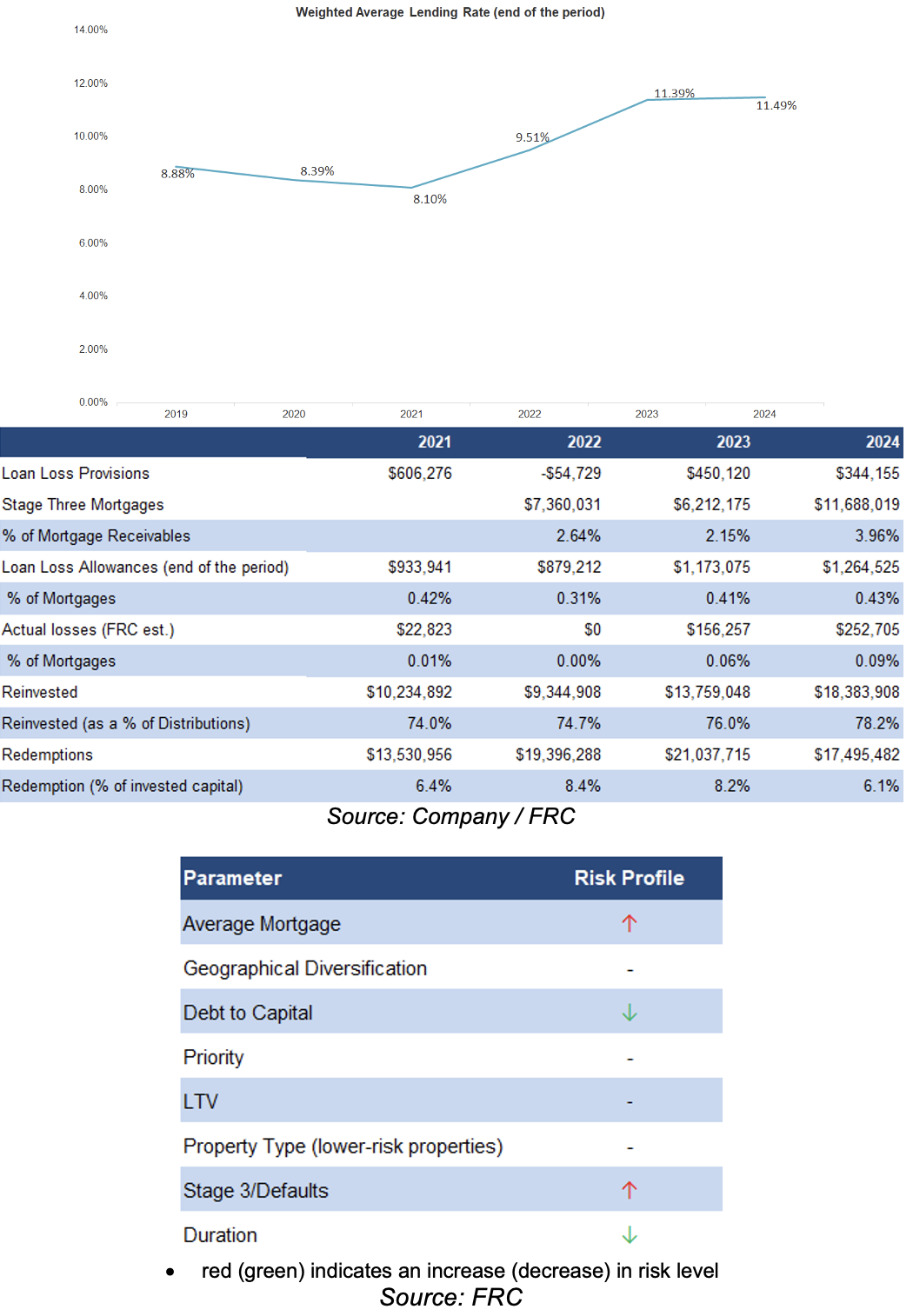
Stage three mortgages rose 181 bp YoY to 4% of the portfolio vs the sector average of 6%; several comparable MICs reported material increases in stage three mortgages in 2024. Redemptions were down 2 pp YoY to 6% of invested capital, indicating investor confidence
In summary, we believe the portfolio’s risk profile has increased due to higher stage three mortgages. However, the fund remains comfortably positioned with a low LTV of 53
Financials
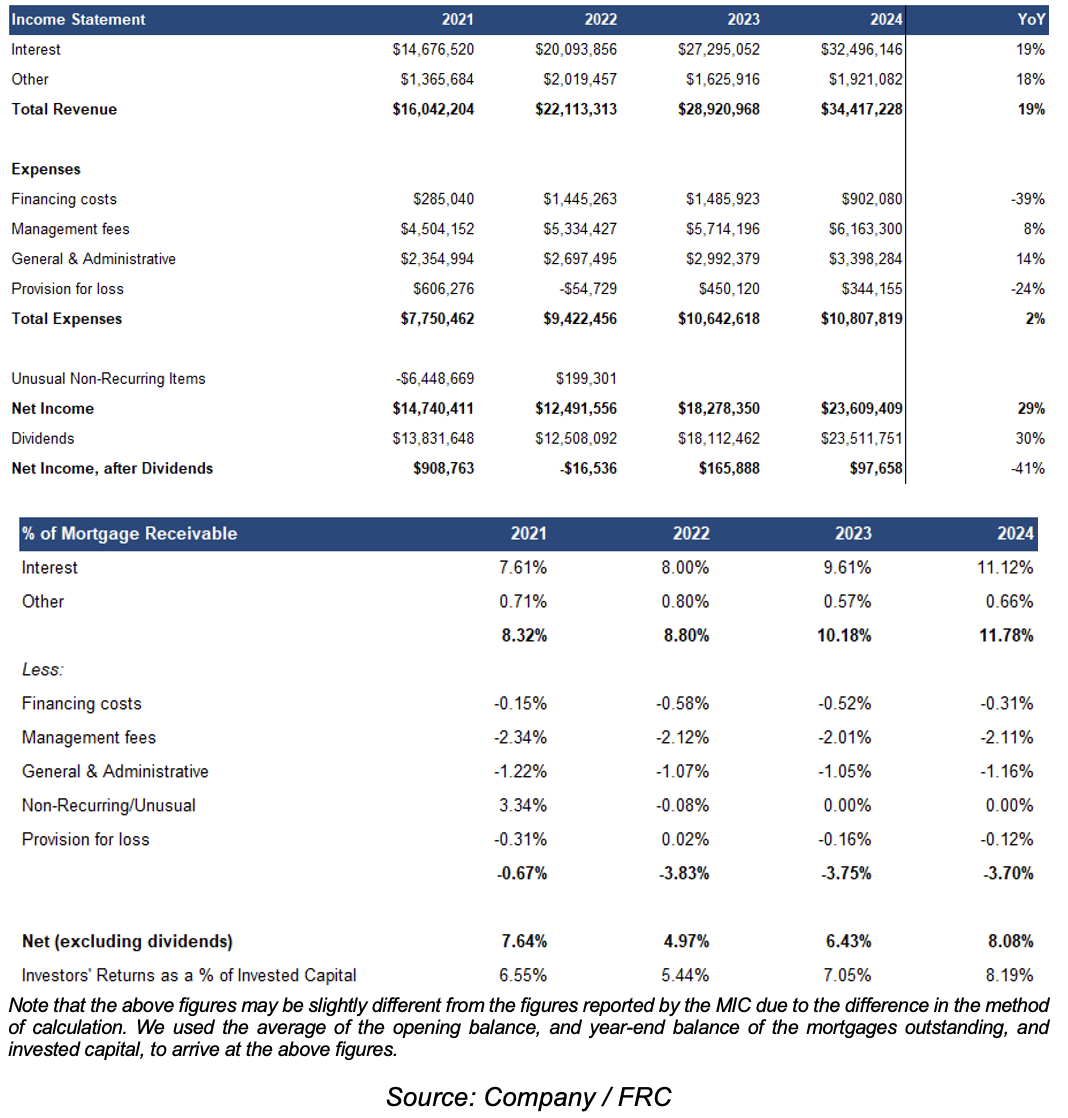
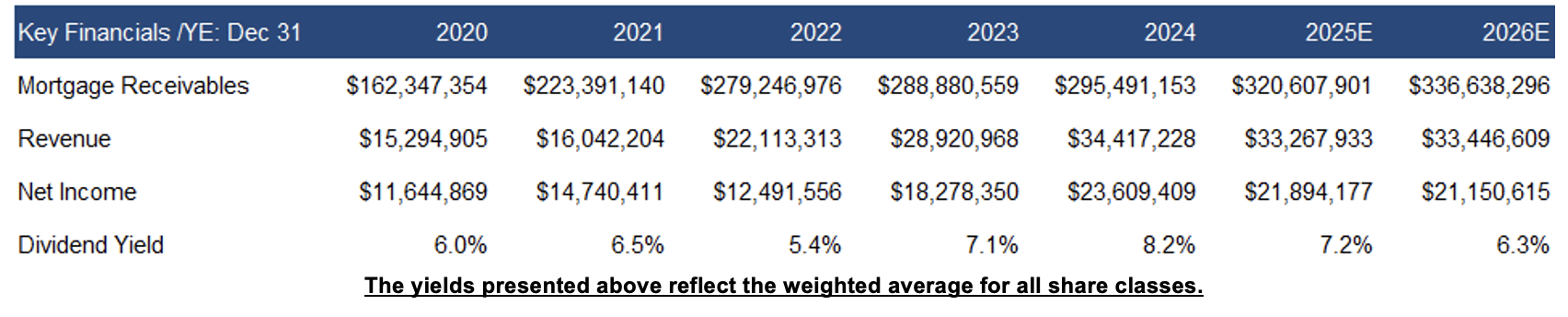
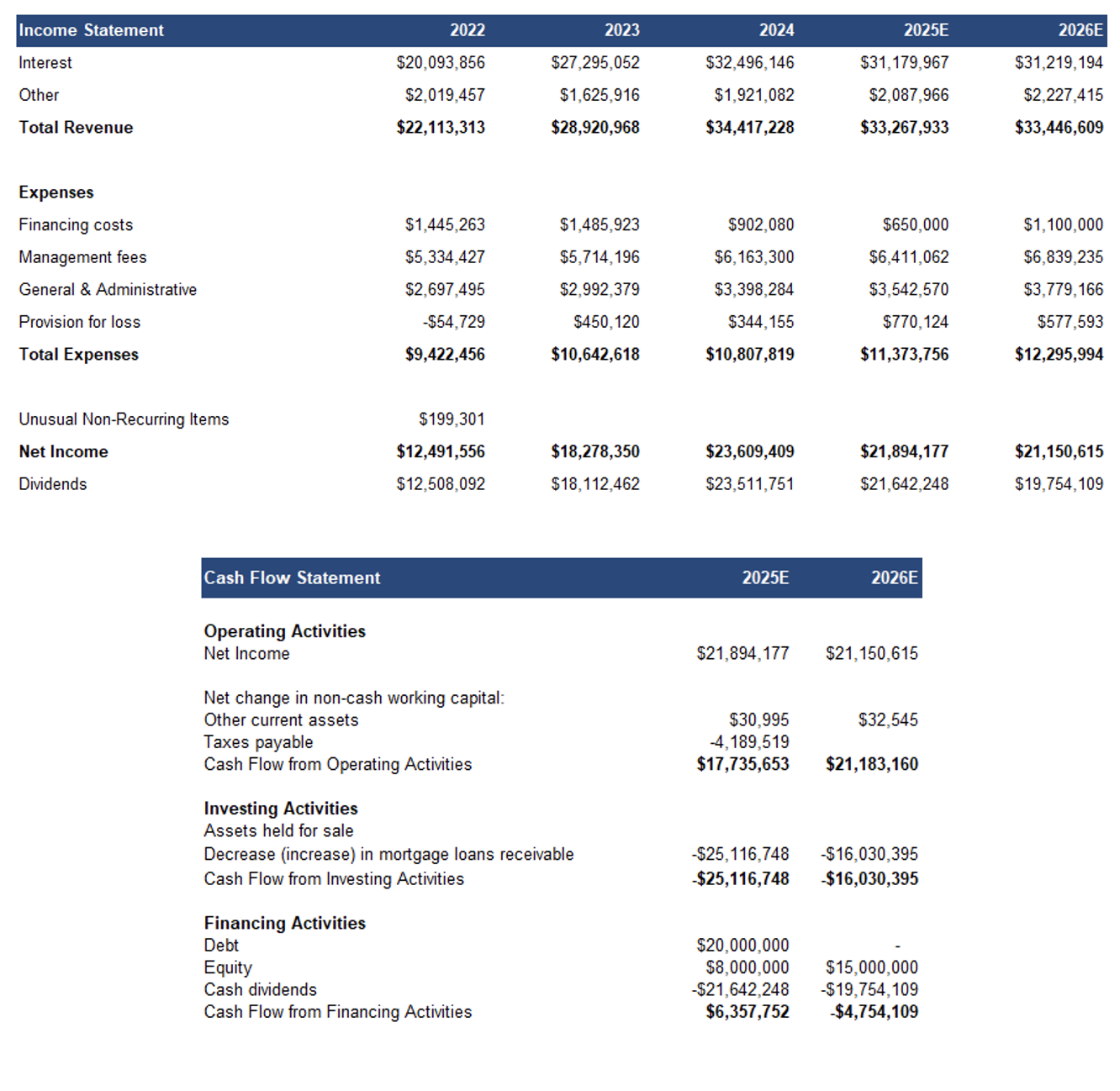
2024 revenue was up 19.0% YoY, beating our estimate by 1.6%, amid higher lending rates. Distributions were up 30% YoY, beating our estimate by 1.9%. Distributions/Equity increased by 1.1 pp YoY to 8.2%
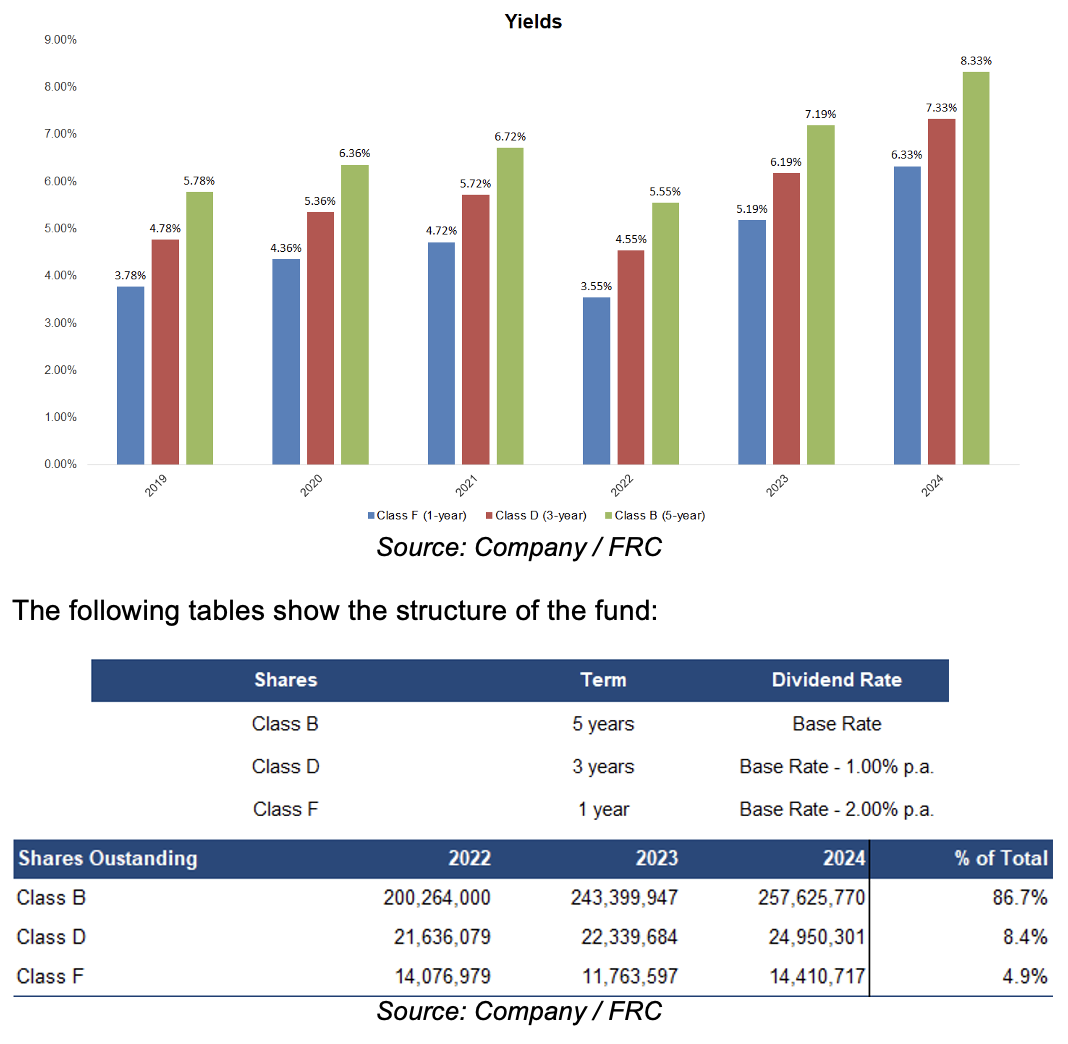
Due to higher lending rates, the yield on class B shares increased from 7.2% in 2023, to 8.3% in 2024 vs our forecast of 8.2%. Three options for investors. Class B (five-year) dominates the mix. Unusual payments
After year-end, the MIC received a CRA Notice of Reassessment for 2020 and 2021, indicating up to $4.0M in additional taxes. The MIC is appealing the decision, and has submitted its response. While awaiting a resolution, the MIC proactively made a $4.2M payment to prevent the accrual of interest, and late payment penalties. Of this, $1.1M will be covered by retained earnings as of year-end 2024, with the remaining $3.1M to be allocated over net income through 2027, reducing yields during that period. We note that this reflects a worst-case scenario; if the CRA rules in the MIC’s favor, yields will improve accordingly.
FRC Projections and Rating
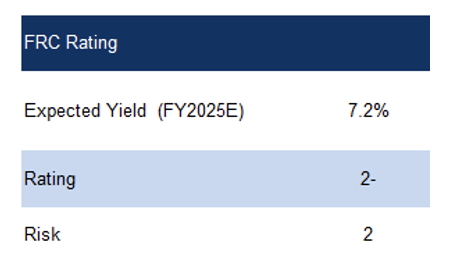
With rates trending downward, we foresee yields declining in 2025 and 2026. We are projecting yields of 7.2% in 2025, and 6.3% in 2026; these forecasts already account for the worst-case scenario related to the tax payments noted above
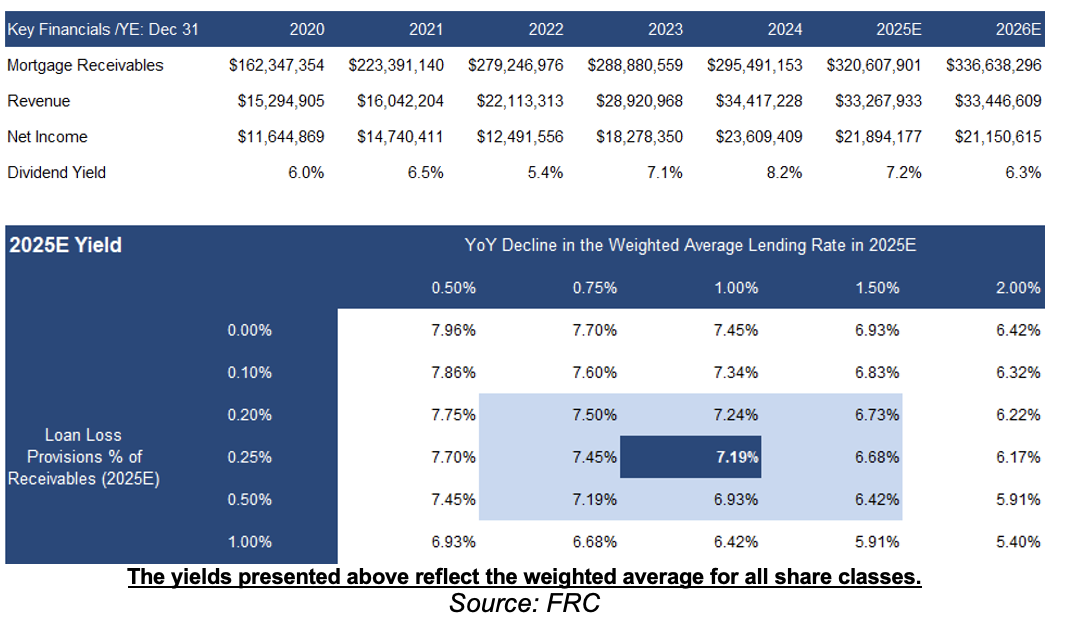
Our estimate for the 2025 yield varies between 6.4% and 7.5%, as loan loss provisions and lending rates vary
We are reiterating our overall rating of 2-, and risk rating of 2. We believe the MIC remains committed to its low-risk mandate, emphasizing low LTV first mortgages and minimal leverage
We find high-yielding funds, like Fisgard, increasingly attractive in the current declining rate environment. This is because MIC lending rates are less elastic, meaning their yields tend to decline less in a falling rate environment, and rise more slowly in a rising rate environment. Given the BoC’s recent and anticipated rate cuts, yields are set to decline. However, we believe the risk of higher default rates is easing, and the mortgage origination market is likely to gain momentum in 2025.
Risks
We believe the fund is exposed to the following key risks (not exhaustive):
APPENDIX


Discussion
Comments reflect the views of individual users, not FRC. Nothing posted in the comments section — by users or otherwise — should be taken as investment advice.