

Disclosure: Loncor Gold Inc. has paid FRC a fee for research coverage and distribution of reports. This fee creates a potential conflict of interest which readers should consider. See last page for other important disclosures, rating, and risk definitions.
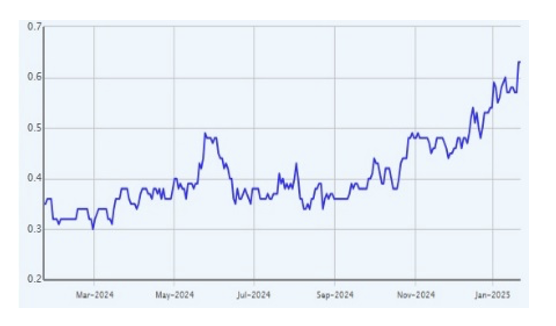
Price Performance (1-year)
Mining in the DRC: Opportunities and Risks
The Democratic Republic of the Congo (DRC) is a key player in global mineral production, with significant reserves of cobalt, copper, gold, and other critical minerals. Rising demand for copper and cobalt, driven by the transition to renewable energy, is drawing growing interest from global investors to the DRC's abundant resources. While the country possesses immense mineral wealth, its mining sector faces persistent challenges, including political instability, security concerns, and inadequate infrastructure. Despite these hurdles, the DRC continues to attract major international mining companies, driven by the allure of its vast mineral resources
The DRC: A global mineral powerhouse. Despite ongoing conflicts, several majors remain active in the DRC
Majors often employ strategies to mitigate risks, such as forming partnerships with local communities and government agencies, and investing in security measures to protect their operations. The recent resurgence of the M23 rebel group in eastern DRC has posed notable security challenges. However, these issues have been largely localized, and have not affected the operations of Barrick's Kibali Mine or Loncor's exploration.
The US, EU, and DRC are collaborating to improve mining, and ensure responsible sourcing of cobalt and copper. Their efforts, centered on sustainability, community support, and higher environmental and social standards, will likely increase the investment attractiveness of the country.
For a junior like Loncor, we believe a successful outcome involves being acquired by a larger player with established operations, and a strong understanding of the operating environment in the DRC. We believe the market is evaluating Loncor's potential based on its ability to independently advance the Imbo project, raising concerns about the challenging operating environment in the DRC. This likely explains why the stock is trading significantly below its intrinsic value. According to management, limited marketing and investor awareness campaigns have also contributed to LN trading well below sector multiples. In our view, the market’s focus should shift to the project's strong fundamentals, and management's ability to secure strategic partnerships (such as through a potential acquisition or joint venture), along with the company’s exploration and marketing initiatives.
Path to unlocking value
Imbo Project
Located in the Ngayu gold belt of northeastern DRC, 220 km from Barrick’s Kibali gold mine. Ngayu hosts Banded Ironstone Formation (BIF) gold deposits, which are typically large-tonnage
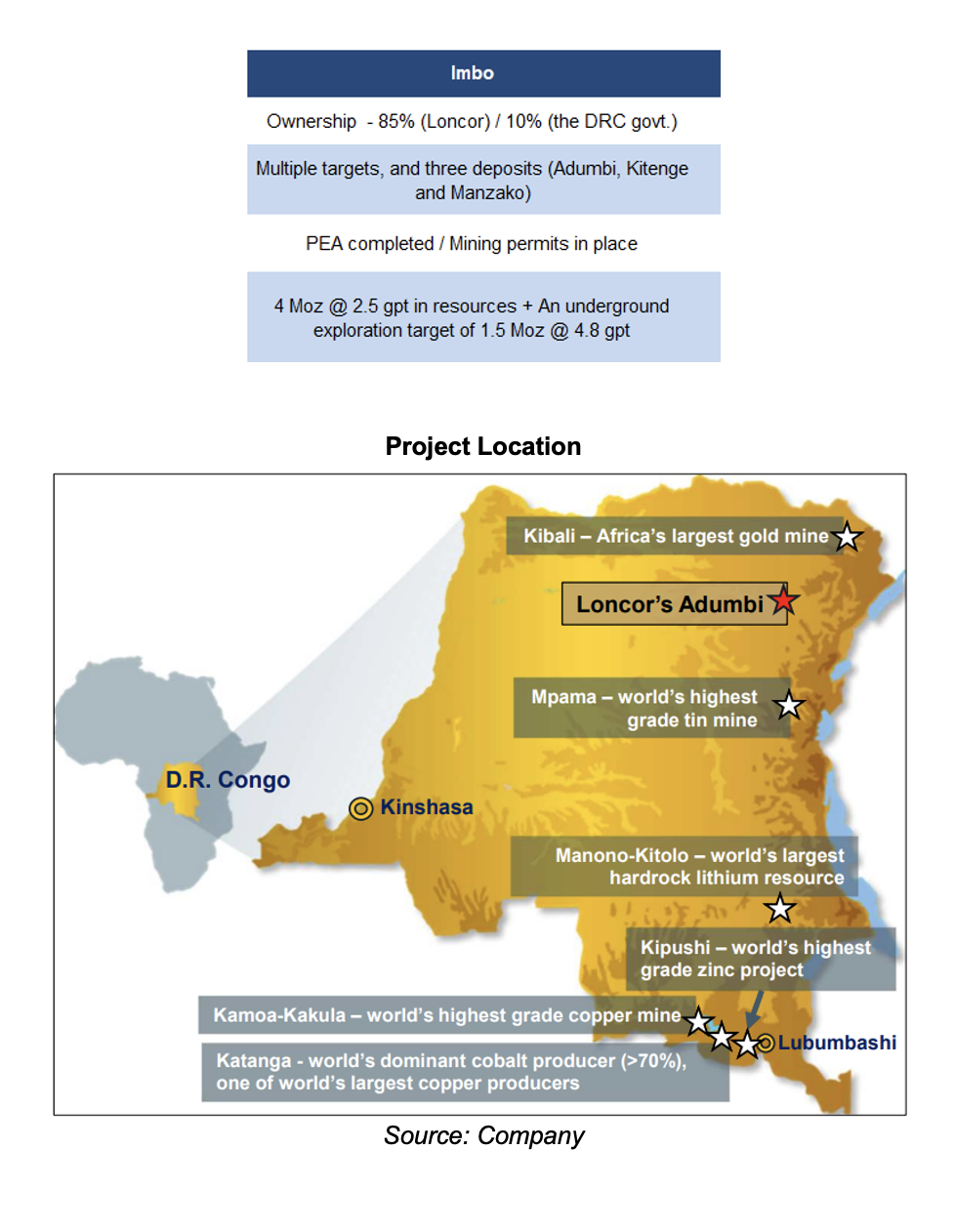
Should the project advance to production, management envisions hydro power as a viable source, which is a significant factor contributing to Kibali's low cash costs
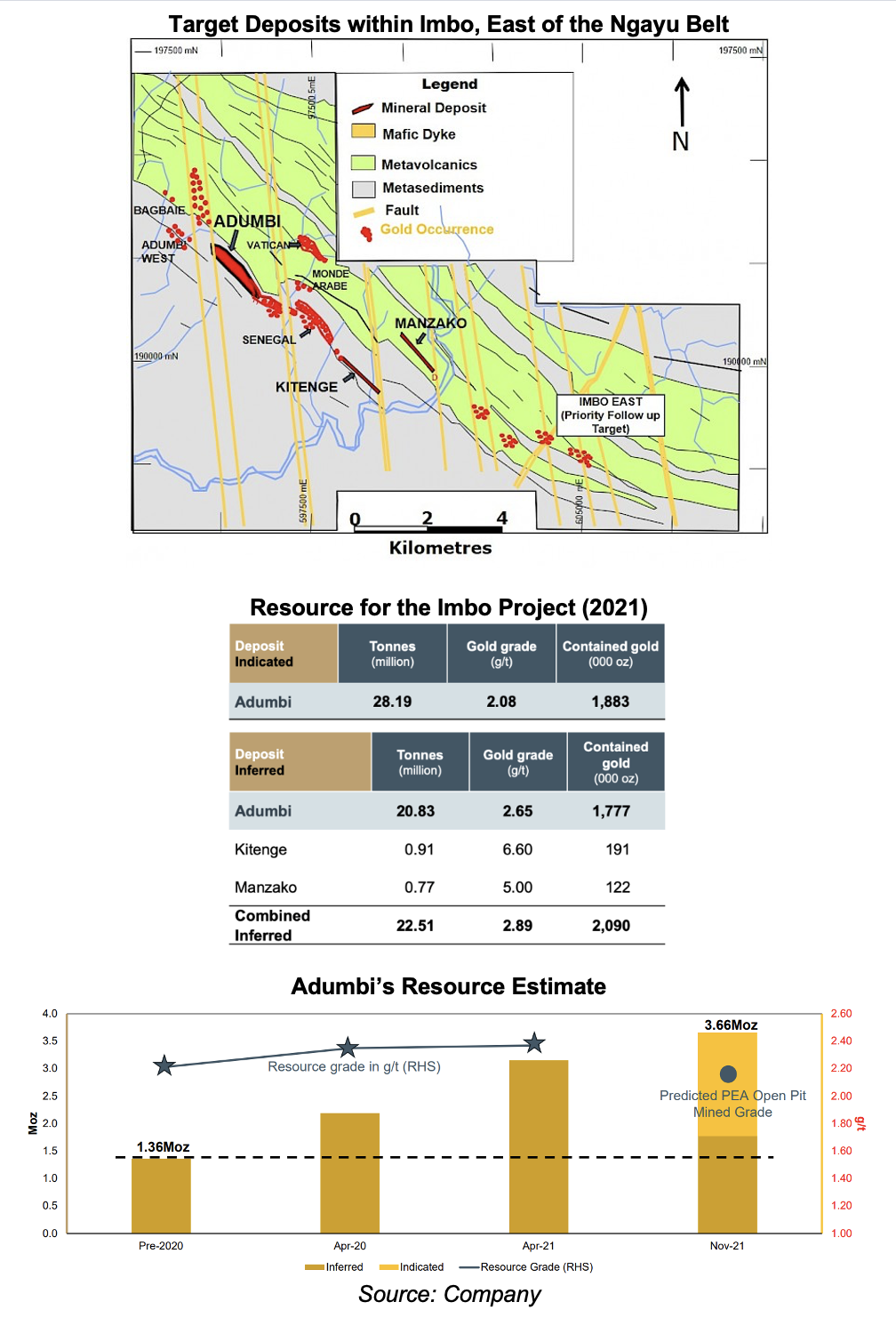
The advanced-stage Imbo project hosts three open-pittable deposits (Adumbi, Kitenge, and Manzako), and multiple targets, along a 14 km long mineralized trend. These three deposits are 3 km from each other, and can likely be part of the same mine plan
Most of Imbo’s resources come from Adumbi. Adumbi holds a relatively high-grade/large open-pit resource. Resources surged 169% since 2020
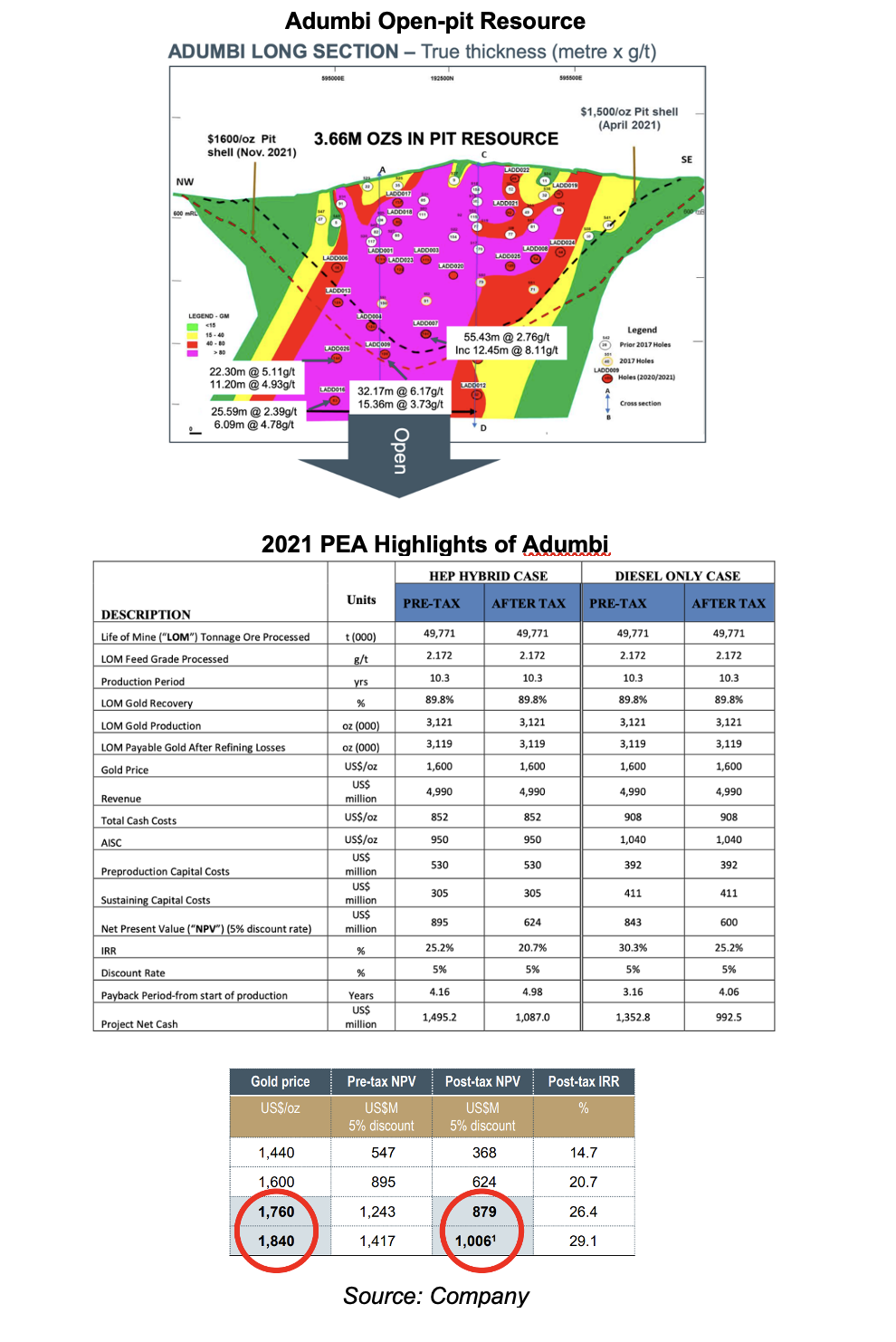
The Adumbi deposit has been drilled along 900 m strike, and 550 m downdip. The open-pit resource grade at Adumbi (3.7 Moz at 2.3 g/t Au) is comparable to that of Kibali’s open-pit and underground resources (16.9 Moz at 3.1 g/t Au)
A PEA completed in 2021 returned an AT-NPV5% of $1B, and a high AT-IRR of 29%, using $1,840/oz gold vs the current spot price of $2,760/oz. Annual production of 303 Koz, which would make it a mid-sized gold producer
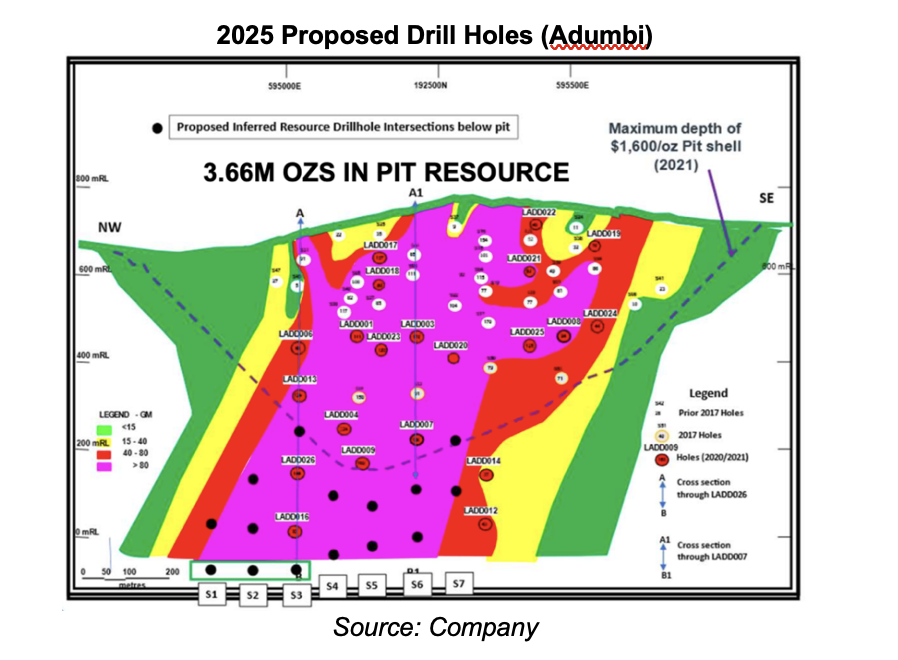
LN is pursuing a resource expansion drill program (nine holes/11,000 m) to potentially delineate underground resources below the open-pit shell. Management has assigned an exploration target of 1.5 Moz (4.8 g/t) below the Adumbi pit-shell, between depths of 550 and 800 m.
Adumbi is open at depth with significant resource expansion potential to a depth of 800 m below surface
LN has conducted scout drilling to test targets in the Imbo East area, located 8 to 12 km southeast of Adumbi, outside the current resource areas. Earlier this month, the company announced promising results from nine holes totaling 2,113 m, with depths ranging from 160 to 320 m.
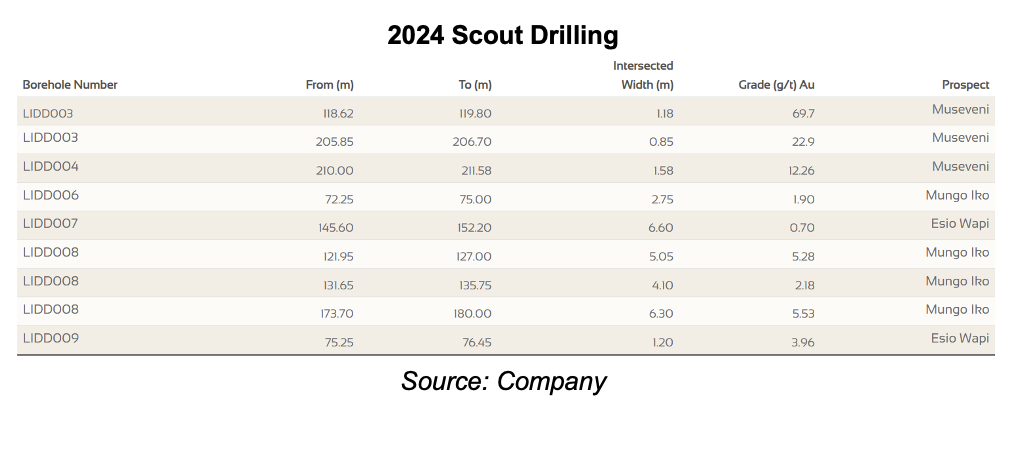
Key results included 6.30 m @ 5.53 g/t, 5.05 m @ 5.28 g/t, 1.58 m @ 12.26 g/t, and 1.18 m @ 69.7 g/t
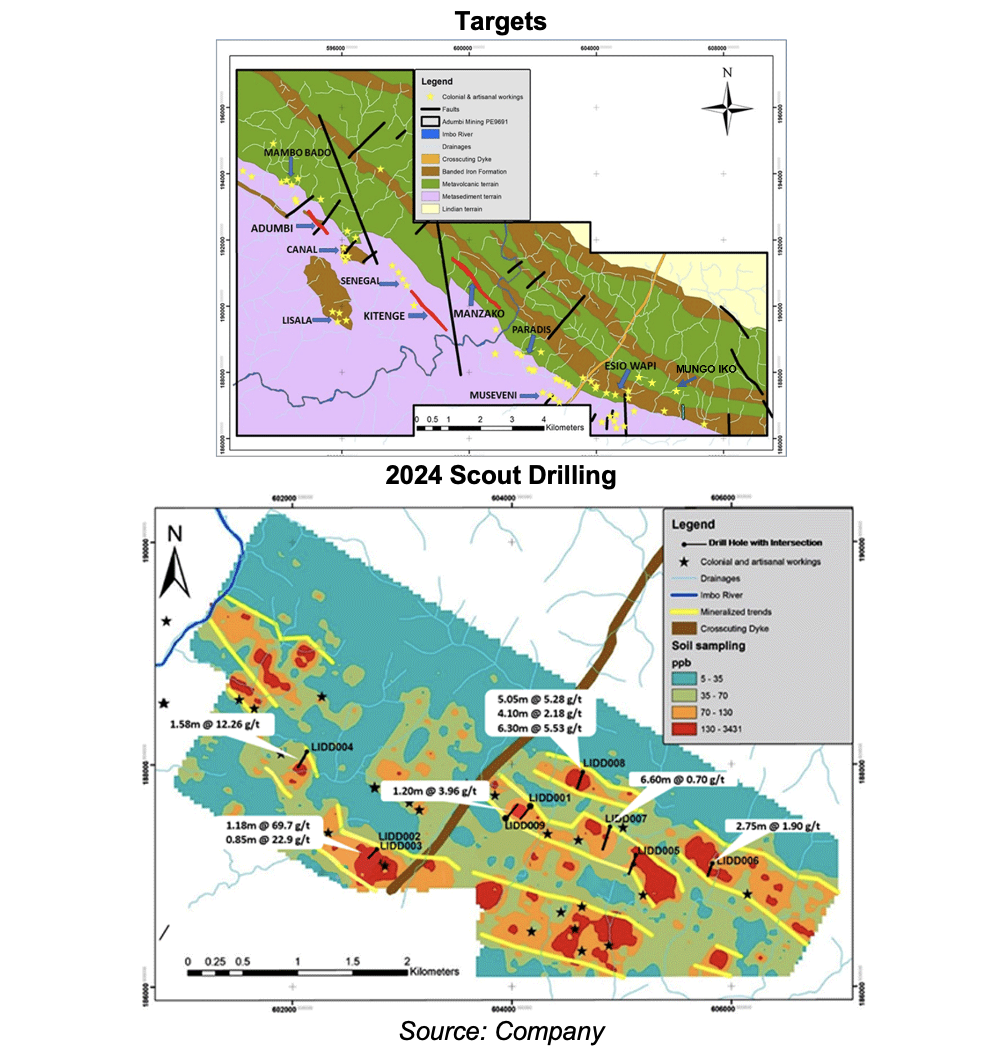
Potential for resource expansion
Management’s long-term plan is to delineate a mining district along the 14 km-long Imbo trend.
Financials
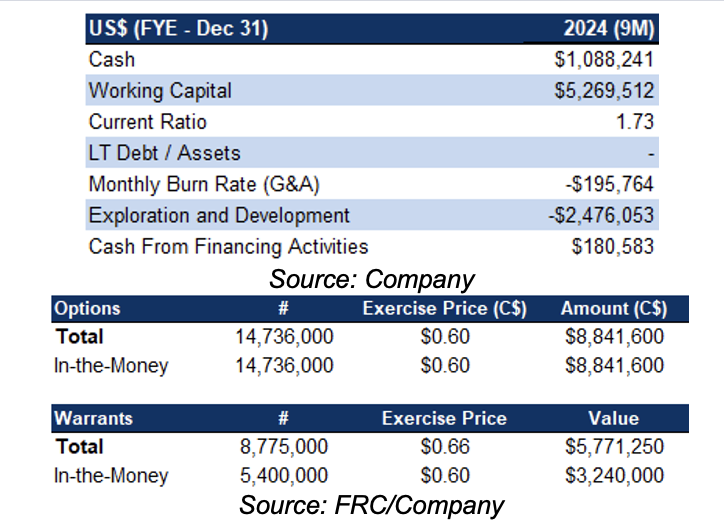
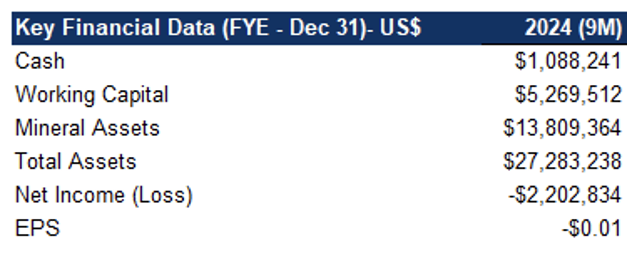
At the end of Q3-2024, LN had $5.3M in working capital
Comparables Valuation
African gold juniors are trading at C$68/oz (previously C$58/oz)
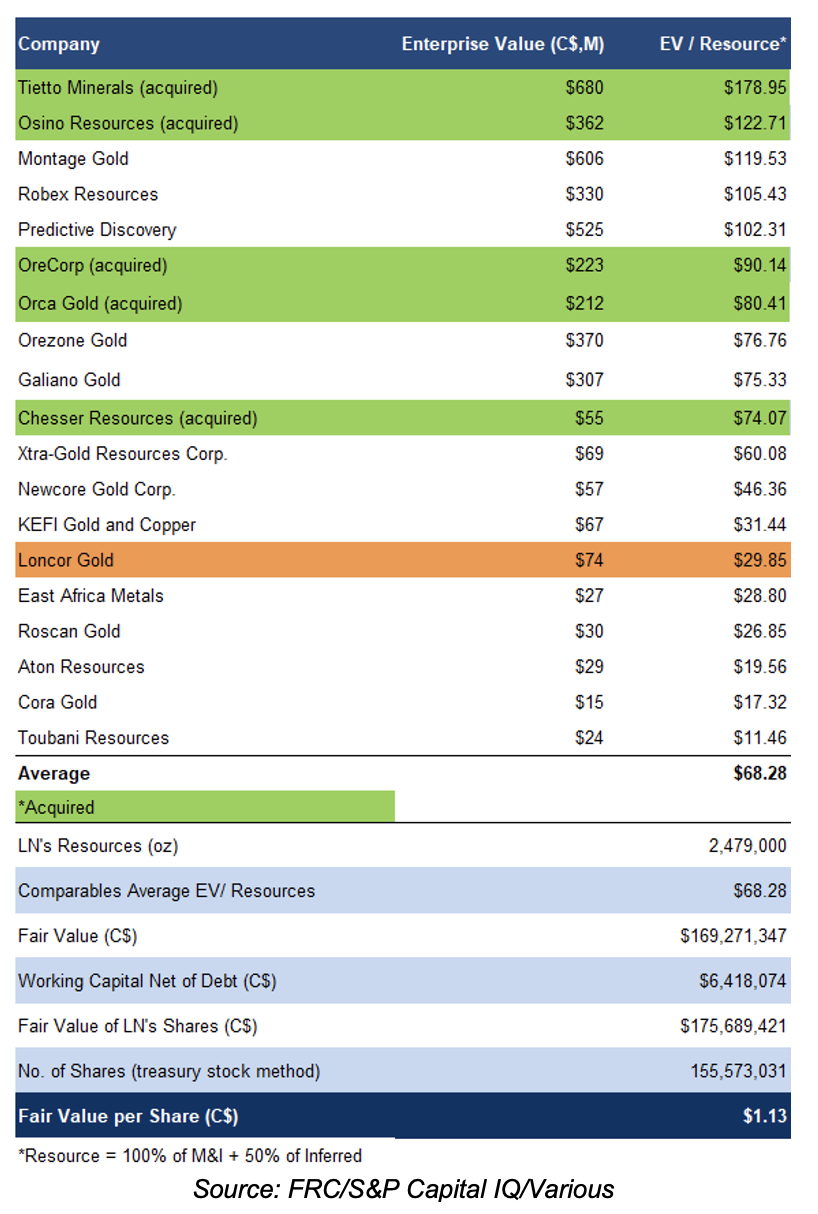
LN is trading at C$30/oz (previously C$19/oz), reflecting a 56% discount. Applying C$68/oz to LN’s resources, we arrived at a comparables valuation of C$1.13/share (previously C$0.87/share
DCF Valuation and Rating
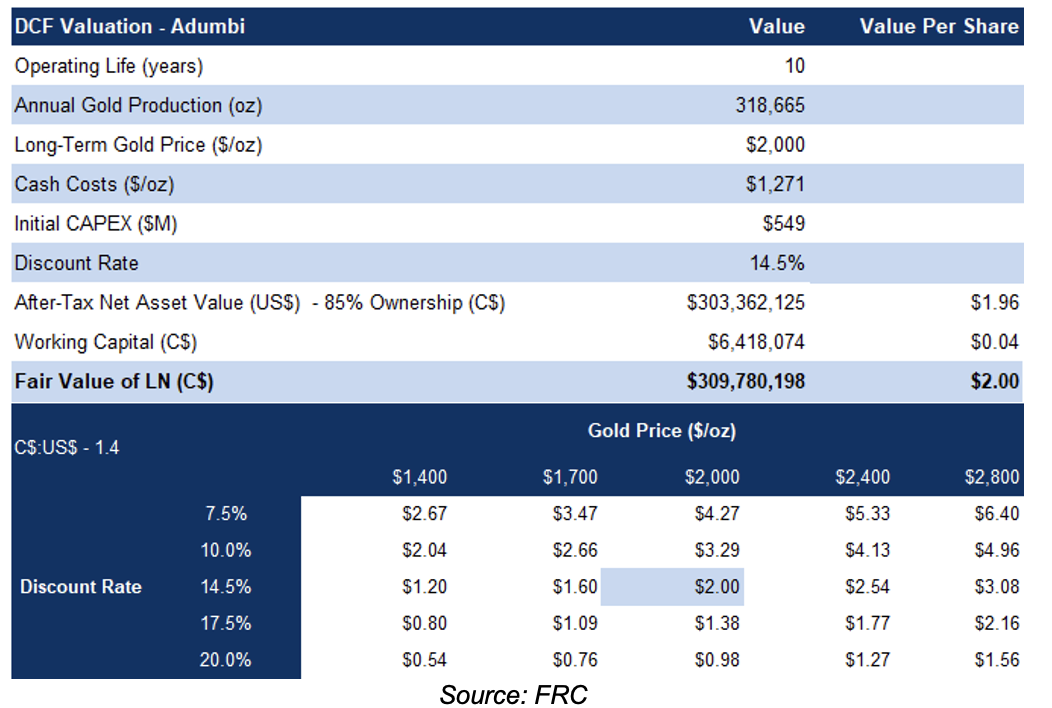
We are reiterating our BUY rating, and raising our fair value estimate from C$0.80/share to C$1.57/share (the average of our DCF and comparables valuations). The company possesses a significant gold resource, supported by robust project economics. Despite its strong fundamentals, Loncor trades at a significant discount to its peers. With ongoing exploration efforts, and the potential for strategic partnerships or acquisitions, we believe Loncor presents a compelling opportunity for those seeking exposure to gold equities.
Risks
We believe the company is exposed to the following key risks:


.webp&w=128&q=75)
.webp&w=128&q=75)


Discussion
Comments reflect the views of individual users, not FRC. Nothing posted in the comments section — by users or otherwise — should be taken as investment advice.